






Best Christmas Markets in Europe 2026: Dates, Locations & Visitor Guide

The best Christmas markets in Europe for 2026 open from mid-November, with most of the famous markets running from late November to 24 December 2026, and a few — including Prague and Tallinn — continuing into early January 2027. Vienna’s main market at Rathausplatz is scheduled from 13 November to 26 December, Strasbourg from 27 November to 24 December, and Prague’s Old Town Square market from 28 November 2026 to 6 January 2027. Entry to almost all markets is free; you pay only for food, drinks and gifts.
Think of a European Christmas market as part street festival, part open-air food hall and part craft fair, set in a historic square and built around Advent traditions that in some cities go back centuries. This guide covers the markets worth travelling for in 2026, their dates, costs and how to avoid the common mistakes.
At a Glance: 2026 Dates for the Top Markets
Dates below reflect the schedules published for the 2026 season at the time of writing. Always check the official city or market website before booking travel, as opening hours can change, especially around 24–26 December.
| Market | City, Country | 2026 Dates | Open on 25 Dec? | Budget | Best For |
|---|---|---|---|---|---|
| Christkindlmarkt, Rathausplatz | Vienna, Austria | 13 Nov – 26 Dec | Yes | €€ | First-timers, families, big spectacle |
| Christkindelsmärik | Strasbourg, France | 27 Nov – 24 Dec | No — closes 24 Dec | €€ | Atmosphere, oldest tradition in France |
| Christkindlesmarkt, Hauptmarkt | Nuremberg, Germany | 27 Nov – 24 Dec | No — closes 24 Dec | €€ | Classic gifts, traditional crafts |
| Old Town Square Market | Prague, Czech Republic | 28 Nov – 6 Jan 2027 | Yes | € | Visiting over Christmas and New Year |
| Cathedral Market | Cologne, Germany | 16 Nov – 23 Dec | No — closes 23 Dec | €€ | Early opening, market-hopping by train |
| Christkindlmarkt, Marienplatz | Munich, Germany | 20 Nov – 24 Dec | No — closes 24 Dec | €€ | Traditional Bavarian food and music |
| Advent Bazilika | Budapest, Hungary | From 13 Nov – 1 Jan 2027* | Yes | € | Value, food, light shows |
| Striezelmarkt, Altmarkt | Dresden, Germany | 25 Nov – 24 Dec | No — closes 24 Dec | € | One of Germany’s oldest markets |
| Old Town Market | Colmar, France | 23 Nov – 29 Dec | Yes, reduced hours expected | €€ | Fairytale streets, couples |
| Christkindlmarkt, Salzburger Altstadt | Salzburg, Austria | Expected 19 Nov – 1 Jan 2027* | Yes | €€ | Alpine setting, open through New Year |
| Weihnachtsmarkt am Gendarmenmarkt area markets | Berlin, Germany | Late Nov – late Dec, varies by market* | Some markets yes | €€ | Choice — dozens of markets in one city |
| Tivoli Gardens Christmas Market | Copenhagen, Denmark | Expected mid-Nov – early Jan* | Check Tivoli’s calendar | €€€ | Families, design, fairground atmosphere |
| Town Hall Square Market | Tallinn, Estonia | 20 Nov – 6 Jan 2027* | Yes | € | Snowy medieval setting, quieter crowds |
*Budapest and Tallinn end dates are based on the published pattern for the season; confirm on the official site before travel.
*Budapest, Tallinn, Salzburg, Berlin and Copenhagen dates are based on the published pattern for the season at the time of writing; confirm on the official city or venue site before travel. Budget key: € = lower-cost city for hotels and food, €€ = mid-range, €€€ = expect Scandinavian prices.
Quick Picks: Which Market Suits You?
- Best overall: Vienna — the biggest spectacle, the most to do beyond the stalls, and a market that runs past Christmas Day.
- Best for first-timers: Strasbourg — compact, beautiful and easy to pair with Colmar in a single weekend.
- Best value: Budapest and Prague — lower hotel and food prices than the German and Austrian cities, with no drop in atmosphere.
- Best after Christmas: Prague, Salzburg and Tallinn — still open when most German markets have packed away.
- Best for families: Copenhagen’s Tivoli Gardens and Vienna, where rides, skating and lights carry the visit as much as the shopping.
- Best for food: Munich and Budapest — come hungry, and plan your market time around meals rather than snacks.
Vienna, Austria — The Best All-Rounder
Vienna does Christmas on a grand scale. The Christkindlmarkt in front of the neo-Gothic City Hall at Rathausplatz is the headline market, with well over a hundred stalls, a large ice-skating area, a carousel and a giant tree. The setting does a lot of the work: the illuminated Rathaus at night is one of the most photographed Christmas scenes in Europe.
Vienna is a strong first choice because the market is only part of the visit. The city has several other markets, including the elegant market at Schönbrunn Palace, which typically runs longer into the New Year period, plus concerts, coffee houses and museums for warming up indoors. Three days is the ideal stay.
Strasbourg, France — The Capital of Christmas
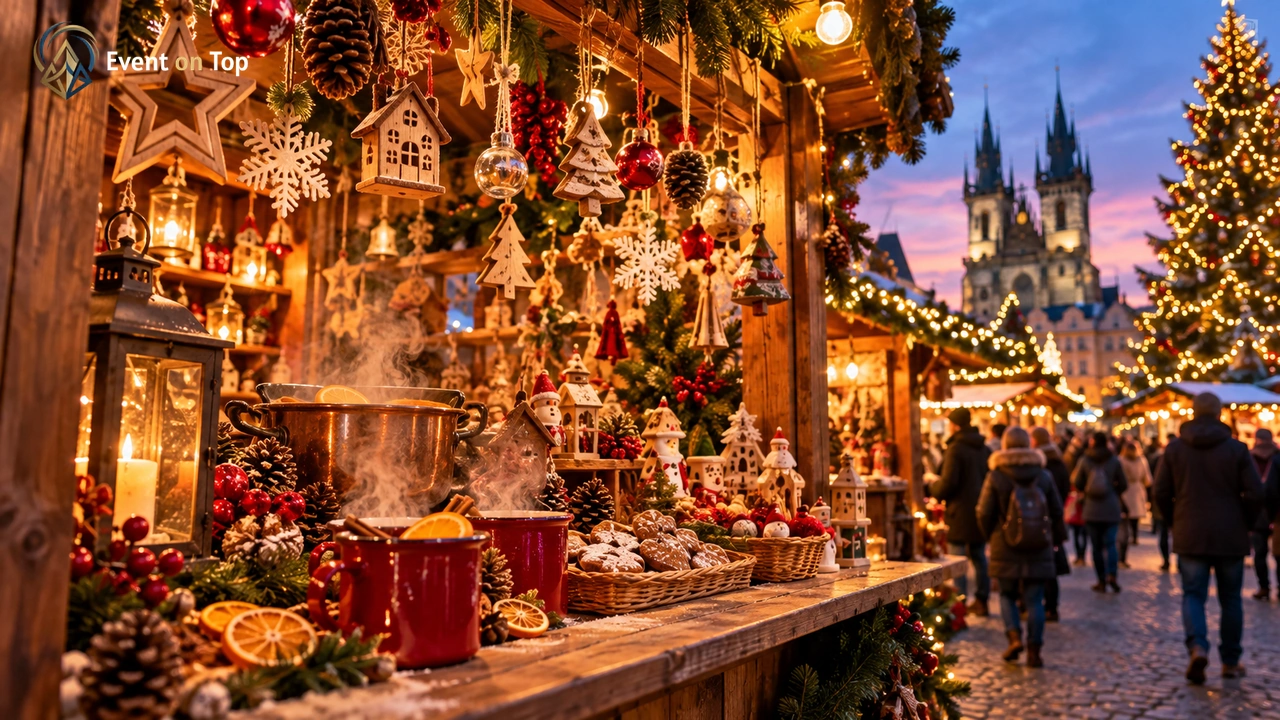
Strasbourg calls itself the Capital of Christmas, and its Christkindelsmärik is one of the oldest Christmas markets in Europe, with roots in the 16th century. The market is spread across several squares in the old town, a UNESCO-listed island surrounded by canals and half-timbered houses, with the cathedral as its backdrop and an enormous Christmas tree in Place Kléber.
Strasbourg is best for atmosphere rather than scale. Come for the Alsatian food — bredele biscuits, tarte flambée and vin chaud — and pair it with Colmar, about 30 minutes away by train, where a cluster of smaller markets fills one of the prettiest old towns in France. Book accommodation early: Strasbourg fills up faster than almost any other market city, and prices rise sharply for December weekends.
Nuremberg, Germany — The Traditional Heartland
Germany is where the modern Christmas market took shape, and Nuremberg’s Christkindlesmarkt is its most famous example. Held in the Hauptmarkt, the main square, it runs under strict rules about what stalls may sell: proper crafts, Lebkuchen gingerbread, Zwetschgenmännle prune figures, fruit loaf and the small grilled Nuremberg sausages — not mass-produced souvenirs. The market opens with a ceremony led by the Christkind, a local teenager chosen for the role, and closes on 24 December.
Eat the sausages served three-in-a-roll (Drei im Weggla) and buy Lebkuchen from the square’s bakers rather than a supermarket later. Beyond the market, the castle above the old town and the toy museum make an easy cold-weather pairing, and Nuremberg’s main station puts Munich and Dresden within simple day-trip range. Do not plan your main visit for Christmas Eve — the market closes early that afternoon.
Munich, Germany — Bavarian Food and Music
Munich’s Christkindlmarkt fills Marienplatz under the neo-Gothic town hall, in a city that takes Advent music seriously — expect choirs and brass from the town hall balcony on many evenings. It is a large, central, strongly traditional market, and the best of the German markets for eating: Kletzenbrot fruit bread, roasted almonds, Stollen and hearty Bavarian dishes alongside the usual stalls.
Beyond the market, Munich’s museums, beer halls and the English Garden fill a second or third day without effort, and the city is the natural base for a day trip to Salzburg (see below) — around 90 minutes by train. Like all Bavarian markets, Marienplatz closes on 24 December, so Munich works best earlier in the season or as the first half of a two-city trip that ends in Prague or Salzburg.
Salzburg, Austria — The Alpine Favourite
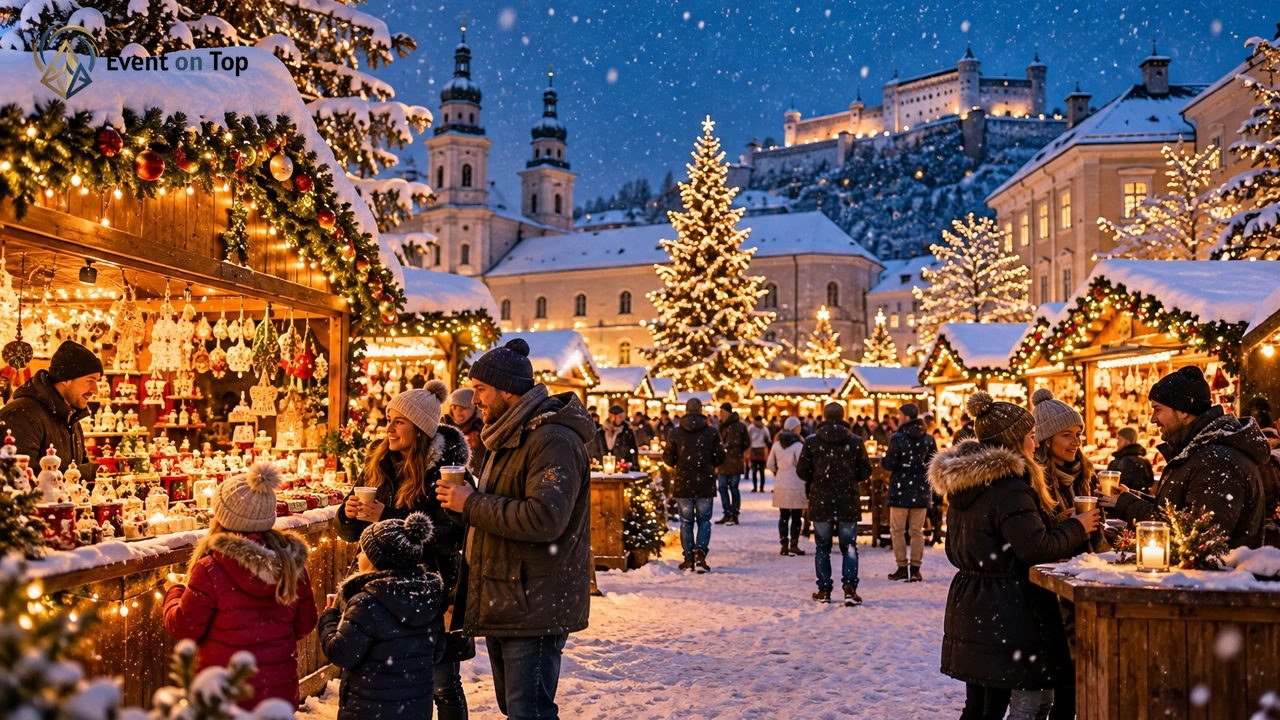
Salzburg’s Christkindlmarkt spreads around the cathedral in the old town, under the fortress, in a baroque city small enough to walk end to end. Its dates are the useful surprise: the market is expected to run from 19 November 2026 through New Year, including Christmas Day — at the time of writing, based on the published pattern for the season — which puts it in the small group of markets that work for a trip between Christmas and New Year.
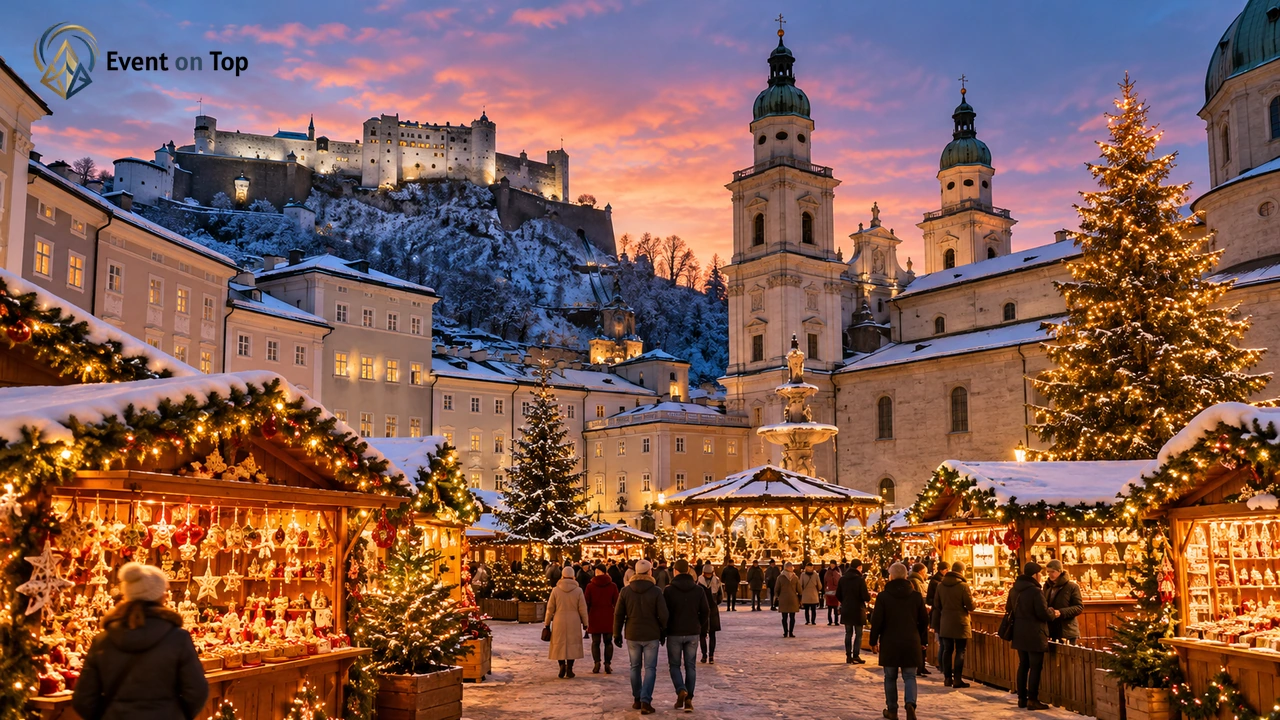
The atmosphere is more musical and less commercial than Vienna’s: Advent singing, brass ensembles and church concerts run through the season, and this is Mozart’s birthplace, so the concert calendar is genuinely good rather than laid on for tourists. Beyond the market, ride the funicular to the fortress for the view over the rooftops, and warm up in the Augustiner brewery hall in Mülln, which locals treat as part of the season too.
Salzburg pairs naturally with Munich by train (around 90 minutes) or with Vienna (around 2 hours 30 minutes). Prices sit between Vienna and Munich levels; book early for the weekends closest to Christmas, when the old town’s small hotels sell out first.
Berlin, Germany — A City of Markets, Not One Market
Berlin does not have a Christmas market; it has dozens — well over 50 in most years, by some counts more than 100 counting small neighbourhood markets. That makes Berlin the right choice if you want variety in one city and the wrong choice if you want a single postcard square. Dates vary market by market, but most run from late November to late December, with a few continuing into the New Year — check the individual market’s page before you go.
Start with three contrasting picks. The market at Gendarmenmarkt, one of Berlin’s finest squares, is the polished one — crafts, good food and, in recent years, a small entry charge (around €2, with free entry at quieter weekday times in previous seasons; confirm the current year’s terms). The market at Alexanderplatz and the one by the Red City Hall are bigger, louder and more funfair. Spandau’s old-town market, a short S-Bahn ride west, is the traditionalists’ favourite and one of the largest in Germany on peak weekends.
Beyond the markets, Berlin in December is museums, galleries and long café lunches — plan one full non-market day. Hotel prices are generally kinder than Munich or Vienna for the same quality, because Berlin has so many rooms; the trade-off is travelling between markets by U-Bahn rather than on foot.
Copenhagen, Denmark — Christmas at Tivoli
Copenhagen’s headline Christmas experience is not a free square market but Tivoli Gardens, the 19th-century pleasure garden in the middle of the city, which dresses itself in lights, trees and stalls for the season. Tivoli’s Christmas season is expected to run from mid-November into the first days of January — confirm exact dates and opening days on Tivoli’s own calendar before booking, as it does not open every day.
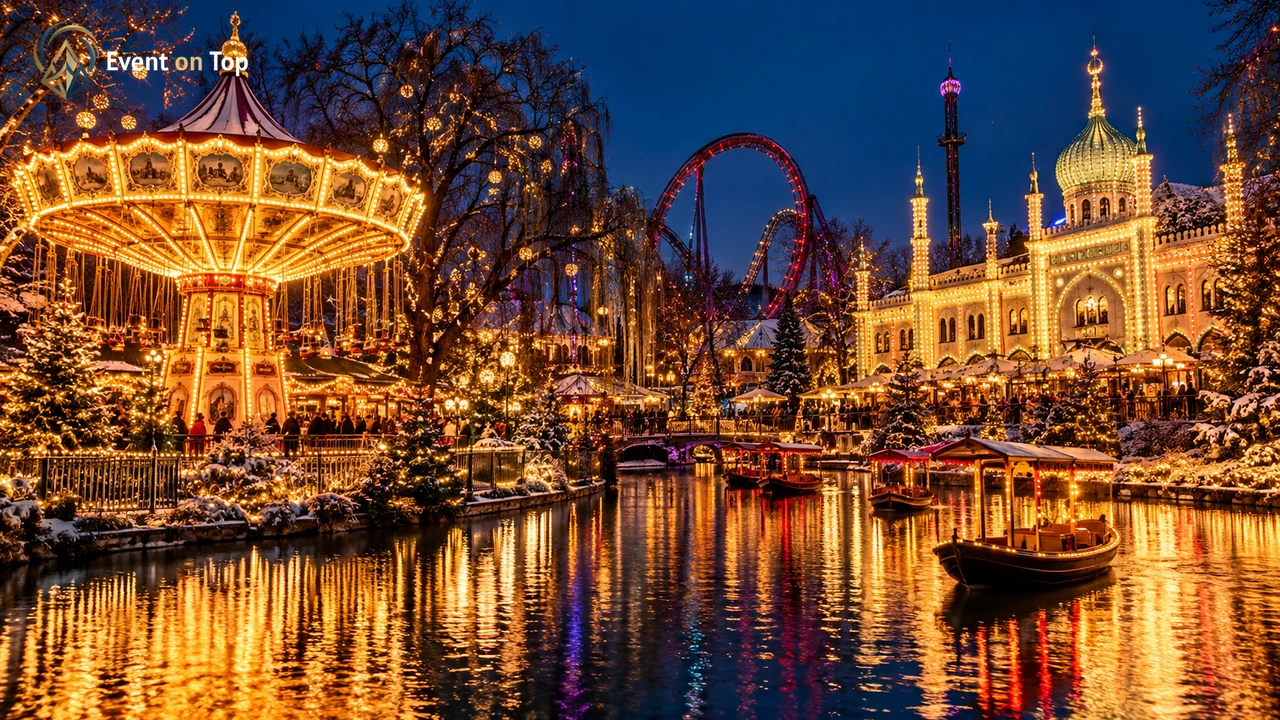
Two honest differences from the rest of this guide: Tivoli charges garden entry (rides cost extra or via a pass), and Copenhagen is the most expensive city in this list for hotels and eating out — the €€€ tier in our table is real. What you get for it is the best family offer of any market here: rides, pantomime, Santa, ice and light shows in one enclosed, manageable space, plus smaller free markets around Nyhavn and the city centre to wander before or after.
Beyond Tivoli, the Danish idea of hygge is the point of the trip — candlelit cafés, design shops for gifts you will not find at a German market, and æbleskiver (round pancake balls) with gløgg, the local mulled wine. Two nights is enough; three makes it relaxed.
Prague, Czech Republic — Best for Christmas Week
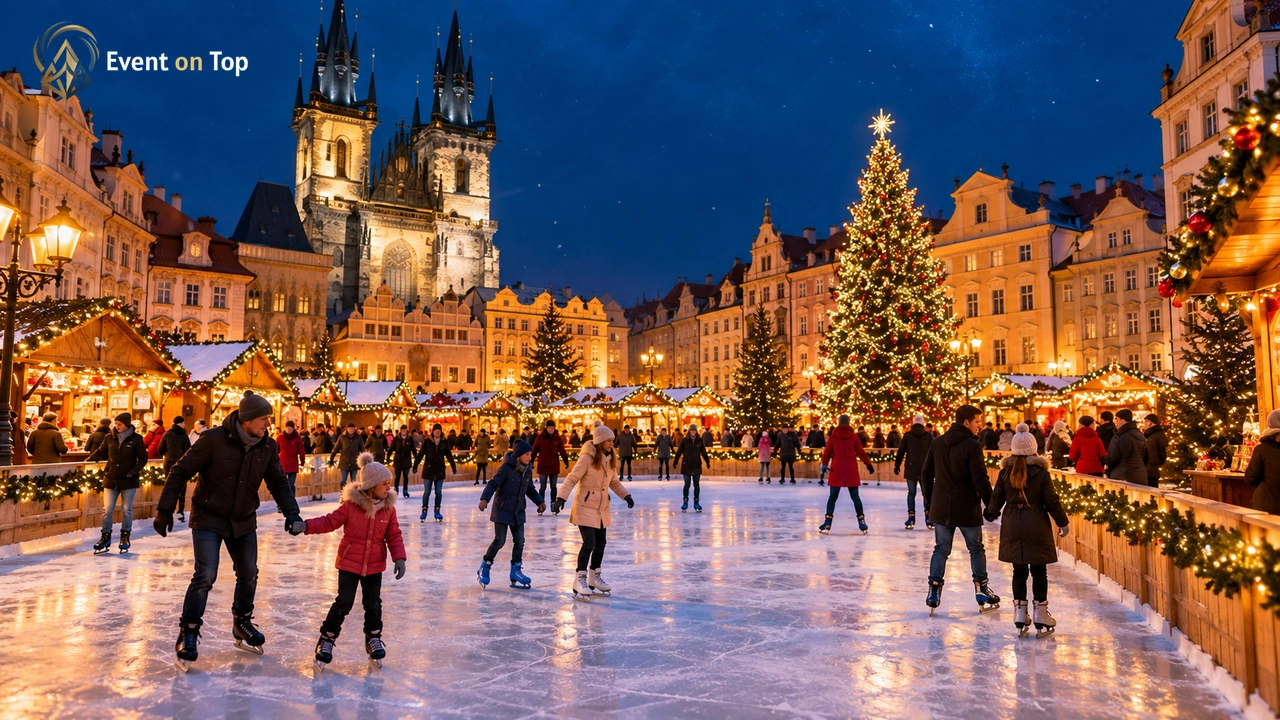
Most German and Austrian markets end on 24 or 26 December. Prague is the exception that matters: the Old Town Square and Wenceslas Square markets run through Christmas and into the New Year, finishing on 6 January 2027. That makes Prague the easiest choice in Europe if your only free days fall between Christmas and New Year — the market is fully open, not winding down.
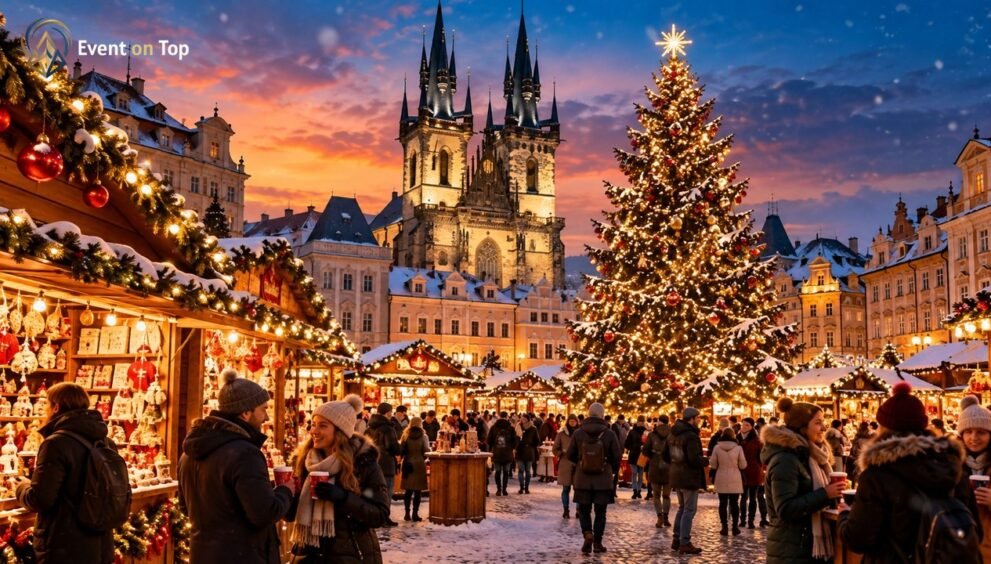
The setting — Gothic towers, the astronomical clock and a huge tree in the Old Town Square — is superb, and prices for food and hotels are generally lower than Vienna. Eat trdelník hot from the grill and drink hot mead or svařák (the local mulled wine) in the square. Beyond the market, cross Charles Bridge early in the morning before the crowds, and use Prague Castle and the Old Town’s concert halls — several run daily Advent and Christmas concerts — as your warmth breaks. Prague also works as the second half of a trip: end in Munich or Vienna before 24 December, then move to Prague for Christmas itself.
Budapest, Hungary — Best for Value
Budapest is the smart value pick of this list. The Advent Bazilika market in front of St Stephen’s Basilica is known for the light projections played across the basilica facade and for a food offering with real depth — chimney cakes cooked over coals, Hungarian stews, stuffed cabbage and lángos — while Vörösmarty Square hosts the city’s other main market, a short walk away. The season runs from mid-November to 1 January 2027 (based on the published pattern at the time of writing), including the Christmas period.
Hotel and restaurant prices run noticeably below Vienna or Munich, which is why Budapest stretches a budget furthest: the same money buys a better-located hotel here. Beyond the market, add an evening in one of Budapest’s thermal baths — sitting in steaming outdoor water while the air is below freezing is the single best cold-weather experience in this guide — and ride tram 2 along the Danube for the Parliament view. Budapest pairs with Vienna by train in about 2 hours 40 minutes.
Markets Open After Christmas Day
If your trip falls between Christmas and New Year, your shortlist shrinks fast — most German markets close on 23 or 24 December and do not reopen. These are the markets in this guide still running after 25 December 2026, based on the dates in our table at the time of writing:
- Prague — Old Town Square market runs to 6 January 2027, the longest season in this guide, and the city adds New Year concerts and fireworks.
- Tallinn — Town Hall Square market also runs to 6 January 2027, with the best chance of real snow of any market here.
- Salzburg — expected to run through 1 January 2027, including Christmas Day.
- Vienna (Schönbrunn) — the main Rathausplatz market ends 26 December, but the market at Schönbrunn Palace typically continues into the New Year period as a New Year market; confirm the current season’s dates.
- Budapest — the Advent Bazilika season is expected to run to 1 January 2027.
- Colmar — runs to 29 December, so it works for the days immediately after Christmas even if not for New Year.
One caution: “open” between Christmas and New Year does not mean “identical”. Some stalls — especially food stalls run by travelling families — finish on 24 December even where the market continues, so expect a slightly smaller market and check the official site for the days you plan to visit.
What Does a Christmas Market Trip Cost?
The markets themselves are free to enter, with two small exceptions at certain premium markets, so your budget is food, gifts and travel. As a rough guide for 2026: a mug of mulled wine or hot chocolate typically costs €4–€7 plus a refundable deposit for the mug, a main food item €6–€12, and handmade gifts anywhere from €5 for small decorations to €40+ for quality woodcraft. Many stalls now take cards, but smaller ones are cash-only, so carry some euros.
The bigger costs are flights and hotels, and both spike on December weekends. Travelling Sunday to Tuesday, booking accommodation two to three months ahead, and staying a 10-minute tram ride from the old town instead of inside it can cut the hotel bill significantly without spoiling the trip.
A Worked Example: Two Nights, Mid-Range, Per Person
So the ranges above become real, here is an illustrative two-night trip for one person sharing a room, based on typical December prices at the time of writing — treat it as a planning model, not a quote:
| Cost line | Vienna or Munich | Prague or Budapest |
|---|---|---|
| Hotel, 2 nights (share of a mid-range room near the centre) | €110–€180 | €60–€110 |
| Market food and drink (€25–€35 per day) | €50–€70 | €40–€60 |
| Gifts and souvenirs | €30–€60 | €30–€60 |
| Local transport and one paid sight | €20–€40 | €15–€30 |
| Total, excluding travel to the city | ≈ €210–€350 | ≈ €145–€260 |
Flights or trains to the city sit on top of this and vary too much by departure point to generalise — booking them early matters more than which market you choose.
The Mug Deposit (Pfand) — How It Works
Almost every market serves mulled wine and hot drinks in a real mug or glass and adds a refundable deposit — the Pfand — typically a few euros on top of the drink price. Return the mug to any stall of the same market and you get the deposit back; keep the mug and you have legally bought your souvenir. Each market has its own annual mug design, which is why locals collect them. Do not hand your mug to a stranger offering to “return it for you” near closing time — it is a small, known hustle.
Practical Tips for First-Time Visitors
Go on a weekday if you can. Saturday afternoons at the famous markets are extremely crowded, while weekday mornings are relaxed and you can actually talk to stallholders. Dress for standing still outdoors — thermal layers, a hat, gloves and waterproof shoes matter more than a stylish coat. Most markets are at their most beautiful after dark, so plan to arrive in late afternoon, see the market in daylight, then stay as the lights come on.
Finally, build in warmth breaks — market, café, market, dinner beats four straight hours outside — and prefer trains between nearby market cities such as Vienna–Budapest or Strasbourg–Colmar.
Three Warnings Worth Knowing Before You Go
Christmas Eve closes early. In Germany and Austria, markets wind down in the early afternoon of 24 December and shops close too. Never schedule your one market day for Christmas Eve — arrive by 23 December at the latest, or choose a market that runs past Christmas from the section above.
Cash is still king at small stalls. Card payment has spread quickly and most larger stalls take cards, but small craft stalls, mug-deposit returns and some food stands remain cash-only. Carry €30–€50 in small notes and coins; market ATMs exist but queue and charge accordingly.
Book the bed before the flight. In Strasbourg, Salzburg and Vienna, December weekend hotel stock is the thing that actually runs out — flights and trains rarely do. A refundable room booked in autumn beats a cheap flight with nowhere sensible to sleep.
Frequently Asked Questions
When do Christmas markets in Europe start in 2026?
Most major markets open between 13 and 28 November 2026. Cologne and Vienna are among the earliest, while Nuremberg and Strasbourg open on 27 November. Almost all markets are open throughout December until at least 23 or 24 December.
Which Christmas market is best for first-time visitors?
Vienna is the safest all-round choice for a first visit because of its size, setting and range of other things to do. Strasbourg is best purely for atmosphere, and Prague is best if you are travelling between Christmas and New Year, when most other markets have closed.
Are Christmas markets in Europe free to enter?
Yes, entry is free at almost all major markets. You pay for food, drinks, rides and gifts. A small number of special or premium markets charge a modest entry fee on peak days, so check the official page for the specific market you plan to visit.
What should I eat at a Christmas market?
Try the local speciality rather than generic fair food: Lebkuchen gingerbread and small sausages in Nuremberg, bredele biscuits in Strasbourg, chimney cake in Budapest, and trdelník and hot mead in Prague. Mulled wine is everywhere; non-alcoholic fruit punch is always available too.
How many days do I need for a Christmas market trip?
Two to three days is ideal for one city. With four to five days you can comfortably combine two nearby cities by train, such as Strasbourg and Colmar, or Vienna and Budapest, without rushing either one.
Which Christmas markets in Europe are the cheapest to visit?
Budapest and Prague, with Dresden and Tallinn close behind. The markets themselves are free almost everywhere, so the saving is in hotels, restaurant meals and market food, all of which run well below Vienna, Munich or Copenhagen prices. Copenhagen is the most expensive city in this guide; Strasbourg is mid-range for costs but sells out fastest, which pushes late bookers into high prices.
Can I visit two Christmas market cities in one trip?
Yes — it is often the best way to do it, because the classic cities cluster together. Easy pairings by direct train include Strasbourg–Colmar (about 30 minutes), Munich–Salzburg (about 90 minutes), Vienna–Budapest (about 2 hours 40 minutes) and Vienna–Prague (about 4 hours). Give each city at least two nights, travel in the morning so you arrive for the afternoon lights, and check whether either market closes on 24 December before you fix the order of the trip.
Conclusion
For 2026, pick the market that matches your dates first and your taste second: Vienna for a classic first trip, Strasbourg and Colmar for atmosphere, Nuremberg for tradition, and Prague if you are travelling after Christmas Day. Book accommodation early, go midweek if you can, and confirm exact dates on the official market website before you book flights.
Planning more events for the year ahead? Read our guides to CES 2027 in Las Vegas for January’s biggest tech event and Coachella 2027 for April’s biggest music festival, or browse more festivals and seasonal events in our Cultural category.


CES 2027 Las Vegas: Dates, Tickets, Venue & What to Expect
23rd Oct 2026[…] Best Christmas Markets in Europe 2026: Dates, Locations & Visitor […]
Coachella 2027: Dates, Lineup, Ticket Prices & Travel Guide
23rd Oct 2026[…] Best Christmas Markets in Europe 2026: Dates, Locations & Visitor […]
Rio Carnival 2027: Dates, Parades & Visitor Guide
23rd Oct 2026[…] carnival-season inspiration? Browse our guide to the Best Christmas Markets in Europe 2026 for a very different winter festival, or explore more in our Cultural […]
Oktoberfest 2027 Munich: Dates, Costs & Tips
23rd Oct 2026[…] a festival year in Europe? Pair this with our Glastonbury 2027 guide for June and the Best Christmas Markets in Europe 2026 guide for December, or browse more in our Cultural […]
Top 12 Cultural Festivals in the World in 2027
24th Oct 2026[…] treat you as one. Start with our Rio Carnival guide and Oktoberfest guide, browse the season in our Best Christmas Markets in Europe guide, and see everything in our Cultural […]
Prague Christmas Markets 2026: Dates, Locations & Local Food Guide
31st Oct 2026[…] This guide covers the Prague Christmas markets in 2026 end to end: the confirmed dates and hours for every market worth your time, what to eat and drink (including the honest truth about trdelník), how the tree lighting works, how to get around, where to stay, and the tips that keep crowds and pickpockets at bay. If you are planning a wider festive tour, Prague also pairs naturally with the other cities in our guide to the best Christmas markets in Europe. […]
Vienna Christmas Markets 2026: Dates, Locations & What to Eat
01st Nov 2026[…] This guide covers the nine markets most visitors plan around — Rathausplatz, Schönbrunn, Belvedere, Spittelberg, Maria-Theresien-Platz, Freyung, Am Hof, Karlsplatz Art Advent and the Wintermarkt in the Prater — with confirmed 2026 dates and hours, what to eat and drink, how to move between them, where to stay, and a simple two-to-three-day plan. If Vienna is one stop on a bigger festive trip, it also pairs naturally with the other cities in our guide to the best Christmas markets in Europe. […]
Budapest Christmas Markets 2026: Dates, Locations & Food Guide
01st Nov 2026[…] into one winter weekend. Budapest also pairs naturally with the other cities in our guide to the best Christmas markets in Europe in 2026 — Vienna and Prague are an easy train ride […]
Cologne Christmas Markets 2026: Dates, Locations & What to Eat
01st Nov 2026[…] Rhine Christmas trip. Still deciding where in Europe to go this winter? Start with our guide to the best Christmas markets in Europe in 2026, then come back here for the Cologne […]
Strasbourg Christmas Markets 2026: Dates, Locations & What to Eat
01st Nov 2026[…] checks. If you are still comparing destinations, Strasbourg sits near the top of our guide to the best Christmas markets in Europe in 2026 — and this page explains […]
Nuremberg Christkindlesmarkt 2026: Dates, Opening & What to Eat
01st Nov 2026[…] sets Nuremberg apart from the hundreds of other markets in our guide to the best Christmas markets in Europe in 2026 is how strictly it protects its character. Stallholders are held to traditional, often handmade […]
Best Christmas Markets in the USA 2026: Dates & Locations Guide
01st Nov 2026[…] the 12 markets most worth planning a trip around. If you want the originals too, our guide to the best Christmas markets in Europe covers the markets these were modeled […]
Christmas in London 2026: Markets, Lights & Winter Wonderland Guide
01st Nov 2026[…] evening itinerary. If you are building a wider festive trip, pair this page with our guide to the best Christmas markets in Europe and, across the Atlantic, the best Christmas events in the […]
Christmas in Paris 2026: Markets, Lights & What to Do
02nd Nov 2026[…] is actually closed on Christmas Day. If you want the wider European picture first, start with our best Christmas markets in Europe, where Paris sits alongside Strasbourg and […]
Christmas in Berlin 2026: Markets, Dates & What to Do
02nd Nov 2026[…] Eve party at Brandenburg Gate. If you want the wider European picture first, start with our best Christmas markets in Europe, where Berlin sits alongside Cologne, Nuremberg and […]
Christmas in Edinburgh 2026: Markets, Lights & Hogmanay Guide
02nd Nov 2026[…] — so you can pick the week that fits your trip. For the wider European picture, start with our best Christmas markets in Europe, where Edinburgh sits alongside London and […]
Christmas in Munich 2026: Marienplatz Markets, Tollwood & Dates Guide
02nd Nov 2026[…] the closed Sunday and the post-Christmas wind-down. For the wider European picture, start with our best Christmas markets in Europe, where Munich sits alongside Nuremberg, Cologne and […]
Christmas in Copenhagen 2026: Tivoli, Markets, Lights & Dates
02nd Nov 2026[…] calendar, because its hours vary by day. For the wider European picture, pair this with our best Christmas markets in Europe, and for a German contrast, our Christmas in Berlin […]
Christmas in Amsterdam 2026: Light Festival, Markets & Ice Rinks
02nd Nov 2026[…] guide says so plainly rather than inventing it. For the wider European picture, pair this with our best Christmas markets in Europe, and for a German contrast, our Christmas in Berlin […]
Christmas in Dublin 2026: TwinkleTown, Markets & Lights
02nd Nov 2026[…] this guide says so rather than inventing it. For the wider European picture, pair this with our best Christmas markets in Europe, and for a British contrast, our Christmas in Edinburgh guide and Christmas in London […]
Christmas in Zurich 2026: Markets, Lights & Dates Guide
02nd Nov 2026[…] you eat and buy, not what you pay to get in. For the wider European picture, pair this with our best Christmas markets in Europe, and for two nearby contrasts, our Christmas in Munich guide and Strasbourg Christmas markets […]
Christmas in Stockholm 2026: Markets, Lights & Dates Guide
03rd Nov 2026[…] page before you build a day around it. For the wider European picture, pair this with our best Christmas markets in Europe, and for the closest Nordic contrast, our Christmas in Copenhagen […]
Christmas in Brussels 2026: Winter Wonders Dates, Route, Food & Bruges Day Trip
06th Nov 2026[…] Two things are new for 2026. The City of Brussels has named the Béarn-Pyrénées region and the Basque Country as guests of honour, with a dedicated village planned for Place de la Bourse. And the event stays open a day longer at De Brouckère, where the ice rink and its square run until Monday 4 January. For the wider European picture, see our guide to the best Christmas markets in Europe. […]
Best Christmas Markets in the UK 2026: 12 Markets, Dates & Tips
06th Nov 2026[…] at once, Southbank and Winter Wonderland. For the wider European picture, pair this with our best Christmas markets in Europe, and for the American equivalent, our best Christmas markets in the […]
Christmas in Rome 2026: Markets, Vatican Tree & What to Do
07th Nov 2026[…] no big German-style Christmas market — if chalets and mulled wine are the whole trip for you, our best Christmas markets in Europe guide points to the cities that do. Rome’s Christmas is quieter, older and free to […]
Christmas in Madrid 2026: Markets, Lights, NYE & Three Kings
07th Nov 2026[…] Madrid has no German-style chalet market and no snow — if that is the whole trip for you, our best Christmas markets in Europe guide points to the cities that do. Madrid’s Christmas is sunnier, older and built around the […]
Christmas in Colmar 2026: Markets Dates, Hours & the Fairytale Old Town
08th Nov 2026[…] This is a full city guide: the confirmed 2026 dates and hours for all six markets, each market’s character, when to go and when to stay away, the moments that make Colmar different, a timed one-day walking route, what to eat, where to stay, the village day trips, and the honest comparison with Strasbourg, half an hour up the road. Dates and hours come from the official programme at noel-colmar.com as published at the time of writing; anything that can still change is flagged, not guessed. For the wider European picture, see our roundup of the best Christmas markets in Europe. […]