


Strasbourg Christmas Markets 2026: The Capital of Christmas Guide

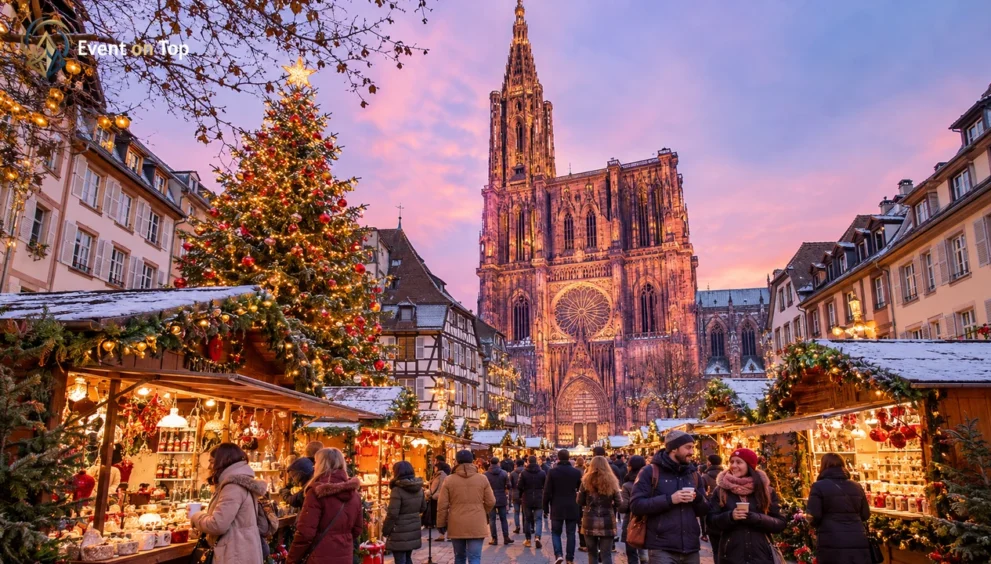
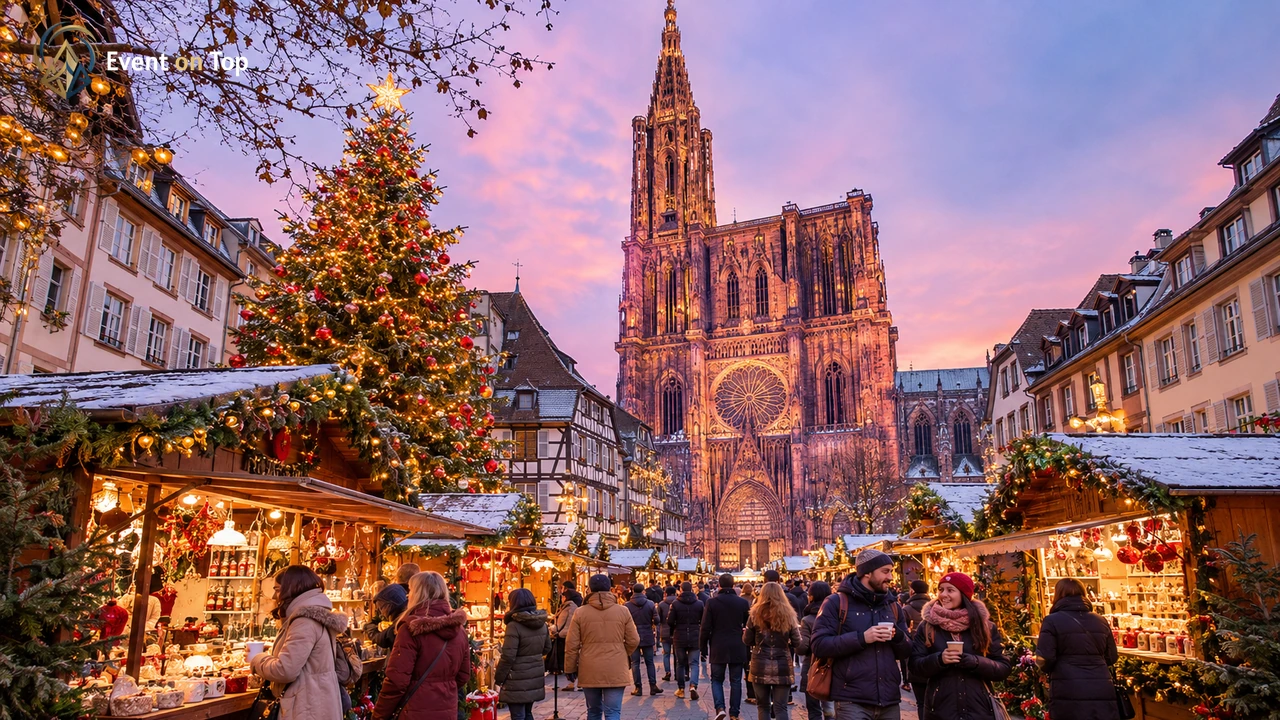
Most Christmas markets borrow a city’s prettiest square for a few weeks. Strasbourg does the opposite: it hands over its entire old town. For almost a month, the Grande Île — the island in the River Ill that holds the cathedral, the medieval lanes and the half-timbered houses — becomes one continuous Christmas market, with more than 300 wooden chalets spread across eight official market sites. The event at its heart, the Christkindelsmärik, has been running since 1570, which makes it the oldest Christmas market in France and one of the oldest in Europe. Since 1992 the city has officially called itself Strasbourg, Capital of Christmas, and the name has stuck because the scale backs it up.
This guide covers the confirmed 2026 dates and opening hours, each of the main markets square by square, the Great Tree on Place Kléber, the Alsatian food and drink worth hunting down, and the practical side: getting there by TGV, where to stay, and how to handle the crowds and security checks. If you are still comparing destinations, Strasbourg sits near the top of our guide to the best Christmas markets in Europe in 2026 — and this page explains why.
Strasbourg Christmas Market 2026 Dates and Opening Hours
The city has published the 2026 dates on its official Christmas site. The Strasbourg Christmas market opens on Friday, November 27, 2026 at 2:00 p.m. and closes on Thursday, December 24, 2026 at 6:00 p.m. That gives you 28 days of market, and in 2026 the opening day falls on a Friday rather than the Wednesday openings of the two previous years — useful if you want the first weekend without taking days off.
Once the market is running, the chalets are open every day from 11:30 a.m. to 9:00 p.m., with no difference between weekdays and weekends. The two exceptions are the opening day, which starts at 2:00 p.m., and Christmas Eve, when everything closes early at 6:00 p.m. Entry to every market is free; you only pay for what you eat, drink and buy.
One warning matters more than any other in this guide: the season ends on December 24, full stop. There is no market on Christmas Day or in the days between Christmas and New Year, so a trip booked for December 25 onward finds decorated streets and illuminations, but no chalets. If your dates fall in that week, plan Strasbourg for the lights and the city itself — or pair it with a market that runs longer.
The Markets: Square by Square
There is no single “Strasbourg Christmas market” to find on a map. The city organizes eight markets on the Grande Île, all within an easy walk of each other, and the real pleasure is drifting between them as the light fades. Here are the ones to know.
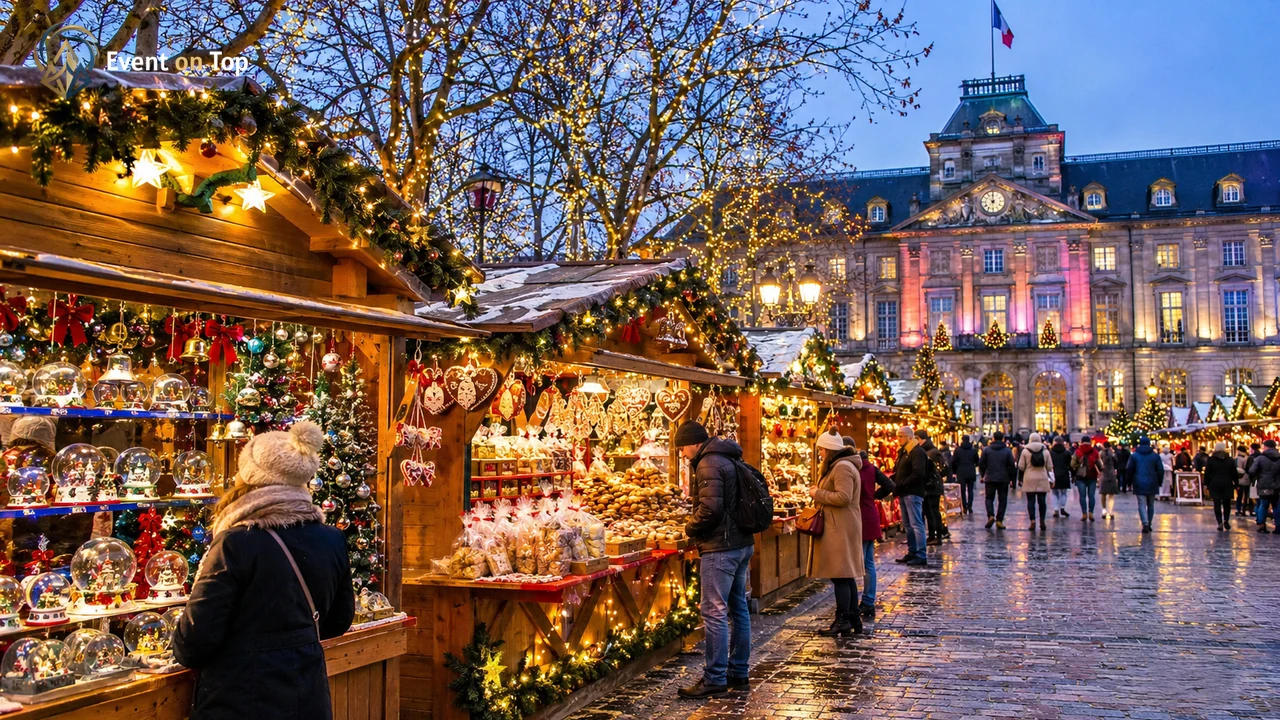
Christkindelsmärik, Place Broglie. This is the historic market — the original Christkindelsmärik, founded in 1570 and held on Place Broglie since 1870, in front of the City Hall and the opera house. Expect the classic mix: ornaments, crafts, gingerbread and bredele, with the city’s Christmas story woven through the square. It is the market to visit first, and the busiest in the evening.
Around the Cathedral, Place de la Cathédrale and Place du Château. The most spectacular setting of all: chalets packed into the streets at the foot of Strasbourg Cathedral, whose single spire towers over the stalls. The tourist office calls this the most impressive of the markets, and it is also the most crowded at midday — go early or after dark, when the cathedral is lit and the lanes glow.
Au pied du Grand Sapin, Place Kléber. Place Kléber holds the Great Tree (covered in its own section below) and the Village du Partage, a charity village where local associations run the chalets around the tree. The official site counts some 110 associations taking part across the season, so this square has a warmer, community feel alongside the spectacle.
Le Quai des Délices, Terrasse Rohan and Place du Marché-aux-Poissons. The gourmet market, on the terrace of the Palais Rohan above the river. This is where the tourist office sends you for locally produced foie gras and for bredle biscuits — the best single stop for edible gifts to take home.
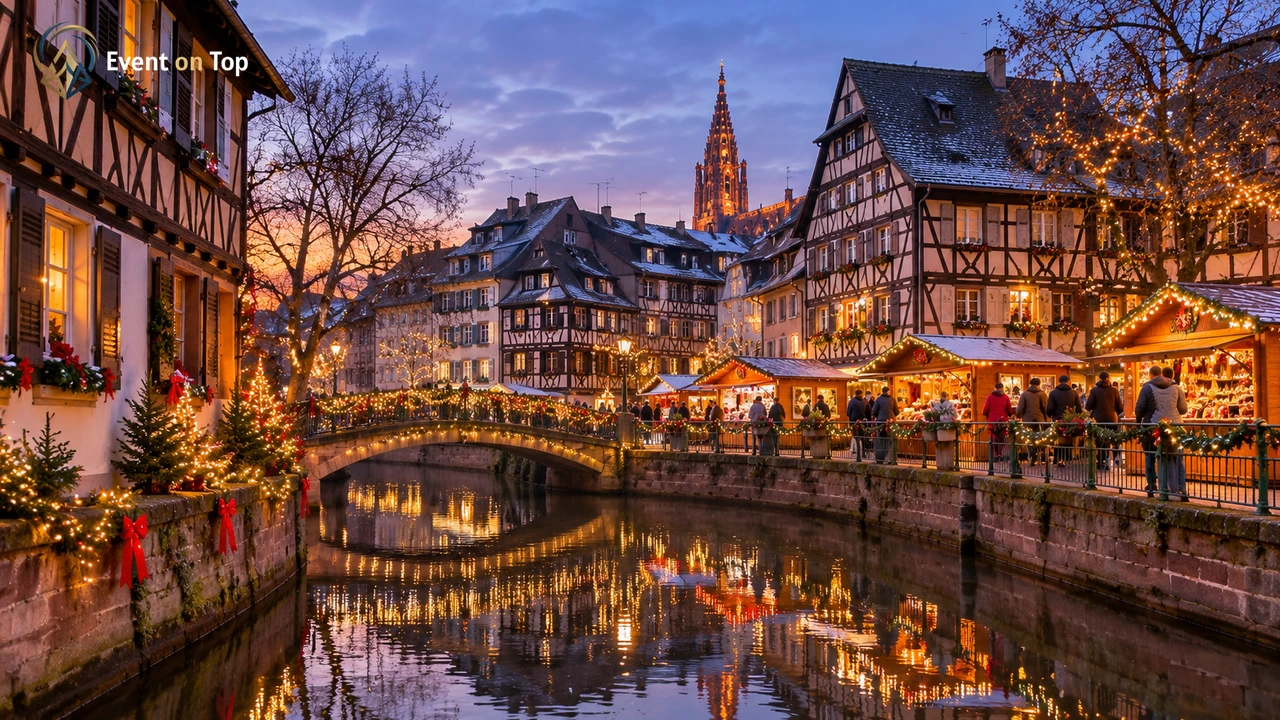
La Petite France, Place Benjamin Zix and Place Saint-Thomas. Smaller markets among the canals and half-timbered houses of the old tanners’ quarter — the most photogenic corner of the city, and usually a calmer browse than the cathedral squares.
Square Louise Weiss. The small-producers market, where the Irréductibles Petits Producteurs d’Alsace sell goods made in the region, shares the square with the Advent Village, a family area with storytelling, craft workshops and concerts. Start here if you want souvenirs that were actually made in Alsace.
Le Carré d’Or, Place du Temple Neuf. A compact market set into the shopping streets between the cathedral and Place Kléber — easy to fold into a walk between the two big squares.
Le Marché OFF, Place Grimmeissen. The alternative market, launched in 2015 and built around the social and solidarity economy: shipping-container stalls selling vintage furniture, upcycled gifts and organic local products, with around 30 exhibitors. It is the most different of the eight, and the one younger, local crowds gravitate to.
The Great Tree on Place Kléber
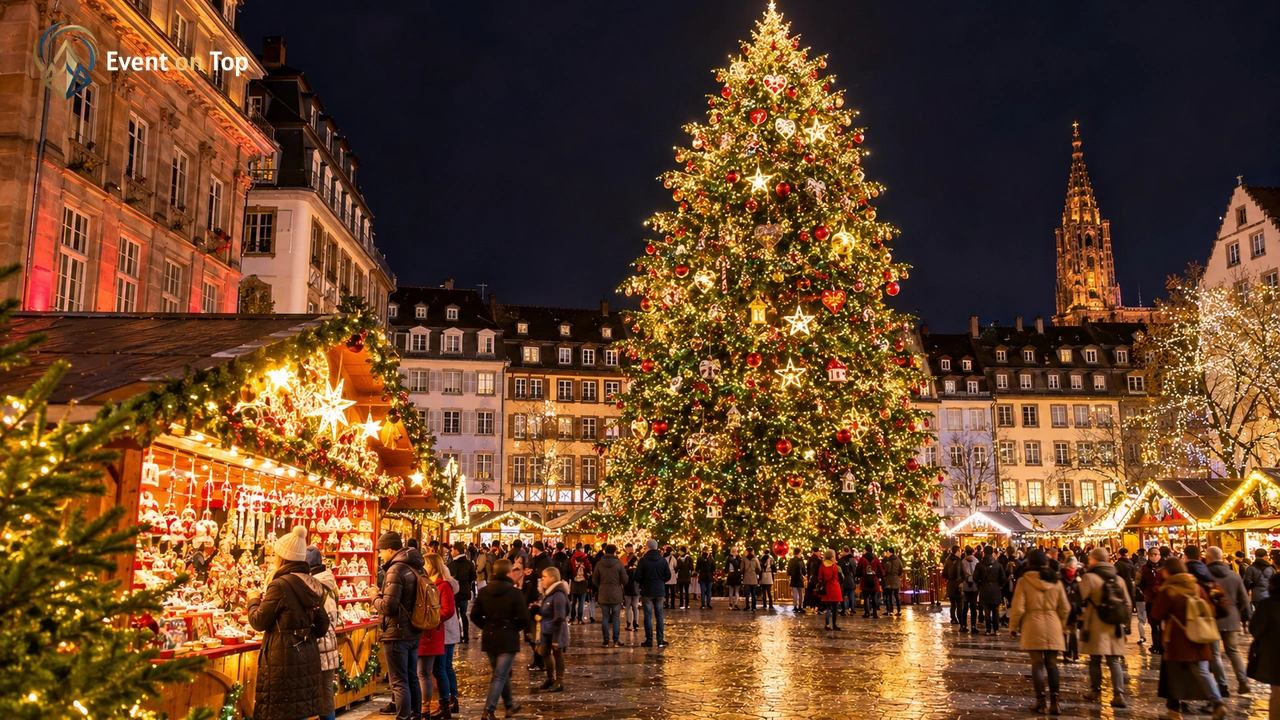
Every Strasbourg Christmas revolves around one object: the Grand Sapin, the Great Tree on Place Kléber. It is a real fir, around 30 meters tall — this year’s tree, a 92-year-old fir measuring 30 meters, was already erected on the square in late October, weeks before the market opens. A tree has stood on Place Kléber every winter since 2000, and it is cut fresh each year from the forests of Alsace, Moselle or the Vosges.
The moment to be there is on the hour between 4:00 p.m. and 9:00 p.m., when the tree’s lights are set to music in a short illumination show and the whole square stops to watch. Arrive a few minutes early, stand back toward the middle of the square, and then drift into the Village du Partage chalets at its feet. If you only have one evening in Strasbourg, this is the evening ritual to build it around.
What to Eat and Drink
Alsatian Christmas baking is the headline act, and several specialties are only made in December. Work through this list:
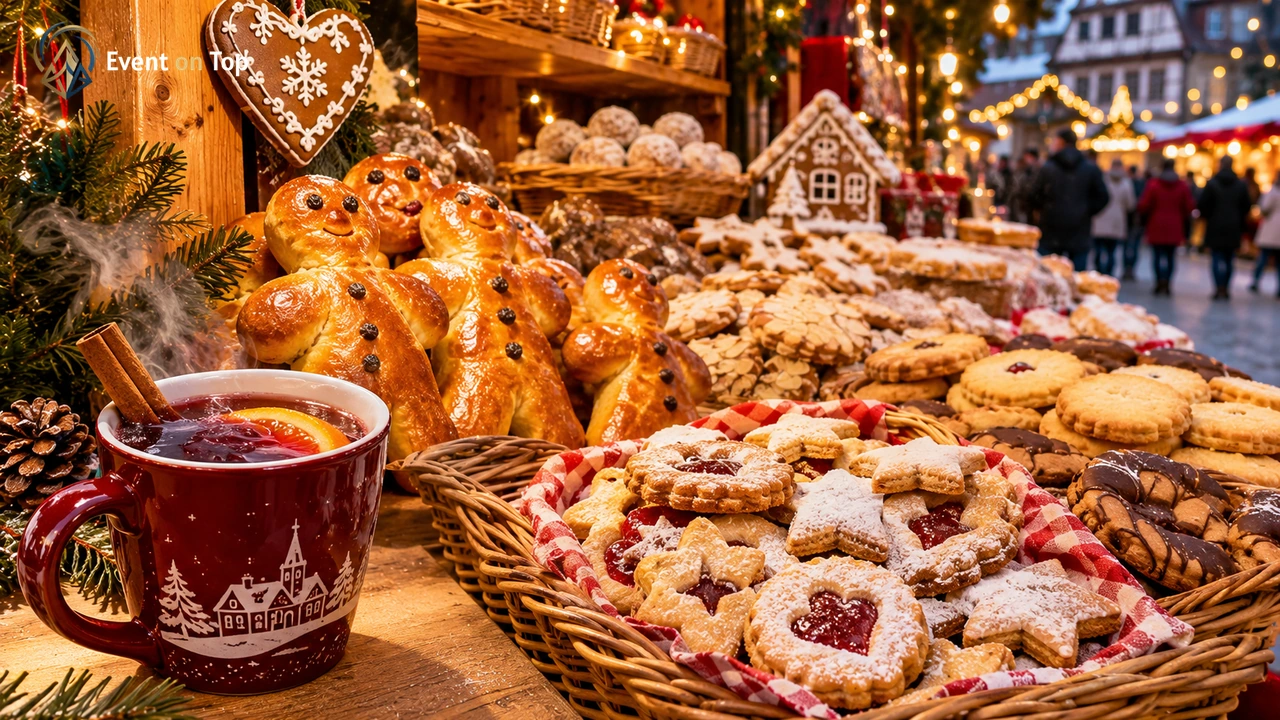
- Bredele (bredle). Small Christmas biscuits that Alsatian families bake in December to give away. Look for Butterbredle (butter), Schwowebredle (almond and cinnamon) and Anisbredle (aniseed). Sold by weight everywhere, and at their best on the Quai des Délices.
- Mannele (maennele). Brioche buns shaped like a little man, with raisin or chocolate-chip eyes, traditionally eaten around Saint Nicholas Day in early December. Best eaten the day they are baked.
- Christstolle and berewecke. Christstolle is a long spiced fruit cake dusted with icing sugar; berewecke is a denser Christmas bread of dried pears, nuts and candied fruit. Both travel well, which makes them the smart take-home buys.
- Dampfnudle. Soft balls of risen dough served with fruit compote — the warm, filling option on a cold evening.
- Foie gras. Alsace is one of France’s historic foie gras regions, and the gourmet market on Place du Marché-aux-Poissons is the place to buy local terrines.
- Tarte flambée. The Alsatian classic — a thin, crisp flatbread with crème fraîche, onions and lardons, baked in a fierce oven. Not Christmas-specific, but no Alsace food run is complete without one, ideally in a winstub (a traditional Alsatian wine tavern) after the stalls.
- Vin chaud. Mulled wine is the standard market drink, made in Alsace with red wine or — the more local move — white wine, always with spices, sugar and citrus. Every hot drink comes in a reusable cup with a refundable €1 deposit: return the cup at any drinks chalet, or drop it in a collection point and the deposit goes to a Strasbourg charity. Hot apple juice is the non-alcoholic staple, local breweries sell a spiced Christmas beer, and Place Broglie even pours mulled beer made with Vosges honey.
Beyond the stalls, leave time for the cathedral itself: during Advent it displays 17th-century tapestries and an 18-meter nativity scene, and the 330-step climb to the platform gives you the markets from above. The Promenade aux Étoiles, a walk lit by hundreds of stars between the Pont du Corbeau and the Saint-Guillaume bridge, is the city’s prettiest after-dark stroll after Petite France’s canals.
Getting to Strasbourg
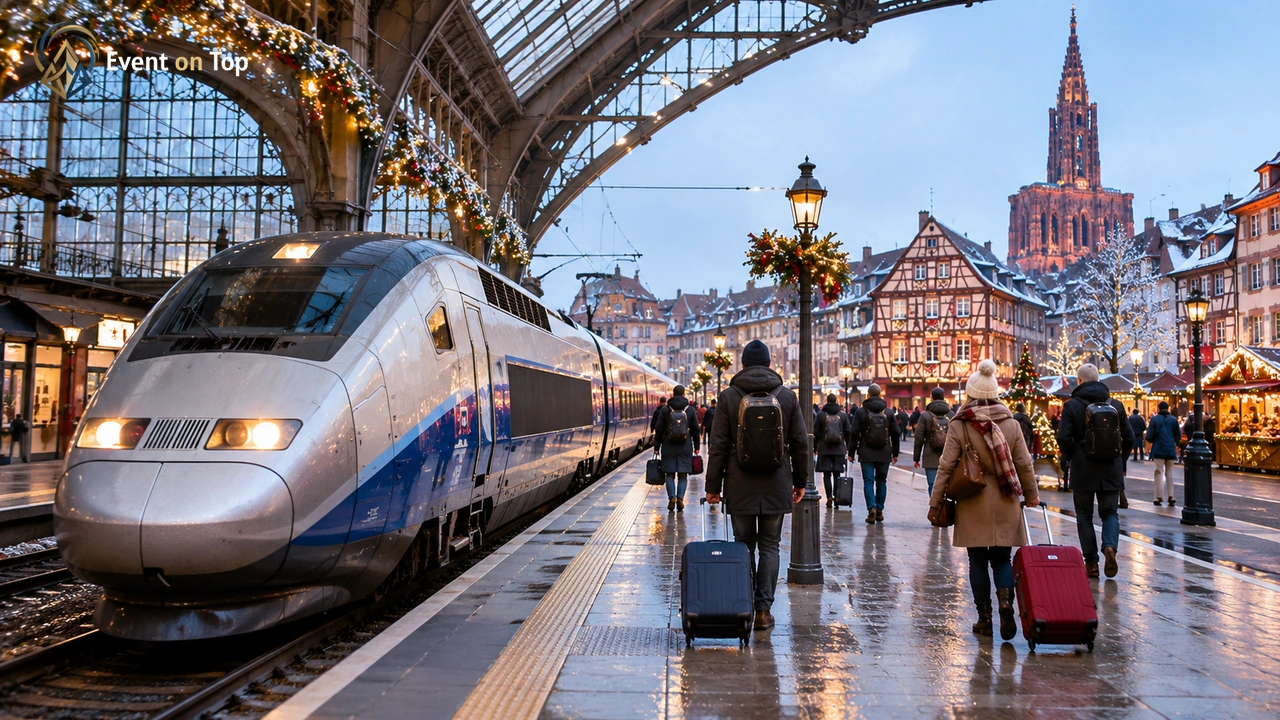
Strasbourg is one of the easiest Christmas markets in Europe to reach without a car, and the car is genuinely the worst option: the Grande Île is pedestrianized and closed to motor traffic for the duration of the market.
By train. The fastest TGV services from Paris Gare de l’Est reach Strasbourg in about 1 hour 45 minutes, and the main station is an easy walk from the Grande Île — the city’s own FAQ puts the first chalets about a 10-minute walk away. Regional TER trains continue to Colmar in about 30 minutes, which makes the classic Alsace pairing simple. Book TGV seats early: December weekends sell out, and prices climb.
By air. Strasbourg Airport at Entzheim has a shuttle train that reaches the main station in about 8 minutes. Many international visitors instead fly into Paris and take the TGV straight from the city, or use Frankfurt or Basel as gateways into the region.
By car. If you must drive, use a Park and Ride on the edge of the city and tram in — do not attempt to park in the center. Because Strasbourg sits right on the German border, it also pairs naturally with a Rhine crossing to the German markets: our guides to the Cologne Christmas markets and the Nuremberg Christkindlesmarkt cover the two biggest German trips to combine with an Alsace run.
Where to Stay: Day Trip or Weekend?
The most convenient base is the Grande Île itself or the streets around the train station — both put all eight markets within walking distance, and you never touch a car. December weekends in the old town sell out first, so if your trip includes a Friday or Saturday night, book as soon as your dates are fixed. Staying on the island has a second advantage: you pass the market’s security checks once on arrival instead of every time you come and go.
A day trip works if you are based in Paris or elsewhere in Alsace — the TGV makes Paris–Strasbourg an easy out-and-back, and a full day covers the cathedral markets, Place Broglie, the tree and Petite France. But Strasbourg rewards a night: the city is at its best after dark, when the illuminations, the tree’s hourly shows and the vin chaud lines are all going at once, and a weekend lets you add Colmar, the cathedral platform and a proper winstub dinner without rushing. If you can only do one, choose the overnight.
Practical Tips for the 2026 Market
- Plan on foot. The whole old town is the venue. Every market is on the Grande Île, the island is pedestrianized during the event, and some central tram and bus stops are not served — wear real walking shoes and treat the day as a walking tour with food stops.
- Expect security checks. The city’s official practical guide warns that pedestrians may be subject to random checks at access points, and large items — suitcases, big backpacks — are systematically inspected when entering the Grande Île. Travel light, keep bags small, and allow a few extra minutes at busy times.
- Time the crowds. The city itself says the markets are least crowded on Mondays, Tuesdays and weekday mornings; Wednesday afternoons, Friday evenings and weekends are the busiest. Arrive at opening (11:30 a.m.) for the cathedral squares, and save Place Kléber for the evening.
- Carry some cash. Most stalls take cards, but the city advises bringing cash because the cash machines on the Grande Île get very busy — and remember the €1 cup deposit.
- Dogs are welcome, with a caveat. Dogs on a leash are allowed in the markets, but the city advises against bringing one on Saturdays and Sundays because of the crowds.
- Check before you go. Hours and arrangements can shift; confirm the final details on the city’s official Christmas site, noel.strasbourg.eu, in the days before you travel.
Frequently Asked Questions
When is the Strasbourg Christmas market in 2026?
The Strasbourg Christmas market runs from Friday, November 27 to Thursday, December 24, 2026. Chalets open at 2:00 p.m. on the first day, then daily from 11:30 a.m. to 9:00 p.m., closing early at 6:00 p.m. on Christmas Eve. The dates are published by the city on its official Christmas site.
Is the Strasbourg Christmas market open on Christmas Day?
No. Every market closes at 6:00 p.m. on December 24 and nothing reopens before New Year, so there is no market on Christmas Day or in the week between Christmas and New Year. The street illuminations stay on into early January, but the chalets are gone.
How tall is the Great Tree in Strasbourg?
The Grand Sapin on Place Kléber is about 30 meters tall. The 2026 tree is a 92-year-old fir measuring 30 meters, erected on the square in late October. Its lights are set to music on the hour between 4:00 p.m. and 9:00 p.m. during the market.
How do I get from Paris to the Strasbourg Christmas market?
Take the TGV from Paris Gare de l’Est. The fastest services reach Strasbourg in about 1 hour 45 minutes, and the station is roughly a 10-minute walk from the first market chalets on the Grande Île. Book early for December weekends, when trains fill and fares rise.
Which Strasbourg Christmas market is best?
It depends what you want. The Christkindelsmärik on Place Broglie is the historic original, the cathedral markets have the most spectacular setting, Place Kléber has the Great Tree and the charity-run Village du Partage, the Quai des Délices is the food market, and the Marché OFF on Place Grimmeissen is the alternative, sustainable option. All eight are on the Grande Île and walkable in a single day.