









United States Entertainment: 10 Exciting Shows, Movies & Celebrities


The entertainment industry in the United States continues to evolve as audiences discover new ways to watch movies, enjoy music, follow celebrities, attend live events, and play video games. Digital platforms have made entertainment more accessible, allowing people to enjoy their favorite content from home or while traveling.
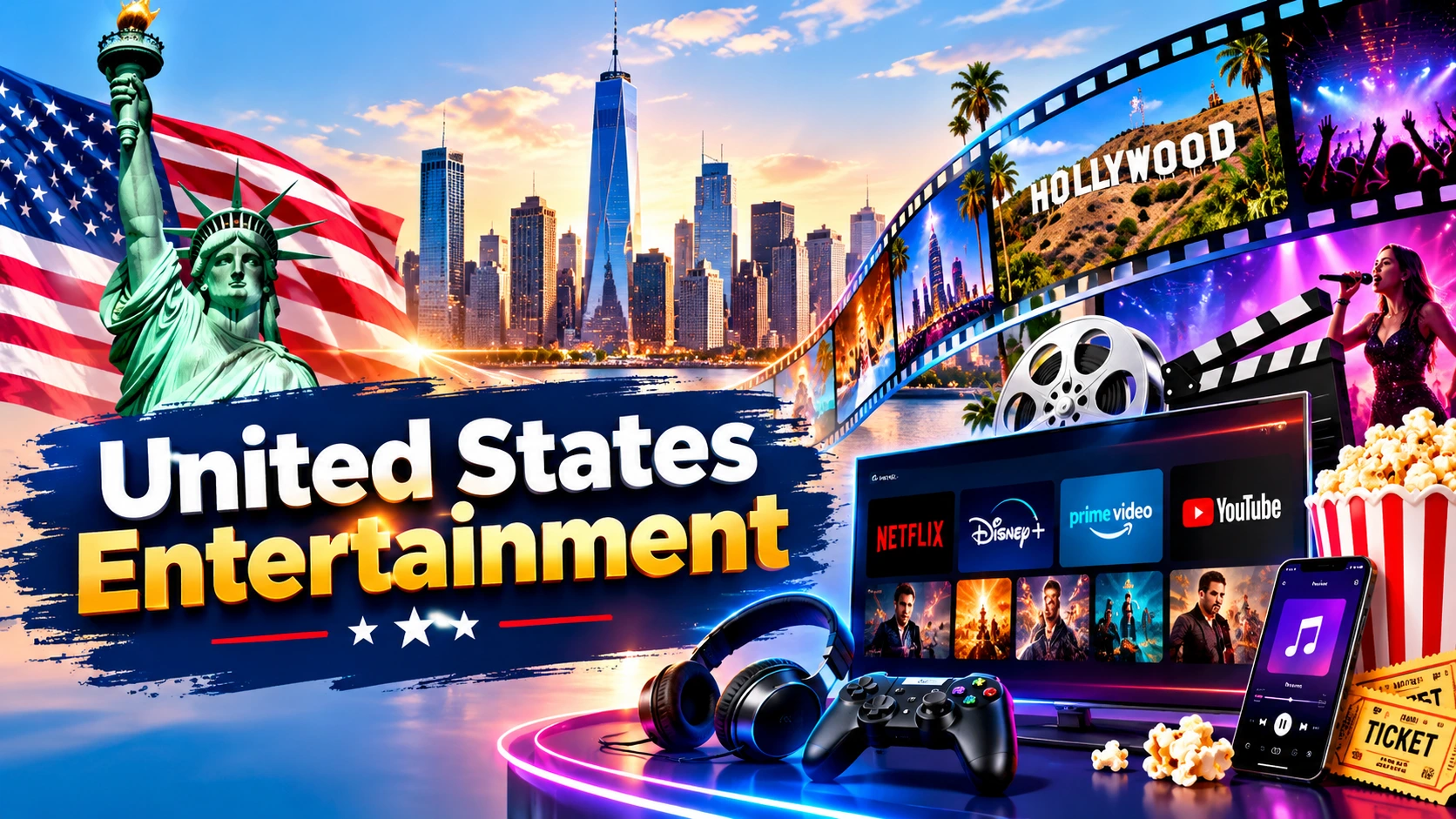
United States Entertainment covers a wide range of activities, including Hollywood films, television programs, music streaming, online gaming, comedy shows, and live performances. In 2026, consumers can choose between free entertainment options, affordable subscriptions, and premium experiences depending on their interests and budgets.
Understanding the available services, pricing structures, and subscription plans helps consumers make informed decisions. This guide explores the major entertainment categories, typical costs, popular platforms, and important trends shaping the American entertainment market.
What Is United States Entertainment?
The American entertainment industry includes businesses and creators that produce content for audiences across the country and around the world. Hollywood studios, television networks, musicians, streaming companies, gaming developers, and event organizers all contribute to this diverse market.
The industry combines traditional entertainment with digital experiences. While cinemas and concert venues remain popular, online platforms allow audiences to access movies, shows, music, and other content whenever they want.
The popularity of American entertainment also extends internationally. Hollywood productions, American television series, popular music, and video games attract audiences from different countries, creating opportunities for artists and businesses to reach global markets.
Major Types of Entertainment in the United States
1. Movies and Hollywood Films
Hollywood remains an important part of the American entertainment landscape. Major studios release films across genres such as action, comedy, romance, horror, science fiction, animation, and drama.
Audiences can watch new releases in cinemas, rent digital movies, purchase films online, or stream titles through subscription services. The best option depends on whether someone prefers theatrical experiences or convenient home viewing.
Cinema tickets vary by location, theater format, and screening time. Premium formats, such as large-screen presentations and luxury seating, generally cost more than standard screenings.
2. Television and Streaming Services
Television has expanded beyond traditional cable and satellite packages. Streaming platforms provide movies, original series, documentaries, reality shows, and selected live programming through internet-connected devices.
Consumers can choose between services with advertising and premium subscriptions that reduce or eliminate advertisements. Some platforms also offer live television packages for viewers who want news, sports, and broadcast channels.
According to Deloitte’s 2026 digital media research, approximately 90% of US households have a paid subscription video-on-demand service. The same research reports an average of four such services per subscribing household, demonstrating the importance of streaming in modern entertainment.
3. Music and Audio Entertainment
Music plays a significant role in American culture, covering genres such as pop, hip-hop, country, rock, jazz, electronic music, and R&B. Listeners can discover new artists through radio, streaming applications, podcasts, and social media.
Music services typically provide free listening with advertisements or paid subscriptions with additional features. Depending on the platform, paid plans may include offline downloads, background playback, improved listening controls, and personalized recommendations.
Live concerts and music festivals offer another way to experience performances. Ticket prices depend on the artist, venue, seating location, event popularity, and additional service charges.
4. Gaming and Interactive Entertainment
Video games have become a major entertainment option for people of different ages. Players can access games through consoles, computers, mobile devices, and cloud-based gaming services.
Some games are free to play, while others require a one-time purchase. Gaming subscriptions may provide online multiplayer access, game libraries, discounts, or additional content.
The total cost of gaming depends on hardware, software, internet access, and optional purchases. Consumers can manage expenses by comparing game prices, checking subscription benefits, and avoiding unnecessary in-game purchases.
5. Live Shows, Comedy, and Cultural Events
Live entertainment includes stand-up comedy, theater productions, dance performances, festivals, touring shows, and family events. These experiences allow audiences to interact with performers and enjoy entertainment outside their homes.
Ticket prices differ considerably between local performances and major national tours. Smaller community events may offer affordable admission, while popular performers and premium seating can command significantly higher prices.
Many venues also provide discounted tickets for students, groups, or early bookings. Checking official event websites can help consumers find accurate prices and understand ticket restrictions before purchasing.
United States Entertainment Pricing & Plans for 2026
Entertainment costs depend on the service, location, subscription level, and type of experience. There is no single price for the entire industry because every provider establishes its own plans and payment terms.
The following table provides general budgeting estimates rather than guaranteed prices. Actual charges may vary, and consumers should confirm current rates with the provider.
| Entertainment category | Typical pricing approach | What consumers receive |
|---|---|---|
| Movie theaters | Per ticket | Access to a cinema screening |
| Video streaming | Monthly or annual subscription | Movies, shows, and selected original content |
| Music streaming | Free or paid subscription | Music libraries, playlists, and listening features |
| Gaming | Free, one-time purchase, or subscription | Games, online features, or game libraries |
| Live concerts | Per ticket | Admission to a live performance |
| Theater and comedy | Per ticket | Access to a scheduled show |
| Cable television | Monthly package | Television channels and selected services |
Streaming Subscription Costs
Streaming services are available at different price levels. Advertising-supported plans can reduce monthly expenses, while premium plans may provide fewer advertisements, additional features, or access to different content libraries.
As an example of a specific service price, Discovery+ announced in October 2026 that its advertising-supported plan would increase from $5.99 to $6.99 per month, while its ad-free plan would rise from $9.99 to $11.99 per month for new subscribers. Existing subscribers were scheduled to see the higher rates beginning November 12, 2026.
This example illustrates why subscribers should review current pricing before choosing a plan. Prices can change during the year, and introductory offers may differ from regular renewal rates.
Free Entertainment Options
Free entertainment is useful for consumers who want to reduce expenses without giving up access to digital content. Advertising-supported streaming platforms, public radio, free online videos, library resources, and selected television broadcasts provide several alternatives.
Some free services have advertisements, limited content libraries, or restrictions on premium features. Others may require a free account, compatible device, or internet connection.
Free options can be especially valuable for families and students. By combining free services with only one or two paid subscriptions, consumers can enjoy a broad selection of entertainment without maintaining too many monthly payments.
Premium Entertainment Plans
Premium entertainment plans target consumers who want exclusive content, additional convenience, or improved viewing and listening experiences. These plans may include fewer advertisements, higher-quality video, offline downloads, multiple profiles, or access to live events.
However, premium features do not always justify the additional expense. A consumer who watches only occasionally may receive better value from a lower-cost plan, while frequent viewers might benefit from a premium subscription.
Before upgrading, customers should compare the included features, device limits, cancellation rules, and renewal prices. These details help determine whether a higher-priced package offers meaningful benefits.
Popular Platforms for American Entertainment
Netflix and Other Video Services
Netflix and competing streaming platforms provide original productions, licensed films, documentaries, and television series. Their content libraries and subscription features vary, making it useful to compare several providers before subscribing.
Some services specialize in particular genres, while others offer broader collections. Consumers should select platforms based on the programs they actually want to watch rather than subscribing to every available service.
YouTube and Digital Creators
YouTube has become an important source of entertainment, featuring music videos, interviews, comedy, educational programs, livestreams, and creator-produced series. Many videos are available without a paid subscription.
Paid memberships can provide additional features, depending on the product and region. However, free viewing remains suitable for people who primarily watch occasional videos or follow individual creators.
Digital creators also influence entertainment trends by introducing new personalities, discussing popular releases, and building communities around shared interests.
Spotify and Music Applications
Music streaming applications allow listeners to explore large music collections, build playlists, and discover emerging artists. Free tiers generally use advertisements or impose certain listening restrictions, while paid tiers may include additional controls and offline listening.
The best plan depends on listening habits and household needs. Individual subscriptions suit personal use, whereas family and student plans may offer better value when the subscriber meets the provider’s eligibility requirements.
Gaming Platforms
Gaming platforms provide access to single-player adventures, competitive multiplayer games, sports simulations, and interactive storytelling. Some services focus on downloadable games, while others emphasize cloud gaming or online multiplayer experiences.
Consumers should review subscription catalogs carefully because available games can change. Purchasing a game separately may sometimes be more practical than maintaining a subscription solely to access one title.
How to Choose the Right Entertainment Plan?
Choosing an appropriate plan begins with understanding personal interests and spending limits. Consumers who enjoy films may prioritize video services, while music enthusiasts may prefer audio subscriptions or concert tickets.
The following steps can help make the selection process easier.
Step 1: Set a monthly budget. Decide how much can comfortably be spent on entertainment after essential expenses have been covered.
Step 2: Identify favorite content. List the movies, shows, music, sports, or games that matter most before comparing providers.
Step 3: Compare subscription features. Review advertisements, supported devices, download options, content availability, and simultaneous streaming limits.
Step 4: Check discounts and bundles. Some providers offer annual payments, student eligibility, family packages, or bundled subscriptions. Terms should be checked before purchase.
Step 5: Review subscriptions regularly. Cancel services that are rarely used and reconsider them when new content becomes available.
Following these steps can help consumers build an entertainment package that balances variety, convenience, and affordability.
Key Entertainment Trends in 2026
Growth of Digital Streaming
Digital distribution continues to influence how entertainment reaches audiences. Streaming platforms make it possible to watch content across televisions, smartphones, tablets, and computers without relying exclusively on traditional broadcast schedules.
At the same time, competition is encouraging providers to improve their content libraries, develop original productions, and explore different subscription structures.
Increasing Interest in Advertising-Supported Plans
Many consumers are balancing entertainment choices against household budgets. Advertising-supported services provide a lower-cost alternative for viewers who are willing to watch advertisements.
Deloitte’s March 2026 research found that 68% of streaming subscribers surveyed paid for an advertising-supported streaming service. It also reported that the average subscribing household spent approximately $69 per month on streaming video services. Source: Deloitte
These findings suggest that affordability and flexibility remain important factors when consumers select entertainment subscriptions.
Short-Form Video and Creator Content
Short videos, livestreams, and creator-led programs attract audiences who prefer quick and easily accessible content. Social platforms allow creators to build communities and distribute entertainment without following the traditional television production model.
Short-form entertainment can complement movies and longer television programs. Its popularity also gives brands, performers, and independent creators new ways to reach viewers.
Artificial Intelligence and Personalization
Artificial intelligence is influencing content recommendations, production workflows, editing tools, and digital effects. These technologies can help entertainment businesses organize large libraries and personalize experiences for individual viewers.
However, creative authenticity, copyright protection, and responsible use of technology remain important considerations. Successful entertainment businesses must balance efficiency with original ideas and audience trust.
Demand for Live Experiences
Concerts, theater performances, festivals, and other in-person activities continue to provide experiences that digital platforms cannot fully reproduce. Fans often value the atmosphere, social interaction, and connection with performers that live events provide.
Event organizers can respond to different budgets by offering multiple seating categories, advance booking options, and selected discounts. Consumers should always review the final checkout price because taxes and service fees can increase the total cost.
Benefits of the American Entertainment Industry
The industry provides a wide range of choices for different interests and budgets. Consumers can explore international films, American television, independent music, gaming communities, and live performances through a combination of traditional and digital channels.
Entertainment also supports employment across acting, directing, writing, music production, broadcasting, software development, marketing, event management, and many other professions.
Furthermore, digital distribution allows smaller creators to reach audiences beyond their immediate communities. Independent filmmakers, musicians, and online personalities can develop audiences through streaming services and social platforms.
Challenges Facing Consumers and Businesses
One major challenge is subscription fatigue. When households maintain several paid services, individual monthly charges can accumulate into a substantial expense.
Content fragmentation creates another difficulty because particular programs may be available only through specific providers. Consumers may need to switch subscriptions or purchase separate rentals to access everything they want to watch.
Businesses also face competition for audience attention, changing technology, production costs, and evolving consumer expectations. Providers that deliver relevant content, transparent pricing, and a convenient experience may be better positioned to retain customers.
Tips for Saving Money on Entertainment
Consumers can reduce entertainment expenses by making a few practical adjustments.
- Choose advertising-supported plans when the savings justify the advertisements.
- Keep only subscriptions that receive regular use.
- Rotate streaming services instead of paying for every platform throughout the year.
- Look for legitimate student, family, or annual subscription discounts.
- Use public libraries for eligible digital media, films, and reading resources.
- Compare the total price of event tickets, including taxes and service fees.
- Set spending limits for gaming purchases and optional digital add-ons.
These habits make it easier to enjoy a broad range of activities while keeping monthly costs under control.
Frequently Asked Questions (FAQs)
1. What is United States Entertainment?
United States Entertainment includes movies, television shows, music, video games, streaming platforms, celebrity culture, concerts, and live performances. It combines traditional entertainment with modern digital services for audiences across the country and around the world.
2. What are the most popular entertainment options in the United States?
Popular entertainment options include Hollywood movies, streaming television shows, music platforms, video games, live concerts, comedy shows, and social media content. Individual preferences and current trends influence which options attract the most attention.
3. How much does entertainment cost in the United States in 2026?
Entertainment costs vary depending on the service and experience. Streaming subscriptions typically charge monthly fees, while movie theaters, concerts, and live shows charge per ticket. Gaming may involve free access, individual purchases, or recurring subscription fees.
4. Which streaming services are popular in the United States?
Popular streaming services include Netflix, Disney+, Hulu, Amazon Prime Video, Max, and Peacock. Each platform offers different content libraries, subscription options, and features, so consumers should compare current plans before subscribing.
5. Are there free entertainment options available in the United States?
Yes, consumers can enjoy free entertainment through advertising-supported streaming services, YouTube, public libraries, free online videos, radio, and selected television broadcasts. Some free services require an account or include advertisements.
Conclusion
United States Entertainment offers consumers an extensive selection of movies, television programs, music, video games, live performances, and digital content. In 2026, the industry combines traditional experiences with flexible online services, creating options for different preferences and budgets.
The right entertainment plan depends on how frequently a person watches, listens, plays, or attends events. Comparing prices, understanding subscription features, and reviewing recurring payments can help consumers make better decisions.
As technology and audience preferences continue to change, affordability, convenience, original content, and memorable experiences are likely to remain important parts of the entertainment landscape. A thoughtful approach allows consumers to enjoy their favorite activities without spending more than necessary.