











Rio Carnival 2027: Dates, Parades & Visitor Guide

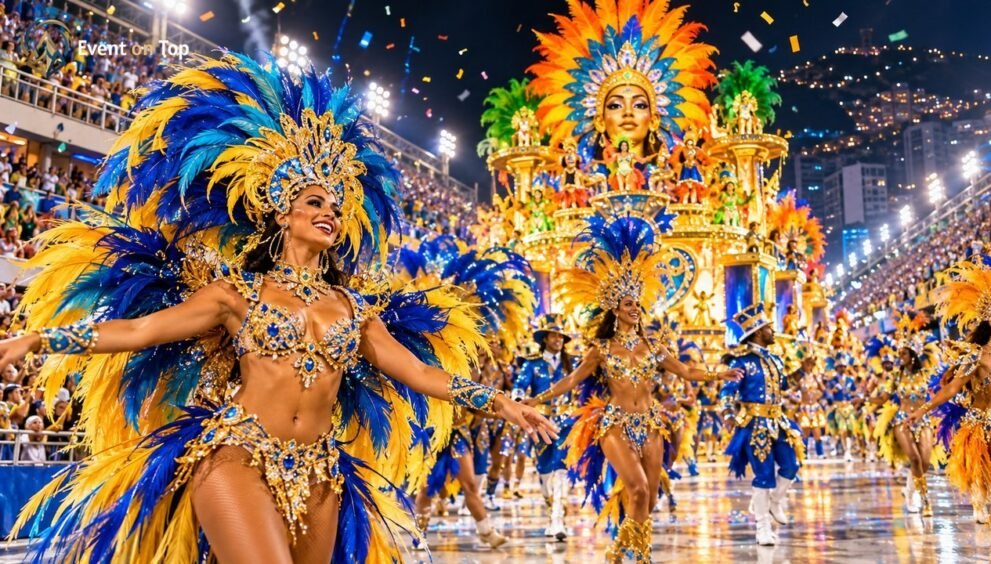
Rio Carnival 2027 officially runs from Friday 5 February to Ash Wednesday, 10 February 2027, with the centrepiece — the Special Group samba school parades at the Sambódromo (Sambadrome) — on Sunday 7, Monday 8 and Tuesday 9 February. The second-tier Série Ouro schools parade on Friday 5 and Saturday 6 February, and the Champions’ Parade, where the top six schools perform again, closes the season on Saturday 13 February 2027. Carnival dates move every year because they are set by the church calendar: Carnival ends the day before Ash Wednesday, 46 days before Easter Sunday (28 March in 2027), which is why 2027’s party lands in early February. The dates and the parade running order are published by LIESA, the league that runs the Special Group — and for 2027 the draw has already been made, so this guide can tell you exactly who parades on which night.
Rio Carnival is really two festivals sharing a city. One is the Sambadrome competition: twelve elite samba schools, each fielding thousands of performers, enormous floats and a new original song, judged on categories from drumming to costume to the precision of their parade. The other is the street carnival: hundreds of blocos (street bands and their following crowds) partying across the city for weeks, entirely free. The best first visit does both.
Parade Nights at the Sambadrome
Each Special Group night, four schools parade, each given a strict time window of roughly 65–80 minutes to move its entire spectacle down the 700-metre avenue designed by Oscar Niemeyer. The 2027 running order from LIESA’s draw:
| Night | Date | Schools (highlights of the draw) |
|---|---|---|
| Série Ouro (2nd division) | Fri 5 & Sat 6 Feb | The next generation of schools — superb value, slightly smaller scale |
| Special Group Night 1 | Sun 7 Feb | União de Maricá, Beija-Flor, Paraíso do Tuiuti, Vila Isabel |
| Special Group Night 2 | Mon 8 Feb | Mocidade, Unidos da Tijuca, Salgueiro, Imperatriz |
| Special Group Night 3 | Tue 9 Feb | Portela, Viradouro, Grande Rio, Mangueira |
| Champions’ Parade | Sat 13 Feb | The top six schools of 2027, decided on Ash Wednesday |
Results are announced on Ash Wednesday (10 February) in a tense televised scoring ceremony that the whole city follows.
How the Judging Works — and Why It Matters to Spectators
The parades are not just a show; they are a scored competition, and knowing the scoring changes what you watch for. Each school is marked across nine judging categories, covering everything from the bateria (the drum corps and its precision), harmony and evolution of the parade, the costumes and floats, the flag-bearing couple, and how completely the school tells its chosen theme song’s story down the avenue. Judges award marks between 9 and 10, with fractions deciding titles — the difference between champion and runner-up is often a few tenths of a point across the whole panel.
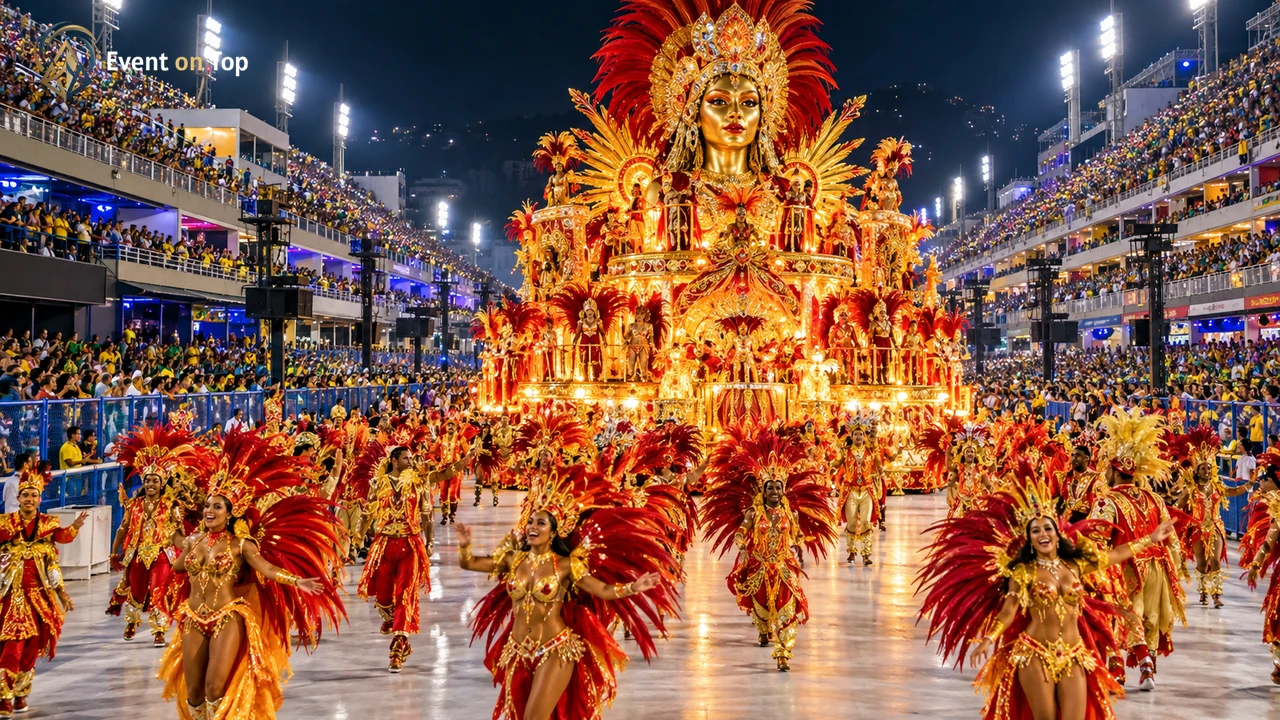
The verdict lands on Ash Wednesday, 10 February, when the scores are read out category by category in the ceremony the city stops for. The highest total is crowned champion; the lowest-placed school is relegated to Série Ouro for the following year and replaced by Série Ouro’s winner. That jeopardy is why Tuesday night’s field matters so much: the draw has stacked several of the most decorated schools — Portela and Mangueira among them — into the final night, when every school knows exactly what score it needs and parades accordingly.
For a first-timer, any Special Group night delivers the full spectacle; Night 3 pairs two of the most storied schools, Portela and Mangueira, while Night 1 includes Beija-Flor, famous for the most theatrical productions. Start time is in the evening and parades run deep into the night — this is not an event that respects bedtime.
Tickets: Prices, Sectors and How to Buy Safely
The Sambadrome sells several very different experiences at very different prices, and the first thing to understand is that there are two price systems. The first is the official face value, in Brazilian reais, sold through the official channel. The second is the international resale and agency market, in US dollars, where most foreign visitors actually end up buying once face-value phases sell through. Both are real — but they are not interchangeable, and confusing them is how people overpay.
Face Value: What Tickets Cost Officially
| Seat type | What it is | Official face value (per Special Group night) |
|---|---|---|
| Popular grandstand, Sectors 12–13 | Concrete terraces at the ends of the avenue; the cheapest way into the Sambadrome | R$10 |
| Grandstand (arquibancada), main sectors | Unnumbered concrete terraces along the avenue; arrive early for the best spots in your sector | R$250 (half-price R$125 for those entitled to concessions under Brazilian law) |
| Numbered chairs, Sector 12 | An allocated seat at ground level, at the end of the avenue | R$250 |
| Passaporte (3-night passport) | Grandstand access to all three Special Group nights in one purchase | R$499 for all three nights |
| Frisa (front-row box) | Open box for six people, at runway level; priced per box, not per person | Sold per box in a separate sale phase — see below; official per-box prices have spanned roughly R$1,835–R$10,200 depending on sector and night |
| Camarote (hospitality box) | Covered box with catering, open bar on many packages, and private space | No single face value — sold as hospitality packages; see the real-world table below |
Face values above are the official release prices for the 2027 carnival as published at the time of writing. The Passaporte deserves a highlight: at R$499 for all three Special Group nights it costs less than two single grandstand tickets bought separately, and it is the best official deal in the building if you genuinely want every night. The half-price concession is a legal entitlement for defined groups (including Brazilian students and seniors) — most international visitors should expect to pay the full R$250.

Real-World Prices: What International Visitors Actually Pay
Once official phases for the popular nights sell through, the market that remains is agencies and resellers, largely pricing in dollars. The ranges below are reseller listings seen at the time of writing (October 2026) for Special Group nights — they are a budgeting guide, not a quote, and they rise as a night sells out.
| Seat type (reseller / agency market) | Typical range seen, per person per night |
|---|---|
| Série Ouro night (Fri 5 / Sat 6 Feb) grandstand packages | From around $38–$58 |
| Special Group grandstand | Around $140–$350 |
| Special Group frisa (per person equivalent) | Around $400–$1,050 |
| Champions’ Parade (Sat 13 Feb) grandstand packages | From around $198 |
Camarotes sit above all of this, because you are buying hospitality, not a seat. Named examples on sale for 2027 at the time of writing, all in the central sectors and sold as all-inclusive packages with food, drink and round-trip transfer included, ranged from around $480 (Camarote Camisa 10, Sector 8) and $500–$540 (Lounge Carioca, Sector 7; Lounge Viradouro, Sector 4) through $650 (Folia Tropical, Sector 8) up to around $1,000 (Verde e Rosa, Sector 7). Two things explain the spread: the sector — Sectors 4 to 11 are the prime stretch, where the schools perform in front of the judges at full intensity — and how much hospitality is bundled in. A camarote in a prime sector with transfer, catering and an open bar is a different product from a grandstand ticket, and should be compared like-for-like.
Sector choice still matters at every price level. Central sectors see the parade at full stretch in front of the judges; sectors near the Apolo end (12 and 13) are cheaper, see the schools’ final push, and are where the popular-priced seats are. Whichever route you buy through, buy through the official channel first, verify any agency before paying, pay by card so the purchase is protected, and check the sector and night on your ticket twice. Invented VIP Carnival packages from unknown sellers who contact you first are a standard trap every single year.
Buying from Outside Brazil
This is the section most foreign visitors need and most guides skip. Official Sambadrome tickets are sold through Ticketmaster Brasil, and the good news is practical: at the time of writing, the official channel accepts international payment cards, and no Brazilian CPF (tax ID) is required to complete a purchase through it — the CPF is the document that blocks foreigners on many Brazilian websites, so its absence here removes the biggest single obstacle. The limit is four tickets per buyer per purchase, which is why groups should plan who buys what before a sale phase opens.
Expect tickets to be released in phases rather than one sale. For 2027, the main sale phase opened on 10 August 2026, with a further phase covering frisas on 10 September 2026, and later phases and the Champions’ Parade inventory following as they are confirmed. In plain terms: tickets are already selling, the most popular nights and sectors move first, and I will sort it out in January is how people end up paying reseller prices for grandstand seats.
One safety rule that overrides all the above: buy only through the official seller’s own website or an established agency you have independently verified. Links to official ticket pages sent through WhatsApp, social media messages or comments are a known scam pattern around Carnival — close the message, open the seller’s site yourself, and navigate from there. And remember the free alternative from the rehearsals note below: the schools’ technical rehearsals at the Sambadrome are traditionally free, and they are a genuine taste of the avenue if ticket prices defeat you.
Which Parade Night Should You Choose?
First, the liberating rule: one Special Group night is enough for almost every first-time visitor. Each night runs four full school parades, each of 65–80 minutes, plus the build-up — five hours or more of spectacle. A second night adds favourite-school loyalty, not a missing half of the experience. Choose by character, not by fear of missing out:
| Night | Schools to know | Character | Price pressure |
|---|---|---|---|
| Série Ouro — Fri 5 & Sat 6 Feb | The rising schools fighting for promotion | The apprenticeship night: full avenue, full effort, gentler scale and crowds — the smart place to learn the Sambadrome | Lowest — packages seen from around $38–$58 |
| Special Group Night 1 — Sun 7 Feb | Beija-Flor, Vila Isabel | Beija-Flor is famous for the most theatrical, engineered productions in Carnival; the strongest single-school spectacle of the three nights | High |
| Special Group Night 2 — Mon 8 Feb | Mocidade, Unidos da Tijuca, Salgueiro, Imperatriz | The balanced night: four big traditional schools, no weak parade, and a crowd that knows the songs | High |
| Special Group Night 3 — Tue 9 Feb | Portela, Viradouro, Grande Rio, Mangueira | The connoisseur’s night — Portela and Mangueira on the same bill, Viradouro parading as the school to beat after its recent title, and it is Mardi Gras itself: the biggest atmosphere of the week | Highest — sells first, costs most |
| Champions’ Parade — Sat 13 Feb | The top six schools of 2027 | The same elite schools as the main nights, pressure off, celebration mode; starts earlier, at 20:00, and finishes at a civilised hour | Best value of the elite nights |
Our honest recommendation by traveller type: if you will only ever do this once and budget stretches, take Tuesday 9 February. If you want the elite schools without the peak price and the 5 a.m. finish, take the Champions’ Parade on 13 February and spend Carnival Tuesday in the street carnival instead — it is the best-value pattern in this whole guide, and it is why the itinerary below ends there. If money is the binding constraint, a Série Ouro night plus free blocos gives you a real Carnival for the price of a modest dinner out. Whichever you pick, pick one night and commit; the visitors who enjoy Carnival least are the ones still comparing options in February.

The Other Carnival: Blocos, Beaches and the City
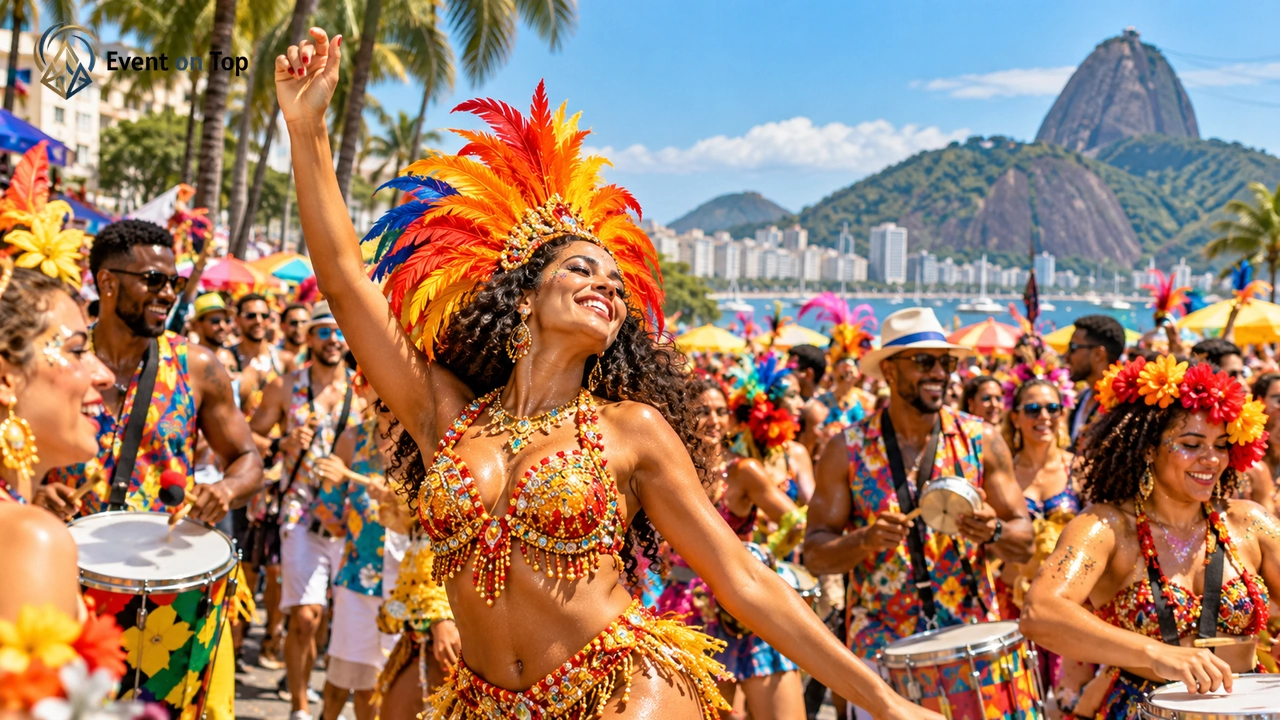
From mid-January, blocos take over Rio’s streets — themed processions ranging from a few hundred neighbours behind a brass band to megablocos drawing hundreds of thousands downtown. They are free, fancy dress is effectively mandatory, and the official city programme (published closer to the time) lists times and routes. Mix bloco mornings with beach afternoons in Ipanema or Copacabana and Sambadrome nights, and pace yourself: February in Rio is high summer, typically hot and humid with afternoon downpours. Practical basics: use the metro to reach the Sambadrome area (stations Praça Onze and Central serve it), carry minimal valuables, use registered taxis or ride apps at night, drink more water than feels necessary, and book accommodation — which prices at the year’s peak — as early as you can.
If your trip starts before Carnival week itself, use the Sambadrome’s free technical rehearsals. The confirmed rehearsal nights for 2027 are Saturday 23, Sunday 24, Saturday 30 and Sunday 31 January — full schools, full bateria, no costumes on the scale of the main nights, and traditionally free entry. The season closes its preparations with the Lavagem da Sapucaí, the ritual washing of the avenue, part blessing and part final rehearsal. Arrive for a rehearsal night and you will understand the Sambadrome’s geography, sound and scale before you have spent a real on a ticket.
Planning Around the Blocos
Blocos feel spontaneous; the big ones are anything but. Rio’s street carnival is organised by Riotur, the city’s tourism authority: bloco organisers register their proposed routes and times in the August–September before Carnival (August–September 2026 for the 2027 season), approvals are confirmed by 15 January 2027, and the official season opens on 16 January 2027. The practical meaning for visitors: the trustworthy bloco programme — which bloco, which neighbourhood, what time, which route — only becomes final in mid-January, so any website giving you exact bloco times for February before then is guessing. Plan your Sambadrome night and your accommodation early, but leave your bloco days deliberately loose until the official programme lands, then choose two or three: one megabloco downtown for the scale, one neighbourhood bloco in the South Zone for the local version, and one themed or costume bloco because you will regret not dressing up at least once. This pacing is built into the plan for travelling around a major event that we recommend for any big-event trip — fix the ticketed anchor first, keep everything else movable.
Planning the Trip: Visas, Where to Stay and Getting Around
Do You Need a Visa for Brazil?
For many visitors, no — most European Union and South American passport holders, among others, enter Brazil visa-free for short tourist stays. The important exception for this guide’s readers: citizens of the United States, Canada and Australia have needed a Brazil e-visa for tourist visits since 10 April 2025. It is applied for online before travel — do not leave it to the final weeks before a February trip, when processing queues grow. Rules depend on your passport, not your residence, and they can change; treat this as general guidance, not legal advice, and check your exact position on the Brazilian government’s official e-visa portal before you book non-refundable travel. Our general event travel checklist has a documents section worth working through alongside it.
Where to Stay
Stay in the South Zone for a first Carnival unless money forbids it: Ipanema and Leblon are the calmest and smartest bases, Copacabana is livelier and usually better value, and all three put the beach, restaurants and metro lines on your doorstep. Centro and Lapa are cheaper and closer to the Sambadrome and the big downtown blocos — and Lapa is the city’s nightlife heart — but they are business districts that empty out outside Carnival hours, and the trade-off shows at the end of the night. That end-of-night journey is the part first-timers underestimate: parades finish in the small hours, and getting across the city at 4 a.m. is slow and expensive whatever you choose. Book as early as you can — Carnival week is Rio’s peak pricing of the year, and the good mid-range rooms go first.
Getting to the Sambadrome by Metro
The metro is the sensible way to and from the parades, and which station you want depends on your sector: Praça Onze serves the even-numbered sectors, Central serves the odd-numbered ones. Using the right station saves a long walk around the building at the busiest moment of the night. The metro has traditionally run extended, effectively all-night hours across the main Carnival nights; the confirmed operating pattern for 2027 will be announced closer to the date, so check it in Carnival week rather than assuming it now. After the parade, follow the crowds and the staff directions rather than your map app — the flow management around the Sambadrome is designed to empty 70,000 people, and it works if you let it.

A Sensible First Carnival: One Week, Paced
Newcomers burn out by Monday because they treat every night as mandatory. A rhythm that works: arrive Thursday 4 February and keep the evening quiet. Friday, join a morning bloco in the South Zone, rest through the hottest hours, and take the Série Ouro night at the Sambadrome as your apprenticeship — the avenue, the sectors and the transport all learned at a slightly gentler intensity. Saturday is for the beach and one big daytime bloco. Sunday, choose your first Special Group night properly rested. Monday is deliberately half-speed — sleep late, eat well, decide honestly whether a second parade night beats a legendary street night in the Centro. Tuesday is your call: the final Special Group night, with Portela and Mangueira, is the connoisseur’s pick. Ash Wednesday, watch the scores come in with the city, and if your trip allows, stay for the Champions’ Parade on Saturday 13 February — the winners, the pressure off, and the happiest night of the fortnight.


Frequently Asked Questions
When is Rio Carnival 2027?
Officially Friday 5 to Wednesday 10 February 2027. Special Group parades at the Sambadrome are on 7, 8 and 9 February, Série Ouro on 5 and 6 February, and the Champions’ Parade on Saturday 13 February.
Why does Rio Carnival change dates every year?
Because it is tied to Lent and Easter: Carnival ends on Shrove Tuesday, the day before Ash Wednesday. Easter 2027 falls on 28 March, which puts Shrove Tuesday on 9 February 2027.
How much are Sambadrome tickets?
Grandstand tickets for the main parade nights were released at R$250 per night through the official channel (Ticketmaster Brazil), limited to four per buyer, with half-price concessions under Brazilian law. Frisas, chairs and camarotes cost more — camarotes much more — and resale prices run well above face value, so start with the official sale.
What is the difference between the Sambadrome parades and blocos?
The Sambadrome is the ticketed competition: twelve Special Group samba schools judged across three nights. Blocos are free street parties — bands and crowds parading through neighbourhoods across the city for weeks around Carnival.
Is Rio Carnival suitable for first-time visitors?
Yes, with normal big-city precautions: book early, stay in the well-established South Zone neighbourhoods, use official transport routes, protect against sun and heat, and keep valuables minimal at street parties.
Do I need a CPF or Brazilian tax ID to buy Sambadrome tickets?
No — not through the official channel. Official tickets are sold via Ticketmaster Brasil, and at the time of writing it accepts international payment cards without requiring a Brazilian CPF from the buyer. The CPF is the stumbling block on many Brazilian websites, which is why this question comes up so often; here, the official route is open to foreign cards. You will still need the ticket buyer’s name and details exactly as they appear on your documents, and the four-tickets-per-buyer limit applies to everyone. If a seller who found you on social media insists they need your CPF, passport scan and payment by transfer, walk away — that combination is a scam pattern, not a booking process.
Rio or Salvador for Carnival — which is better for a first trip?
They are different festivals that share dates (5–10 February 2027) and a name. Rio is a spectacle you watch at its peak: the Sambadrome competition, the floats, the judged parades — plus free blocos on top. Salvador, in Bahia, is a festival you join: giant sound trucks (trios elétricos) crawl through the streets and the crowd follows them, dancing for hours; entry to the roped areas beside the trucks comes from buying that bloco’s shirt, the abadá. A third option, São Paulo, runs the same Sambadrome format as Rio with smaller crowds and generally cheaper hotels. For a first Brazil carnival trip, Rio is the usual answer — it gives you the world’s most famous version of the event plus a great city around it. Choose Salvador instead if dancing inside the party matters more to you than watching the greatest show of it, and you are comfortable with bigger, denser street crowds and less English. Plenty of travellers do Rio first and Salvador second, in different years — they complement rather than compete.
What is a camarote, a frisa and an arquibancada — and which should I buy?
These are the three Sambadrome seat families, in ascending order of price. An arquibancada is a grandstand — an unnumbered concrete terrace; the people’s seat, the loudest atmosphere, face value R$250 a night, and the right buy for most visitors. A frisa is a small open box for six at runway level, sold per box; you are close enough to see costume detail and feel the bateria, and it suits a group splitting the cost. A camarote is a covered hospitality box — catering, drinks, private space, sometimes DJs and transfers bundled in — priced as a luxury package (reseller listings seen for 2027 run from around $480 to $1,000 per person for the named central-sector boxes). Buy the arquibancada if you want the classic Carnival; the frisa if your group wants proximity without hospitality prices; the camarote if the night is a special occasion and the package genuinely includes the transfer and catering, which you should confirm in writing before paying.
Conclusion
Rio Carnival 2027 is early — 5 to 10 February, with the great Sambadrome nights on 7, 8 and 9 February and the Champions’ Parade on the 13th. Book flights and hotels now, buy Sambadrome tickets through official channels, and leave your days loose for the blocos: the planned spectacle and the street chaos together are what make Rio’s the greatest show on earth.
Planning the trip around the parades? Start with our round-up of the top cultural festivals in the world in 2027 to see where Rio sits among them, work through our event travel checklist before you book, and use our guide to planning a trip around a major event for the booking order — tickets and rooms first, everything else after. Or explore more festivals in our Cultural category.


Top 12 Cultural Festivals in the World in 2027
23rd Oct 2026[…] street blocos carry everyone else. Book Sambadrome tickets and accommodation months ahead — our Rio Carnival guide covers sectors, prices and safety in detail. Mardi Gras (culminating on Fat Tuesday, 16 February […]