


Christmas Table Decor Ideas 2026: 15 Looks for a Table Everyone Remembers

The table is where Christmas actually happens. Not the tree, not the mantel, not the front door — the table. It is where everyone sits down together, where the food lands, where the crackers are pulled and the conversation runs long after the plates are cleared. A beautifully dressed table does something no other decoration can: it makes the meal itself feel like the event.
And yet most Christmas tables are dressed in a panic, an hour before the guests arrive, with whatever came out of the decoration box first. This guide is the calm version: how to layer a table so it looks planned instead of piled, fifteen looks that work in 2026, the centrepiece height rule that keeps everyone talking across the table, place settings that feel considered, candlelight that is safe, and DIY touches you can finish in one evening. Christmas Day 2026 falls on Friday, December 25. Planning the whole house? Start with our Christmas decor ideas for 2026, our tree decorating guide, our mantel decor guide and our wreath guide — the table should echo the same palette as the tree and the mantel, not invent a new one.
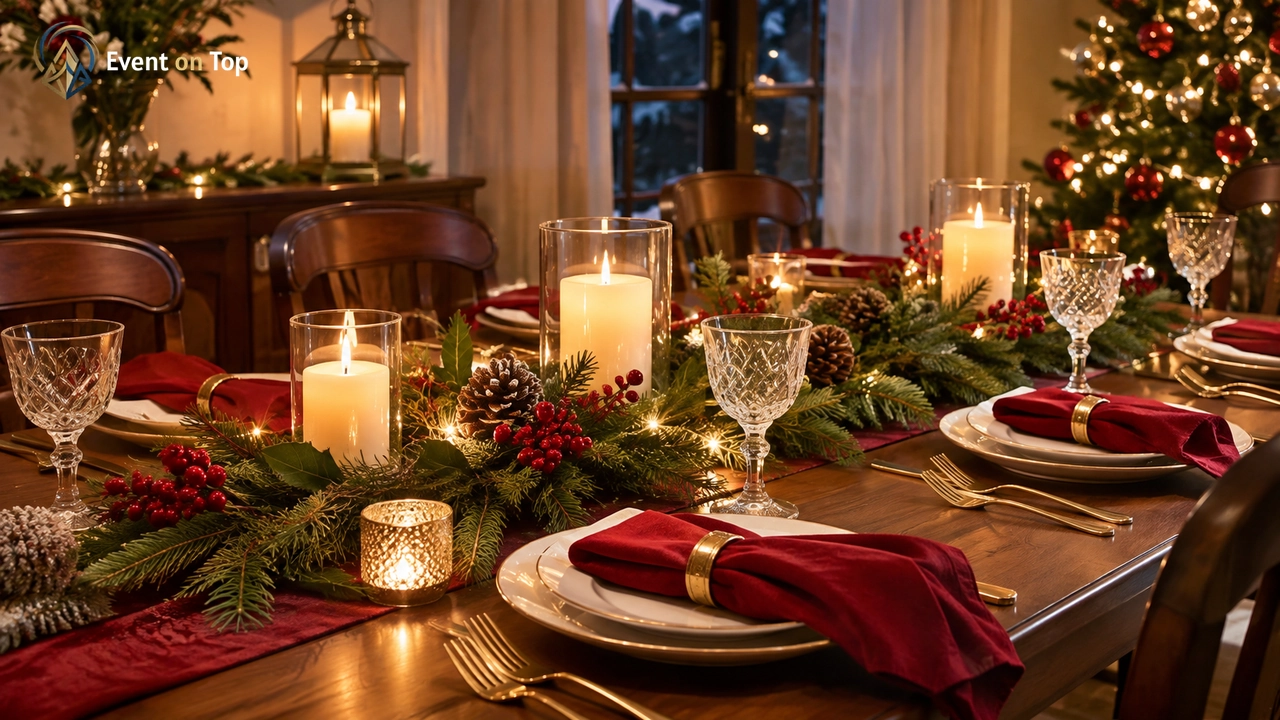
The Layering Method: How a Table Goes From Bare to Beautiful
Every good Christmas table is built in the same four layers, in the same order. Skip a layer and the table feels thin; pile everything on at once and it feels cluttered. Work through them one at a time and the table almost dresses itself.
Layer one is the foundation. A tablecloth or a runner, never both fighting each other — a cloth for a formal table, a runner for a relaxed one. Linen or cotton in a plain colour is the safest base; a pattern here fights with everything that comes after it. If the table itself is beautiful wood, skip the cloth and let the runner do the work — a bare wood table with a linen runner reads more expensive than a table buried under a shiny cloth.
Layer two is the spine. One long line down the centre of the table: a garland, a row of small wreaths, or a length of fabric with greenery on top. The spine is what makes the table look long and generous, and it is where most of the decoration lives. Keep it low — this is the centrepiece rule, and it matters more here than anywhere else.
Layer three is the places. Charger plates, dinner plates, cutlery, glasses, napkins, a name at each seat. This is the layer guests actually touch, and it is where the table stops being a display and starts being a meal. Set the places before you add the final decoration, so you can see how much room is really left.
Layer four is the light. Candles, fairy lights woven through the garland, a lantern or two. Light goes on last because it is the finishing touch, and because you need to see the table finished before you decide where the glow should fall.
The one rule that holds all four layers together: one colour story, three colours plus one metallic, the same rule our wreath guide uses. Pick the palette before you buy anything — red, green and gold; forest green, cream and brass; jewel tones and black — and let every layer obey it. A table in three colours looks planned. A table in seven looks like a clearance sale.
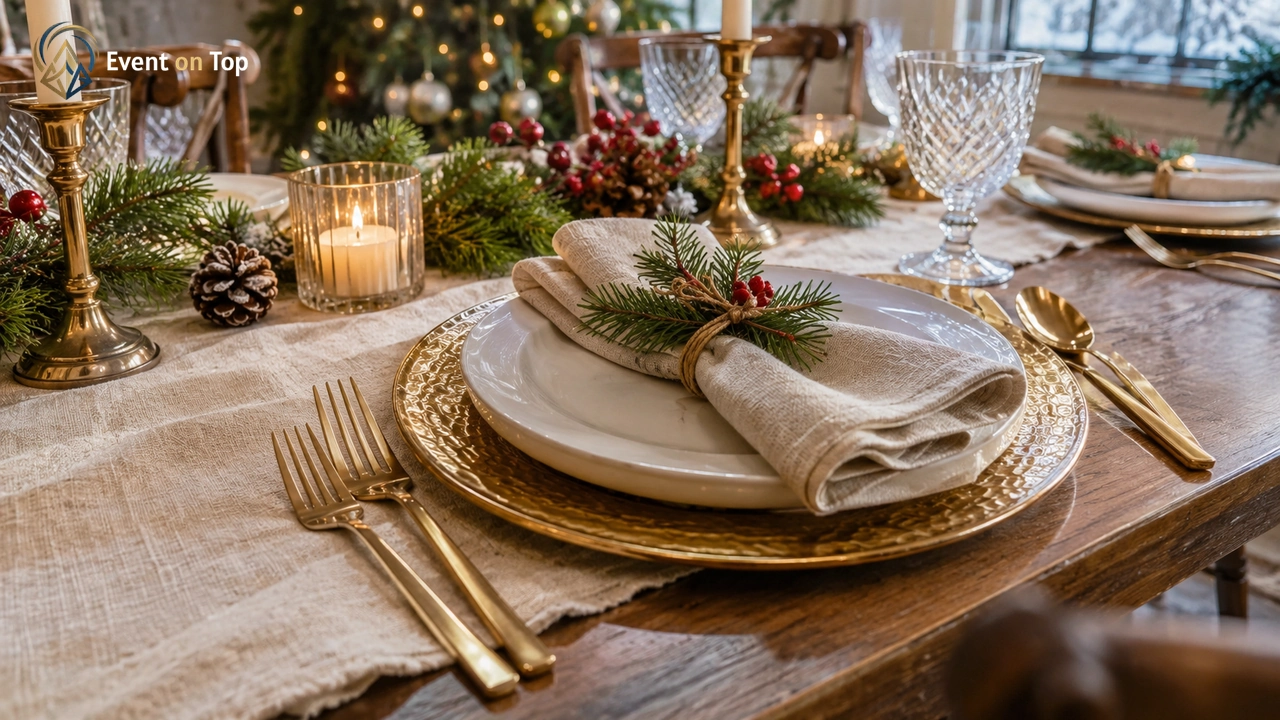
15 Looks That Work in 2026
The 2026 season has two clear directions, the same pair running through our decor, tree, mantel and wreath guides. One is quiet and natural: layered greenery, wood tones, dried elements, texture instead of colour. The other is luminous and full: jewel tones, velvet, brass and lots of light. Both work on a table. Pick the direction that matches your dining room, then pick a look inside it.
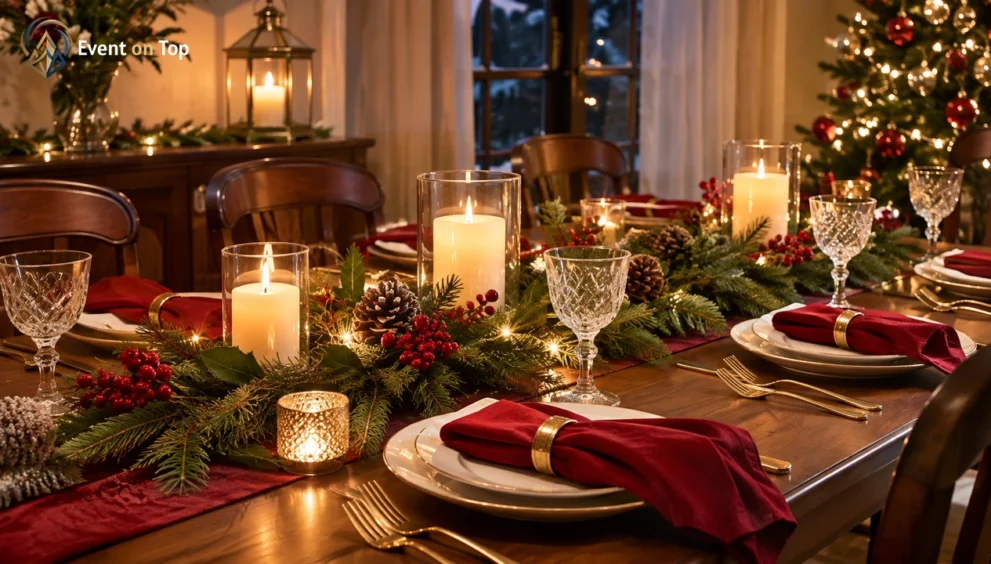
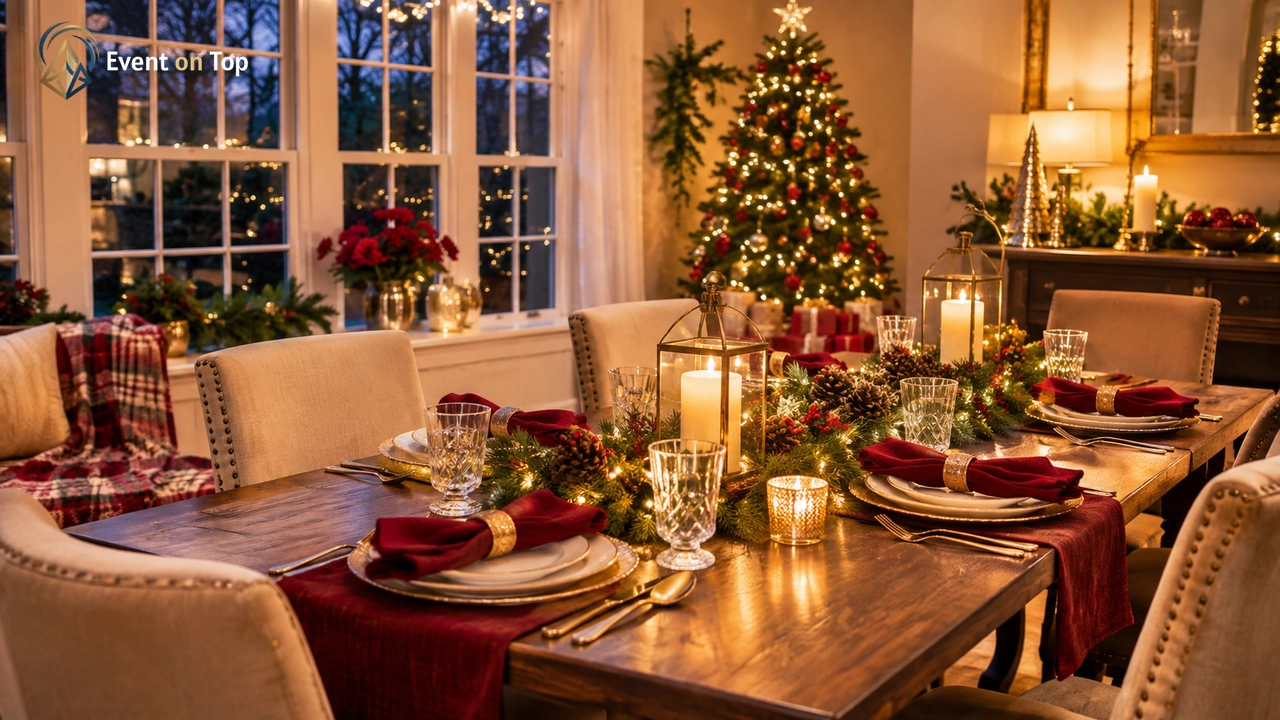
1. Classic red and green, done properly. Deep red napkins, evergreen garland, brass candlesticks, white plates. The 2026 update is matte instead of shiny — matte berries, a linen runner instead of a satin one, and a velvet bow on the back of each chair.
2. Forest green and cream. A green linen runner, cream plates, cream candles in brass holders, sprigs of cedar at each place. Calm, expensive-looking, and the easiest palette to live with for a long lunch.
3. Jewel tones and brass. Emerald, ruby and deep plum with brass candlesticks and gold chargers — the same palette our maximalist guide uses on the tree, brought down to table size. Rich, dramatic, and the best choice for an evening meal.
4. Scandi minimal. A bare wood table, a thin line of greenery, white candles in plain holders, one small wooden star at each place. Restraint is the whole point: three beautiful pieces beat thirty average ones.
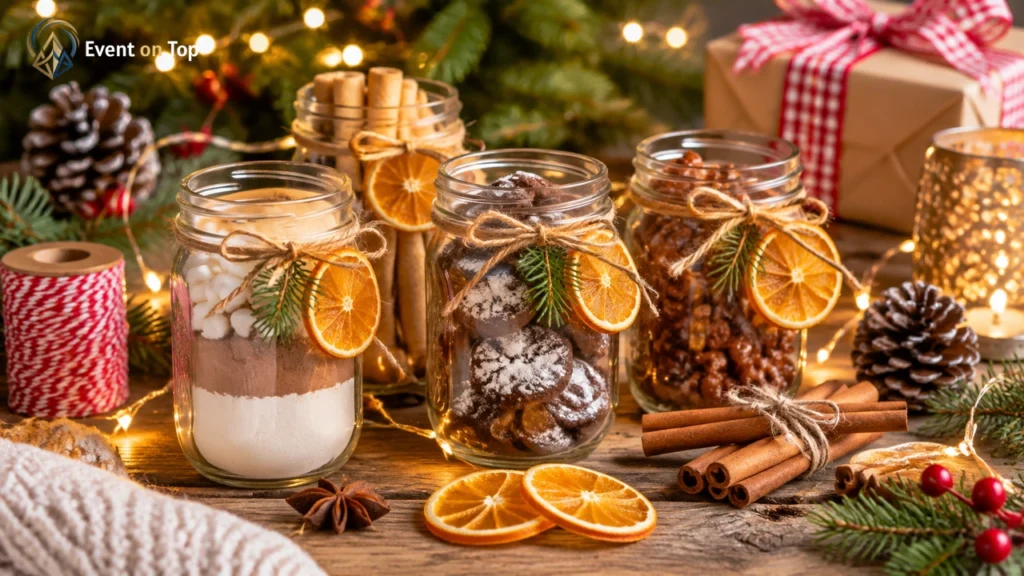
5. Woodland and foraged. Pinecones, dried orange slices, bare twigs and a slightly wild garland running down the centre. The easiest look to build from a walk in the woods, and the one that smells the best.
6. The plaid table. A plaid runner or plaid napkins, pinecones, a few sprigs of red berries. The table version of a warm hug, and the natural partner to the plaid-and-pinecone wreath on the front door.
7. White, frosted and silver. White plates, a frosted garland, silver candlesticks and white berries. Serene and dramatic at dusk with the candles lit — warm white fairy lights woven through the garland are non-negotiable here.
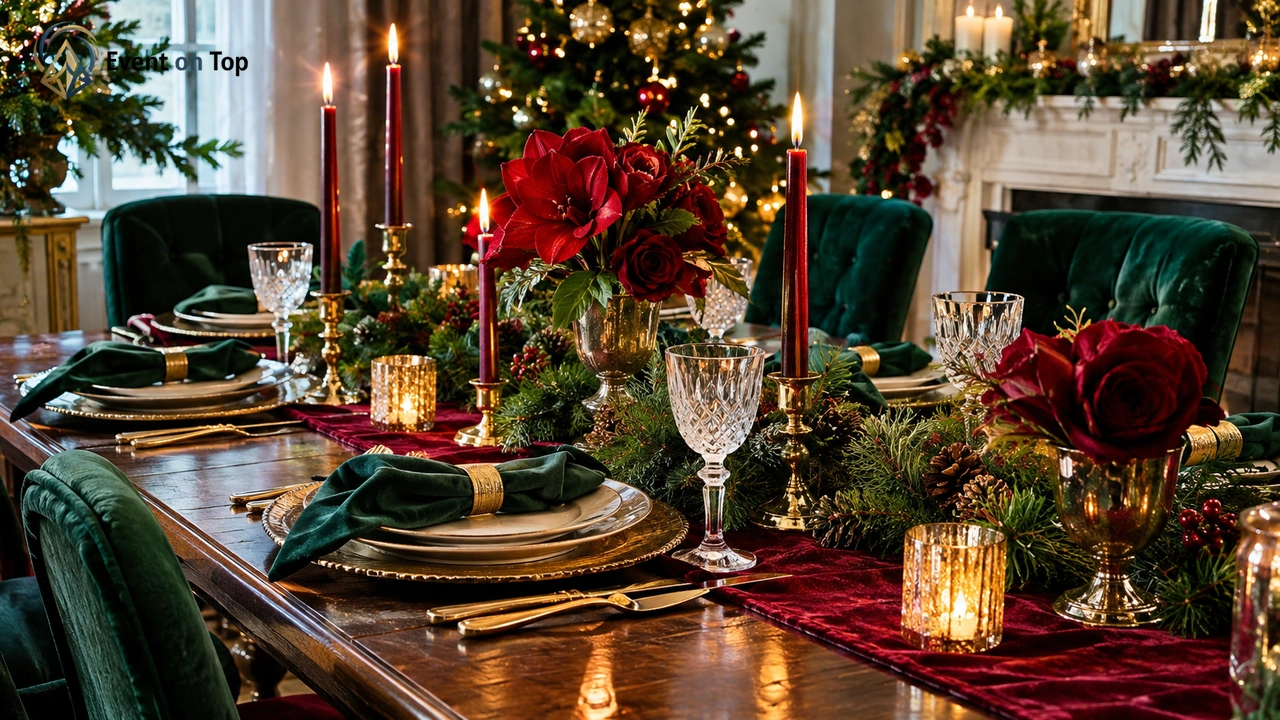
8. The black-and-gold table. Black taper candles in tall gold candlesticks, black napkins, gold chargers, a dark green garland. The boldest look of the season — save it for dinner, not lunch, because it needs candlelight to work.
9. Burgundy and blush. Burgundy napkins and candles, blush roses or amaryllis in the centrepiece, gold cutlery. The softest of the rich palettes. Burgundy is the colour of the season; blush keeps it from feeling heavy.
10. Coastal and calm. Driftwood pieces, white and pale blue, dried starfish or shells mixed with greenery down the centre. Unusual for Christmas, and exactly why it works — especially in a bright dining room.
11. The citrus table. Dried orange slices, fresh oranges and lemons piled in a bowl, cinnamon sticks tied to napkins, a warm orange-brown palette against cream linen. It smells wonderful, it costs very little, and it looks like a feast before the food arrives.
12. Vintage bauble and tinsel. Vintage-style glass baubles scattered down the garland, a little tinsel, a velvet bow on each chair. It pairs beautifully with retro ornaments on the tree, and it is the table most likely to make a grandparent smile.
13. The candle-only table. No garland, no baubles, no centrepiece at all — just candles. Pillar candles of different heights down the centre, in glass hurricanes, on a plain runner. The most elegant look here, and the cheapest, because the candles do all the work.
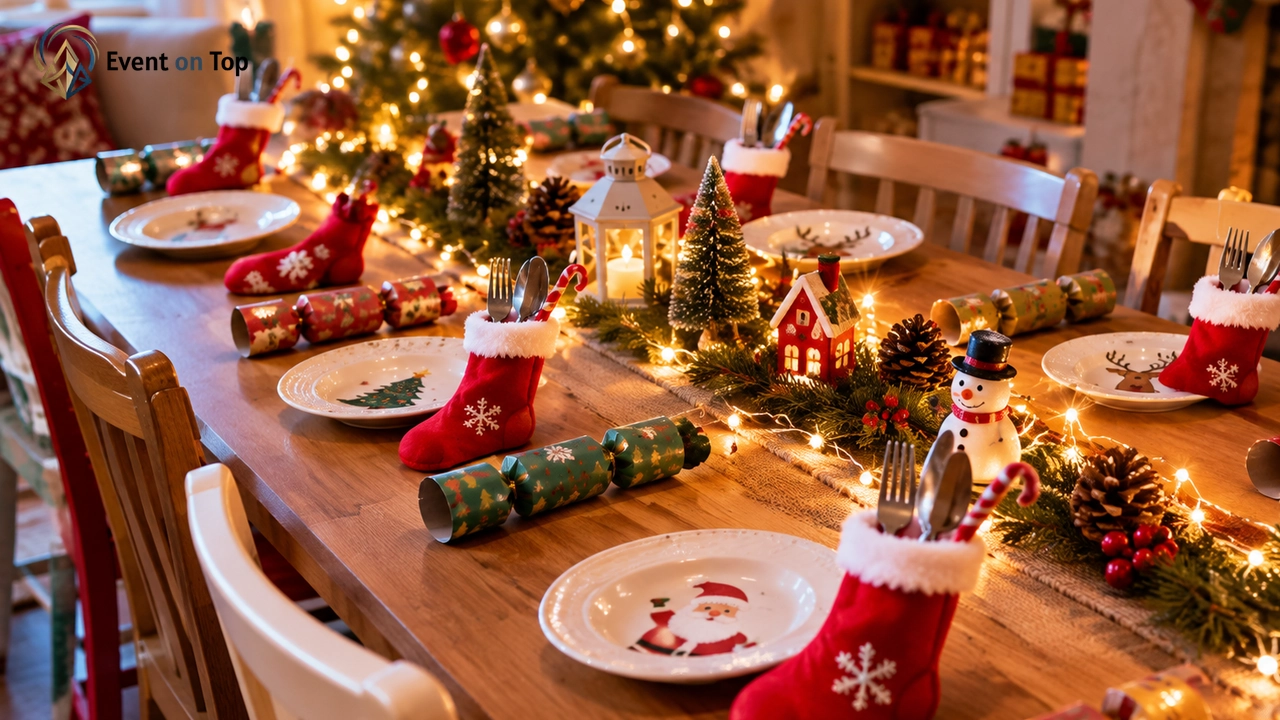
14. The kids’ table, dressed up properly. Not a lesser table — a real one, in miniature. The same palette as the grown-ups’ table, smaller plates, paper crackers, a mini stocking holding the cutlery at each place. Children who feel like guests behave like guests.
15. The mixed-metal table. Gold, brass and copper together — brass candlesticks, gold chargers, copper mugs or cutlery — against a plain cream or green base. The 2026 shift is toward collected, lived-in tables, and mixed metals are the fastest way to get that look without buying a matching set.
Whichever look you choose, keep the centrepiece low and the palette tight. Most cluttered tables are really just too many colours competing in a small space, and the three-colour rule is the fastest fix there is.
Centrepieces: The Height Rule That Keeps Everyone Talking
The centrepiece is where most Christmas tables go wrong, and the fix is a single rule. Decorations should sit either low, roughly under 30 centimetres, or high, above 60 centimetres — never in between. Anything between those heights sits exactly where seated guests’ faces are, and the table turns into two rows of people peering around a decoration. A low garland with candles lets everyone see each other. A tall candelabra above head height does the same.
Low is the safer choice. A garland of evergreen running down the centre, with pillar candles tucked into it and a few baubles or pinecones scattered through, is the classic low centrepiece, and it works in every palette in this guide. Keep the greenery under four inches tall at its highest point and let the candles carry the height instead — the candles are the vertical element, the greenery is the horizontal one, and the two should never compete.
Five centrepiece formulas that always work: a garland with pillar candles and pinecones; a row of small wreaths with a candle in the middle of each; a long wooden tray holding candles, greenery and baubles, which can be lifted off the table in one move when the food arrives; a bowl of fresh oranges, greenery and cinnamon sticks; and a single large lantern with fairy lights inside, flanked by low greenery. The tray is the most practical of the five, because a centrepiece that cannot move is a centrepiece in the way of the turkey.
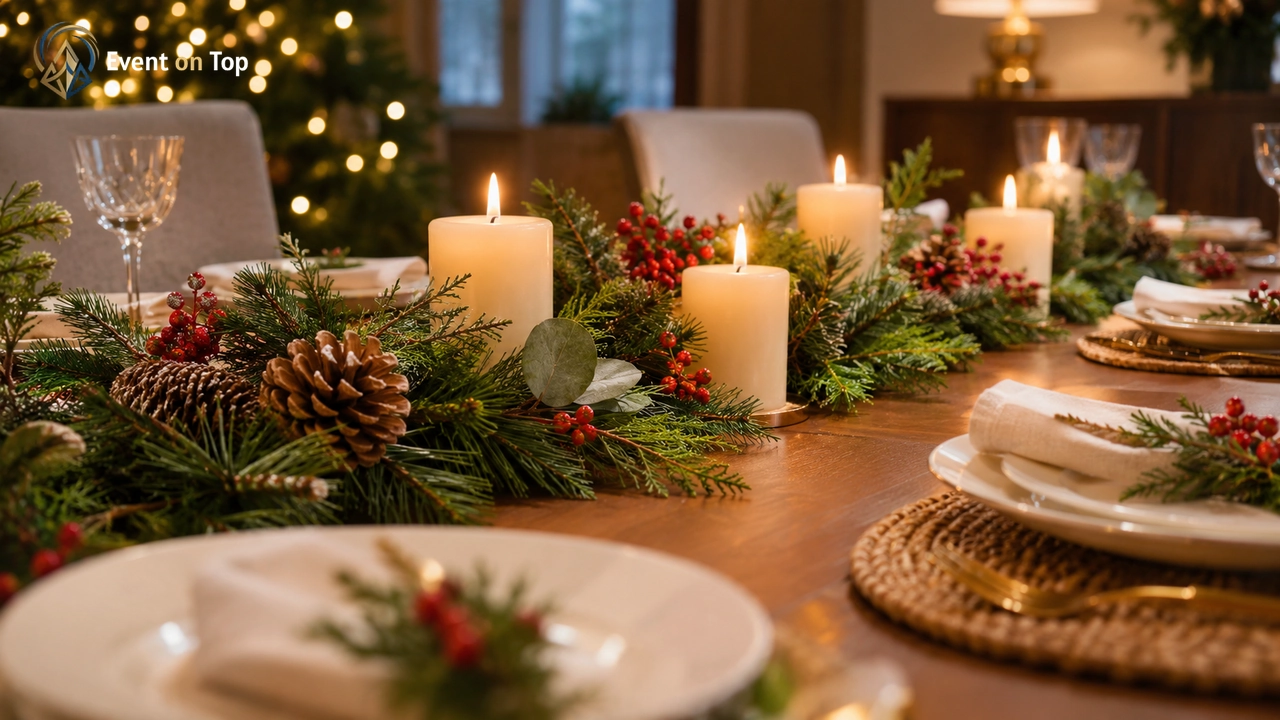
Place Settings That Feel Considered
A place setting is a small composition, and it is the part of the table each guest actually looks at. Start with a charger — a large decorative plate under the dinner plate — in gold, wood, or a plain colour from your palette. It frames the plate, it protects the tablecloth, and it is the single cheapest way to make a table look formal. On top of it, the dinner plate, then the cutlery in the order it will be used, outside in, and the glasses above the knife.
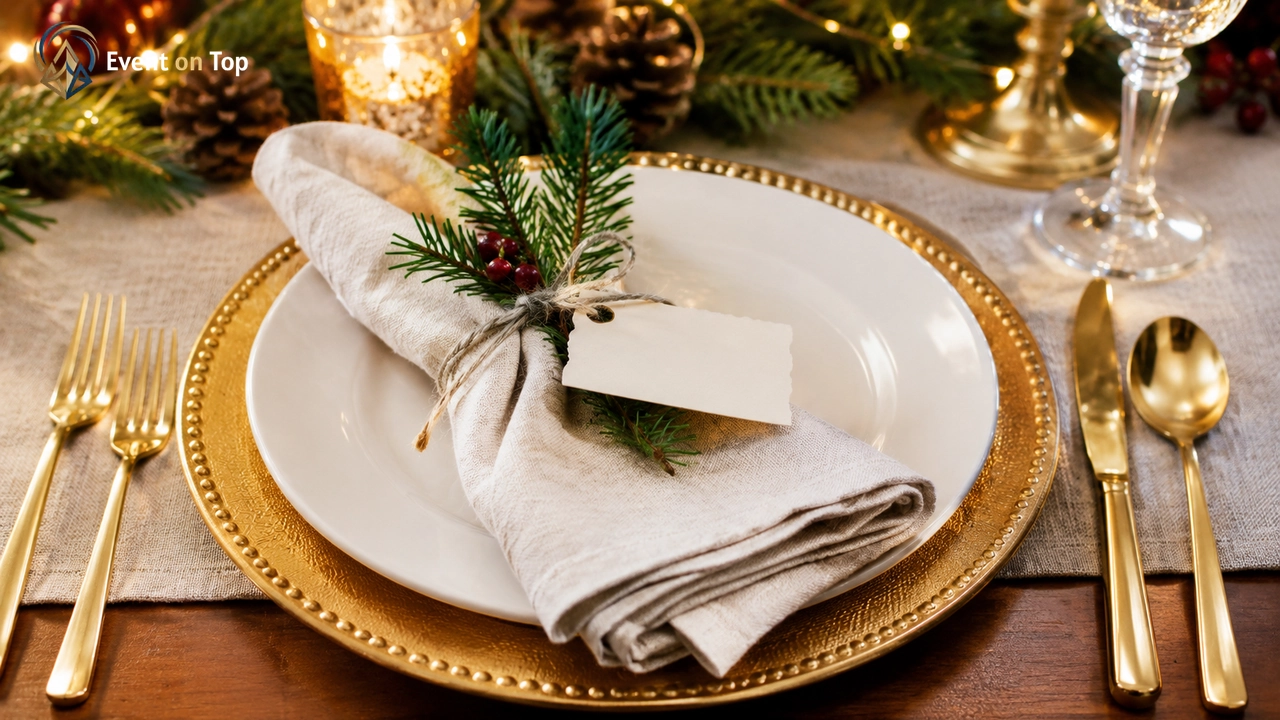
The napkin is where the personality lives. A linen napkin folded simply, with a sprig of evergreen or rosemary tucked into a ring, beats an elaborate fold every time — elaborate folds look clever for a minute and then get in the way. Tie the sprig on with string or ribbon in your lead colour, and the napkin becomes a small gift in itself. A mini stocking holding the cutlery works just as well at the grown-ups’ table if the stockings match the palette.
A name at each seat is the detail guests remember. A handwritten place card — a folded card, a sprig of greenery with a tag, a name written on a dried orange slice — tells people they were expected, and it solves the seating problem before anyone has to ask where to sit. Christmas crackers are the British tradition that has finally landed on American tables, and 2026 tables use them as place card and party favour in one: one cracker beside each plate, with the name card tucked under it. Leave room: a place setting needs about 60 centimetres of width per person, and a table squeezed tighter than that feels crowded no matter how pretty it is.
Candlelight, Done Safely
No festive table is complete without candlelight, and candlelight is also the one decoration that can burn the house down. The rules are simple and they are not optional. Keep candles at least 12 inches away from anything that can burn — greenery, napkins, crackers, the garland itself — and never put a candle under a low-hanging decoration. Use stable holders on a flat surface, never a candle balanced on a bauble or a pile of greenery. Light the candles when guests sit down, not an hour before, and blow them out when the table is cleared — a candle left burning in an empty dining room is the most common Christmas fire, and it is entirely avoidable.
Real candles give the best light, and taper candles in tall holders give the most of it. But there are two places where real flame does not belong: a table with small children, and a table with a low garland that cannot keep its distance. Battery candles and LED dinner candles have improved enormously — the good ones flicker like a real flame — and they deliver the glow without the risk. Use them in the garland and at the kids’ table, and keep real flame in tall, stable holders where it can be watched.
The Kids’ Table, the Buffet & Small Spaces
The kids’ table deserves the same care as the main table, not a plastic cloth and a shrug. Set it with the same palette, smaller plates, unbreakable cups, and one small activity at each place — a paper cracker to pull, a colouring card, a tiny puzzle. A mini stocking holding the cutlery at each place is the detail children love most, and it costs almost nothing. Keep candles off the kids’ table entirely; battery candles give the glow without the risk, and a string of fairy lights down the centre does the rest.
A buffet table follows different rules from a sit-down table, because nobody sits at it. Here the centrepiece can be tall — a tall branch arrangement, a candelabra, a tiered stand of food — because there is no conversation to block. Stack the plates at one end, the food in the middle, the drinks at the other end, and let people move in one direction. And a small table is not a problem: a table for four needs the same four layers, just smaller. A thin garland, four candles, four place settings, and the restraint to stop there. A small table dressed simply looks deliberate. A small table dressed like a banquet looks crowded.
DIY in One Evening
Making your own table decor is easier than it sounds, and one evening is enough for all of it. Tie a sprig of greenery onto each napkin with string. Write names on paper place cards. Fill a jar with pinecones and a few baubles for the centre of the table. Make napkin rings from ribbon and a sprig of rosemary. Fold the napkins into a simple pocket and tuck the cutlery inside. None of these takes more than ten minutes, and together they are the difference between a table that was bought and a table that was made.
Buy the base and the greenery first, the candles second, and the baubles last — the same order our wreath guide uses, because the base decides everything else. Make the DIY pieces the day before, not the morning of: a napkin ring tied in a hurry looks like a napkin ring tied in a hurry.
Budget & Timing
A Christmas table is the cheapest big win in Christmas decorating, because the pieces that do the most work are also the cheapest. A linen runner, a few bunches of greenery, a roll of wide velvet ribbon in your lead colour and a bag of pinecones cost very little, and the ribbon alone will do more for the look than a bag of baubles in the wrong colour. Shop your own garden first for greenery, and buy secondhand where it suits you — charity shops and flea markets are full of brass candlesticks, vintage baubles and ribbon for a fraction of retail.
Timing is simple. Lay the foundation — cloth, runner, spine — the day before, or the weekend before for a party. Set the places and light the candles on the day itself, an hour before guests arrive. And buy after Christmas for next year: the runners, ribbon and candle holders that go on sale in January are the same ones.
Frequently Asked Questions
How tall should a Christmas centrepiece be?
Low enough to see over, so guests can talk across the table — roughly under 30 centimetres — or high enough to see under, above 60 centimetres. Never in between. A low evergreen garland with pillar candles is the safest choice for most tables, because the candles carry the height and the greenery stays flat.
What colours work best for a Christmas table in 2026?
Three colours plus one metallic, the same rule as the tree and the wreath. The strongest palettes for 2026 are classic red and green with brass, forest green and cream, jewel tones with brass, and quiet Scandi neutrals with wood. Pick one palette and let every layer — runner, plates, napkins, candles — obey it.
How do I decorate a Christmas table on a budget?
Start with the pieces that do the most work for the least money: a linen runner, greenery from the garden, a roll of ribbon in your lead colour and a bag of pinecones. Make the napkin rings and place cards yourself in one evening. Buy the base and the greenery first, the candles second, and the baubles last — and buy after Christmas for next year, when the same pieces go on sale.
Are real candles safe on a Christmas table?
Yes, if you follow the rules: keep candles at least 12 inches from anything that can burn, use stable holders on a flat surface, light them when guests sit down and blow them out when the table is cleared. Use battery candles in the garland and at the kids’ table, where real flame does not belong, and never leave a lit candle in an empty room.
When should I decorate the Christmas table?
Lay the foundation — cloth, runner and the greenery spine — the day before, or the weekend before for a party. Set the places and light the candles on the day itself, about an hour before guests arrive. Christmas Day 2026 is Friday, December 25, so a table dressed on Christmas Eve is ready for the main meal with nothing left to rush.