







Christmas Decor Ideas 2026: Whimsy, 90s Nostalgia & Classic Looks That Actually Work

Christmas decorating has a way of going wrong in exactly the same way every year: a cart full of beautiful things that do not belong together, a tree that looks like a shop window, and a house that feels more cluttered than festive. The fix is not a bigger budget. It is a smaller plan. Pick one mood, one palette, and one focal point per room, then repeat a few colors and textures so the whole home feels connected instead of decorated in separate pieces.
This guide is built that way. It starts with the 2026 trends that are actually worth trying — gingerbread whimsy, playful 90s nostalgia, heritage jewel tones, Scandinavian calm, soft pink and natural woodland — then walks room by room through the tree, the mantel, the table and the outside, with budget ideas and honest advice on what to skip. Christmas Day 2026 falls on Friday, December 25, so if you are decorating around Thanksgiving weekend, you have about four weeks to enjoy it. If you are still building your list, our Christmas gift ideas for 2026 pair with this guide.

Start With a Plan: One Mood, One Palette, One Focal Point
Before you buy a single ornament, answer three questions. First, what mood do you actually want when you walk in the door? Cozy and traditional, playful and bright, calm and minimal, or full festive drama? The mood decides everything else. Second, what do you already own? Most homes already have a box of ornaments, a wreath, a set of lights and a few pieces that mean something. Build the plan around those, and buy only what fills a gap. Third, where is the focal point in each room? One tree, one mantel, one table — not three competing displays in the same space.
Then settle the palette. Two or three colors, repeated everywhere, will do more for your home than any single expensive piece. Classic red and green with warm gold is the safest choice and the easiest to shop for. Deep burgundy with antique gold and dark chocolate brown is the 2026 version of the same idea — richer and more grown-up. Green, cream and natural wood suits a Scandinavian or woodland look. Soft pink with champagne and white is the gentle option that works beautifully in a bright room.
The 2026 Trends Worth Trying
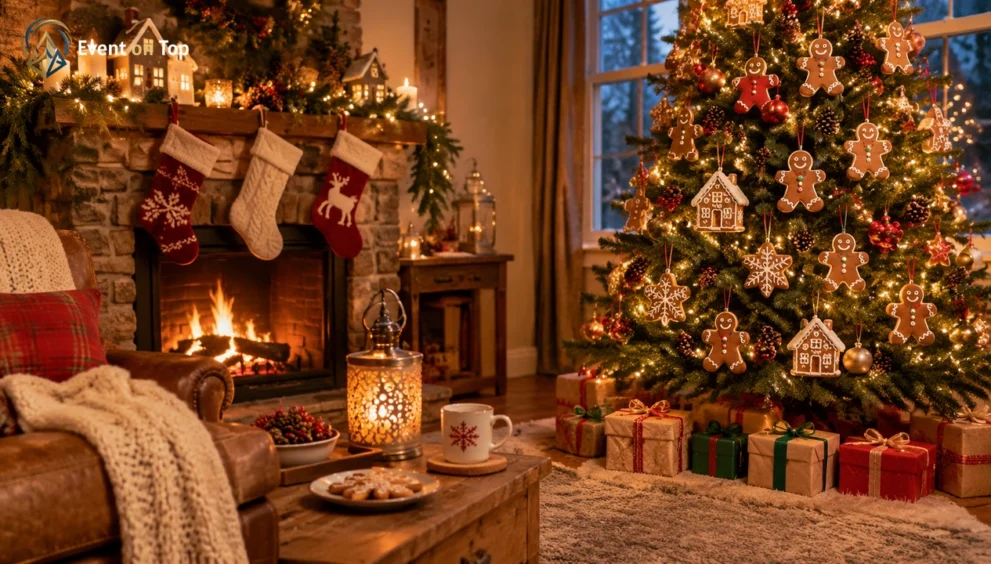
Every year brings a new set of trends, and most of them are not worth chasing. These six are, because they work in real homes, not just in photographs. Gingerbread whimsy is the most playful look of the season: gingerbread-house ornaments, cookie-shaped baubles, candy details and warm brown with icing white. It suits families, kitchens and anyone who wants Christmas to feel sweet rather than serious. Playful 90s nostalgia is its louder cousin — colorful glass ornaments, tinsel, multicolored lights and the decorations you remember from childhood. It is joyful, unpretentious, and forgiving: nothing has to match.
Heritage Christmas is the opposite instinct: collected over generations, or at least looking that way. Vintage-style glass ornaments, heirloom silver, rich jewel tones — deep red, burgundy, forest green, navy — and classic tartan plaid. Oversized plaid bows are the standout detail this year, tied onto the tree, the wreath and the garland. Scandinavian Christmas stays calm and simple: natural materials, simple shapes, evergreen and warm white with natural wood, lifted by red paper decorations. Soft pink Christmas pairs blush pink with champagne, velvet and candlelight for a softer, more romantic room. And natural woodland brings the outside in: real greenery, pinecones, dried oranges, wooden ornaments and linen textures, with warm white lights doing most of the work.
The trick is to choose one of these as your main look and borrow details from one other at most. A heritage tree with a gingerbread mantel works. A Scandi room with one pink accent works. All six in one living room does not — and it is the single most common decorating mistake of the season.

The Tree: Where Most People Should Start
The tree is the centerpiece, so it deserves the most attention — and the most restraint. Start with lights before anything else: warm white lights, wrapped from the inside of the branches outward, so the glow comes from within the tree rather than sitting on its surface. A good rule is to step back after the lights and look at the tree in the dark before you hang a single ornament. If the light is even and warm, the rest is easy. If it is patchy, fix it now, because ornaments will not hide it.
Then add ribbon and bows, which are the defining detail of 2026. A wide plaid or velvet ribbon, woven through the branches in loose loops, gives the tree structure and fills the gaps between ornaments. Oversized bows — one at the top instead of a star, or a few large ones scattered through the branches — do the same job with less effort. Hang your largest ornaments first, deep in the branches, then the medium ones, then the small and delicate ones at the tips. Mix textures on purpose: shiny glass next to matte baubles, wood next to metal, a handmade ornament next to a bought one.
Personalization is the strongest trend of the year, and it costs nothing. Ornaments that tell a story — one from a trip, one a child made, one inherited from a grandparent — are what make a tree yours. If you have young children, let them hang the ornaments they love, even if the placement is wrong. A tree that looks perfect and untouched is a display; a tree with a slightly crooked handmade ornament at eye level is a family Christmas.
The Mantel, the Staircase & the Entryway
Once the tree is done, the mantel is the next focal point — and the easiest to get right. A lush garland, real or good-quality artificial, draped across the mantel with a little sag in the middle, is the base. Tuck in fairy lights, a few pinecones or dried orange slices, and one oversized bow at the center or at each end. Stockings hang below, and they look best when they match each other in color or material, even if each one is different in detail. Brass candlesticks or a few pillar candles on the mantel add height and a warm glow in the evening; keep flames away from the garland and never leave them burning unattended.
The staircase is the same idea, stretched out: garland along the banister, tied at intervals with ribbon, with a bow at each newel post. The entryway needs only one strong gesture — a wreath on the door, a small tree or a cluster of lanterns by the entrance, and a doormat that can handle wet boots.

The Table: Christmas Dinner Without the Fuss
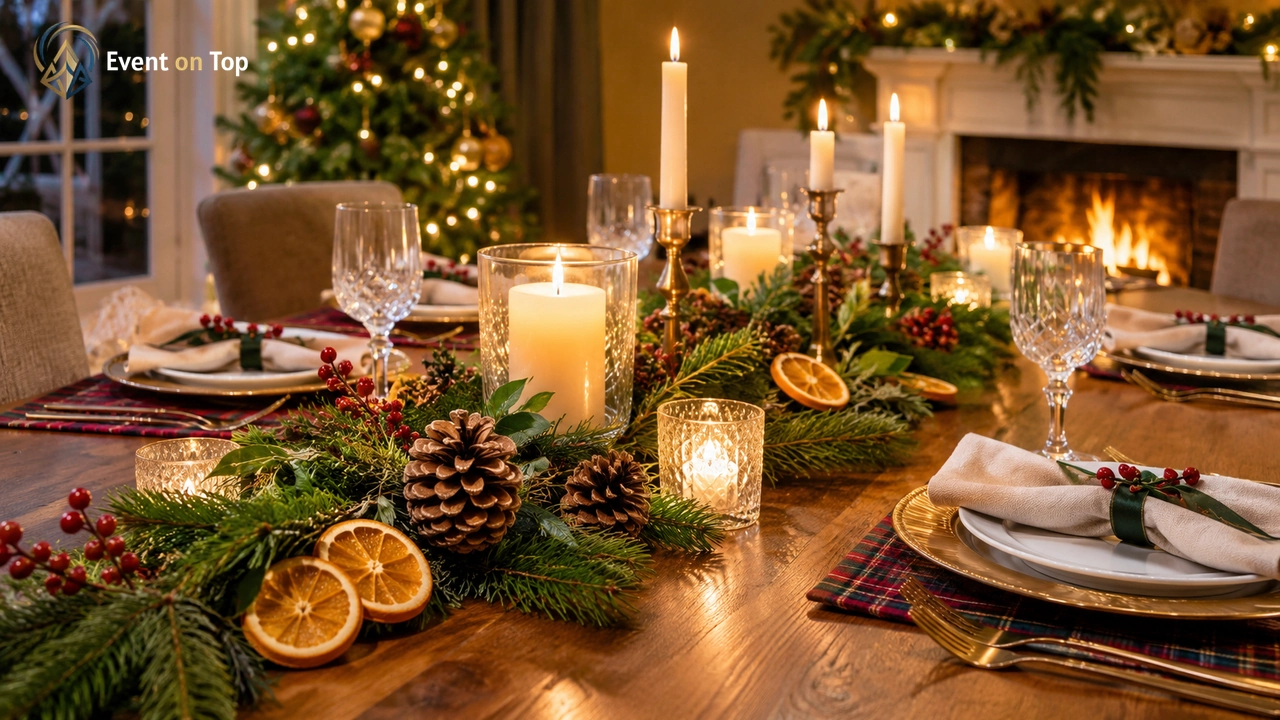
The Christmas table does not need a centerpiece that blocks conversation. A low garland or a runner of greenery down the middle, with candles at different heights and a few pinecones or dried oranges scattered between them, is enough — and it leaves room for the food, which is the real centerpiece. Keep the palette the same as the tree, and use what you already own: the good plates, the cloth napkins, a sprig of greenery on each place setting. Place cards are a small touch that make a big difference, especially at a large family table, and a handwritten name on a simple card beats a printed one every time.
If you are hosting, decorate the table last, on the day itself or the night before, so it stays fresh and you are not working around it for a week. And if the table is also where gifts get opened or games get played, keep the decoration simple enough to clear in a minute.
Windows, Lights & the Outside
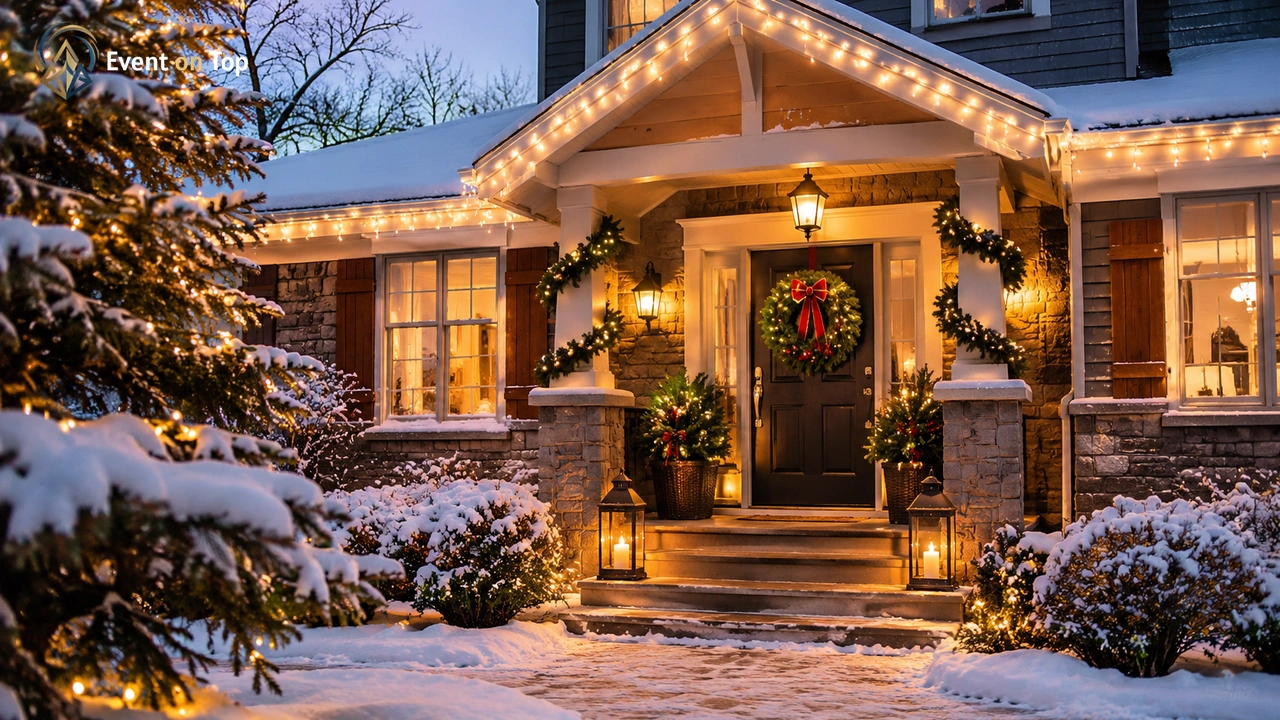
Outside decorating is where restraint matters most. A wreath on the door, warm white lights along the roofline or around the windows, and one or two lit features — a small tree by the door, lanterns on the steps — will make a house look welcoming from the street. The houses that stop traffic are usually the ones with a single idea done well, not the ones with everything switched on at once. If you want inspiration for the big displays, our best Christmas light displays in the USA guide covers the neighborhood and drive-through shows worth a trip.
Inside the windows, a simple paper star, a candle in the window, or a string of warm fairy lights along the sill reads beautifully from outside and costs almost nothing. Check your lights before you hang them, and use a timer so the outside lights switch off by themselves late at night.

Decorating on a Budget: What to Buy, What to Reuse, What to Make
Christmas decorating does not need to be expensive, and the most charming homes are often the ones that spent the least. Buy the things that last and that you will reuse for years: good warm white lights, a solid wreath, a set of baubles in your palette, and one or two quality pieces each year rather than a whole new theme every December. Reuse everything that still works — last year’s ornaments in a new arrangement, with a new ribbon color, look completely different. And make the things that are fun to make: dried orange slices, paper stars and snowflakes, pinecone ornaments, a garland of dried cranberries or popcorn, and salt-dough ornaments with the children. These are the decorations people remember, and they cost almost nothing.
Think in bands, not in a total. A small refresh — new ribbon, a few baubles, a wreath — covers most homes. A medium refresh — lights, a garland, a table runner and a set of stockings — suits a home that is starting nearly from scratch. A full refresh is for the year you move house or change your palette completely, and even then, buy the long-lasting pieces first and add the small details over the next two or three Christmases.
Small Spaces & Rentals: Big Christmas, Small Footprint
A small flat or a rented home can still do Christmas properly — it just needs a different scale. A slim tree, a tabletop tree, or even a wall tree made from lights and a few ornaments gives you the focal point without taking over the room. A wreath on the inside of the door, a garland along a shelf instead of a staircase, and fairy lights along a window ledge do the work of a full display in a fraction of the space.
Renters should stick to damage-free hanging: removable hooks, twine and ribbon tied rather than nailed, and freestanding pieces rather than anything screwed into a wall. Choose decorations that pack flat and store small — paper stars, fabric bunting, a collapsible tree — so next year’s setup is as easy as this year’s. And remember that scent does as much as sight in a small space: a pot of cinnamon and orange simmering on the stove, or a few sprigs of fresh greenery on the table, will make a small room feel like Christmas.
When to Decorate & When to Take It Down
There is no single right date, but there is a rhythm that works for most households. Many families start the weekend after Thanksgiving — Thanksgiving Day 2026 is Thursday, November 26 — when the house is already full and the boxes are easy to reach. Others wait until the first weekend of December, which keeps the decorations feeling fresh on Christmas Day itself. Either way, put the tree and the lights up first, then the mantel and the table, and leave the small finishing touches for last. If you are planning around public events, our Christmas tree lighting ceremonies guide covers the big switch-ons, and our Christmas in New York and Christmas in London guides cover the cities that do it best.
Taking it down is the part nobody enjoys, so make it easy on yourself: label the boxes by room as you pack, wrap ornaments in the tissue they came in, and coil lights around a piece of cardboard so they do not tangle. Many households take decorations down by Twelfth Night, which falls on January 5, 2027, with Epiphany on January 6 — a long-standing tradition in the UK and parts of Europe — while others keep the lights up through the first weekend of January.
What to Skip in 2026
Some decorating ideas fail so reliably that they deserve their own section. Do not buy a whole new theme every year — it is expensive, it fills the loft with boxes you will never open again, and it makes the house feel like a shop display. Do not buy decorations that need an app, a remote, or a subscription to work. Do not mix every trend at once: the gingerbread tree, the pink room, the Scandi mantel and the maximalist staircase are each lovely on their own and a mess together.
Do not overfill the tree. If you cannot see any green between the ornaments, take a third of them off and put them in a bowl on the table instead. Do not decorate every surface: a house with one or two clear surfaces feels festive; a house with no clear surfaces feels cluttered. And do not buy fragile, expensive ornaments for the bottom branches if you have small children or pets — put the unbreakable ones low and save the glass for the top, where everyone can admire it and nobody can reach it.
FAQs
When should I start decorating for Christmas 2026?
Most households start the weekend after Thanksgiving — Thanksgiving Day 2026 is Thursday, November 26 — or the first weekend of December. Starting after Thanksgiving gives you about four weeks to enjoy the decorations before Christmas Day on Friday, December 25. Put the tree and lights up first, then the mantel and table, and save the small finishing touches for last.
What are the biggest Christmas decor trends for 2026?
Gingerbread whimsy, playful 90s nostalgia, heritage Christmas with jewel tones and oversized plaid bows, Scandinavian simplicity, soft pink with velvet and candlelight, and natural woodland with greenery, pinecones and dried oranges. Personalization — ornaments that tell your family’s story — is the strongest trend of all. Pick one main look and borrow details from one other at most.
How do I decorate for Christmas on a budget?
Buy only the long-lasting pieces — good warm white lights, a solid wreath, baubles in your palette — and reuse everything else in a new arrangement. Make the fun things yourself: dried orange slices, paper stars, pinecone ornaments and a garland of dried cranberries cost almost nothing and are the decorations people remember. Build the look up slowly, one good piece a year, rather than buying a whole new theme every December.
How can I decorate a small apartment or rental for Christmas?
Use a slim or tabletop tree, a wreath on the inside of the door, garland along a shelf, and fairy lights on a window ledge. Stick to damage-free hanging with removable hooks and ribbon, choose decorations that pack flat, and let scent do some of the work — cinnamon and orange simmering on the stove, or fresh greenery on the table, makes a small room feel like Christmas.
When should I take my Christmas decorations down?
Many households take decorations down by Twelfth Night, which falls on January 5, 2027, with Epiphany on January 6 — a long-standing tradition in the UK and parts of Europe — while others keep the lights up through the first weekend of January. Label boxes by room as you pack, wrap ornaments in tissue, and coil lights around cardboard so they do not tangle next year.


Christmas Tree Decorating Ideas 2026: 12 Looks, Lights & the Pro Order
07th Nov 2026[…] Christmas Decor Ideas 2026: Whimsy, 90s Nostalgia & Classic Looks […]
Maximalist Christmas Decor Ideas 2026: Bold Trees, Layers & Colour
07th Nov 2026[…] Christmas Decor Ideas 2026: Whimsy, 90s Nostalgia & Classic Looks […]
Christmas Wreath Ideas 2026: 15 Front Door Looks & How to Choose
07th Nov 2026[…] Christmas Decor Ideas 2026: Whimsy, 90s Nostalgia & Classic Looks […]
Christmas Table Decor Ideas 2026: 15 Looks & the Layering Method
07th Nov 2026[…] Christmas Decor Ideas 2026: Whimsy, 90s Nostalgia & […]
Christmas Outdoor Decor Ideas 2026: 21 Looks for Yard, Porch & Lights
07th Nov 2026[…] Christmas Decor Ideas 2026: Whimsy, 90s Nostalgia & […]