



Salem vs Sleepy Hollow for Halloween: Crowds, Costs & Which Trip Fits You

Salem vs Sleepy Hollow for Halloween: Crowds, Costs & Which Trip Fits You
Two American towns own Halloween by birthright. Salem, Massachusetts, is where the 1692 witch trials happened, and every October it runs Haunted Happenings, a month-long citywide festival that draws more than a million visitors to a city of well under 50,000 people. Sleepy Hollow, New York, is where Washington Irving set his Headless Horseman, and every October the village and its Tarrytown neighbor build a season of storytelling, cemetery paths and glowing pumpkins around the legend. Both are legendary, both are reached by train from a major city, and both peak on Halloween itself — Saturday, October 31, 2026. They are not, however, interchangeable trips. This head-to-head compares the experience, the crowds, the costs and the logistics, so you can pick the one that fits the Halloween you actually want. For full depth on the Massachusetts side, start with our Salem Halloween 2026 guide.
The Short Verdict
Pick Salem if you want Halloween at maximum scale: a whole city in costume for a full month, real witch-trials history underneath the party, the biggest Halloween night in America, and a festival you can graze for free and pay to deepen. You will share it with enormous crowds and book everything early.
Pick Sleepy Hollow if you want Halloween as a storybook: one great legend, told well, in two small Hudson Valley villages — an evening of storytelling where Irving wrote it, a cemetery at dusk, and the Great Jack O’Lantern Blaze nearby. The scale is smaller, the crowds are gentler, and the whole thing works as a day trip from New York City.
The one-line version: Salem is a festival you attend; Sleepy Hollow is a story you step into.
At a Glance (Comparison Table)
The two trips side by side — the details behind each row are in the sections that follow.
| Detail | Salem, Massachusetts | Sleepy Hollow, New York |
|---|---|---|
| The anchor story | The real 1692 witch trials | Irving’s fictional Headless Horseman |
| The season | Haunted Happenings, October 1–31, 2026 | Historic Hudson Valley events, select dates through October 2026; the Blaze runs September 18–November 8 |
| Halloween night, Oct 31 | The main event: street finale, costume balls, drone display | The Blaze runs (it is open every night in October); village events run on select dates |
| Scale | Citywide, month-long; 1 million+ October visitors | Two villages; ticketed events with limited capacity |
| Getting there without a car | MBTA train from Boston, about 30 minutes | Metro-North from New York City, about 35–40 minutes |
| Signature paid ticket | Official Witches’ Halloween Ball, about $212 | Great Jack O’Lantern Blaze, from $24 (standard adult about $32) |
| Free layer | Parade, markets, street scene, Witch Trials Memorial | Village streets, Old Dutch Church grounds, cemetery atmosphere |
| Base city | Boston (about 16 miles away) | New York City (about 30 miles away) |
| Best for | Festival maximalists, history seekers, Halloween-night purists | Families, story lovers, crowd-averse day-trippers |
The Experience: Citywide Festival vs Storybook Village
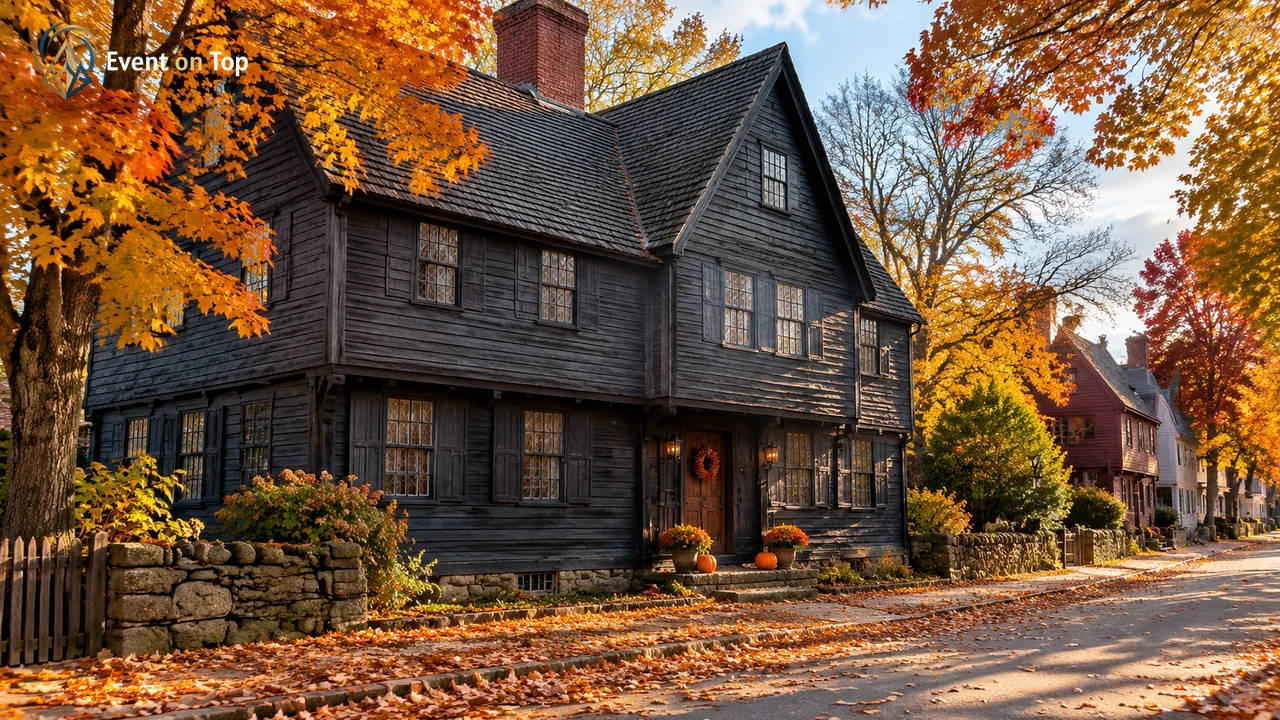
Salem’s October is a takeover. Haunted Happenings runs the entire month — October 1 to 31, 2026 — and layers Halloween entertainment on top of genuine history. The entertainment layer is huge: ghost tours leaving through the evening, walk-up haunted houses, a psychic fair, costume balls, market weekends on Salem Common, and the after-dark Salem Night Faire in the woods of Pioneer Village. The history layer is the real thing: the Witch House, the only building in Salem with direct ties to 1692 still standing; the Witch Trials Memorial, with twenty stone benches for the twenty executed victims; the Salem Witch Museum; and the Peabody Essex Museum. In 2026 the city adds its 400th anniversary programming on top. Nothing about Salem is contained — the festival is the city, and you wander it.
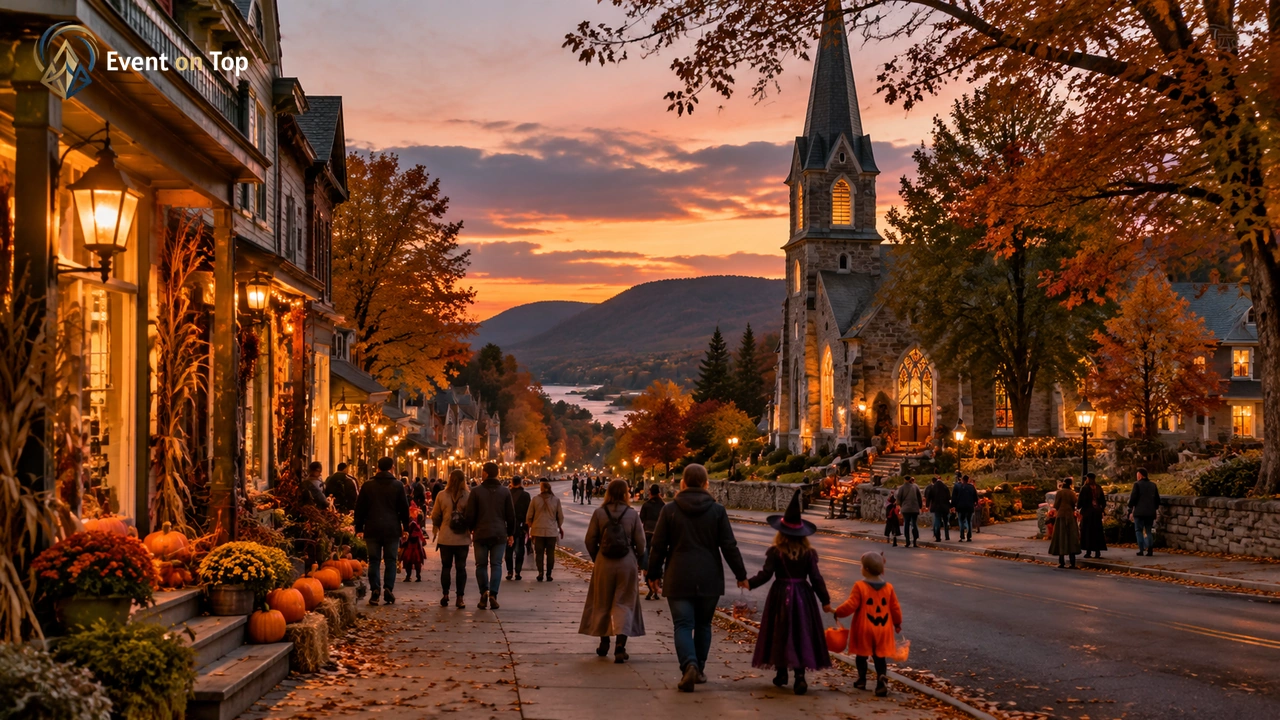
Sleepy Hollow’s October is a curation. The villages of Sleepy Hollow and Tarrytown sit about 30 miles north of Manhattan, and Historic Hudson Valley builds the season around one tale. At Philipsburg Manor, Twilight Village at Sleepy Hollow fills an evening with fire performers, storytellers and a sound-and-light recreation of the Horseman’s midnight ride; The Headless Horseman Files turns the legend into a daytime whodunit; The Spirits of Sleepy Hollow Country is a night of stage magic. At Washington Irving’s Sunnyside estate in Tarrytown, master storyteller Jonathan Kruk performs Irving’s “Legend” outdoors, where the story was written. Between events, the village itself does quiet work: Sleepy Hollow Cemetery, where Irving is buried, runs tours, and the Old Dutch Church stands at the heart of the legend.
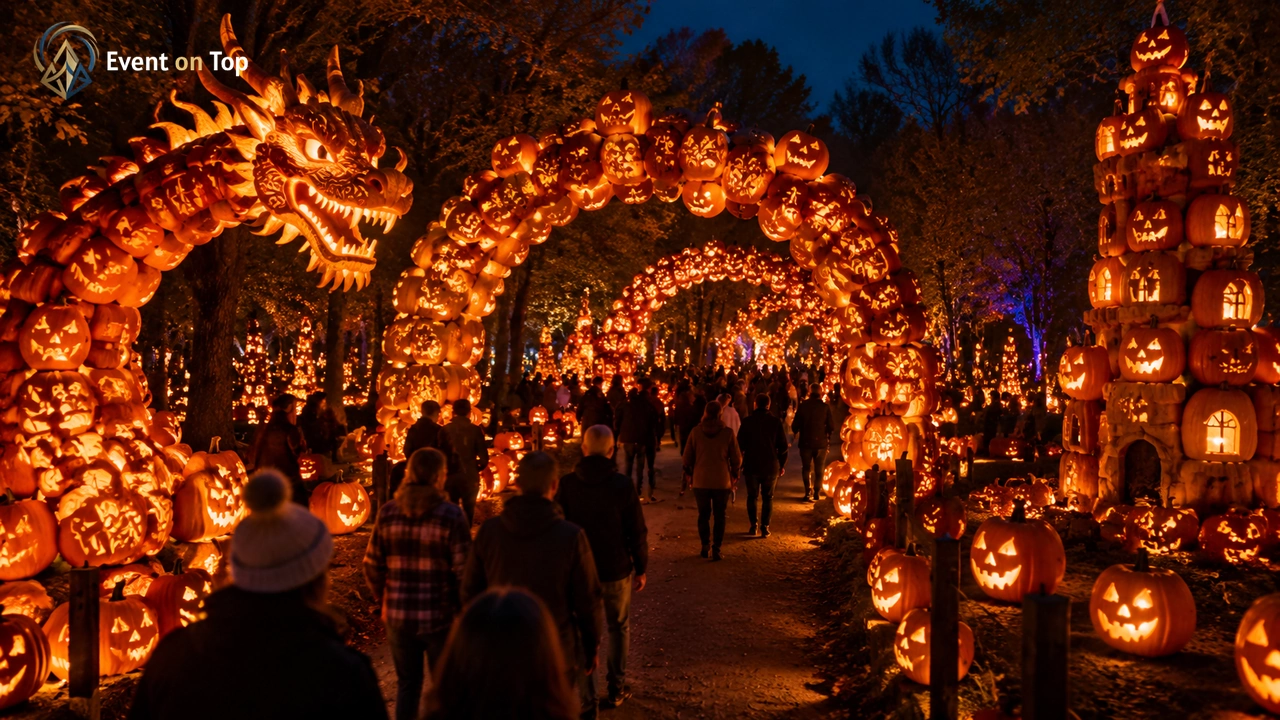
And then there is the area’s spectacle. The Great Jack O’Lantern Blaze at Van Cortlandt Manor in Croton-on-Hudson — the next stop up the same rail line — arranges more than 7,000 hand-carved, illuminated pumpkins into tunnels, arches and sculptures along a night trail. We re-checked the official Historic Hudson Valley page while writing this: the Blaze is on now for 2026, runs through November 8, is open every night in October, and is advance-ticket only — nothing is sold on site. Crucially, nothing jumps out at you. The Blaze is art, not horror, which is why it anchors family trips in a way no Salem haunted house can.
Crowds & Booking Pressure
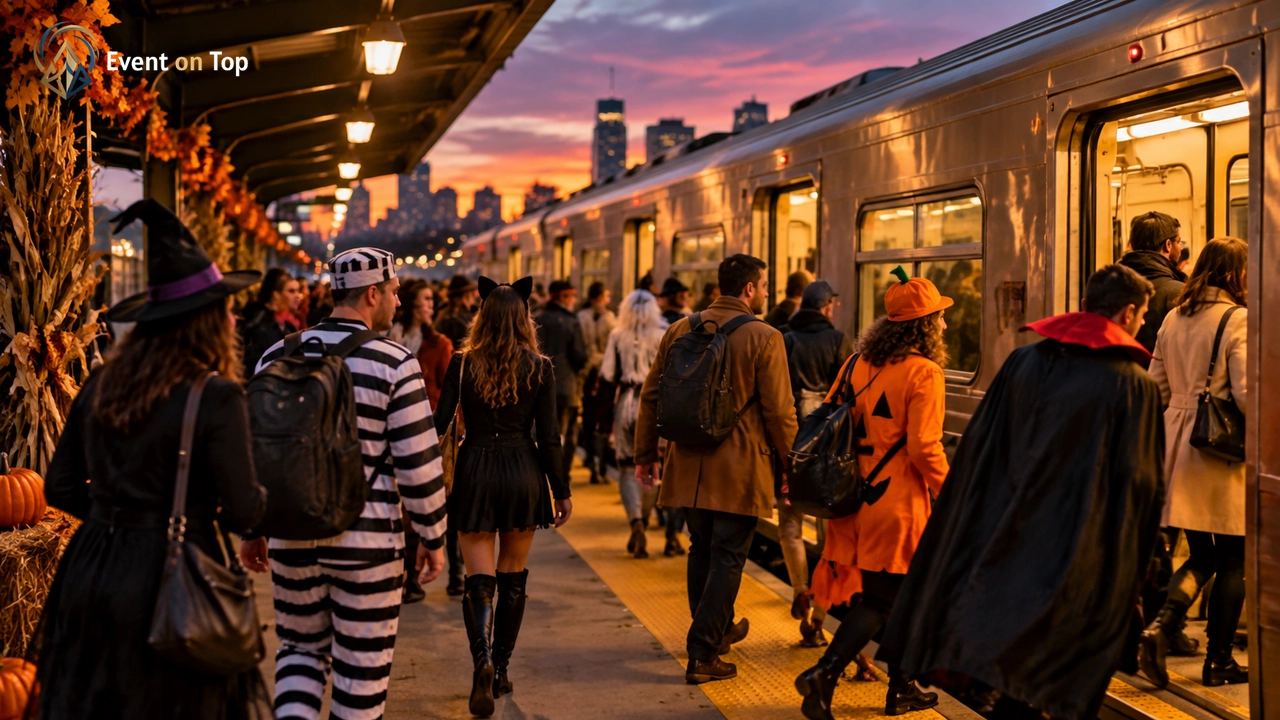
Salem’s crowd problem is famous and earned. Destination Salem counts more than a million October visitors, and the pressure builds through the month: weekdays in the first two full weeks (roughly October 5–16, Tuesday to Thursday) are the quiet version of the same festival, while every weekend is heavy and the final stretch, October 24–31, is peak — Halloween night is the single busiest day of the year. Downtown hotels sell out for October weekends months ahead, many with two- or three-night minimums, and ghost tours, the Witch House and the Witches’ Ball all need advance booking. The transport matches the story: take the MBTA commuter train from Boston’s North Station (about 30 minutes; the $10 weekend pass covers unlimited Saturday–Sunday rides), because downtown garages typically fill by about 10:30 a.m. on October weekends and Halloween-day streets close to traffic by noon.
Sleepy Hollow’s pressure is different in kind. The villages never see Salem’s raw volume — there is no million-visitor month and no citywide crush — but almost everything worth doing is a small, ticketed event, and small rooms sell out as surely as big festivals. Historic Hudson Valley’s events have limited capacity and October weekends regularly sell out; the Tarrytown Halloween Parade (Saturday, October 24) is the day-trip peak; and the Blaze sells advance tickets only, with prime October nights going first. The booking rule is the same as Salem’s — reserve the headline events the day your dates are set — but the consequence of failing is narrower: you miss a show, not a city. Metro-North’s Hudson Line makes the trip itself easy: express trains from Grand Central reach Tarrytown in about 35–40 minutes, Philipse Manor station sits beside Philipsburg Manor, and Croton-Harmon, for the Blaze, is about an hour out.
The Cost Picture
Neither town charges a gate fee, so the honest comparison is about which paid layers you stack on top of a free core.
Salem’s free core is bigger. The Grand Parade (Thursday, October 1, 6:30 p.m.), the marketplace weekends, the street scene and the Witch Trials Memorial cost nothing, and on a fall weekday you can have a full, satisfying day spending only on food and the train. The paid layer is priced per piece — museums and historic sites charge individual admission, ghost tours and readings are per person — and it tops out at the Official Witches’ Halloween Ball on October 31 at the Hawthorne Hotel: 21+, a costume contest with a $1,000 first prize, and general admission listed at about $212 for 2026. The real budget-buster is the bed: downtown Salem rooms in October are a book-in-spring market at peak-season prices, and basing yourself in Boston, Beverly or Lynn on the rail line is the standard saving.
Sleepy Hollow’s paid layer is the point of the trip. The signature ticket is the Blaze: standard timed-entry tickets start at $24 on select value evenings, with regular pricing about $32 for adults and $24 for children 3–17 (children 2 and under free), and FLEX tickets from $129 if your date sells out. The village events — Twilight Village, Irving’s “Legend,” the Horseman Files, Spirits — are each individually ticketed on top. But Sleepy Hollow’s structural advantage is the day trip: from New York City you can ride up in the morning and sleep in your own bed, which deletes the hotel line from the budget entirely. Stay overnight in Tarrytown and you pay typical Hudson Valley fall-weekend rates — book early, as rooms near the villages are limited.
The verdict on money: a budget Salem day (train, free festival, one museum) and a budget Sleepy Hollow day (train, cemetery, one evening event) land in similar territory. The gap opens at the top end — Salem’s ball-and-hotel Halloween night costs far more than anything on the Sleepy Hollow side — and closes again if you day-trip Salem from Boston instead of sleeping there.
Best One-Day Itinerary for Each
Salem in one day. Ride a morning MBTA train from North Station and arrive by 10 a.m., before the streets thicken. Spend the late morning on the history layer — the Witch Trials Memorial and one museum (the Salem Witch Museum for the trials story, the Witch House for the building) — while timed-entry slots are easiest. Eat early, around 11:30 a.m., or graze the marketplace stalls on Salem Common instead of joining the 1 p.m. restaurant queue. The afternoon belongs to Essex Street, Pickering Wharf and a booked psychic reading if that is on your list; walk-in slots vanish by mid-afternoon on weekends. Book an early-evening ghost tour (around 7 p.m.) so it ends while the street scene is still at full volume, and plan on one train later than the one you “intend” to catch — on October Saturdays, the platform crowd is the real timetable. Our full Salem guide has the week-by-week crowd calendar to pick your date against.
Sleepy Hollow in one day. This is the classic New York day trip, and our New York Halloween 2026 guide treats it as such: Metro-North from Grand Central to Tarrytown in the late morning, then split the daylight between the legend’s landmarks — Sleepy Hollow Cemetery (Irving’s grave), the Old Dutch Church — and one daytime event, such as the Headless Horseman Files at Philipsburg Manor or a daytime visit to Irving’s Sunnyside. Eat on Tarrytown’s Main Street in the early evening, then choose your night anchor: Twilight Village or Irving’s “Legend” in the village, or ride one stop up to Croton-Harmon for the Blaze — allow 45 to 90 minutes for the trail — and take a late train back to the city. Book every ticketed piece in advance; on October weekends, “we’ll decide when we get there” is how the day falls apart.
Who Should Pick Salem / Who Should Pick Sleepy Hollow
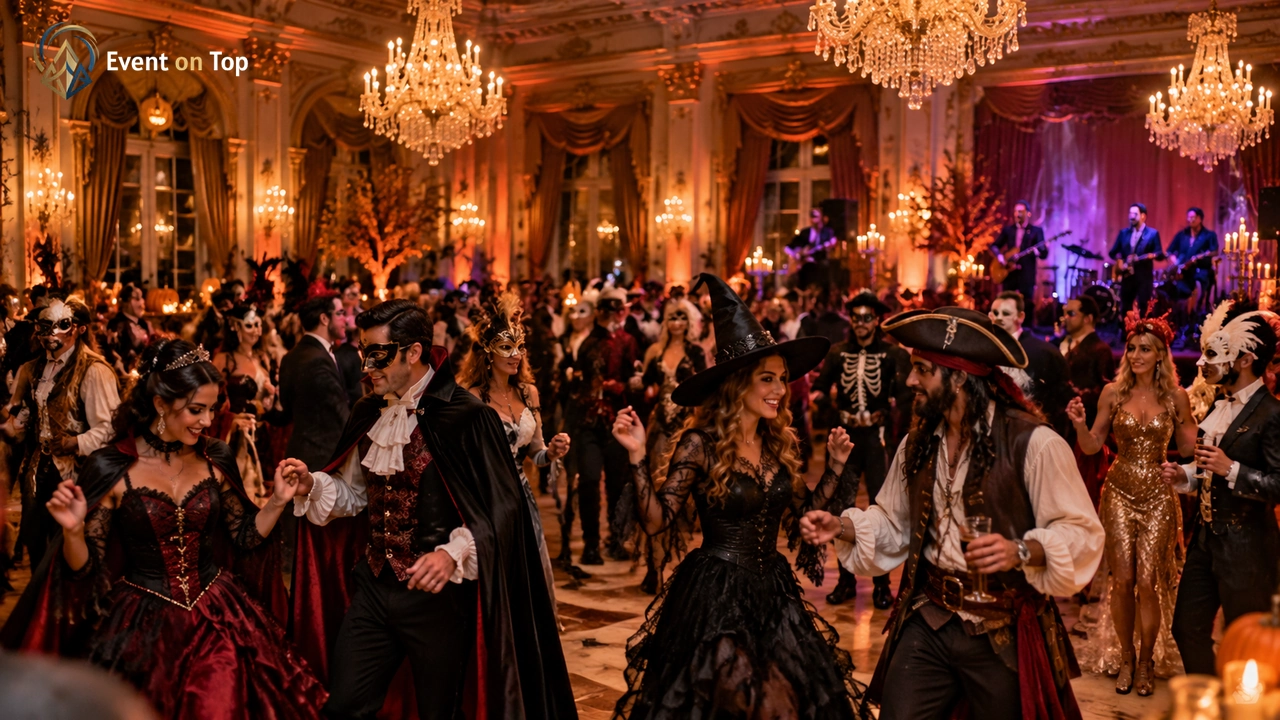
Pick Salem if Halloween night itself is the point — Saturday, October 31 in Salem means costumed crowds from midday, live music stages, the Witches’ Ball, and a 400-drone display over the North River to close the season (scheduled for about 10:15 p.m.; confirm on the official calendar the week of). Pick Salem if you want the real history under the festivities, if you are traveling with a group that wants options at every price point, or if you are based in Boston and want the fullest version of the holiday America offers.
Pick Sleepy Hollow if you are based in New York City and want a complete Halloween trip without a hotel. Pick it if you are traveling with children — the Blaze delivers spectacle with zero jump scares, and the village events skew atmospheric over frightening. Pick it if crowds genuinely spoil a trip for you, if you love the literary side of the holiday, or if your Halloween needs to extend past the 31st: the Blaze keeps glowing through November 8, a week after Salem’s season ends.
Can You Do Both in One Trip?
Not as a day trip — be clear-eyed about that. Salem and Sleepy Hollow are roughly 200 miles apart, about a 3.5- to 4-hour drive, in different states with different base cities. Nobody sensible does both in a day, and doing both in a single weekend means spending it on the highway rather than at either festival.
What does work is a long weekend built as two bases: a night or two in Boston (or Salem itself) for the Witch City at full strength, then the drive — or a train-and-car combination — down to the Hudson Valley for a Tarrytown night and the Blaze, or the reverse. Give each town its own evening, because evenings are what both do best: Halloween week crowds make Salem’s nights electric, and Sleepy Hollow’s events are almost all after-dark affairs. The two trips also de-risk each other nicely in a longer itinerary, since Salem’s season ends October 31 while the Blaze runs to November 8 — a trip that runs past Halloween can put Salem first and Sleepy Hollow second. In practice, though, most people should treat these as two separate trips in two separate years — which is a good problem: it means Halloween has a sequel.
Frequently Asked Questions
Which is better on Halloween night itself, October 31?
Salem, and it is not close. October 31 is Salem’s crescendo — costumed crowds from midday, downtown streets closed to cars, the Witches’ Ball, and the drone display to finish. Sleepy Hollow still offers a strong night (the Blaze runs on Halloween, as it does every night in October), but the village reads as a beautiful evening out rather than the center of the holiday.
Which is less crowded?
Sleepy Hollow, clearly — two villages with capped, ticketed events versus a city hosting a million-plus visitors across the month. The caveat is that Sleepy Hollow’s small capacities sell out, so “less crowded” only holds if you book. Salem’s calm version is a weekday in the first two full weeks of October.
Which trip is better for kids?
Sleepy Hollow, on the strength of the Blaze: a huge, glowing, no-jump-scares night that works for small children and grandparents alike, plus daytime village events. Salem is good for kids in daylight and before the final week — the pet parade (October 10), markets and museums — but after dark in the last week the center turns adult and extremely dense.
Can I do Sleepy Hollow as a day trip from New York City?
Yes — it is one of the easiest Halloween day trips in the country. Metro-North’s Hudson Line from Grand Central reaches Tarrytown in about 35–40 minutes on express trains, Philipse Manor station is beside the manor, and the Blaze is one stop further at Croton-Harmon, about an hour out. Book the events in advance and the trains take care of themselves.
Is Salem worth it if I can only go in the last week of October?
Yes, if you go in with bookings and a train plan — that is the honest condition. The final week is the fullest, loudest version of the festival, and Halloween night is the single busiest day of the year; hotels and prime tours will be gone, but the free layer never sells out, and day-tripping by train from Boston keeps the trip workable.
Two Towns, Two Kinds of Halloween
Salem and Sleepy Hollow are not rivals so much as answers to different questions. Salem asks how big Halloween can get — a city, a month, a million people, real history wearing a costume. Sleepy Hollow asks how well Halloween can be told — one village, one horseman, seven thousand pumpkins lighting the dark. Pick the question that sounds like your October, book the tickets early, and take the train. For where both sit among the season’s heavyweights, see our roundup of the best Halloween events in the USA in 2026.