







Family Halloween Costumes With Baby and Dog: Coordinated Ideas the Whole Crew Can Actually Wear

Family Halloween Costumes With Baby and Dog: Coordinated Ideas the Whole Crew Can Actually Wear
Halloween 2026 falls on Saturday, October 31 — a full day to get the whole crew into one coordinated photo before the evening falls apart. Two members of that crew never got a vote: the baby, who will wear whatever is soft, and the dog, who can vote with its feet and a full-body shake at the worst possible moment.
So this guide is built the other way around. Every theme below is assigned in three comfort levels, and the least tolerant member of the family sets the ceiling for everyone. The result is a set of lineups that can actually be worn — to a party, around the neighborhood, and through at least one feeding, one diaper change, and one dog who has opinions.
The Coordination Formula (One Theme, Three Comfort Levels)
A coordinated family costume is not four identical outfits. It is one theme, one anchor color, and one shared motif, expressed at whatever level each member can handle. Build every lineup from the same three levels:
Level 1 — the full costume. For the enthusiastic parent. The cape, the overalls, the full commitment. Most families only have one Level 1 person — that person is the theme’s headline.
Level 2 — costume-lite. A themed shirt, a hat, an apron, or one strong prop. This is where the second parent usually lands — and it matters: Level 2 is what connects the headline costume to everyone else in the photo.
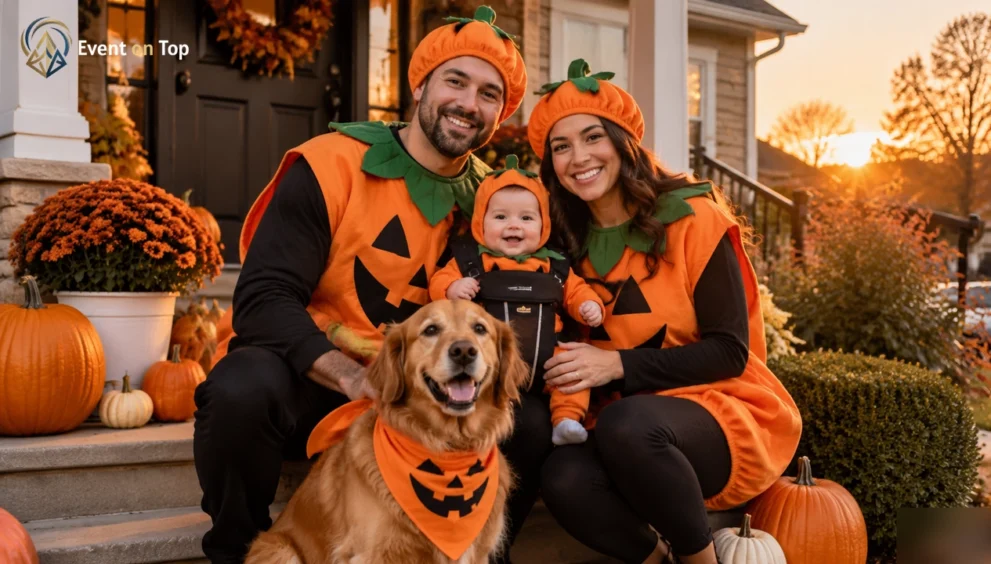
Level 3 — accessory only. This is the default level for the baby and the dog — not a compromise. A baby in a pumpkin-print sleeper and a dog in a matching orange bandana read as fully part of the theme in any photo. Level 3 is soft, washable, and off in seconds if dinner, a nap, or a muddy paw intervenes.
Three working rules hold the formula together. First, choose the theme around the baby’s comfort and the dog’s temperament, not adult ambitions. Second, every piece on the baby and the dog should come off in under ten seconds. Third, if a member of the crew is miserable, downgrade that member a level — a happy dog in a bandana photographs better than a miserable dog in a full suit, every time. Adding older siblings, grandparents, or friends? The same three levels scale up — our group Halloween costume ideas cover bigger crews in the same spirit.
Garden & Farm Themes
Garden and farm themes are the easiest win in this guide: ordinary clothes, soft props, nothing fragile.
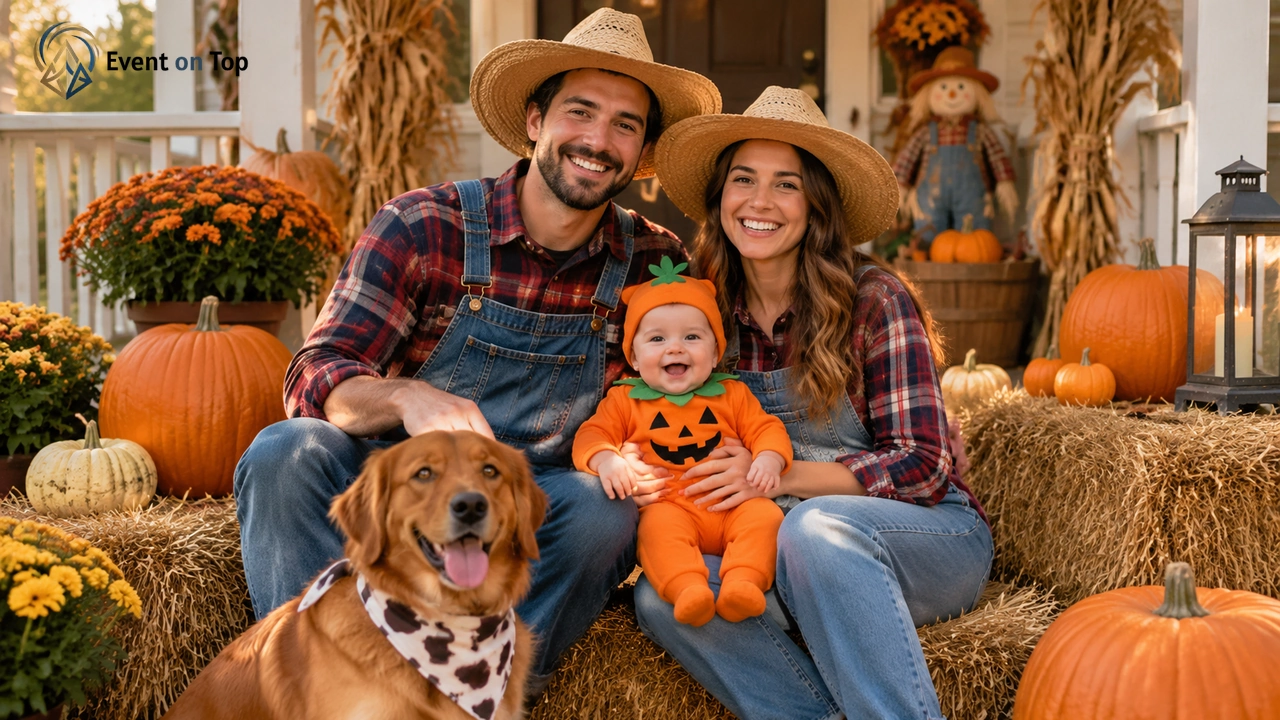
The pumpkin patch. Parents: gardeners or farmers — plaid shirts, jeans or overalls, straw hats (Level 1 and 2). Baby: the pumpkin — an orange sleeper or bunting with a green leaf hat; this is the one baby costume that works at every age because it is just warm clothing with a hat. Dog: a green or orange bandana as a fellow pumpkin, or a plain bandana as part of the harvest crew. Nothing is fragile, and the lineup survives a hayride.
The farmyard. Parents: farmers in overalls, one optionally a gentle scarecrow (plaid shirt, straw hat, a little face paint). Baby: a chick (yellow sleeper, soft feather-free hat), a lamb (cream sleeper, ear hat), or a tiny pig (pink sleeper, ear hat). Dog: the easiest casting in the guide — a spotted bandana or lightweight vest makes a cow, a pink bandana makes a pig, and a dog who sheds the costume entirely is still, convincingly, the farm dog.
The garden party. Parents: a gardener (apron, gloves, sun hat) and a butterfly or bee at Level 2 — striped shirt and antenna headband. Baby: a flower — a green sleeper with a petal-framed soft hat. Dog: the bee, if willing: a lightweight yellow-and-black striped vest worn for the photo only, or a flower collar accessory for portraits. Garden themes also tolerate warm October weather better than any furry suit.
Classic Monsters, Baby-Friendly Versions
The classic monsters are public-domain archetypes — vampire, mummy, ghost, skeleton, witch — which means any family can use them freely, and every one has a soft version that works with a baby in the picture. Keep the monsters charming rather than scary: the baby is the punchline that makes the whole lineup friendly.
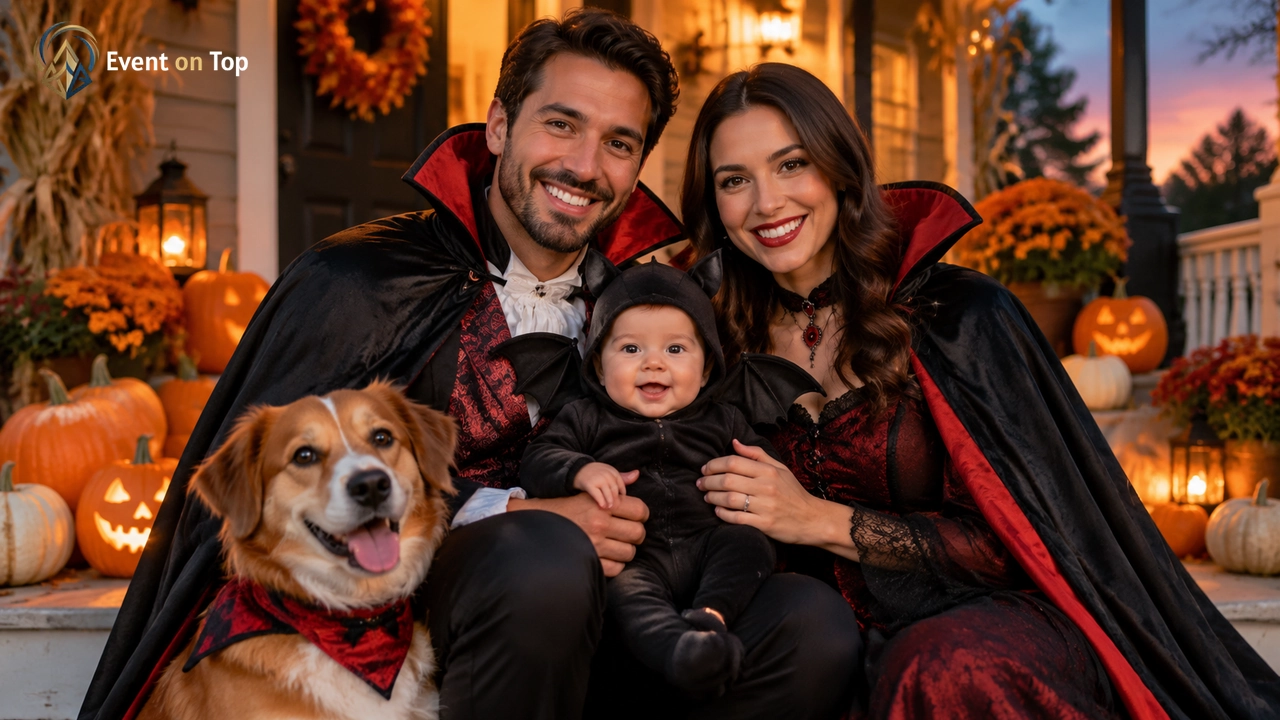
Vampire family. Parents take the capes and collars (Level 1). The baby is the tiniest bat: a black sleeper and a soft hat with bat ears. The dog, in a small cape-style collar accessory or a black-and-red bandana, becomes the vampire’s second bat. Skip plastic fangs for anyone holding the baby — one less thing to drop, poke, or swallow.
Mummy crew. Parents wrap loosely in white fabric strips over normal clothes — deliberately shabby is funnier and safer than tight wrapping. The baby wears a plain white sleeper (no wrapping on babies, ever — loose fabric near a baby is a hazard, not a costume). The dog gets a white bandana and is formally credited as the mummy’s dog.
Skeleton set. Matching bone-print pajamas are the lowest-effort monster lineup: parents in skeleton-print tops, the baby in a bone-print footed sleeper, and the dog in a skeleton-print lightweight vest or bandana. Everything is sleepwear, so everyone can go straight from the photo to bed.
Witch and her cats. One parent is the witch (hat, dark dress or cape). The baby is a black cat: black sleeper, soft ear hat, nothing on the face. The dog is the second cat or the witch’s familiar, via a black bandana or ear headband it already tolerates. A second parent can join as a warlock, a broom-carrying assistant, or a very confused wizard at Level 2.
Storybook Archetypes (Generic Only — No Characters)
Storybook dressing tempts families toward specific beloved characters, but the durable version of this section is archetypes only: a knight, a dragon, a pirate, a fairy. Archetypes need no permission, no licensed costume, and no explanation — a three-year-old guest will identify every one instantly.
Knight, dragon, and steed. One parent is the knight: a gray tabard, a soft helmet, a foam shield. The baby is the dragon — a green hooded bunting or sleeper with soft felt spikes down the back, which doubles as the warmest costume in this guide. The dog is the noble steed (a blanket-style saddle cover worn for the photo) or a second, smaller dragon in a green bandana. Take the photo early; dragons nap without warning.
Pirate crew. Parents are pirates at whatever level they like — striped shirts and bandanas at Level 2, full coats at Level 1. The baby is the parrot: a bright green or red sleeper with a soft feather-free crest hat (craft feathers near a baby’s mouth shed and get chewed). The dog is the first mate in a pirate bandana, or the ship’s dog, which requires no costume and total honesty.
Woodland court. A parent as a fairy (wings over normal clothes) or a woodland ranger (hat, vest, binoculars prop); the second parent as a king or queen with a soft felt crown. The baby is a mushroom — white or cream sleeper, red cap-style hat with white dots — or a tiny royal in a plain sleeper with a felt crown worn for the photo. The dog is a deer via an antler headband only if this particular dog has cheerfully worn one before, and only for the length of the photo; otherwise a brown bandana and the title of Royal Hound.
Matching by Color, Not Full Costumes
Some years, one parent will not wear a costume, the baby is teething, and the dog has already eaten one hat. Color matching is the strategy for that year, and it works better than reluctant full costumes.
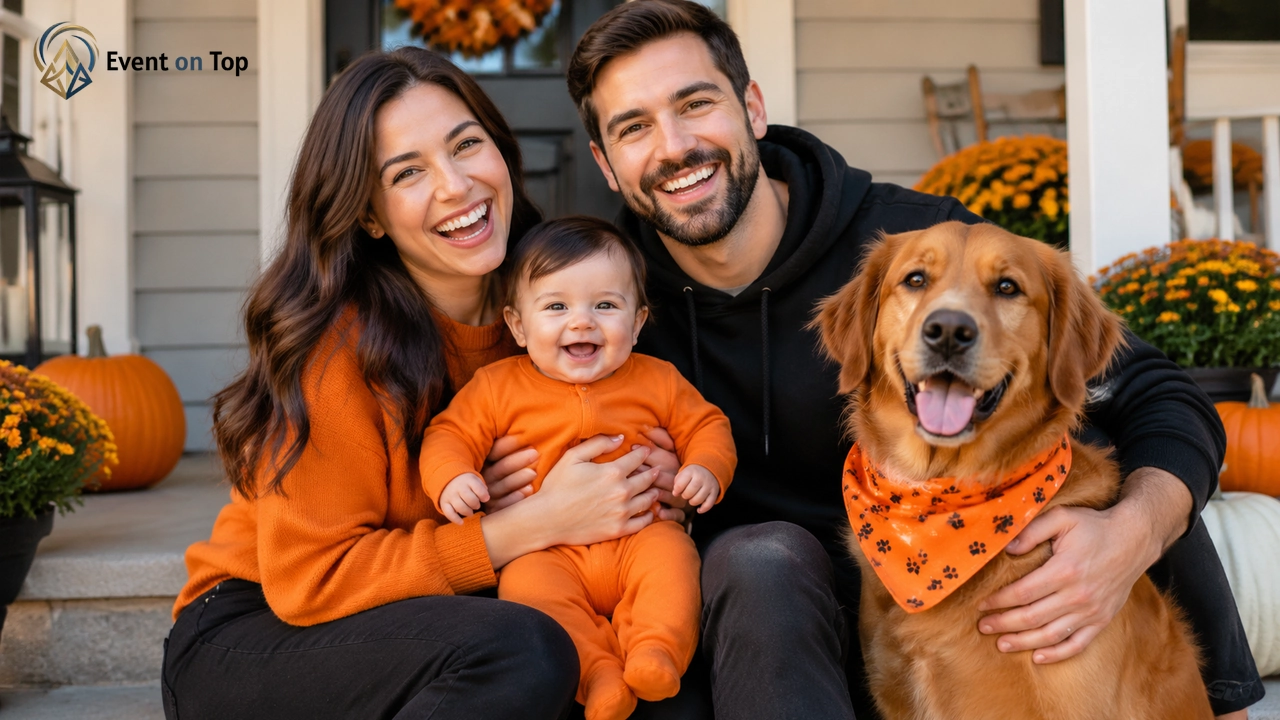
Pick a palette and dress from your own closets. Orange and black is the classic: black jeans and orange tops for the parents, an orange sleeper for the baby, an orange bandana for the dog. Purple and green reads instantly as Halloween and flatters everyone. All black with one orange accessory each looks deliberate and takes ninety seconds. Autumn plaid — everyone in flannel, baby in a plaid sleeper, dog in a plaid bandana — suits farm outings, pumpkin patches, and cooler states.
The rules are the same three levels in disguise: the accessory is the costume. A matching color story plus one shared motif (everyone’s accessory is a pumpkin, a bat, or a star) is all a camera needs. It is also the best approach for warm-weather Halloweens, huge extended-family photos, and any lineup assembled the day before.
Dog Comfort & Safety Rules
The dog’s costume rules decide whether the dog is in the photo or hiding under the porch. Treat them as non-negotiable.
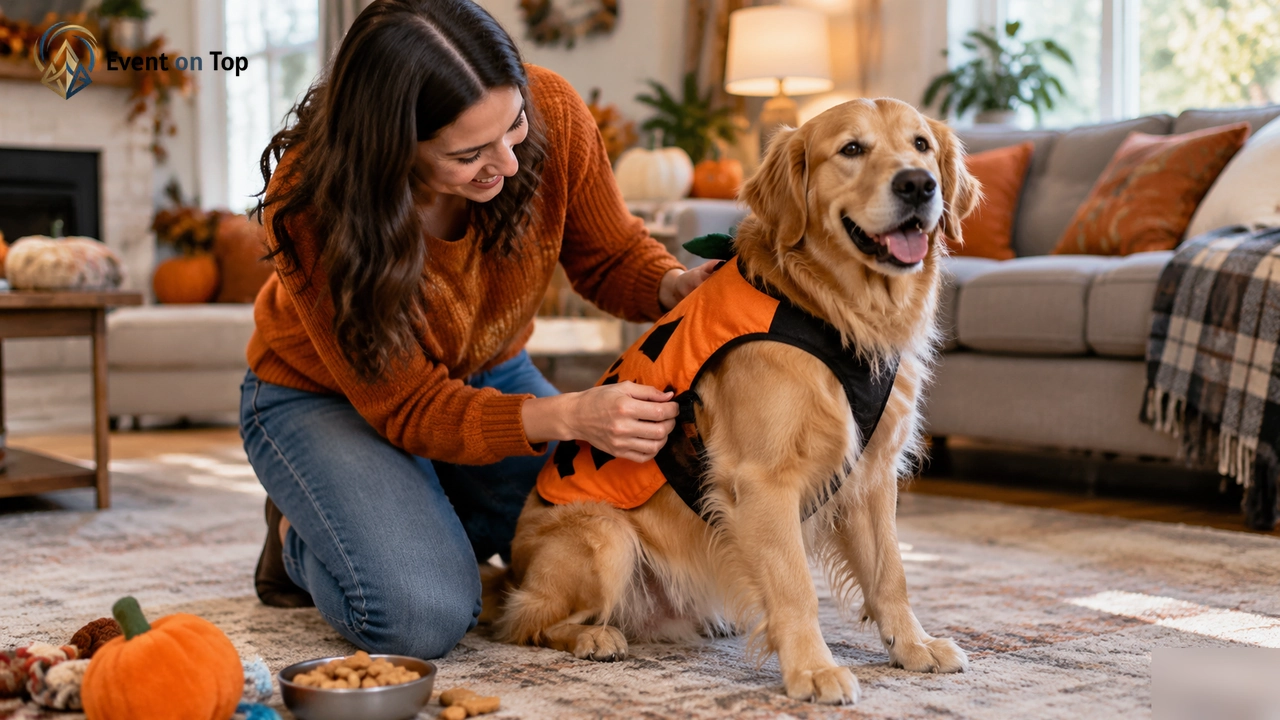
Rehearse. Put the costume on at home, for a few minutes, days before Halloween, with treats and praise. A dog who has worn the vest three times in the kitchen will wear it once on the porch. A dog meeting it for the first time on October 31 is being set up to refuse.
Fit and freedom. A dog costume should sit snug without being tight, and it must never restrict breathing, barking, seeing, walking, or going to the bathroom. Nothing should wrap or tighten around the neck. Keep pieces away from eyes and ears; if the dog walks strangely, the costume comes off.
Small parts are the real hazard. Buttons, bells, glued-on gems, and dangling decorations are chew targets, and a detached piece is a choking hazard. Choose costumes with printed or sewn-flat designs, inspect for anything loose before and after wearing, and never leave a costumed dog unsupervised.
Overheating is the silent limit. Full suits trap heat, and dogs cannot shed heat the way we do. Thick-coated breeds and flat-faced breeds (short-nosed dogs who already breathe hard on a warm walk) should skip full costumes entirely — a bandana is their costume. Watch for warning signs: heavy panting, drooling, restlessness, rubbing or rolling to get the costume off. Any of them ends the session immediately — costume off, water, shade.
Believe the opt-out. Freezing in place, a tucked tail, pawing at the costume, lip-licking, showing the whites of the eyes, or bolting from the room are a dog saying no in complete sentences. Downgrade to a bandana or a festive collar — or photograph the dog exactly as it is. Never dye a dog’s fur: dyes and sprays irritate skin and will be licked. Keep the dog leashed around trick-or-treaters, and keep Halloween candy well out of reach — chocolate and xylitol-sweetened candy are dangerous for dogs.
Baby Carrier & Stroller Integration (Plus Photo Tips)
For most babies, Halloween happens in a carrier or a stroller, so the costume is designed around the transport, not the other way around.
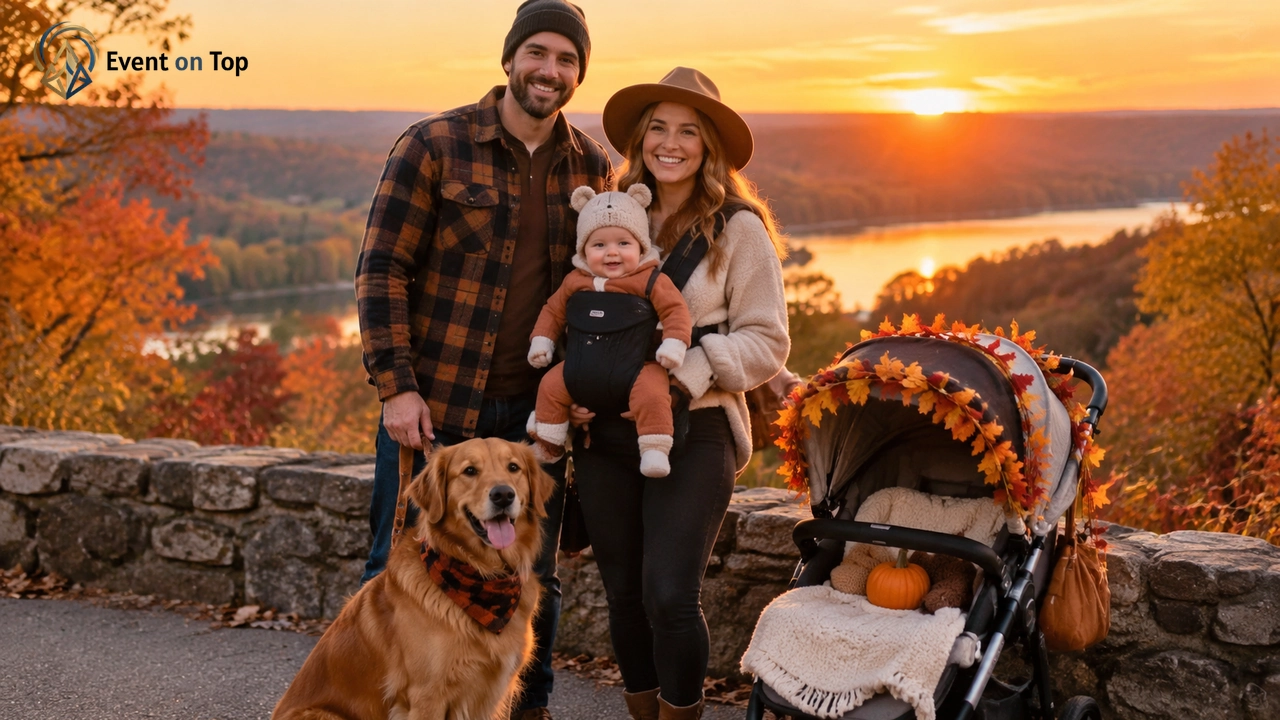
Carrier rules come first. Nothing bulky goes between the baby and the wearer’s body — no padded layers or stuffed props, nothing that changes how the carrier fits. The baby’s face stays visible and completely clear at all times: no hoods up over the face, no costume pieces draped across the carrier opening. The reliable formula is a themed sleeper or onesie on the baby, a hat with ears or a motif on the head, and the decoration on the outside of the carrier — a soft pumpkin panel or bat garland clipped to the carrier cover, where it shows in photos and touches nothing important. Check the baby’s temperature regularly, too: a carrier plus a costume layer is warm, and a hat that is cute in the photo may be too much by the second street. And watch your own costume: capes, dangling scarves, and hard props at baby-face height will be grabbed, chewed, or poked into someone.
Stroller decoration is the cheat code. A stroller can carry the theme so the baby doesn’t have to: a pumpkin-orange canopy cover, a “dragon’s nest” blanket arrangement, paper bats on the frame. Keep decorations clear of the canopy’s airflow and the baby’s reach, attach nothing loose that can fall onto the baby, and leave wheels, brakes, and folding points unobstructed. The baby rides in a plain soft outfit and still stars in photos. Coordinating older siblings walking alongside need their own age-by-age planning — our kids’ Halloween costume ideas are organized by age group for exactly that job.
Photo tips for a crew with a baby and a dog. Take the official photo first, before the event, the food, and the opinions. Shoot on the porch in the last of the daylight, feed the baby beforehand, and keep the dog on a leash held by the Level 1 parent so the dog can be positioned — and released — fast. Use burst mode and aim for ten frames; the one where the dog looks at the camera and the baby is awake is in there somewhere. Treats for the dog, patience for everyone, and low ambitions are the whole technique: a slightly candid photo of a comfortable crew beats a perfect photo of a miserable one.
Frequently Asked Questions
How do I keep my dog in a costume long enough for a photo?
Rehearse it at home in short, treat-filled sessions during the week, then take the photo first thing in the evening, before anything else happens. If the dog will only tolerate two minutes, plan for a two-minute photo — costume on, porch, burst mode, costume off, done.
What can my baby wear if they’ll be in a carrier all evening?
A themed sleeper or onesie plus a soft motif hat, with the decoration on the carrier cover rather than on the baby. Nothing bulky between the baby and your body, and the baby’s face visible and clear the whole time — that combination is the safest option and, in photos, the cutest.
Our dog hates costumes. Can we still match?
Yes — this is exactly what the color-matching and bandana levels are for. A bandana or festive collar in the family palette puts the dog in the theme with nothing to fight about, and a relaxed dog beside the family reads better in the photo than a costumed dog trying to escape.
Is it safe to dress up a flat-faced or thick-coated dog?
Only minimally. These dogs overheat fast and breathe harder under any extra layer, so skip full costumes and suits. A lightweight bandana, worn briefly and watched closely for heavy panting, is their ceiling — and skipping the costume altogether is always a respectable answer.
How do we coordinate if one parent refuses to dress up?
Put them in the palette. Color matching exists for this parent: everyday clothes in the family colors plus one themed accessory — a hat, an apron, a pumpkin pin — and they are coordinated without wearing a costume. It is the most negotiated peace treaty in Halloween, and it works.
One Good Photo and a Crew That Lasts the Evening
The goal was never the most elaborate family costume on the street. It is one theme everyone could wear, one photo where the baby is awake and the dog is still in frame, and a crew still speaking to each other by the time the trick-or-treaters arrive. Build the lineup from the least tolerant member outward, and all of that gets easy.
Ready to take the crew out? Our guide to family Halloween events rounds up the zoo nights, trunk-or-treats, and not-so-scary parties where a coordinated family — baby, dog, and all — fits right in.