






Office Halloween Party Themes: HR-Appropriate Ideas With Decor, Food & Contests

Office Halloween Party Themes: HR-Appropriate Ideas With Decor, Food & Contests
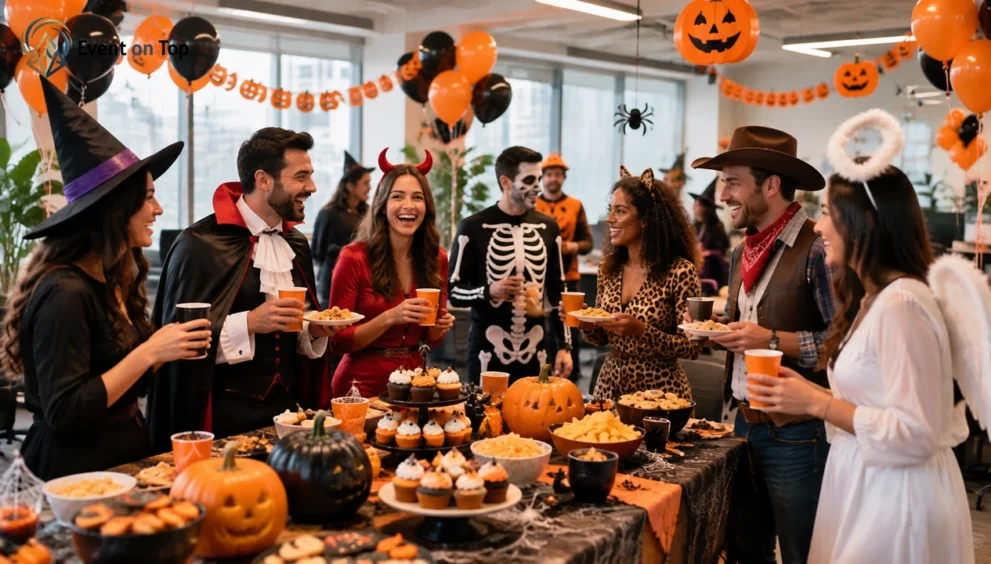
The office Halloween party lives or dies on one decision: the theme. Pick well and you get a break room full of people who want to be there — a witch’s hat on the head of IT, teams arguing happily about whose cubicle door looks best, a costume contest that gives everyone a reason to join in. Pick badly and you get an HR email. The office halloween party themes ideas in this guide land on the right side of that line: every theme is workplace-appropriate, decorates in about 30 minutes, works with a normal dress code, and comes with a food angle and a contest format, so the theme carries the whole party, not just the invitations. Halloween 2026 falls on Saturday, October 31, so most office celebrations will happen on Thursday or Friday, October 29–30 — mid-workweek, which makes low-disruption themes even more valuable.
What Makes a Theme Office-Safe
An office-safe theme passes four quick tests. First, it decorates fast and comes down faster — everything below goes up in roughly 30 minutes with tape, paper, and a few props; nothing involves fake blood on the carpet, fog machines near the fire alarm, or props blocking a walkway. Second, it works for people who do not want a costume: a colleague can join in with an orange sweater, a headband, or a themed snack and still feel included. Third, it scares nobody by default — gentle spooky is fine; gore, realistic weapons, and costumes that mock a religion, culture, or coworker are not. Fourth, it survives the workday: decor still looks fine at 4 PM, and food is still safe to eat at lunch.
The HR-sensitivity note (read this before you announce anything). Make participation genuinely optional, with no sign-up pressure and no penalty — visible or social — for skipping it. Keep the scare level at “spooky-lite” so the theme is fun for everyone, not just horror fans. Respect religious and cultural differences: some colleagues do not celebrate Halloween at all, and a harvest or decades alternative lets them join the social part without the Halloween part. Default to alcohol-free drinks, and label food ingredients so people with allergies or dietary rules can choose safely. A theme that passes those tests gets better turnout than any amount of enthusiasm.
Beyond the four full themes below, these quick-pick ideas slot into almost any workplace:
| Theme | Decor in 30 minutes | Dress-code-safe costume | Food angle | Contest format |
|---|---|---|---|---|
| Black-and-Orange Classic | Balloon bunches, paper bats, pumpkin centerpiece | Black outfit plus one orange accessory | Orange soda, cheese puffs, candy corn | Best use of the two colors |
| Spooky-Lite | Paper ghosts, smiling pumpkin cutouts, string lights | White top, bat or cat ears headband | Ghost meringues, marshmallow “boo” cups | Cutest (not scariest) look |
| Masquerade-Lite | Gold and black streamers, paper mask garland | Paper or felt eye mask over work clothes | Finger sandwiches, sparkling juice | Most elegant mask |
| Pumpkin Patch Office | Paper hay-bale backdrop, pumpkin cutouts on doors | Plaid shirt, denim, straw hat | Cider, caramel dip with apple slices | Best pumpkin-decorating entry |
| Haunted Cubicle-Lite | Cotton cobweb corners, battery candle per desk, door signs | All-black outfit, optional cape | “Potion” punch, gummy worms | Best decorated desk |
For games as well as a theme, pair any of these with the low-prep formats in our guide to office Halloween party games for coworkers, built on the same opt-out-friendly rules.
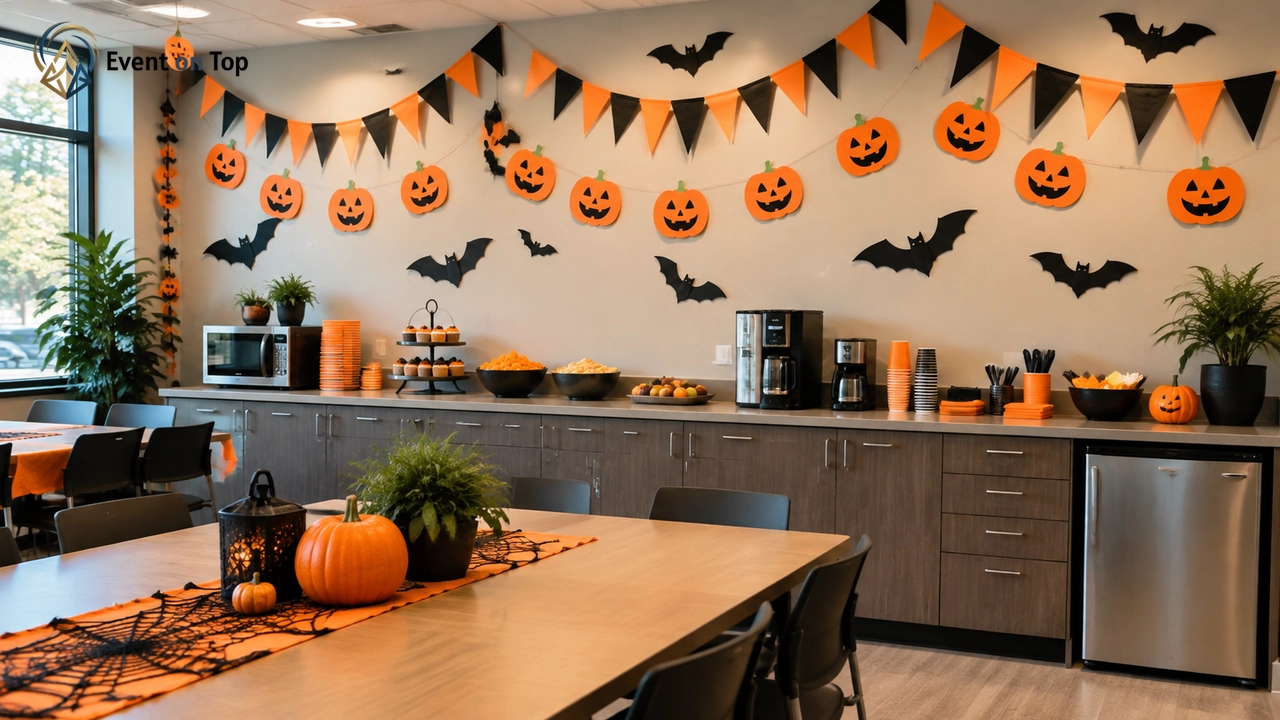
Classic Monster Mash (The Safe Default)
If your office has never done Halloween before, start here. Classic monsters — vampires, witches, mummies, werewolves, friendly ghosts — are the most recognizable Halloween language there is, and the cartoon versions read as playful rather than frightening. It is the theme most likely to win a cautious manager’s approval: everyone understands it instantly.
Decor in 30 minutes. Black tablecloth on the snack table, a paper garland of smiling monster faces, and one balloon cluster at the entrance. Cobweb (stretched cotton) goes in corners and over picture frames only — never across doorways. A “Monster Mash” sign from printed letters finishes the room.
Dress-code-safe costumes. Vampire means a cape over a normal shirt, no fake blood; witch means a pointed hat with everyday clothes; mummy means a white scarf over a light outfit; ghost means a white top and dark trousers. All pass a standard dress code, come off in seconds for a client call, and keep faces visible — face paint stays optional and light, full masks stay at home.
Food angle. Green “slime” punch from lemon-lime soda and lime sherbet, mummy-wrapped cheese sticks with crescent-dough bandages, and candy labeled with playful monster names. Keep one savory and one non-sugar option so the table works for everyone.
Contest format. “Best Classic Monster” — judged on recognizability, not expense. Paper-ballot voting at lunch keeps it light, and a “best effort” mention means the person in just a cape still had a reason to play.
Costume-planning tip: teams can coordinate without matching outfits using the group-theme approach in our group Halloween costume ideas guide — one monster per person is a group costume with zero coordination meetings.
Vintage Halloween Office
Vintage Halloween — 1920s to 1950s paper decorations, orange crepe paper, black cats, old-fashioned jack-o’-lantern grins — is the most charming theme on this list and the one that photographs best. It suits offices that want atmosphere without a hint of horror: the palette is warm, the imagery nostalgic, the whole thing more “autumn fair” than “haunted house.”
Decor in 30 minutes. Orange and black crepe-paper streamers along the ceiling edges, paper pumpkin and black-cat garlands, and a centerpiece of real mini pumpkins on a kraft-paper runner. Pin a few vintage-style Halloween postcard prints to the notice board. That is the whole setup — paper goods, thirty minutes, and it all recycles afterward.
Dress-code-safe costumes. Vintage is kind to office wardrobes: 1920s-inspired means a headband and beads over a dress, or a vest and flat cap; 1950s means a polka-dot skirt, rolled jeans, or a cardigan-and-scarf look. Nothing needs buying, nothing breaches a dress code, and it gets the best cross-generational participation.
Food angle. Lean old-fashioned: caramel-dip apple slices, a popcorn bar, ginger snaps, and hot cider in a slow cooker — which doubles as decor, since the room will smell like October all day.
Contest format. “Best Vintage Look” plus a cookie-decorating round judged at lunch, giving non-costume colleagues a competitive outlet. Judge on silhouette and effort rather than authenticity — nobody needs a history lecture with their cider.

Harvest Festival: The Zero-Spook Option
Harvest Festival is the theme for offices where Halloween itself is the obstacle — a cautious culture, mixed beliefs, or a front-of-house role where pumpkins with faces might raise eyebrows. It keeps everything people like about an autumn party (food, color, a break in the routine) and removes every trace of spooky. If even two or three colleagues would quietly dread a Halloween party, this theme includes them.
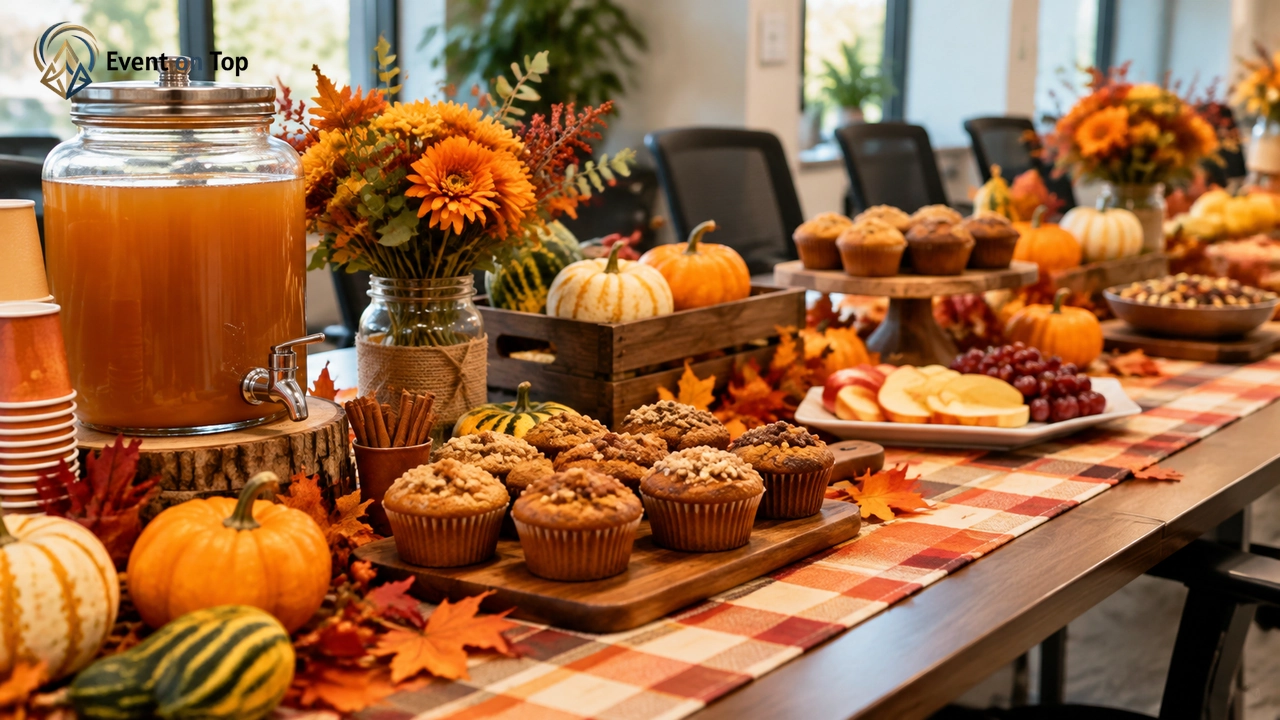
Decor in 30 minutes. Paper autumn leaves along the table edges, a plaid runner, mini pumpkins and gourds as centerpieces, and a “fall favorites” note board where people pin a small card. Warm colors only — oranges, reds, golds — nothing black-and-creepy anywhere.
Dress-code-safe costumes. There are no costumes in the traditional sense, which is the point: invite “fall colors day” instead — plaid shirts, autumn-toned sweaters, or a scarecrow-lite look (plaid plus a straw hat). Participation has a zero-awkwardness floor.
Food angle. Harvest food is the easiest office food there is: apple cider, pumpkin muffins, a chili or soup potluck if your office does potlucks, caramel apples, and a pie-slice dessert table. Label everything with ingredients — harvest potlucks tend to be homemade, so labels matter more here, not less.
Contest format. Swap the costume contest for a bake-off, judged by ballot at lunch with a small prize. Add pumpkin decorating with paint and stickers rather than carving tools — no knives in the break room, and the finished pumpkins double as decor all week.
Decades Day
Decades Day is the highest-energy theme here and needs no Halloween buy-in at all: each person — or team — picks a decade and dresses the part. The 1970s bring flares and disco shimmer, the 1980s neon and big hair (wig optional), the 1990s flannel and denim, the 2000s tracksuits and frosted tips for the brave. Because the theme is nostalgia rather than Halloween, it pulls in colleagues who would skip a spooky party entirely — and the end-of-day photo wall is always the year’s best.
Decor in 30 minutes. Divide the room by decade with colored tablecloths and printed signs (one table per era), add a paper timeline along one wall, and a decade playlist at low volume if your office allows background music. Each team decorates its own table in ten minutes as part of the fun.
Dress-code-safe costumes. Decades dressing is normal clothes worn with intent: flannel and jeans for the 1990s, a bright windbreaker for the 1980s, tie-dye for the 1970s. Hair and accessories do the heavy lifting, faces stay visible, everything comes off instantly for a meeting. One firm rule: decades dressing celebrates styles, never stereotypes of people.
Food angle. Assign a decade-flavored snack per team — fondue-style cheese dip for the 1970s, pizza rolls and bright sodas for the 1980s–90s, coffee and donuts for the 2000s. It spreads the cost and gives each decade a taste to match its table.
Contest format. “Best Decade” by team plus individual “Most Committed Throwback” — judged on outfit, table, and snack together. Team judging keeps any one person from feeling singled out and turns the decorating into the competition.
For a home-party version of this energy — and a bigger theme bank to steal from — see our main Halloween party ideas guide.

Running the Costume Contest (Categories, Judging, Prizes)
Whatever theme you pick, the costume contest is the engine of the party — and the part most likely to go wrong if improvised. Run it like this.
Categories. Never run a single “best costume” prize; it always goes to whoever spent the most money. Run four or five categories instead: Best Overall, Funniest, Most Creative (handmade beats store-bought), Best Theme Fit, and Best Minimal Effort, plus Best Team if groups coordinated. More categories means more winners — and more people willing to dress up next year.
Judging. Two fair systems work in offices. Ballot voting: everyone gets one slip per category at lunch, votes are anonymous, a volunteer counts. Judging panel: three volunteers from different teams score 1–5 on creativity, theme fit, and effort — never on expense. Announce the system in advance so nobody suspects favoritism, and set one hard rule: costumes that mock a person, group, or belief are ineligible, full stop.
Prizes. Keep prizes small, equal across categories, and work-appropriate: a gift card, a desk trophy that passes to next year’s winner, an extra-long lunch voucher if your workplace allows it, or a reserved parking spot for a week. Public recognition does half the work for free, and winner photos (with permission) sell next year’s party to the skeptics.
Food & Drink That Survive a Workday
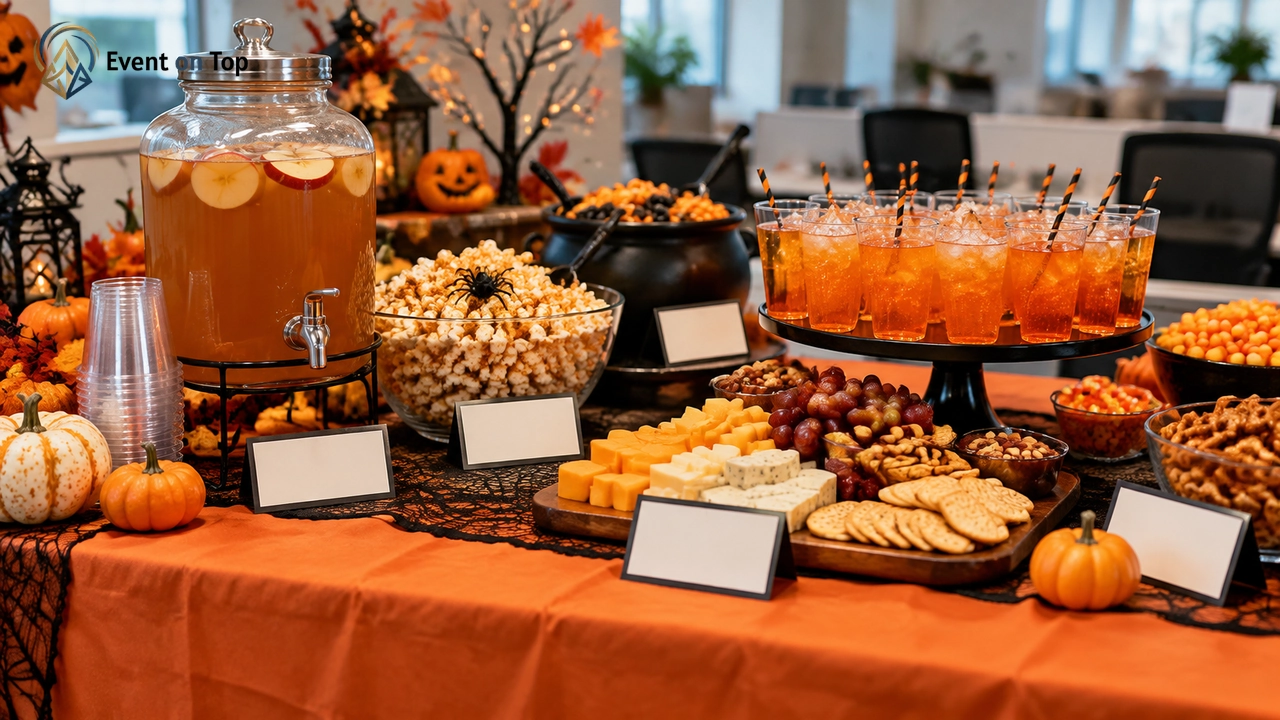
Office party food has a harder job than home party food: it sits out for hours and gets eaten between meetings. Plan for that reality. Favor shelf-stable, room-temperature items — popcorn, pretzels, candy, cookies, whole fruit, muffins. Anything creamy, meaty, or mayonnaise-based goes out in small batches and returns to the fridge on a timer, not on the table from 9 AM to 5 PM.
Drinks are the easy win. Default to alcohol-free — cider, sparkling water with orange slices, a themed punch, and a coffee-and-tea station cover every preference and every policy. If your workplace’s alcohol policy permits drinks at celebrations, check that policy first and follow it exactly; the safest planning assumption is that the party works perfectly well without it.
Two habits make the food side genuinely inclusive. Label everything with its name and main ingredients, especially anything homemade or containing nuts, gluten, or dairy. And include at least one substantial savory option and one sugar-free drink, so colleagues managing allergies, diabetes, or religious dietary rules eat the same party as everyone else — not watch it.
A One-Week Planning Timeline
Most offices will party on Thursday, October 29 or Friday, October 30. Work backwards from your party day:
| When | Task |
|---|---|
| 7 days out | Pick the theme, get a manager’s nod, book the room or break area |
| 6 days out | Send the announcement: theme, optional participation, dress-code reminder, contest categories |
| 5 days out | Open a snack and drink sign-up so you do not get nine bags of candy corn |
| 3 days out | Buy non-perishables, balloons, paper goods, and prizes; confirm slow-cooker or fridge space |
| 1 day out | Print signs, ballots, and labels; clear phone storage for photos |
| Party morning | 30-minute decor sprint, food out in batches, contest ballots at lunch, winners mid-afternoon |
| Next workday | Decor down, thank-you message with photos, note what worked for next year |
The plan is deliberately light: one organizer, one helper, and a theme doing the heavy lifting. If it still feels like too much, cut the contest categories to three and the decor to the table — the party survives, because the theme was doing most of the work anyway.
FAQs
How do we celebrate Halloween at work without upsetting HR?
Choose a low-scare theme, make participation visibly optional, keep costumes dress-code-safe with faces uncovered, label all food, and default to alcohol-free drinks. Run the plan past your manager or HR contact a week ahead — a five-minute heads-up turns most objections into helpful suggestions.
What if some coworkers do not celebrate Halloween?
Pick Harvest Festival or Decades Day, which keep the social break and the food while removing the Halloween content, and frame the invitation around autumn or nostalgia instead. Nobody should have to explain sitting out; the zero-spook options let them join in.
How much should an office Halloween party cost?
This guide deliberately avoids fixed figures because budgets vary enormously by team size and city — but every theme here is built on paper goods, balloons, a few props, and shared snacks, the cheapest tier of office party there is. A food sign-up sheet keeps any one person from carrying the cost.
Can we run an office Halloween party in one lunch hour?
Yes — that is what the 30-minute decor plans are for. Set up before lunch, run the costume contest with ballot voting during the meal, announce winners before people return to their desks, and leave the decor up for the afternoon. Decades Day and Classic Monster Mash both compress well into an hour.
What are the best office Halloween party themes ideas for a remote or hybrid team?
Decades Day and Masquerade-Lite travel best to video calls — both read clearly on camera and need no shared space. Run the costume contest with screenshot photos and a chat poll, judge decorated backgrounds as the “desk” category, and send remote staff the same snack if budget allows, so the food is shared too.
Pick the Theme, Send the Invite
The best office Halloween party is not the scariest or the most expensive one — it is the one everybody felt able to join. Choose Classic Monster Mash for a safe first year, Vintage for charm, Harvest Festival when inclusion matters most, or Decades Day for pure energy, then let the theme carry the decor, food, and contest. Send the announcement a week out, keep participation optional, and make October 29–30 the workdays your office remembers fondly.