






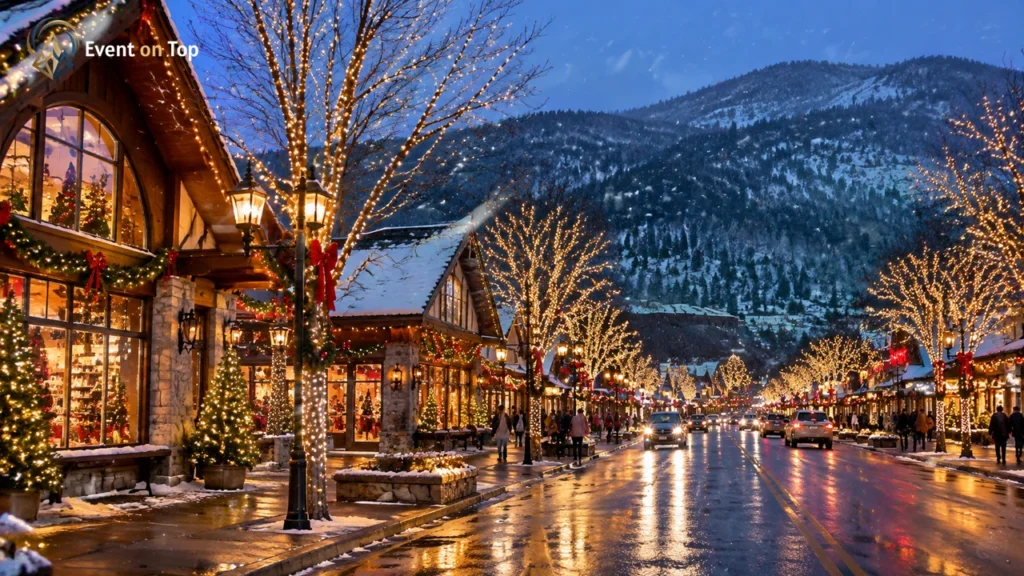
Christmas in Oslo 2026: Jul i Vinterland, the Lights Walk, Ice Skating & New Year’s Eve

Oslo does Christmas in the dark — and that is the whole point. In December the sun rises around 09:00 and sets by about 15:30, so the city spends most of the day lit by fairy lights: strung down Karl Johans gate, glowing around the market stalls at Spikersuppa, reflected in the harbour at Bjørvika. It is cold, usually around freezing, but the season here is genuine rather than staged. This is a Norwegian Christmas: the main celebration is a family dinner on Christmas Eve, the market is free to enter, the ice rink is free to skate on, and the most traditional fair in town runs for just four days in an open-air museum of old wooden farmhouses.
Most guides ranking for this topic are market lists: they name Jul i Vinterland, give the dates and move on. This guide is a full city guide instead — the market in detail, the lights walk, the Folkemuseum fair, the Opera House and the harbour, the ice rink, what to eat, a one-day walking plan, New Year’s Eve, and the practical notes. Dates come from the organizers’ and the museums’ own 2026 listings; anything still unannounced is flagged, not guessed.

Jul i Vinterland: Oslo’s Christmas Market at Spikersuppa
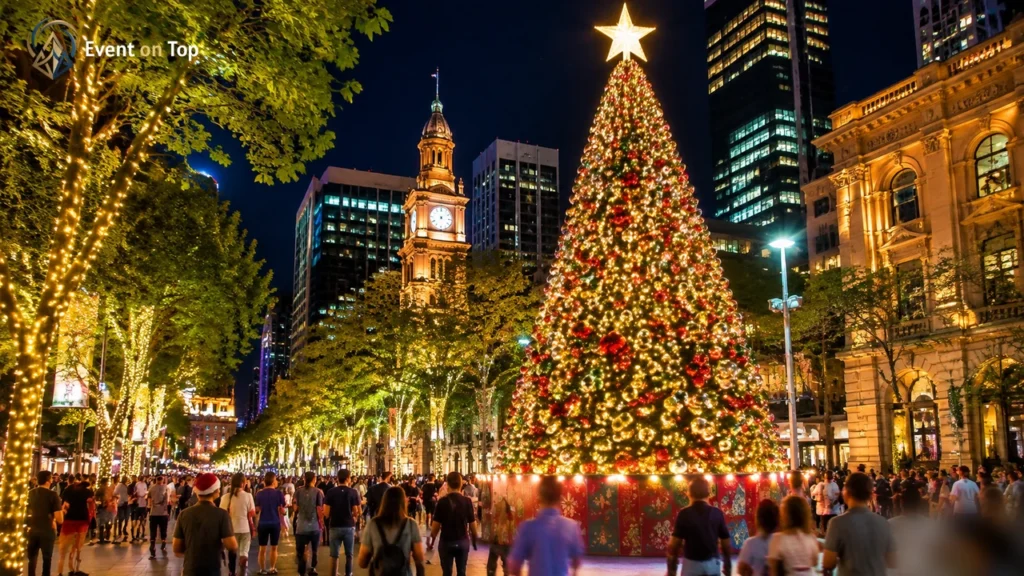
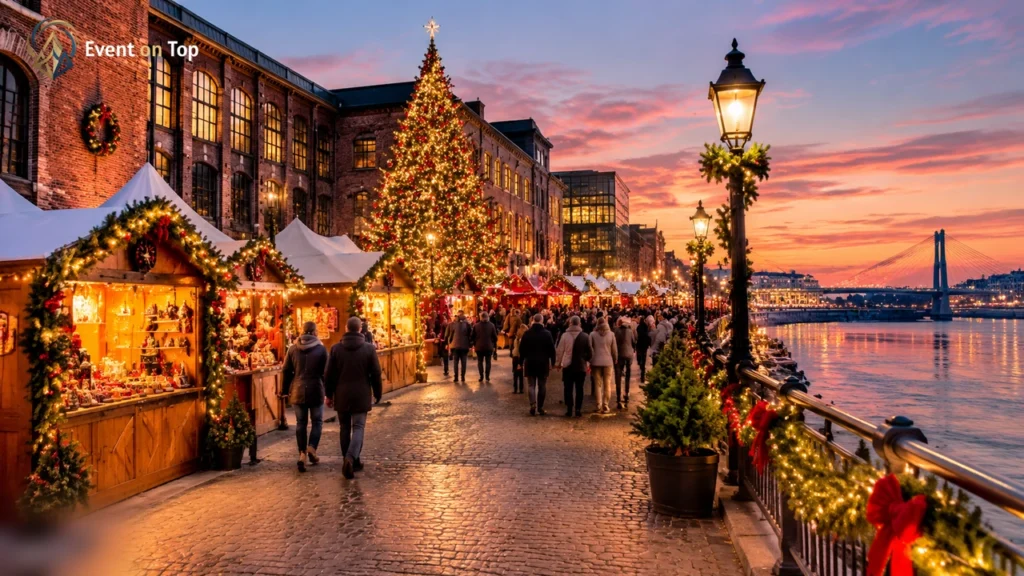
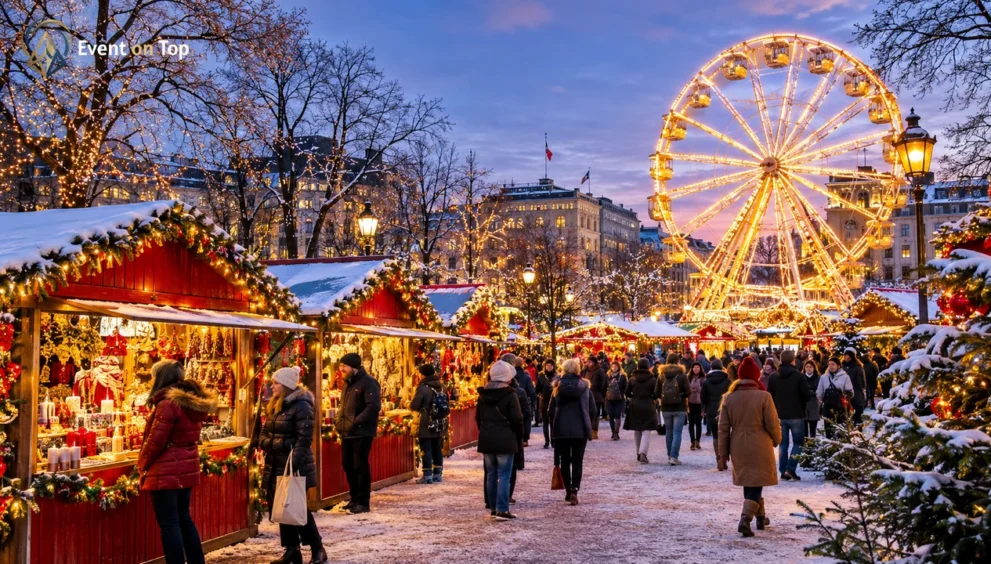
Jul i Vinterland — “Christmas in Winterland” — is the market everyone means when they talk about Christmas in Oslo. It fills Spikersuppa, the long square on Karl Johans gate between the Parliament building (Stortinget) and the National Theatre, in the middle of the city. The 2026 edition runs from Saturday 7 November 2026 to Sunday 3 January 2027, and entry is free. Wooden stalls sell crafts, gifts, decorations and seasonal food, there are carousels and a Ferris wheel above the square, a stage programme of music and storytelling, and the Spikersuppa ice rink sits in the middle of it all.
Usual hours are Monday to Thursday 12:00 to 20:00, Friday 12:00 to 21:00, Saturday 10:00 to 21:00 and Sunday 10:00 to 20:00. The market is closed on Christmas Eve, 24 December, and hours change around Christmas and New Year — check julivinterland.no first. It is the only Oslo market that runs through Christmas and into January, which makes it the easy choice for a short stay.
This is a charming market, not a vast one: a compact square of stalls, rides and food rather than the sprawling market towns of central Europe. Its strength is atmosphere — the lights coming on at 15:30, the rink glowing in the middle, the smell of gløgg and waffles in the cold air — and it is best visited after dark, on a weekday afternoon rather than a Saturday evening close to Christmas.
The Lights Walk: Karl Johans Gate After Dark
The best free thing in Oslo at Christmas is the walk. Start at Oslo Central Station after dark and walk up Karl Johans gate, the city’s main pedestrian street, which is strung with lights end to end in December. You pass the Parliament building and the market at Spikersuppa, then the National Theatre, and the street rises gently toward the Royal Palace at the far end. The walk takes about twenty minutes at a stroll: do it at least once after dark, when the city is fully lit and the market is at its brightest.
The official lights switch-on for 2026 had not been confirmed on the city’s or the market’s own channels when this guide was written, so do not build a trip around a switch-on evening until VisitOslo or Jul i Vinterland announces it. Once on, the lights stay up through the season and into early January, so the walk works on any December evening. Stortorvet, Oslo’s main square a short detour from Karl Johans gate, usually hosts a smaller Christmas market from early November to around 22 December — but its 2026 dates had not been confirmed on an official source when this guide was written, so check VisitOslo’s Christmas calendar before planning around it.

The Norsk Folkemuseum Christmas Fair: the Traditional One
If Jul i Vinterland is the fun version of Christmas in Oslo, the Norsk Folkemuseum Christmas fair is the real one. The Norwegian Museum of Cultural History is an open-air museum on the Bygdøy peninsula, filled with historic farmhouses and town buildings from all over Norway — including a medieval stave church — and for two weekends in December it becomes a traditional Christmas fair. The houses are decorated for their period, hosts wear period costume, and more than 100 stalls sell handmade gifts, crafts and traditional food.
The 2026 fair runs on just four days: Saturday 5 and Sunday 6 December, and Saturday 12 and Sunday 13 December, from 10:00 to 16:00 each day. Admission is the museum ticket: adults pay NOK 200, children aged 0 to 17 enter free, and the Oslo Pass covers entry. Take bus 30 from the city centre to Bygdøy and allow two to three hours, plus warm boots, because most of the fair is outdoors. It is the one Oslo Christmas event with a hard deadline: outside those two weekends, you cannot visit it at all.
The fair is also the best food stop of the season. The stalls and the museum’s old kitchens serve the traditional Christmas food the city-centre market only hints at — lefse from wood-fired griddles, freshly baked goods, gløgg and hot drinks — and the second weekend, 12 and 13 December, falls on Saint Lucia’s Day, when children dressed in white carry candles and hand out saffron buns.
The Opera House & the Harbour at Christmas
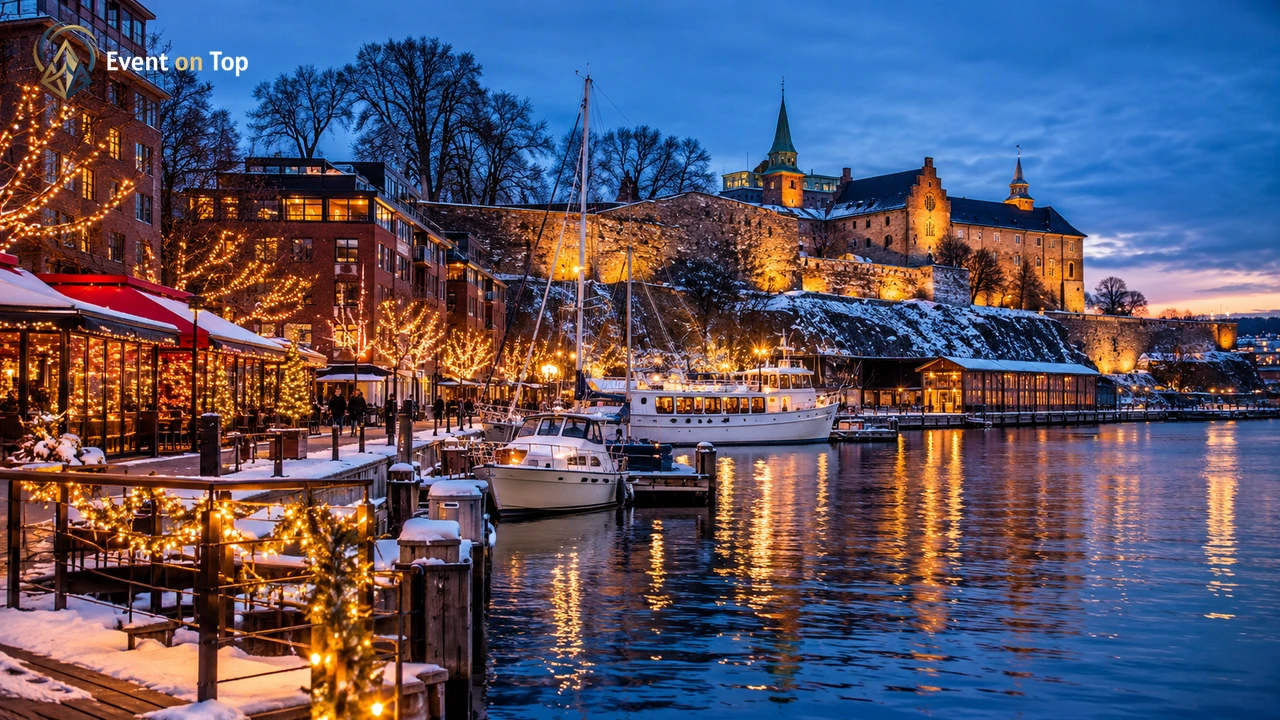
Oslo’s harbour is where the city shows its modern side, and at Christmas it is at its most photogenic. The Oslo Opera House in Bjørvika is a sloping white marble roof you can walk up for free, with a panoramic view across the harbour and the Oslofjord — in December, a low sun, a darkening sky and the city lights coming on below. The roof is free to visit, though it can be icy underfoot, so wear shoes with grip.
The same waterfront walk takes you past the Munch Museum and the National Museum, both in Bjørvika, and along to Aker Brygge, the old shipyard turned waterfront dining district, dressed with Christmas lights and one of the better places in the city for a warm dinner after the market. Akershus Fortress, the medieval castle built in the late 1200s on the headland above the harbour, is a short walk from Aker Brygge and its grounds are free to wander — at dusk it is one of the best evening walks in the city. For a wider sense of how Oslo fits into the season across Europe, see our guide to the best Christmas markets in Europe, and for the Nordic capitals’ takes on the same season, our guides to Christmas in Stockholm and Christmas in Copenhagen.

Ice Skating at Spikersuppa
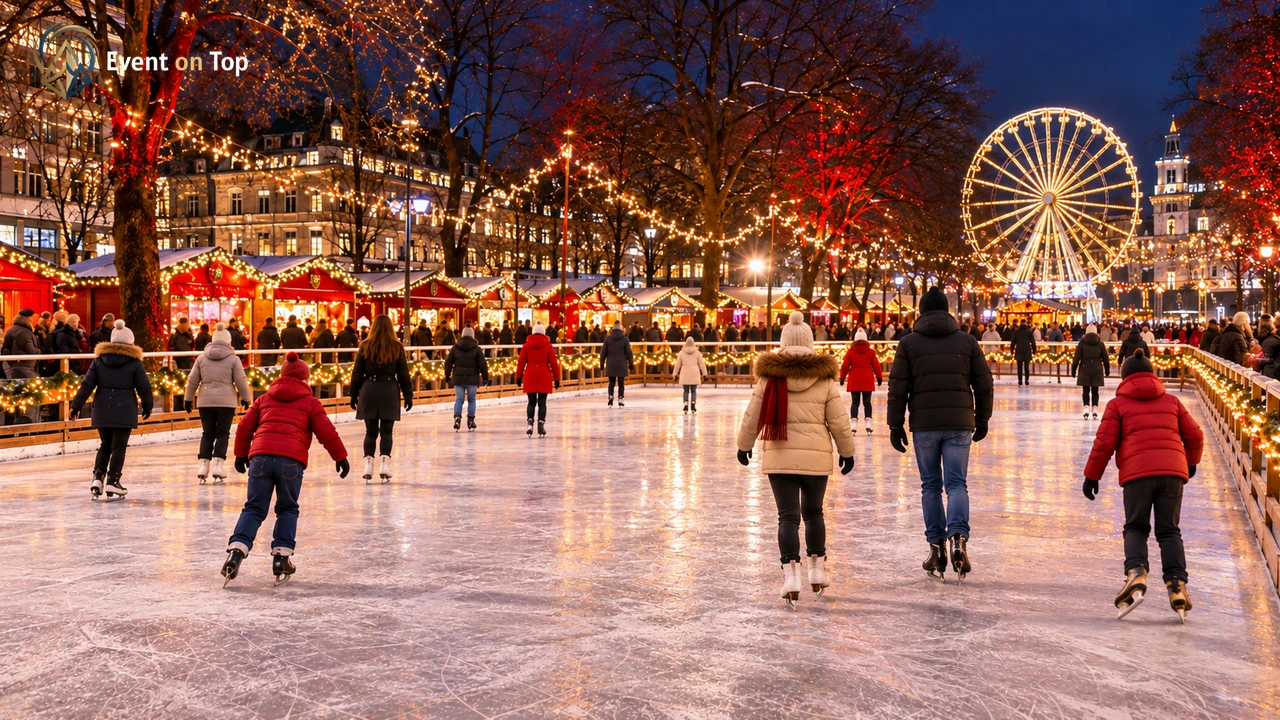
The Spikersuppa rink is one of the most central outdoor skating rinks in any European capital, and the heart of Jul i Vinterland. It sits directly on Karl Johans gate, flanked by the National Theatre and within sight of the Royal Palace, ringed by market stalls and Christmas lights. Skating is free if you bring your own skates, and skate hire costs around NOK 200 per day. The ice is groomed morning and afternoon, and hockey sticks are not allowed, which keeps the rink friendly for beginners.
One honest flag: the rink’s exact 2026 opening day had not been confirmed on the official Jul i Vinterland channels when this guide was written. In past seasons it has usually opened around the end of November, depending on the weather. If skating is the point of your visit, check julivinterland.no before you travel. The rink is most atmospheric after dark, from about 16:00 onward — weekday mornings are the quietest sessions for children new to skating.
What to Eat: Ribbe, Pinnekjøtt, Gløgg & Pepperkaker
Norwegian Christmas food is the part of the season most visitors miss. The centrepiece is the Christmas Eve dinner, Julaften, on 24 December — the main celebration in Norway, not Christmas Day. In the Oslo region the traditional dish is ribbe, roasted pork belly with crisp crackling, served with potatoes, red cabbage and gravy. In western Norway the classic is pinnekjøtt, steamed and salted lamb ribs; both appear on Oslo restaurant menus in December. Presents are opened on Christmas Eve too, which is why the city goes quiet from the afternoon of the 24th.
At the markets, the food is simpler and easier to graze on. Gløgg is the Norwegian mulled wine — spiced red wine served warm with raisins and blanched almonds in the cup, richer and stronger than the German or British versions — and there is a non-alcoholic version too. Heart-shaped waffles with jam and sour cream, smultringer (small ring-shaped doughnuts), and pepperkaker, the thin spiced ginger biscuits that are Norway’s Christmas biscuit, are sold at the stalls, along with brunost, the sweet brown cheese, and lefse, soft flatbread often spread with butter and cinnamon sugar. Market food is priced at a premium, so budget accordingly — and book a restaurant Christmas dinner on the 24th or 25th well ahead, because most restaurants are closed or fully booked.
One Festive Day in Oslo: the Walking Plan
If you have one day, do it in this order. Start late morning at the Norsk Folkemuseum fair if your trip falls on one of its four days — it opens at 10:00 and is best in daylight — or, on any other day, start at the Opera House roof for the harbour view while the light lasts. From Bjørvika, walk along the harbour to Akershus Fortress and Aker Brygge for lunch, then head up to Karl Johans gate for the market at Spikersuppa as the light fades. The sun sets around 15:30, so the market, the rink and the lights come into their own from mid-afternoon onward.
Eat as you go: gløgg and a heart-shaped waffle at the market, pepperkaker from a stall, dinner at Aker Brygge. If you have a second day, spend it at Vigeland Park in Frogner Park — 212 sculptures by Gustav Vigeland, free to visit and striking in snow — or on the museums of Bygdøy, including the Fram Museum. For the other Nordic capitals, see our guides to Christmas in Stockholm and Christmas in Copenhagen.

New Year’s Eve in Oslo
New Year’s Eve in Oslo is different from the big organized parties of southern Europe. Oslo does not run one large official fireworks display in the city centre: the midnight fireworks are largely private, set off by residents across the city, and the sky fills with them from rooftops and gardens in every direction. The best way to watch is from a viewpoint — Ekeberg hill, above the city to the south-east, or the grounds of Akershus Fortress above the harbour — where you can see the whole city light up at once.
Two honest flags. First, no official New Year’s Eve programme for 2026 had been announced on VisitOslo’s or the city’s own channels when this guide was written — check visitoslo.com in December before trusting any named event or fireworks time quoted elsewhere. Second, the practical rules still apply: shops close early on 31 December, restaurants are heavily booked, and public transport runs on a reduced holiday timetable, so book dinner and your route home in advance.
Practical Tips: Weather, Transport & the Days the City Closes
Oslo in December is properly cold: daytime temperatures average around 0 to −3°C, with the damp air and the wind off the Oslofjord making it feel colder. Snow is possible but not guaranteed, so pack waterproof boots with grip, thermal layers, a warm hat and gloves, and a waterproof outer layer. At the winter solstice the sun is up for under six hours, so treat the museums, the fair and the Opera House roof as daytime activities, and the market, the rink and the lights walk as the evening.
Getting around is easy: the centre is compact and walkable, and the T-bane metro, trams and buses run by Ruter cover the rest of the city reliably in cold weather. From the airport, the Flytoget express train reaches Oslo Central Station in about 20 minutes; regular trains are slower and cheaper, and both run on Christmas Day with reduced frequency, so build in extra time over the holiday period.
Finally, the closures — the most practically important part of this guide, because the Norwegian holiday differs from what visitors from the US, the UK or southern Europe expect. Christmas Eve, 24 December, is the main celebration: shops close early, the market is closed for the day, and the city goes quiet. Christmas Day and Boxing Day, 25 and 26 December, are public holidays: most shops, many restaurants and most museums are closed. New Year’s Day, 1 January, is the same, and shops close early on 31 December. The days between — 27 to 30 December — run on normal hours. One more note: the Viking Ship Museum on Bygdøy stays closed during redevelopment into the Museum of the Viking Age, due to open in late autumn 2027 — the Historical Museum in the city centre is the alternative this winter.
FAQs: Christmas in Oslo 2026
When does Jul i Vinterland open in 2026?
Jul i Vinterland runs from Saturday 7 November 2026 to Sunday 3 January 2027 at Spikersuppa on Karl Johans gate, between the Parliament and the National Theatre. Entry is free. The usual hours are Monday to Thursday 12:00 to 20:00, Friday 12:00 to 21:00, Saturday 10:00 to 21:00 and Sunday 10:00 to 20:00; the market is closed on Christmas Eve, 24 December. Check julivinterland.no for holiday hours.
When is the Norsk Folkemuseum Christmas fair in 2026?
The fair runs on just four days — Saturday 5 and Sunday 6 December, and Saturday 12 and Sunday 13 December 2026 — from 10:00 to 16:00 each day at the Norsk Folkemuseum on Bygdøy. Adults pay NOK 200, children aged 0 to 17 enter free, and the Oslo Pass covers entry. There are more than 100 stalls, decorated historic houses, folk dancing and carols; take bus 30 from the city centre.
Is ice skating free in Oslo at Christmas?
Yes — skating on the Spikersuppa rink is free if you bring your own skates, and skate hire costs around NOK 200 per day. The rink is most atmospheric after dark, from about 16:00 onward. One flag: the rink’s exact 2026 opening day had not been confirmed on the official channels when this guide was written — in past seasons it has usually opened around the end of November — so check julivinterland.no first.
What is open in Oslo on Christmas Day?
Very little. Christmas Day, 25 December, and Boxing Day, 26 December, are public holidays in Norway, and most shops, restaurants and museums are closed. The main celebration is Christmas Eve, 24 December, when the city goes quiet from the afternoon and the market is closed. Plan Christmas Day as a walk and a pre-booked restaurant; the market reopens after Christmas and runs until 3 January.
How cold is Oslo in December, and will it snow?
December temperatures in Oslo average around 0 to −3°C, and the damp air and wind off the Oslofjord make it feel colder. Snow is possible but not guaranteed, so pack waterproof boots with grip, thermal layers, a warm hat and gloves. The days are short: sunrise around 09:00, sunset by about 15:30.


Christmas in Tallinn 2026: Market Dates, the 1441 Tree & What to Eat
08th Nov 2026[…] Christmas in Oslo 2026: Jul i Vinterland, the […]