







Office Halloween Party Games for Coworkers: HR-Appropriate, Low-Prep Fun

Office Halloween Party Games for Coworkers: HR-Appropriate, Low-Prep Fun
The best halloween office party games coworkers remember fondly share three traits: nobody has to perform, nobody has to wear anything, and nobody gets singled out. The games below are built for real workplaces — mixed ages, mixed enthusiasm levels, and at least one person who would rather be answering email. Every game is opt-in friendly, runs on supplies from a supply closet, and fits the setting listed: at desks, across a lunch hour, over a video call, or inside a ten-minute meeting break. Pick two or three, not twelve.
Ground Rules: Inclusive, Opt-Out Friendly, Zero Embarrassment
Before any game starts, set the terms out loud — it takes thirty seconds and it is the difference between a party and an HR conversation. Everything is optional. Watching, judging and scorekeeping are real roles, not consolation prizes, so say so. Nobody performs solo unless they volunteered — every game here works in pairs or teams, and nobody gets nominated by the room. Keep it about the season, not the scare. Pumpkins, candy and ghosts beat gore and jump scares — some coworkers skip Halloween entirely for religious or personal reasons, and a good host makes that a non-event. Photos need consent before anything lands in a team channel. Finally, keep games inside breaks and the scheduled party window.
Desk-Friendly Games
These run quietly at workstations or in a shared channel across the day, so people join between tasks.
Guess the Candy Jar
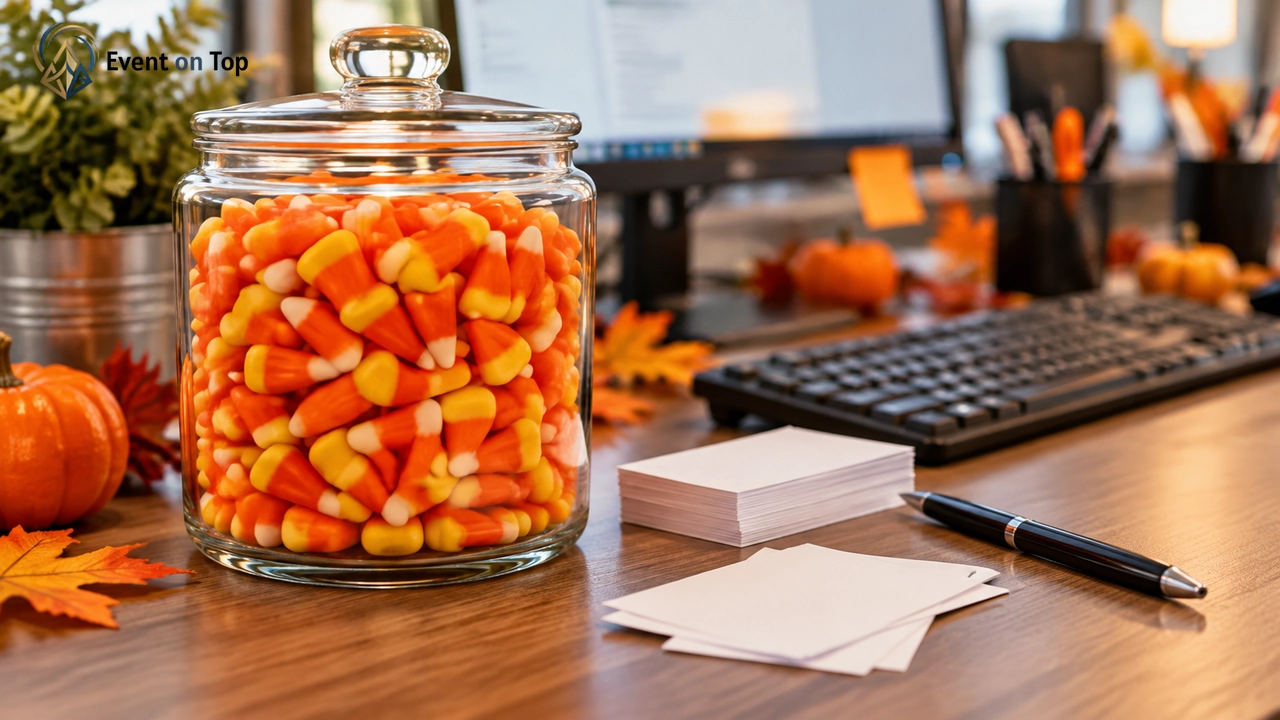
Players: Whole office, drop-in · Materials: A clear jar, candy corn or wrapped candies, slips of paper or a shared form · Time: Runs all day; two minutes to play
Fill the jar, count every piece as you fill it, and seal the number in an envelope. Set the jar somewhere visible with guess slips beside it — one guess per person. At the party’s end, open the envelope and award the jar itself to the closest guess. It costs almost nothing, needs no costume or talent, and gives the week a low-key talking point. Break ties with a quick coin flip between finalists.
Spooky Desk Bingo
Players: 6 or more · Materials: Printed or digital bingo cards, small prizes · Time: Across the party day; five minutes to check cards
Generate bingo cards filled with things people might spot during the day: a pumpkin on a desk, a coworker in orange, a spider decoration, someone eating candy corn, a cat-ear headband. Players mark squares as they genuinely spot each item. First full row wins; keep playing for second and third rows so the game does not end in the first hour. Free bingo-card generators online will build the set in minutes.
Two Truths and a Lie: Halloween Edition
Players: 4–12 · Materials: None · Time: 10–15 minutes
Each volunteer shares three short statements about their Halloween history — two true, one invented: childhood costumes, worst candy haul, a pumpkin-carving injury. The group votes on the lie. It is the rare icebreaker that works because the topic is harmless and the revelations are funny rather than personal. One boundary: keep stories work-safe and about yourself, never another coworker.
Whole-Team Games for a Lunch Hour
With a real block of time and a break room, these two tournament formats carry the whole party.
No-Carve Pumpkin Decorating Contest
Players: Teams of 3–5 · Materials: One small pumpkin per team, paint pens, stickers, googly eyes, ribbon, glue — no knives · Time: 25–30 minutes
Give every team the same pumpkin and the same supply pile, set a timer, and let them decorate. Paint pens and stickers keep it carving-free, mess-contained and workplace-safe. Themes help: each team draws one from a hat (haunted house, harvest, famous landmark, our own office). When time ends, pumpkins go on a judging table for the formats in the prizes section below. Display them in reception afterward — it extends the party for free.
Halloween Trivia Tournament
Players: Teams of 3–6 · Materials: Question set, answer sheets, a host · Time: 30–40 minutes
Run it as a simple bracket or a three-round points race: round one on Halloween traditions and history, round two on classic spooky movies and music (keep titles mainstream), round three on candy and autumn knowledge. Teams write answers down — no shouting out — and swap sheets to score each round, which keeps arguments minimal. Mix the difficulty so the winner is not decided in round one; a host who keeps the pace brisk matters more than a perfect question set.
Virtual & Hybrid Team Games
Remote coworkers are the easiest people to accidentally leave out of an office party. These formats put the video call at the center instead of treating it as a window into a room they are not in.
Virtual Spooky Scavenger Hunt
Players: 4 or more on video · Materials: A prepared item list, timer · Time: 15–20 minutes
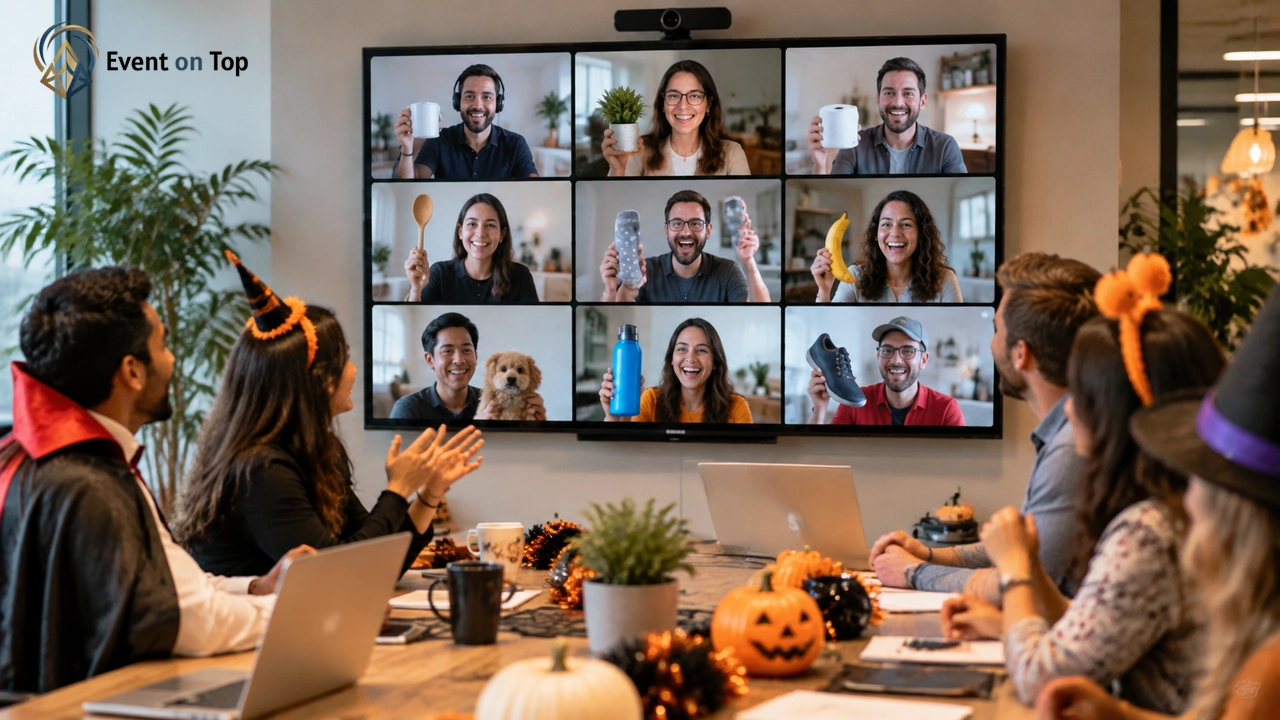
The host names an item — something orange, a candle, a book with a dark cover, the oldest thing in your kitchen — and everyone races off-camera to fetch it and hold it up. First back with a qualifying item scores a point. It gets people moving, shows off everyone’s space with no pressure to decorate, and runs happily with cameras-on volunteers only. Keep extra rounds in reserve in case energy runs high.
Halloween Pictionary (Shared Whiteboard)
Players: 6 or more on video · Materials: Video call with a shared whiteboard or drawing tool, a word list · Time: 20–25 minutes
Split into two teams. One player draws a Halloween word — jack-o’-lantern, haunted house, broomstick, cauldron — on the shared whiteboard while their team guesses against a 60-second clock. Drawing with a mouse is equally hard for everyone, which is exactly why it is funny and fair. Use a pre-written list of easy-to-draw nouns; abstract words stall the game. The drawer can pass twice per round.
Costume Parade: 30-Second Edition
Players: Any, cameras optional · Materials: Video call, a voting poll · Time: 15 minutes
Anyone who dressed up — at home or in the office — gets thirty seconds on camera to show the costume and say one line about it; everyone else votes in a quick poll for the categories below. Hybrid tip: put in-office paraders in front of the meeting-room camera so remote voters judge everyone equally. Nobody is required to parade; voting-only is full participation. For team looks, the coordinated ideas in our group Halloween costume ideas roundup scale from a duo to a whole department.
No-Costume-Required Games
A costume-free track is what makes the party genuinely inclusive — new hires, client-facing staff, and the simply-not-bothered all need a way in.
Name That Spooky Tune
Players: Any number · Materials: A speaker and a playlist of famous Halloween songs and film themes · Time: 15 minutes
Play five to ten seconds of a well-known spooky track or theme and let teams write down the title — writing beats shouting, and stops one loud expert from running the table. Stick to songs famous enough that most people have a fair shot, and award a bonus point for naming the artist or film.
The Spooky Story Chain
Players: 5–15 · Materials: None · Time: 10 minutes
One person opens with a single sentence — “The office lights flickered, and the break-room fridge began to hum a tune…” — and each next person adds one sentence. The only rule: keep it playful, not gruesome, and never make a real coworker the monster. Read the finished story aloud at the end; it is reliably funnier than anyone expects.
Minute-to-Win-It: Office Edition
Ten-minute meeting breakers, one minute per player, with a running scoreboard. These are the highest-energy games on the list, so keep them volunteer-based and finish with a laugh.
Candy Corn Chopstick Pick-Up
Players: 2 at a time, volunteers · Materials: Candy corn, chopsticks, two bowls per player · Time: 60 seconds per round
Players move candy corn from a full bowl to an empty one using chopsticks only — one piece at a time, no hands steadying the bowl. Most pieces in a minute wins. Run it as a relay across a meeting break so six people play inside ten minutes. Pieces that hit the floor retire from the game.
Pumpkin Stack
Players: 2 at a time, volunteers · Materials: Six mini pumpkins or firm apples per player, a flat table · Time: 60 seconds per round
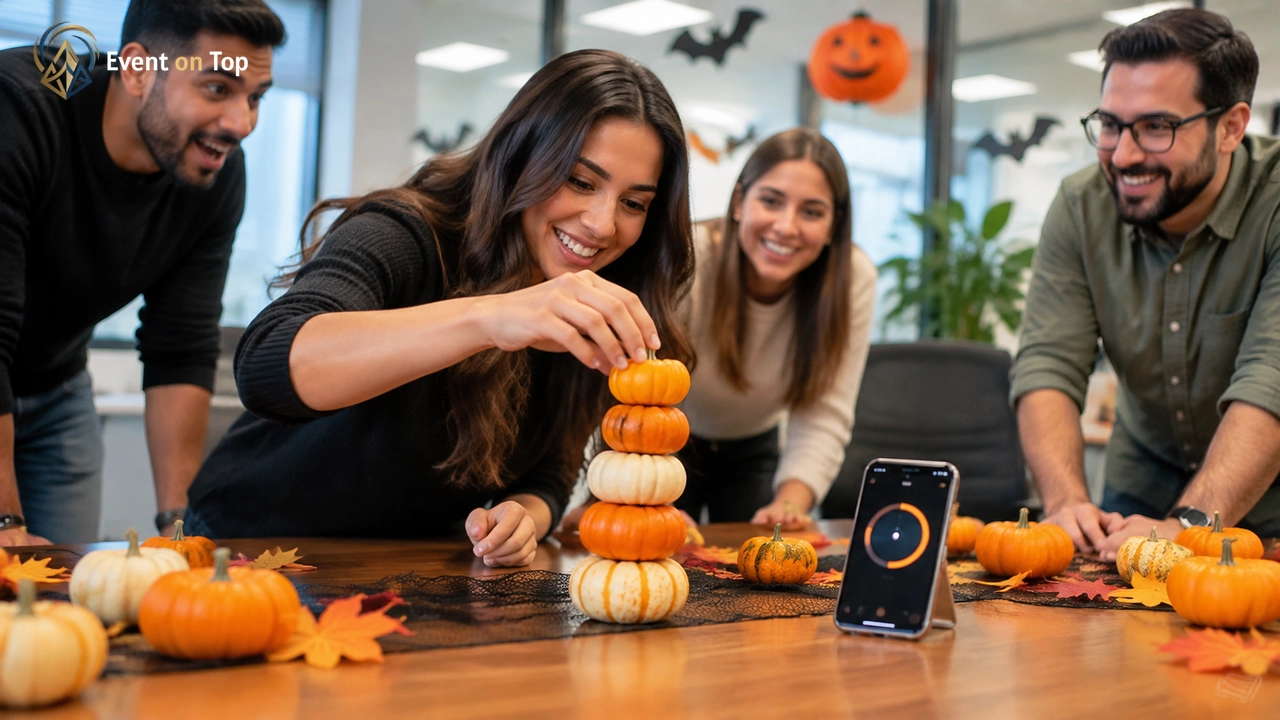
Stack all six as high as you can; the tower must stand for three full seconds when the clock stops. It sounds trivial and is not — the last pumpkin is where towers go to die. Flat-bottomed mini pumpkins are kinder than apples if you want more finishers.
Ghost Bowling
Players: 2–4 at a time · Materials: Six empty tissue boxes or stacked paper cups as pins, one soft foam ball, a hallway or meeting room · Time: About 2 minutes per player
Set the pins at one end, mark a throwing line, and give each player two rolls with the foam ball. Draw a simple ghost face on each pin — it takes two minutes and doubles the charm. Foam only: nothing here should be able to dent a wall, a monitor, or a working relationship. Two rounds each keeps a full team inside a coffee break.
Prizes & Bragging Rights
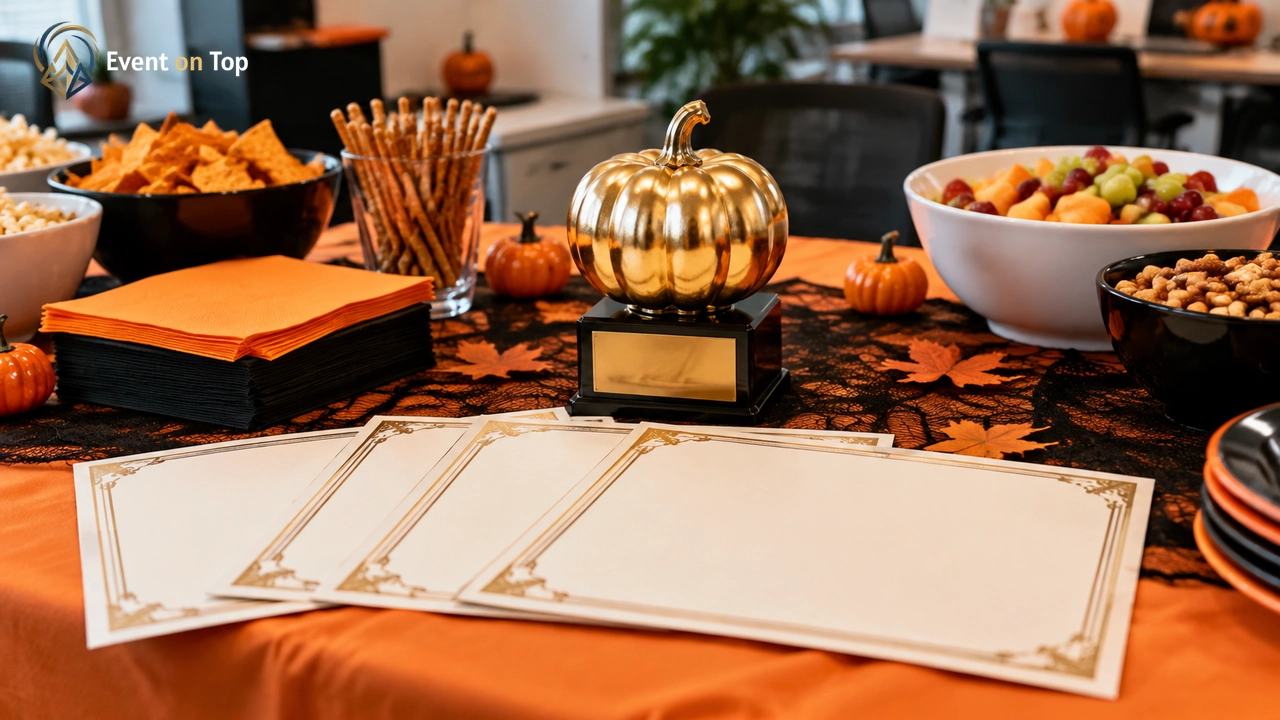
Prizes in an office work best as honors first and objects second. A traveling trophy kept on the winner’s desk until next Halloween, a silly superlative certificate, or first pick from the snack table lands better than anything with a price tag — and keeps the party clear of questions about budgets and gift policies. Announce every category in advance so people can play toward the one they want, and spread them wide: with enough categories, a third of the room goes home a winner of something.
Costume contest judging formats that work:
- Anonymous poll: Costumes are numbered, everyone votes once per category in a quick poll, and the host reads results. Fairest format for hybrid teams.
- Category sweep: Skip the single “best costume” crown and judge categories instead — Most Creative, Best Group Effort, Funniest, Best No-Costume Costume (regular clothes, brilliant sign), Most On-Theme. More winners, fewer feelings.
- Guest judges: Two or three volunteers from another team, or last year’s winners, score on a simple card: creativity, effort, theme fit. Good when you want a verdict with a little ceremony.
- Applause-o-meter: The host holds a hand over each entry and the room cheers; loudest wins. Reserve this for small, extroverted teams — it is the least shy-friendly format here.
- Photo finish: Post costume photos (with permission) to the team channel and let reactions decide over the afternoon. Remote staff compete on equal footing, and latecomers still get seen.
Prize ideas, no price tag required: the traveling pumpkin trophy; a “Haunted Desk of the Year” certificate; bragging-rights titles announced in the team channel; first-in-line rights at the potluck table; picking the break-room music for a day; the good office chair for a week, if your workplace runs on that kind of currency. Planning the wider celebration around the games — themes, decor, food and the contest itself — is covered in our office Halloween party themes guide, and the games bank in our Halloween party ideas guide scales everything up for a home party.
FAQs
How many games should an office Halloween party have?
Two or three is the sweet spot for a lunch-hour party: one passive game that runs all day (like the candy jar), one team game, and one quick volunteer round. More than that turns the party into a schedule. If people are still playing when the hour ends, that is a success, not a shortfall.
What if most of our team works remotely?
Build the party around the video call rather than streaming an in-office event. The virtual scavenger hunt, whiteboard Pictionary and the photo-finish costume vote give remote staff the same game, not a view of one — and they deliberately need only what people already have at home.
How do we keep games appropriate for work?
Opt-in everything, team formats over solo performance, and themes kept to pumpkins, candy and classic spooky fun rather than gore or anything faith-based. Skip drinking games entirely, ask before posting photos, and give scorekeeping real status. If a game would embarrass you in front of your own boss, cut it.
Our office does not allow costumes. Can we still do this?
Yes — half of this list never touches a costume: trivia, bingo, the candy jar, the story chain, tune-guessing and every minute-to-win-it round. Add a Best No-Costume Costume category (a witty desk sign counts) and the costume-free crowd often out-participates everyone else.
When should an office Halloween party happen in 2026?
Halloween falls on Saturday, October 31, 2026, so most offices will celebrate on Friday, October 30 — or Thursday, October 29 if Friday is a common work-from-home day. Pick the day with the most people in the building, and run the virtual games on that same call so hybrid staff share one party, not two.