






Top 12 Cultural Festivals in the World in 2027

The world’s great cultural festivals in 2027 open with Rio Carnival on 5-10 February, run through Holi in India and the summer festival season in Europe and Japan, and close with Oktoberfest in Munich (18 September-3 October) and the Diwali season in autumn. This list selects the twelve cultural festivals most worth travelling for in 2027 – celebrations rooted in place, faith, harvest or history rather than in a concert lineup – in calendar order, with confirmed dates where calendars are fixed and honest pattern-based labels where religious or lunar dates await official confirmation.
Cultural festivals ask something of visitors that concerts do not: participation without ownership. The best traveller at every festival on this list is a respectful guest – dressed appropriately, camera-conscious, and there to join in rather than to watch from behind a phone.
The Top 12, in Date Order
Religious and lunar festivals are marked expected – their exact Gregorian dates are set by religious calendars and confirmed officially closer to the time. Confirm all dates before booking.
| # | Festival | Location | 2027 Dates | Rooted In |
|---|---|---|---|---|
| 1 | Rio Carnival | Rio de Janeiro, Brazil | 5-10 Feb (confirmed) | Pre-Lenten carnival |
| 2 | Mardi Gras | New Orleans, USA | Season to 16 Feb (Fat Tuesday) | Pre-Lenten carnival |
| 3 | Holi | India (Vrindavan, Jaipur, Delhi) | March (expected, lunar calendar) | Spring, colour, renewal |
| 4 | Songkran (Thai New Year) | Thailand | 13-15 Apr (fixed pattern) | Buddhist New Year, water |
| 5 | Semana Santa | Seville, Spain | Late March/early Apr (Holy Week) | Catholic Holy Week |
| 6 | Edinburgh Festival Fringe | Edinburgh, UK | August (pattern; TBC) | Arts and performance |
| 7 | Gion Matsuri | Kyoto, Japan | July (month-long, fixed pattern) | Shinto tradition, 1,000+ years |
| 8 | La Tomatina | Buñol, Spain | Last Wed of Aug (pattern) | The famous tomato fight |
| 9 | Oktoberfest | Munich, Germany | 18 Sep-3 Oct (confirmed) | Bavarian harvest tradition |
| 10 | Día de los Muertos | Oaxaca, Mexico | 1-2 Nov (fixed) | Day of the Dead |
| 11 | Diwali season | India (Jaipur, Varanasi, Delhi) | Autumn (expected, lunar calendar) | Festival of lights |
| 12 | Hogmanay | Edinburgh, UK | 31 Dec (fixed) | New Year |
The Carnival Pair: Rio and New Orleans
Rio Carnival (5-10 February).
is the world’s largest party with the world’s most serious competition inside it: the Special Group samba schools parade through the Sambadrome in a judged contest a year in the making, while hundreds of street blocos carry everyone else. Book Sambadrome tickets and accommodation months ahead – our Rio Carnival guide covers sectors, prices and safety in detail. On cost: the street carnival is free, and Sambadrome grandstand tickets for the main parade nights were released at R$250 per night through the official channel, with numbered chairs, front-row frisas and hospitality camarotes priced above that – full sector detail is in our Rio Carnival guide. On scale: Rio’s authorities typically estimate several million participants across the carnival period once the blocos are counted, which is why the city, not just the Sambadrome, is the venue. Mardi Gras (culminating on Fat Tuesday, 16 February 2027) is Rio’s North American cousin: weeks of parades by krewes, throws from floats, and a city that treats carnival as civic identity. The two overlap in season; choose Rio for spectacle and samba, New Orleans for parades you participate in from the kerb.
Spring: Colour, Water and Holy Week
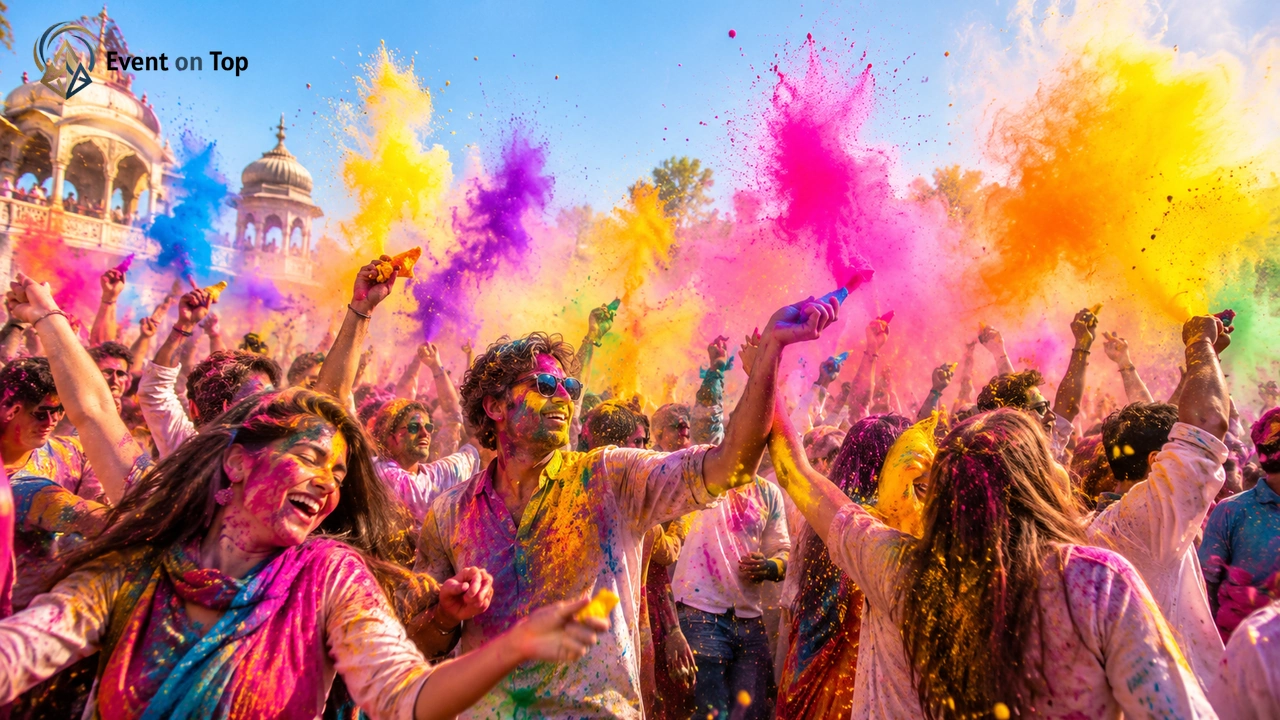
Holi (March; exact date by lunar calendar).
Holi turns Indian cities into moving paintings – arrive in clothes you will throw away, protect your phone and hair, and accept that everyone is a target; Vrindavan and Mathura hold the deepest traditions, Jaipur and Delhi the most visitor infrastructure.
Songkran (13-15 April).
Songkran is Thailand’s New Year, and it begins quietly: mornings belong to the temples, where water is poured gently over Buddha statues and elders’ hands to make merit and wash the old year away, and families build small sand pagodas in temple courtyards. By afternoon the same water becomes the world’s friendliest street fight – buckets, hoses and water pistols from Bangkok’s Silom and Khao San roads to Chiang Mai’s moat, where the old-city ditch becomes an arsenal. Base yourself in one city rather than touring during the festival: intercity transport books out, roads are chaotic, and everything you carry will get wet, including your passport daypack – a waterproof pouch is the single best purchase of the trip.
Semana Santa (Holy Week, Seville).
Semana Santa is the counterpoint to both festivals above: a week of candlelit processions in which Seville’s brotherhoods carry enormous pasos – floats bearing centuries-old images of Christ and the Virgin, some weighing a tonne – on the shoulders of costaleros hidden beneath the platform, moving at a shuffle through streets so narrow the float seems to breathe against the walls. Penitents in pointed hoods walk in silence, and occasionally a saeta, an unaccompanied flamenco prayer, rises from a balcony and stops the crowd entirely. The emotional peak is La Madrugá, the night from Thursday into Good Friday, when the most beloved images process until dawn. Book old-town accommodation months ahead, expect processions to reroute your evenings entirely, and treat it as worship you are privileged to witness – because it is.
Summer into Autumn: Japan, Spain, Munich, Mexico
Gion Matsuri (July, Kyoto)
Gion Matsuri fills Kyoto’s July with a festival over a thousand years old, begun in 869 as a ritual to calm plague and kept, almost unbroken, ever since. Its heart is the Yamaboko Junko processions on 17 and 24 July, when towering wooden floats – the largest weighing over ten tonnes – are hauled through the centre on wooden wheels, turned at corners by crews dragging them around with bamboo and water, and assembled, by tradition, without a single nail. The three evenings before each procession, the Yoiyama, are when visitors love it most: float districts pedestrianised, floats lit and open for blessings, food stalls and yukata everywhere. Base yourself near Gion or Kawaramachi, book months ahead, and plan for serious heat and humidity – July in Kyoto is beautiful and exhausting in equal measure.
La Tomatina (Last Wednesday of August, Buñol)
La Tomatina is the list’s beautiful absurdity: one hour, one small Valencian town, and well over a hundred tonnes of overripe tomatoes grown specially to be thrown. It starts with the palo jabón, a greased pole topped with a ham that someone must claim before the water cannons signal the fight, and it ends, an hour later, with a second cannon and a river of juice that the town hoses down with practised speed. Since 2013 it has been ticketed and capacity-controlled at around 20,000 people, and tickets sell out: basic official entry tickets have cost roughly €12-€15 in recent editions (estimate – confirm the 2027 price on the official site), with organised day-trip packages from Valencia costing more but solving the transport and the no-accommodation-in-Buñol problem in one go. Goggles, a white t-shirt you will abandon, and shoes that can survive the hour are the whole dress code.
Oktoberfest (18 September-3 October, Munich)
Oktoberfest is not really about beer: it is Bavaria in traditional dress, brass bands, fairground rides and fourteen great tents – guide and tent strategy in our Oktoberfest guide. Two facts plan the trip. First, cost: entry to the grounds and tents is free – anyone selling a general Oktoberfest ticket is selling something that does not exist – and the real budget is what you eat and drink inside (a one-litre Maß cost about €14.80-€15.90 in 2026, with 2027 prices announced closer to the festival) plus Munich accommodation, which is where prices genuinely multiply. Second, scale: around six to seven million visitors pass through across the sixteen days in a typical year, which is why weekday lunchtimes, not Saturday nights, are the insider’s Oktoberfest.
Edinburgh Festival Fringe (August, Edinburgh)
The Fringe is the world’s largest arts festival by a distance: an open-access explosion in which anyone who finds a venue can put on a show, producing thousands of performances – comedy, theatre, circus, spoken word – across hundreds of spaces from grand theatres to pub basements, all through August. It runs alongside Edinburgh’s book, art and international festivals, so the whole city becomes one programme you navigate by instinct and word of mouth; locals will tell you the best show you see will be one you chose on a stranger’s recommendation in a queue. The programme is published in spring, individual tickets are mostly modest, and the one true rule is accommodation: Edinburgh in August is booked out early and priced accordingly, so the Fringe is won or lost at the hotel stage.
Día de los Muertos (1-2 November, Oaxaca)
Día de los Muertos – cemeteries glowing with marigolds and candles, families welcoming their dead home – demands the most of a visitor’s respect and gives the most back.
Diwali Season (Autumn, India)
Diwali is not one night but five days, and knowing the shape of it transforms the trip. It opens with Dhanteras, for gold and new beginnings; continues through Naraka Chaturdashi, the small Diwali of early-morning rituals; peaks on the main night, when Lakshmi, goddess of prosperity, is welcomed into homes lit by rows of clay diyas, buildings are outlined in lights, rangoli patterns bloom at doorways and fireworks run until late; then Govardhan Puja, and finally Bhai Dooj, honouring brothers and sisters. For visitors, Jaipur is the spectacle – its bazaars are draped in lights and compete for best-dressed market – while Varanasi offers the spiritual counterpoint, and about fifteen days later its own Dev Deepawali, when the ghats carry a river of lamps that is among the most beautiful nights on Earth. Book Diwali week early, expect firecracker noise and smoke as part of the atmosphere, and accept invitations if they come: this is a festival that happens in homes as much as streets.
Hogmanay (31 December, Edinburgh)
Hogmanay closes the year with torchlight, street parties and the world’s most committed New Year. Scotland treats midnight as a season, not a moment: Edinburgh’s celebrations open with a torchlight procession through the old town, peak in a ticketed street party beneath the castle with stages, ceilidh dancing and fireworks at midnight, and spill into 1 January traditions like first-footing – visiting neighbours with coal, shortbread and whisky for luck – and, for the brave, the Loony Dook, a fancy-dress dash into the freezing Firth of Forth at South Queensferry. Street party tickets are sold in advance and sell out, Edinburgh accommodation for the period is among the year’s most expensive, and the weather is a genuine character in the story: dress for standing outdoors in a Scottish winter and Hogmanay will reward you like no other New Year on Earth.
How to Attend Respectfully (and Practically)
Dress for the place of worship, not the photo. Ask before photographing people in ritual contexts, and never block processions for a shot. Learn ten words of the language and the festival’s one-sentence meaning – hosts notice, and doors open. Practically: accommodation near old towns sells out months ahead for Rio, Seville and Munich; festival weeks raise prices everywhere; and religious dates can shift by a day with official announcements, so book refundable and reconfirm dates in the month before travel (our event trip planner sequences this properly).
Beyond the Icons: One Discovery Worth the Detour
Every list like this one stops at the famous names, so here is the entry for travellers who have done a few of them: the Fès Festival of World Sacred Music (Fès, Morocco), held in late spring in one of the world’s oldest continuously lived-in medieval cities (exact 2027 dates to be confirmed on the official site). For about a week, Sufi ensembles, gospel choirs, qawwali singers, early-music groups and sacred traditions from faiths most visitors could not name perform in palace courtyards and at the great Bab Al Makina gate – music presented not as entertainment borrowing from ritual, but as ritual itself, in a city built for it. Days pair the concerts with forum debates on culture and peace; nights end with free Sufi sessions in the old medina. It is smaller, quieter and harder to reach than anything in the twelve above – and for many travellers it becomes the festival they measure all others against.
Frequently Asked Questions
What is the biggest cultural festival in the world in 2027?
Rio Carnival, by attendance and global fame – millions join its street parties while its Sambadrome parades run 5-10 February 2027. Oktoberfest draws comparable visitor numbers across its sixteen days in Munich.
Which cultural festival is best for a first-timer?
Oktoberfest is the most logistically forgiving (fixed dates, huge infrastructure, no language barrier to entry), and Songkran the most instantly joyful. Rio rewards preparation; start there once you have one festival trip behind you.
Are the 2027 dates for Holi and Diwali confirmed?
Not at the time of writing – both follow the Hindu lunar calendar, and exact Gregorian dates are officially confirmed closer to the time (Holi falls in March, Diwali in autumn). This guide marks them expected and will be updated; always confirm before booking.
Can visitors join in, or only watch?
Most festivals on this list welcome participation – Holi, Songkran, Rio’s blocos and Hogmanay are built on it. Ritual-centred events (Semana Santa, Día de los Muertos cemetery vigils, Gion’s sacred elements) are for respectful presence rather than joining in; follow local cues.
When should I book for Rio Carnival or Oktoberfest 2027?
Months ahead – Sambadrome tickets and well-located Rio hotels move early, and Munich’s Oktoberfest accommodation is famously booked by spring. Refundable rates are your friend while religious and programme details settle elsewhere on the calendar.
Which cultural festivals are free to attend?
More than most travellers expect. Holi and Songkran are street festivals – participation costs nothing beyond clothes you can ruin and a waterproof pouch. Rio’s hundreds of blocos are free (only the Sambadrome competition is ticketed), Oktoberfest charges no entry at all – you pay only for food, drink and rides – and Hogmanay’s wider celebrations are free even though the main Edinburgh street party is ticketed. The ticketed exceptions on this list are La Tomatina (official entry ticket required), the Edinburgh Festival Fringe (mostly individually ticketed shows), and reserved experiences like Sambadrome frisas and Oktoberfest tent tables. When a festival is free, the real cost is always the same: accommodation in a city at its annual peak, so book that early and refundable.
Conclusion
Choose by the kind of guest you want to be: dancer (Rio, New Orleans), celebrant (Holi, Songkran), witness (Seville, Oaxaca) or reveller (Munich, Edinburgh). Whichever you pick, go as a guest and the festival will treat you as one. Start with our Rio Carnival guide and Oktoberfest guide, browse the season in our Best Christmas Markets in Europe guide, and see everything in our Cultural category.
Oktoberfest 2027 Munich: Dates, Costs & Tips
24th Oct 2026[…] Top 12 Cultural Festivals in the World in 2027 […]
Best Halloween Events in the USA 2026: Dates & Costs
26th Oct 2026[…] Top 12 Cultural Festivals in the World in 2027 […]
Last-Minute Halloween Costume Ideas 2026 | Easy DIY
26th Oct 2026[…] Things to Pack and Book, and if this has put you in a festival mood, explore our guide to the Top Cultural Festivals in the World 2027 for your next big […]
Best Winter Festivals in the World 2027: 10 Snow & Ice Events
01st Nov 2026[…] have to choose one or two and plan properly. If winter festivals are your thing, our roundup of the top cultural festivals in the world is worth a look once you have picked your […]