









Trick-or-Treat Times 2026: Hours by State, Age Limits & Safety Tips


Trick-or-Treat Times 2026: Hours by State, Age Limits & Safety Tips
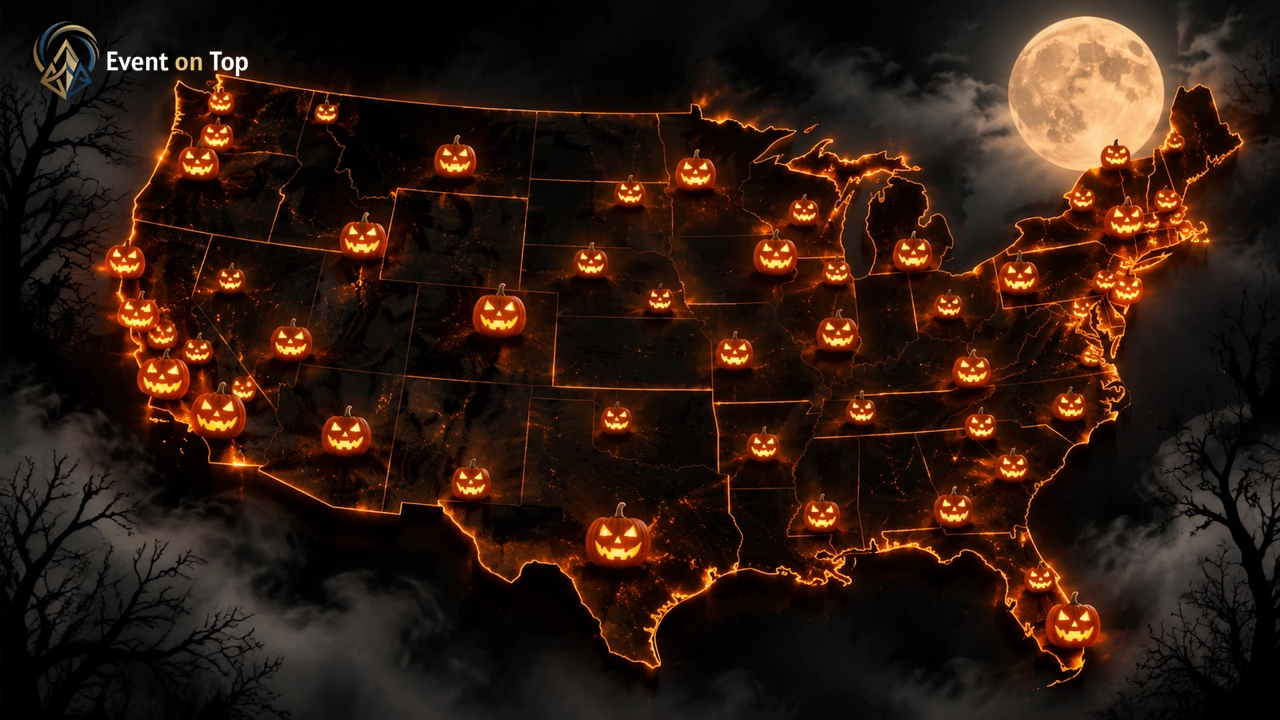
It is the question every parent asks in the last week of October: what time does trick-or-treating actually start — and when does it end? The honest answer surprises people. There is no national schedule, and no state sets one either. Trick-or-treat times are decided town by town, by city halls, police departments, homeowners associations and, in many neighborhoods, by nothing more formal than custom and porch lights. Halloween 2026 falls on Saturday, October 31, which changes the shape of the evening in ways this guide explains. Below you will find the typical trick-or-treat window for every state, the hours real towns have already announced for 2026, how to confirm your own town’s exact times, what age limits actually exist (far fewer than the internet claims), and the safety rules that matter once it gets dark. Planning the whole night around it? Start with our guide to the best Halloween events in the USA 2026 for the events worth building the evening around.
Quick Answer: When Does Trick-or-Treating Start and End in 2026?
Quick answer: In most US towns, trick-or-treating runs from about 5:30 to 8:00 PM on Saturday, October 31, 2026. The youngest children head out around dusk (5:00–6:00 PM), the busiest stretch is roughly 6:00–7:30 PM, and most official windows end at 7:00, 7:30 or 8:00 PM — very few run past 8:30 PM. Your town’s own announcement always beats this general guidance.
Why dusk? Because trick-or-treating is timed to sunset, and sunset on Halloween varies a lot across the country. On October 31, 2026, the sun sets at about 5:38 PM in Boston, 5:46 PM in Chicago, 5:53 PM in New York, 6:01 PM in Los Angeles and 6:40 PM in Miami. One more quirk helps this year: daylight saving time does not end until 2:00 AM on Sunday, November 1, so Halloween night keeps its later, summer-time sunsets. Expect Saturday hours to start a little earlier and stretch a little longer than a school-night Halloween in many towns — but as the sections below show, plenty of towns simply keep the window they use every year.

Trick-or-Treat Times by State: Typical Windows for 2026
First, the rule that governs this whole table: no state sets trick-or-treat hours. Cities, towns, boroughs, HOAs and police departments do — and many places set nothing at all, following custom instead. The windows below are therefore typical local windows: the range most communities in each state actually use, drawn from the patterns in this year’s announced schedules. Treat your state’s row as a planning baseline, then confirm your own town with the steps in the section after next. One caveat covers every row, so we will say it once here: always check your town’s official announcement before Halloween night.
| State | Typical window | What drives it locally |
|---|---|---|
| Alabama | 6:00–8:00 PM | Subdivisions and HOAs post most schedules |
| Alaska | 5:00–8:00 PM | Cold and early darkness end the night |
| Arizona | 6:00–9:00 PM | Warm evenings allow later hours |
| Arkansas | 6:00–8:30 PM | Church trunk-or-treats are widespread |
| California | 5:30–9:00 PM | Big cities mostly set no official hours |
| Colorado | 5:00–8:00 PM | Mountain weather can move events indoors |
| Connecticut | 5:30–8:00 PM | Often tied to downtown events |
| Delaware | 6:00–8:00 PM | Many towns set formal curfew-style hours |
| Florida | 6:00–9:00 PM | Late sunset means a longer window |
| Georgia | 6:00–8:30 PM | Atlanta-metro subdivisions set their own |
| Hawaii | 6:00–8:30 PM | Neighborhood and block-party format |
| Idaho | 5:30–8:00 PM | Cold snaps shorten the night |
| Illinois | 5:00–8:00 PM | Many towns publish official hours; Champaign–Urbana runs 5–7 PM in 2026 |
| Indiana | 5:30–8:00 PM | Mayors announce town hours; Indianapolis suburbs mostly run 5–8 PM |
| Iowa | 6:00–8:00 PM | Des Moines metro goes on Halloween night itself (see below) |
| Kansas | 6:00–8:30 PM | Trunk-or-treats common in rural areas |
| Kentucky | 6:00–8:00 PM | Larger cities announce official hours |
| Louisiana | 6:00–8:00 PM | Parishes occasionally shift the date |
| Maine | 5:00–7:30 PM | Early darkness, short window |
| Maryland | 6:00–8:00 PM | County-level guidance in many areas |
| Massachusetts | 5:30–8:00 PM | Salem’s October crowds ripple across the region |
| Michigan | 6:00–8:00 PM | Most towns announce a two-hour window |
| Minnesota | 5:00–8:00 PM | Weather is the wildcard |
| Mississippi | 6:00–8:00 PM | School and church events anchor the night |
| Missouri | 5:00–8:30 PM | A joke or riddle earns candy in some areas |
| Montana | 5:30–8:00 PM | Early sunset and cold |
| Nebraska | 6:00–8:00 PM | Official windows in the bigger cities |
| Nevada | 5:30–9:00 PM | Las Vegas suburbs run late |
| New Hampshire | 5:00–7:30 PM | Some towns use a different date (Rochester: Fri Oct 30) |
| New Jersey | 5:00–8:00 PM | Boroughs set hours; some add youth curfews |
| New Mexico | 5:30–8:30 PM | Warm evenings, later starts |
| New York | 5:00–8:00 PM | Apartment buildings often run earlier, lobby-style hours |
| North Carolina | 6:00–8:00 PM | HOAs set most schedules; downtown events fill gaps |
| North Dakota | 5:00–8:00 PM | Cold ends the night early |
| Ohio | 6:00–8:00 PM | But much of central Ohio goes Thursday, October 29 (see below) |
| Oklahoma | 6:00–8:30 PM | Oklahoma City sets no official hours; custom rules |
| Oregon | 5:30–8:00 PM | Rain gear is standard equipment |
| Pennsylvania | 6:00–8:00 PM | Boroughs set formal hours; Pittsburgh runs 5:30–7:30 PM |
| Rhode Island | 5:00–7:30 PM | Towns coordinate closely |
| South Carolina | 6:00–8:00 PM | Downtown business events are common |
| South Dakota | 5:00–8:00 PM | Weather dependent |
| Tennessee | 5:30–8:00 PM | Nashville suburbs run a little later |
| Texas | 6:00–9:00 PM | Subdivisions set their own hours |
| Utah | 5:30–8:30 PM | Trunk-or-treating is widespread |
| Vermont | 5:00–7:30 PM | Short, cold window |
| Virginia | 6:00–8:00 PM | A few Hampton Roads cities have real ordinances (see age limits) |
| Washington | 5:30–8:00 PM | Mall events are the rain backup |
| West Virginia | 6:00–8:00 PM | Cities announce windows; Charleston runs 6–8 PM |
| Wisconsin | 4:00–7:00 PM | The afternoon state — many towns start before dark, a few on a different day |
| Wyoming | 5:30–8:00 PM | Cold shortens the night |
| Washington, DC | 6:00–8:30 PM | No citywide window; neighborhood custom (and the youth curfew) applies |
Read the table with two patterns in mind. Northern and colder states skew earlier and shorter; warm southern and western suburbs stretch later. And a handful of places change the date, not the hours — which brings us to the biggest 2026 factor of all.
Why Saturday Changes Things in 2026
A Saturday Halloween rearranges the usual rules in four ways.
No school-night pressure. There is no homework, no early bedtime and no Sunday-morning alarm for most families, so official windows that exist are more likely to be used in full, and informal neighborhoods stay lively until the porch lights go off.
Towns that normally move the date are staying on the 31st. Some communities shift trick-or-treating when Halloween lands on a weekday — and this year many of them are shifting back. Rochester, Wisconsin, which normally goes on the Sunday before, keeps Saturday, October 31 in 2026 (1:00–4:00 PM); the Village of Jackson, Wisconsin does the same (5:30–7:30 PM). The famous exception runs the other way: in central Ohio, the regional planning recommendation puts trick-or-treat on Thursday, October 29 whenever Halloween falls on a weekend, and Columbus and many of its suburbs have followed it for 2026 (6:00–8:00 PM) — while Cleveland, Cincinnati and Dayton stay on Saturday. Never assume; check.
Trunk-or-treats pile onto the same weekend. Schools, churches and community groups schedule their parking-lot events for the Saturday itself, so many families now do a daylight trunk-or-treat first and door-to-door after dark. Our family Halloween events guide rounds up the best of those formats, from trunk-or-treats to zoo nights.
Parties run later — trick-or-treating mostly doesn’t. Adults get the long night (see our Halloween party ideas for that side of the evening), but door-knocking etiquette stays the same: when the porch lights go off and the official window closes, the candy part of Halloween is over, Saturday or not.

The Best Time to Go, by Your Child’s Age
Toddlers and preschoolers (up to about 4): go in daylight. Aim for roughly 4:30–6:00 PM, or your town’s official start if it is earlier. A short loop of familiar houses, an adult hand the whole way, and home before full dark. Trunk-or-treats and downtown events built for this age often run in the afternoon — the easiest Halloween of all.
Kindergarten to grade school (about 5–11): own the main window. Sunset to about 7:30 PM is the sweet spot: porch lights on, streets busy, candy bowls still full. This is also the peak-traffic stretch, so the visibility rules in the safety section matter most now. An adult should walk with any child under 12.
Tweens and teens (12+): take the tail of the window. Older kids can start later, when the displays and atmosphere peak, and stay out until the town’s official end — usually 8:00 or 8:30 PM. Agree the route, a check-in time and a hard return time before they leave, and check the age-limit section below: in a small number of towns, an older teen trick-or-treating is not just frowned on, it is against local code. (Still sorting the costume? Our kids’ Halloween costume ideas for 2026 are grouped by age, with the safety rules built in.)

How to Confirm Your Town’s Exact Hours
Five minutes of checking this week beats guessing on Saturday night. Work through these in order:
- Your town or city website — look under News or Announcements. Most towns that set hours post them between October 20 and 28, and many keep the same window every year.
- Your police department’s social pages — in much of the Midwest and Pennsylvania, the official hours appear first (and sometimes only) in a police or sheriff’s Facebook or X post.
- HOA and neighborhood channels — Nextdoor, subdivision Facebook groups and HOA emails are where subdivision-set hours live, especially across the South and Texas.
- Local news roundups — TV stations and newspapers publish county-by-county lists in the final week (the Indianapolis, central Ohio and Wisconsin lists are especially thorough).
- Nothing posted? Plan on last year’s window — most towns repeat it — and let porch lights be your guide on the night: lights on means welcome, lights off means done.
One warning from this year’s schedules: neighboring towns genuinely differ. Chicago, famously, sets no designated hours at all, while suburbs an hour away publish precise ones — so check your town, not the nearest big city.
Age Limits & Teen Rules: What Towns Actually Say
Here is the honest national picture: there is no state or national age limit for trick-or-treating. The overwhelming majority of American towns have no age rule at all, and most families simply decide for themselves when a child is done. But “rare” is not “nonexistent” — a handful of towns, mostly in one corner of Virginia, do have real ordinances, and they are worth knowing before a teen heads out.
- Chesapeake, Virginia is the best-known case. Its city code (§ 46-8) limits trick-or-treating to children 14 and under, within set hours ending at 8:00 PM, and breaking the rule is a Class 4 misdemeanor (a fine of up to $250). The limit was originally 12; the city council raised it to 14 in 2019 after the old version — which once carried a theoretical jail term — drew national criticism. Parents and guardians accompanying younger children are exempt.
- The rest of Hampton Roads, Virginia is stricter: Norfolk, Virginia Beach, Hampton, Suffolk, Newport News and Portsmouth all limit trick-or-treating to children 12 and under, ending by 8:00 PM, with violations classed as misdemeanors. Newport News even bars accompanying adults from wearing masks.
- Belleville, Illinois bans trick-or-treating for anyone above eighth grade in its “Halloween Solicitation” ordinance, and limits visits to 5:00–8:30 PM.
- Elsewhere, the examples are scattered singles: Rayne, Louisiana bars anyone over 13; St. Michaels, Maryland sets the line at 13; Charleston, South Carolina restricts trick-or-treating to 16 and under.
Context matters, though. These ordinances are rarely enforced against well-behaved kids: Chesapeake’s original law dates to 1970 and, as legal publisher Nolo notes, has effectively never been enforced; police in these towns consistently say they focus on disruptive behavior, not on a polite teenager walking with younger siblings. Virginia lawmakers even approved legislation in 2026 to curb local trick-or-treat age limits — though it only takes effect if reenacted in 2027. The practical takeaway for teens: know whether your town is one of the few with a rule, respect the official end time everywhere, and be the group householders are happy to see.
Safety Rules That Matter After Dark
- Be visible. Add reflective tape or trim to costumes and candy bags, and give every child a flashlight or glow stick. Dark costumes on dark streets are the classic Halloween hazard.
- Face paint beats a mask. Masks that block peripheral vision cause trips and bad road crossings; the CDC’s longstanding advice is to check that any mask leaves a clear line of sight — or swap it for paint.
- Cross at corners, not between cars. Walk on sidewalks where they exist, face traffic where they don’t, and keep phones down while crossing. The busiest trick-or-treat stretch (about 6:00–8:00 PM) is exactly when the most drivers are heading to parties.
- Under-12s go with an adult. That is the consistent guidance from the American Academy of Pediatrics and Safe Kids Worldwide. Older kids go in groups, on an agreed route, with a check-in plan.
- Agree the end time before you leave. Town window, porch lights, or a fixed clock time — pick one, and treat lights-off houses as closed, not as a challenge.
- Check the haul at home. Inspect candy before eating, and throw away anything unwrapped, damaged or homemade from strangers.
- Hosting instead? Keep your porch and steps lit and clear of trip hazards, secure pets before opening the door, and consider a teal pumpkin — the signal that you have non-food treats for kids with allergies.

Frequently Asked Questions
What time does trick-or-treating start in 2026?
Most towns start between 5:00 and 6:30 PM on Saturday, October 31, 2026, with the single most common official windows being 6:00–8:00 PM and 5:00–7:00 PM. Young children often start at dusk — as early as 4:00 PM in parts of Wisconsin — while warm-weather suburbs may not get going until 6:00 PM. Your town’s announcement is the final word.
What time does trick-or-treating end in 2026?
Most official windows end at 7:00, 7:30 or 8:00 PM, and very few places run past 8:30 PM. Where nothing is official, the end is social, not legal: when porch lights switch off across the street, the night is over.
Who decides trick-or-treat hours?
Your town does — or nobody does. Cities, villages, townships and boroughs announce most official windows, police departments publicize them, and HOAs set them in many subdivisions. No state government sets trick-or-treat hours, which is why two towns ten miles apart can run different windows, or even different dates.
Is there an age limit for trick-or-treating?
Almost everywhere, no. A small number of towns — concentrated in Hampton Roads, Virginia — cap trick-or-treating at 12 (Chesapeake at 14), and a few others, like Belleville, Illinois (eighth grade), have their own rules. There is no state or national limit, and enforcement against polite teens is rare — but check your local code if you live in eastern Virginia.
What if my town hasn’t posted hours?
Wait until midweek — most towns post between October 20 and 28 — then check the police department’s social pages and local news roundups. If nothing appears, plan on last year’s window (towns rarely change it) and follow the porch lights on the night.
Is trick-or-treating on a Saturday different?
Yes, in feel more than in rules. Expect earlier starts, fuller windows, afternoon trunk-or-treats and later parties — but official end times barely move, and a few places even shift the date (much of central Ohio goes on Thursday, October 29). And enjoy the bonus: the clocks go back the night after Halloween this year, so Saturday keeps its later sunset and everyone gets the extra hour on Sunday morning instead.
One Last Check Before Saturday
Trick-or-treat times in 2026 come down to one habit: check your town, then build the evening around its window — youngest kids at dusk, grade-schoolers in the main stretch, teens home by the official end. Confirm the hours today, charge the flashlights, add the reflective tape, and Saturday night takes care of itself.
Still building the rest of the plan? The best Halloween events in the USA 2026 covers the parades, parties and Halloween towns worth the trip, and our family Halloween events guide has the not-so-scary events, zoo nights and trunk-or-treats made for younger kids.


Best Halloween Events in the USA 2026: Dates & Costs
28th Oct 2026[…] itself is the main night for costumed outings, and families planning that evening can check the trick-or-treat times for 2026 before heading out. Many trunk-or-treat events also run this same final weekend, so families […]