










How to Buy Concert Tickets Safely Online in 2027


To buy concert tickets safely online in 2027, start with the artist’s official website or the venue’s official box office, buy during official sales or presales where possible, and if a show is sold out, use only verified resale platforms that guarantee valid tickets or your money back. Never buy from social media sellers, screenshots of tickets, or anyone asking for payment by bank transfer, gift cards or cash apps with no buyer protection. Most ticket scams succeed for one simple reason: a fan in a hurry skips the checks that take two minutes.
Demand for major tours keeps rising, dynamic pricing confuses buyers, and fake listings appear within minutes of big on-sales. This evergreen guide walks through the whole process in order — finding the real seller, beating the queue fairly, checking a resale listing properly, paying the safe way, and knowing your rights if a show is postponed or cancelled — so you can use it for any concert, festival or theatre ticket you buy this year.
Step 1: Find the Official Seller First
Every legitimate sale starts from one of two places: the artist’s official website or the venue’s official website. Both link to the authorised primary seller for that event. Start there, every time, rather than with a search engine ad — the top results for a big show often include resale sites styled to look official, sometimes at several times face value, and they are not always clearly labelled at a glance.
Before an on-sale, check the basics on the event page: the exact date and venue (big tours sometimes play two nights, or two cities with similar names), the seating map, the face-value price range including fees, and the ticket limit per person. Knowing the real price range in advance is your best scam detector later: a “bargain” far below it, for the biggest show of the year, is almost never real.
Step 2: Use Presales and Official On-Sales Properly
Many major tours now sell a large share of tickets before the general sale through presales — for fan club members, album or merch buyers, venue newsletter subscribers or payment card holders. Presale access is normally free or low-cost to obtain legitimately (signing up for the artist’s mailing list is the classic route) and is worth doing: the queue is smaller and the choice of seats is better. Register accounts with the official seller in advance, save your payment details, and verify your email and phone before the day, because on-sale queues punish anyone resetting a password at 10:00 a.m.
On the day, join the queue from one device and one browser, arrive a few minutes early, and do not refresh once you are in line unless the seller instructs you to. Be ready for dynamic or “platinum” pricing on some events, where the primary seller raises prices for high-demand seats. That is legal and increasingly common — but it means you should decide your maximum budget before the queue opens and be willing to walk away from seats above it. Prices for some shows come back down closer to the event date as demand settles.
Step 3: If It Is Sold Out, Use Verified Resale — Carefully
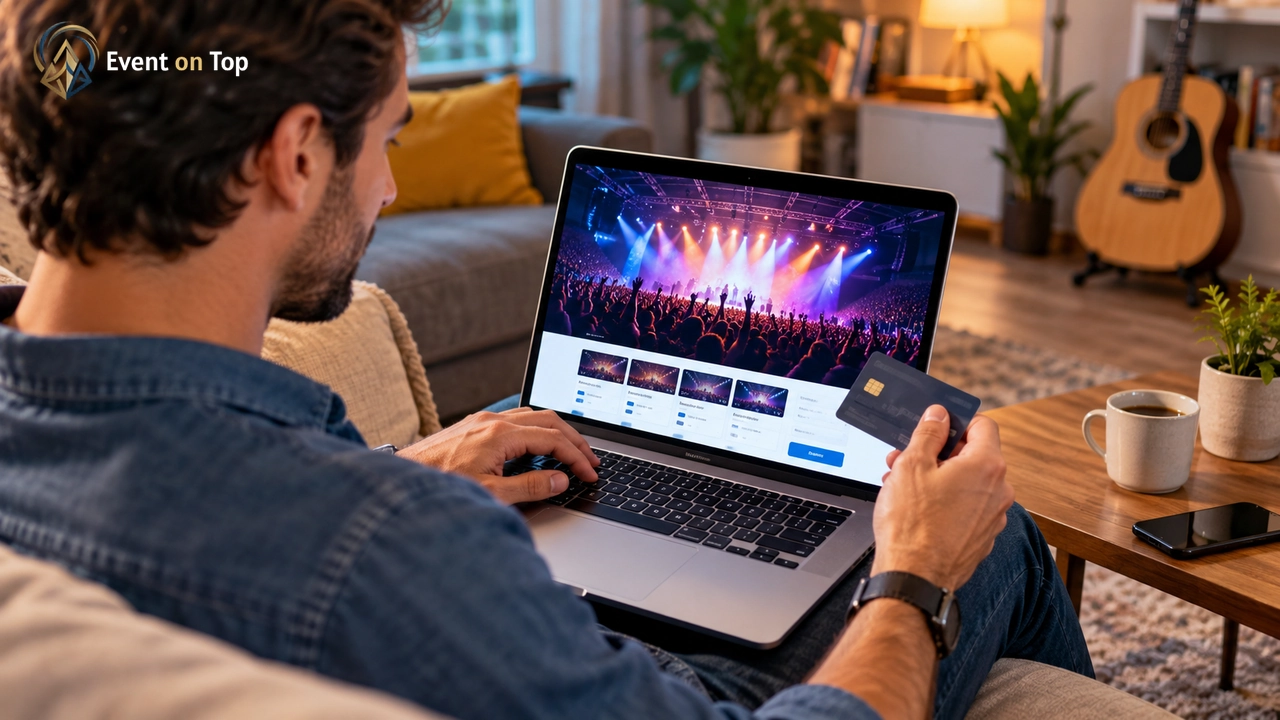
A sold-out show does not mean no tickets; it means the primary market is gone and resale is your route. Stick to established resale platforms that verify sellers, reissue tickets in your name where the system allows, and offer a clear guarantee: a valid ticket or a refund. Avoid listings on social media, messaging apps and classified sites, however friendly the seller seems — there is no mechanism to check the ticket and no one to refund you.
| Buying route | Safety level | What to check |
|---|---|---|
| Artist / venue official seller | Highest | You arrived via artist or venue site, price matches announced range |
| Official fan-to-fan exchange | High | Ticket is transferred/reissued through the official system |
| Established resale platform with guarantee | Good, at market price | Guarantee terms, total price incl. fees, delivery method |
| Social media / DM seller | Unsafe — avoid | No verification, no refund route, common scam format |
| Screenshot or PDF “ticket” from a stranger | Unsafe — avoid | Barcodes can be copied and sold many times |
On any resale listing, check the total price including fees (the headline price is rarely the final one), the exact section and row, whether the ticket is mobile-transfer only, and the delivery timing. For many events, legitimate mobile tickets are delivered as a transfer into your own ticketing account, not as a file — a seller who can only send a screenshot is a red flag, because the same screenshot can be sold to ten people and only the first scan gets in.
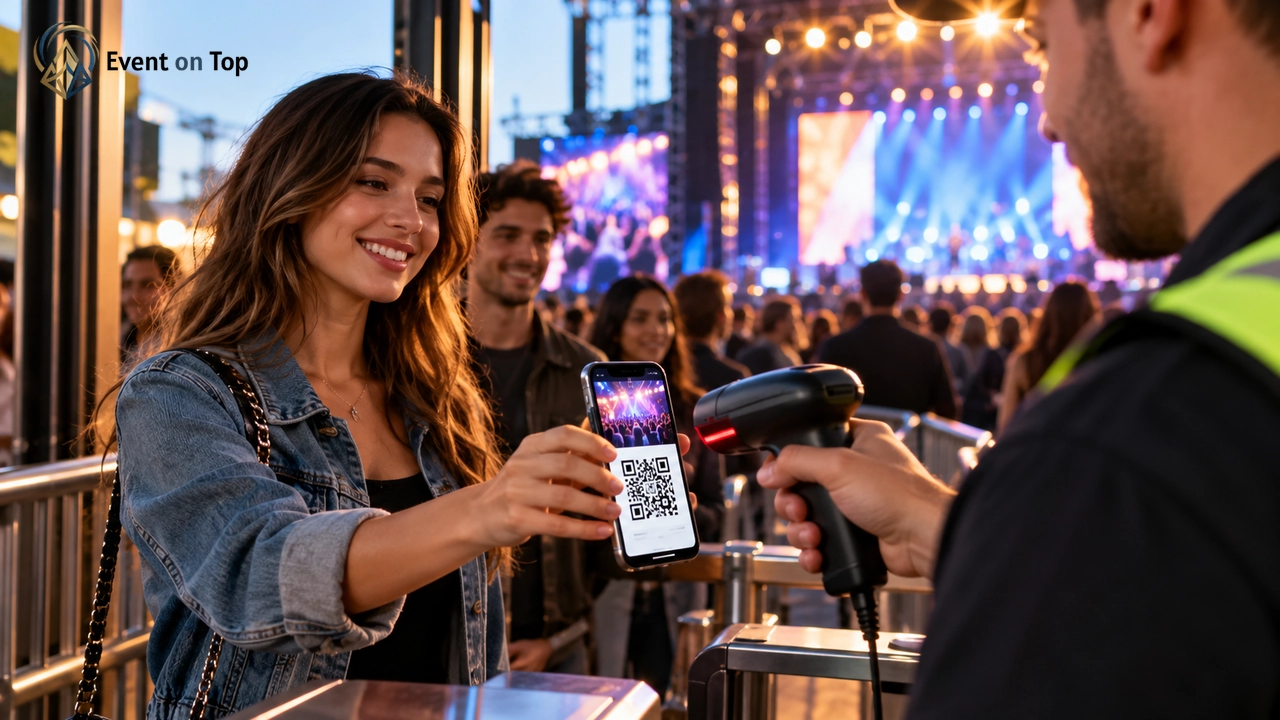
There is a technical reason screenshots fail, and understanding it will save you from the most common resale scam. Most modern mobile tickets do not carry a fixed barcode. The code inside the official app refreshes automatically — on some major platforms roughly every 15 seconds — and many tickets will not display a usable code at all until you are near the venue. A screenshot is therefore a picture of a code that has already expired, and a PDF of a “mobile ticket” is usually a sign the ticket was never a genuine mobile ticket in the first place. If a seller cannot transfer the ticket into your own account through the official system, treat that as the answer: walk away, however convincing the image looks.
Guarantee vs Ticket Protection: Two Different Safety Nets
Buyers often confuse two products with similar names. A platform guarantee protects you against the seller and the ticket: if the ticket is invalid, never arrives, or the event is cancelled and the platform does not rebook you, the platform refunds you or supplies a comparable replacement. It costs you nothing extra — it is part of buying on a verified platform — and a listing without one is a listing to avoid.
Ticket protection (sometimes sold as ticket insurance at checkout) protects you against your own circumstances: you fall ill, your transport breaks down, a flight is cancelled, or a family emergency stops you attending. Typical policies cover a defined list of reasons — illness or injury, serious travel disruption, and certain emergencies at home are common; simply changing your mind is not. It is an optional extra, usually priced as a small percentage of the order. It is worth considering when the order is expensive and your trip depends on several things going right — a festival weekend with flights and a hotel booked around it is the classic case. It is poor value on a cheap local show you could resell. Read the covered-reasons list before you pay, not after you need it. Neither product replaces the other: a guarantee will not help if you are too ill to travel, and protection will not help if the ticket itself was fake.
What a Ticket Scam Actually Looks Like, Step by Step
Scams rarely look like scams until the gate. A typical pattern runs like this. A sold-out show is announced, and within hours a friendly account appears in fan groups offering “two spare tickets, face value, can’t go any more.” The profile looks real — photos, followers, a plausible story. You message; the seller replies quickly, sends a screenshot of what appears to be a genuine mobile ticket, and asks for payment through a payment app “to avoid resale fees,” sometimes with a small discount for paying at once. You pay. A PDF or image arrives that looks official. On the night, you join the queue, present the code — and it has already been scanned, or was never valid at all. The seller’s account is gone, the payment app offers no buyer dispute for a voluntary transfer, and the box office cannot help: you never bought a ticket, you bought a picture of one. Every step of that sequence is stopped by the routine in this guide — official transfer only, platform checkout only, card payment only. If a seller asks you to skip any one of those steps “to save money,” that request is the scam revealing itself.
The Truth About Ticket Fees
The ticket price you see first is rarely the price you pay, and on resale platforms the gap is large enough to change which listing is actually cheapest. Published fee surveys of major resale marketplaces in 2025 put typical buyer-side service fees broadly in the 20% to 38% range of the ticket price, depending on the platform and event — and that is before delivery or order-processing charges. Treat those figures as an illustrative range from published surveys, not a promise for any single checkout; platforms change their pricing, and the only figure that matters is the all-in total on your own order screen.
The practical effect is easy to see. Take the same seat, listed at the same $150 headline price on three platforms with different fee levels:
| Listing (same seat, illustrative) | Headline price | Illustrative fees | You actually pay |
|---|---|---|---|
| Platform A | $150 | ~20% ($30) | ~$180 |
| Platform B | $150 | ~28% ($42) | ~$192 |
| Platform C | $150 | ~38% ($57) | ~$207 |
Same seat, same seller’s price — a difference of around $27 between the cheapest and dearest checkout in this example, purely from fees. For high-demand shows the gap on real listings can be far larger. The rule that follows is simple: never compare headline prices. Compare only the final total, with all fees included, shown before you enter payment details. Any platform that will not show you that total early in checkout is telling you something about how it does business. This is also why a slightly higher headline price on a low-fee platform can beat a “bargain” listing elsewhere — run both to the total before you decide. For more on timing your purchase, see our guide to the best time to buy event tickets.
Step 4: Pay the Safe Way and Keep Proof
How you pay matters as much as where you buy. Pay by credit card wherever possible: card payments carry the strongest dispute and chargeback protection if tickets do not arrive or turn out to be invalid. Reputable platforms’ own checkout systems are the next best option. Never pay a stranger by bank transfer, gift cards, cryptocurrency or peer-to-peer payment apps — these methods are effectively cash, and their appearance in a ticket sale is the single clearest scam signal.
Keep everything: the confirmation email, order number, listing details and screenshots of the listing showing section, row and price. If tickets are transferred to you, accept the transfer immediately into your own account and confirm the event, date and seats match your order before the day of the show, not at the door.
Step 5: Know the Red Flags and Your Rights
The classic warning signs repeat across almost every reported scam: prices far below face value for a high-demand show; pressure to decide in minutes (“three other buyers are waiting”); a seller who moves the conversation off the platform to messages or email; stock photos instead of a real listing; and any request to pay a “deposit” to hold tickets. Any one of these is enough reason to stop.
If an event is postponed, tickets bought through official and verified channels are normally honoured for the new date, with refund windows offered by the seller. If it is cancelled outright, those channels refund automatically in most cases. This protection is precisely what you lose with informal sellers. If you believe you have been scammed, contact your card provider immediately to dispute the payment, report the listing to the platform, and report the fraud to your local consumer protection or police reporting service — speed improves the chance of recovering money.
If You’ve Been Scammed: The Chargeback, Step by Step
If the worst happens, act in this order. First, contact your card provider immediately and dispute the payment — card networks set dispute windows (commonly up to around 120 days from the transaction or the event date, depending on the network and reason), so do not wait until after the show to start. Explain plainly that you paid for tickets that were invalid or never delivered. Second, assemble your evidence pack before you call: the order confirmation, the listing screenshot showing section, row and price, your messages with the seller, and proof the ticket failed (a photo of the gate rejection or a note from venue staff, if you have one). Providers decide disputes on documents, not stories. Third, report the listing and the seller account to the platform where you found them, even if you paid elsewhere — it protects the next buyer and strengthens your dispute record. Fourth, report the fraud to your national or local consumer-protection or police fraud-reporting service; reports are how payment apps and marketplaces get patterns shut down. If you paid by bank transfer or a payment app instead, contact your bank anyway and ask about recall or fraud procedures — recovery is harder and never guaranteed, which is exactly why Step 4 of this guide insists on card payment for anything bought from a stranger.
Frequently Asked Questions
What is the safest website to buy concert tickets?
The safest route is the artist’s official website or the venue’s box office, which link to the authorised primary seller for that event. For sold-out shows, use an established resale platform that verifies sellers and guarantees a valid ticket or a refund.
How can I tell if a ticket website is legitimate?
Check that you reached it from the artist or venue site, that prices match the announced range, that the full price including fees is shown before payment, and that it offers card payment and a written refund guarantee. Be suspicious of sites that appear only in ads, use the artist’s name in their web address, or hide fees until the final step.
Are resale tickets safe to buy?
They can be, on established platforms that verify sellers, transfer tickets into your name and guarantee the order. They are not safe when bought through social media messages or classified listings, where there is no verification and no refund if the barcode does not work.
When is the best time to buy concert tickets?
For most shows, the official presale or general on-sale at face value is the best combination of price and seat choice. For some high-demand events, resale prices ease closer to the show date — but that is never guaranteed, and waiting is a gamble if you must attend.
What should I do if my tickets do not arrive?
Contact the seller’s customer service first with your order number, and check your ticketing account for a transfer. If the seller cannot resolve it and the event is close, contact your card provider about disputing the payment, and keep all confirmation emails and listing records as evidence.
Why are resale ticket fees so high, and how do I compare prices fairly?
Resale platforms charge service fees for verification, guarantees and operating their marketplaces, and published surveys put typical buyer fees broadly between 20% and 38% depending on the platform and event. Because the percentages differ, headline prices cannot be compared directly. The only fair comparison is the final all-in total shown before payment — compare that figure across platforms for the same section and row, and choose on the total, not the ticket price.
Is ticket insurance or ticket protection worth buying?
Sometimes. Ticket protection covers you if a listed reason — such as illness or serious travel disruption — stops you attending; it does not cover a fake ticket (that is what a platform guarantee is for) and it does not cover changing your mind. It is most worth it on expensive orders tied to travel you cannot rearrange, and least worth it on low-cost local shows. Check the covered-reasons list in the policy wording before you add it at checkout.
Conclusion
Safe ticket buying is a routine, not a talent. Work through this checklist before every purchase and you remove almost all of the risk:
Safe Buying Checklist
- I started from the artist’s or venue’s official website — not a search ad or a social-media link.
- I know the official face-value price range, so I can spot a price that makes no sense.
- I tried presales and the official on-sale before turning to resale.
- If reselling was necessary, the platform verifies sellers and guarantees a valid ticket or a refund — in writing.
- I compared the all-in total price including fees, not the headline price.
- The ticket will be transferred into my own ticketing account — not sent as a screenshot or PDF.
- I paid by credit card or through the platform’s own checkout — never by bank transfer, gift card or payment app to a stranger.
- I saved the confirmation email, order number and a screenshot of the listing.
- I set a maximum budget before dynamic pricing could move it.
Put the routine to work on a real event with our Coachella 2027 ticket and travel guide, plan February with our Super Bowl LXI guide, and browse more concerts and festivals in our Entertainment category.


EDC Las Vegas 2027: Dates, Tickets & Lineup Guide
23rd Oct 2026[…] How to Buy Concert Tickets Safely Online in 2027 […]
Tomorrowland 2027: Dates, Tickets & Packages Explained
23rd Oct 2026[…] How to Buy Concert Tickets Safely Online in […]
Lollapalooza 2027: Dates, Tickets & Chicago Guide
23rd Oct 2026[…] free water stations and shade strategy matter more here than at desert or coastal events. Our guide to buying concert tickets safely applies to Lollapalooza resale exactly — use official channels […]
Formula 1 2027 Calendar: All Races, Dates & Circuits
23rd Oct 2026[…] buy event tickets explains the presale pattern, and general ticket-buying safety rules are in our concert ticket safety guide, which applies to Grand Prix tickets […]
How Much Does It Cost to Attend the Super Bowl?
23rd Oct 2026[…] Secondary marketplaces list the largest public inventory. Published reporting on recent Super Bowls has commonly put average resale prices in the $5,000–$9,000 band per ticket before fees, with the cheapest “get-in” seats sometimes dipping below that in the final days and premium lower-bowl seats far above it. Prices swing with the matchup — a big-market team pairing pushes the market up; snow-belt versus small-market pairings soften it. Buy only from established, guaranteed marketplaces (see our ticket safety guide). […]
Best Time to Buy Event Tickets: When Prices Are Lowest
23rd Oct 2026[…] curve above applies and patience (Phase 4) is the discount — subject to the safety rules in our ticket buying safety guide. Sports finals are the exception class: when the finalists are glamorous, late markets rise, so […]
Coachella 2027: Dates, Lineup, Ticket Prices & Travel Guide
23rd Oct 2026[…] by year. Buy only from the official website or its authorised partners, and read our guide to buying concert tickets safely online before using any resale site, because festival wristbands are a prime target for […]
Super Bowl LXI 2027: Date, Venue, Tickets & Halftime Show Guide
23rd Oct 2026[…] cheap Super Bowl tickets in October 2026 should be treated as a scam risk. Read our guide to buying concert and event tickets safely online before spending anything, use only verified platforms, and never pay by bank transfer or gift […]