
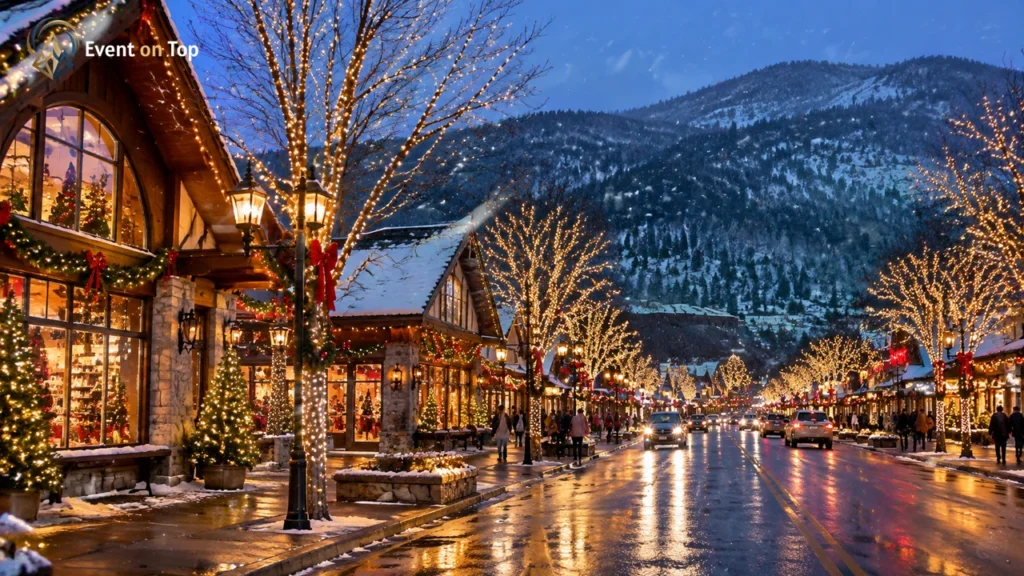
Christmas in Barcelona 2026: Fira de Santa Llúcia, Lights, Gaudí & Three Kings

Barcelona does Christmas in sunshine and nativity scenes, not snow — and in 2026 it does it with a title no other city holds: European Capital of Christmas. More than 130 kilometres of streets are lit, the oldest Christmas market in Catalonia has stood in front of the cathedral since 1786, Gaudí’s buildings glow with their own light shows, and the season does not end quietly — it ends with the Three Kings riding through the city on the evening of January 5. A December afternoon here can still reach 14 degrees under a clear blue sky, the markets sell hand-painted figures for the pessebre rather than mulled wine by the litre, and the harbour gets its own Christmas fair with a Ferris wheel, an ice rink and a nativity scene floating on the water.
The guides already ranking for this topic are mostly market lists: they give you the Fira de Santa Llúcia’s dates and stop there. This guide is a full city guide instead — all four markets, the lights walk, the Gaudí light shows, the Catalan traditions that make Barcelona’s Christmas unlike anywhere else in Europe, the food, New Year’s Eve and the Three Kings, plus the closures that catch visitors out — with dates checked against the Catalan government’s cultural agenda and the city’s own festival listings, and anything still unannounced flagged rather than guessed. The city had not announced the 2026 lights switch-on date when this guide was written in early November, so check the official Barcelona Christmas page before you go.

Christmas in Barcelona 2026 at a Glance
- Season: late November 2026 to January 6, 2027 (Epiphany, Three Kings’ Day).
- Main markets: Fira de Santa Llúcia at the Cathedral (Nov 27–Dec 23), Fira de Nadal de la Sagrada Família (late Nov–Dec 23), Nadal al Port Vell at the harbour (Nov 27–Jan 6), Fira de Reis on Gran Via (mid-December–Jan 6).
- Lights: more than 130 km of illuminated streets, late November to January 6; Barcelona is European Capital of Christmas for 2026.
- Light shows: Els Llums de Sant Pau (Nov 19, 2026–Jan 10, 2027) and Casa Batlló: A Winter Night (Nov 14, 2026–Jan 13, 2027).
- Big nights: New Year’s Eve, December 31; the Three Kings parade (Cabalgata de Reyes) on the evening of January 5.
- Public holidays: December 8 (Immaculate Conception), December 25 and December 26 (Sant Esteve, St Stephen’s Day).
- Weather: daytime highs of 10–14 degrees Celsius, evenings around 8–10 degrees — layers, not a heavy coat.
- Best for: market lovers, Gaudí fans, families, and anyone who wants a European Christmas without the cold.
Fira de Santa Llúcia: Barcelona’s Oldest Christmas Market
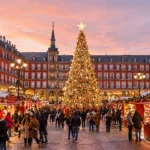
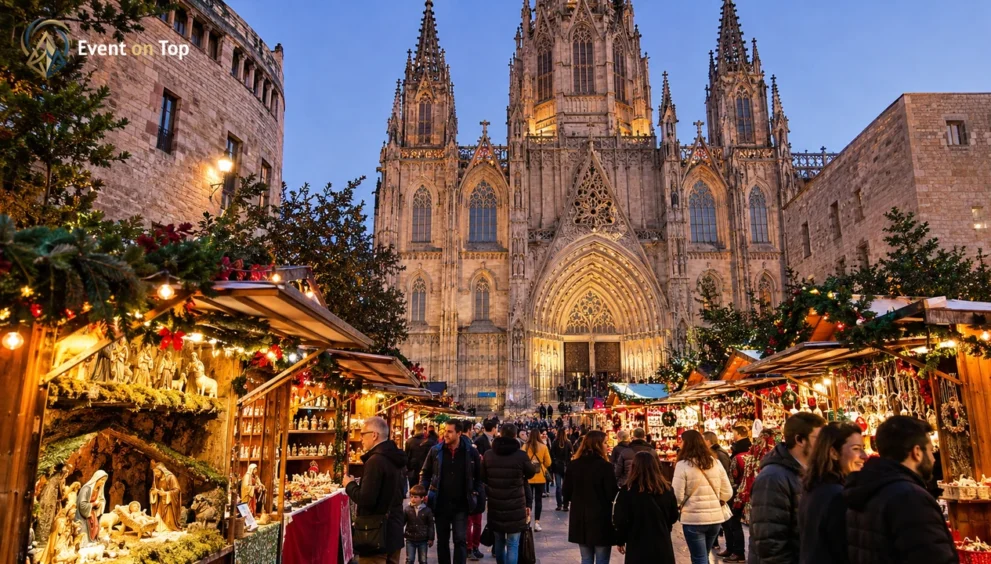
The Fira de Santa Llúcia is Catalonia’s oldest Christmas market, running in front of Barcelona Cathedral on Plaça de la Seu and Avinguda de la Catedral since 1786. In 2026 it runs from November 27 to December 23, daily from 10:00 am to 9:00 pm, according to the Catalan government’s cultural agenda — a couple of guides list November 28 as the opening day and slightly shorter hours, so check the official listing before you go. Around 300 stalls fill the square with nativity figures, greenery, handmade decorations, musical instruments and gifts, and the cathedral’s stone facade behind them makes the whole square feel like a set.
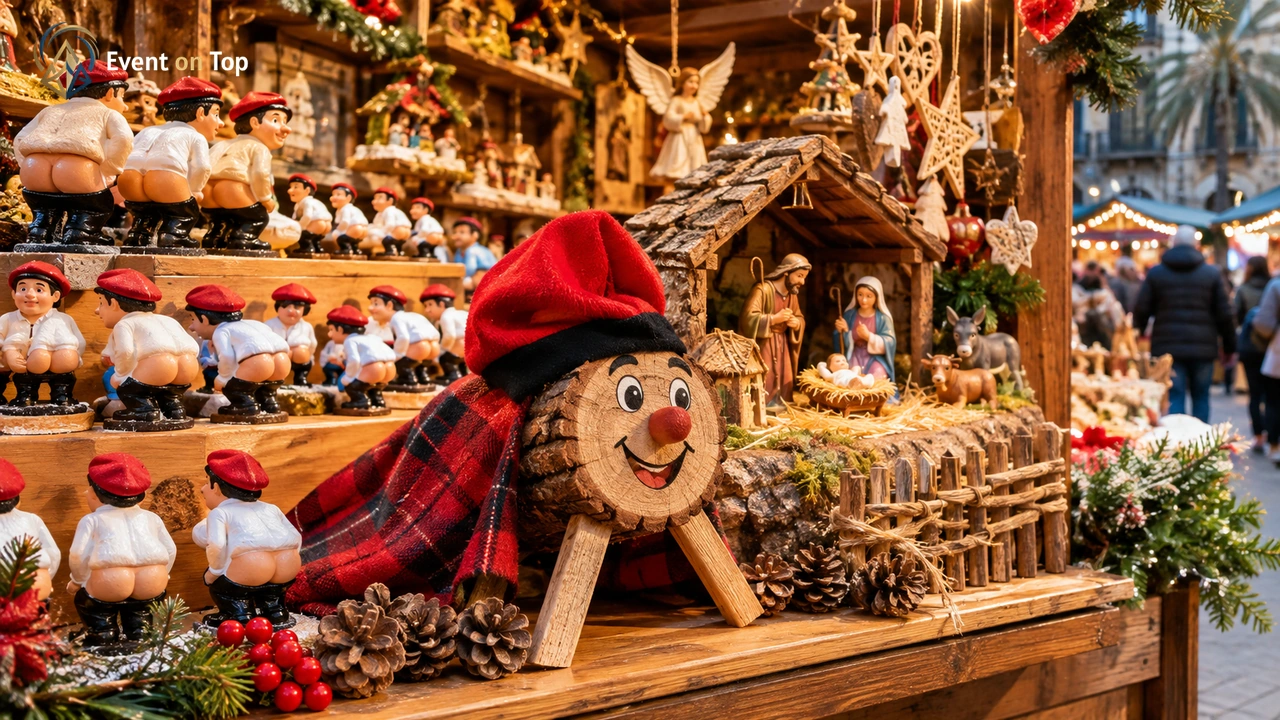
This is the market to buy the pieces of a pessebre: moss, miniature houses, hand-painted figures, and the two Catalan characters no other market in Europe sells. The caganer is a small squatting figure hidden in the nativity scene, a traditional symbol of fertility and good fortune — today made in hundreds of versions, from footballers to politicians. The Tió de Nadal, also called Caga Tió, is a smiling log with a red hat and little legs that children “feed” from December 8 and then beat with sticks on Christmas Eve, singing, until it “delivers” the sweets and small toys hidden inside. Both are sold at dozens of stalls here, and both make better souvenirs than anything in the gift shops on La Rambla.
Come for the food as well as the figures. Turrón — soft and hard almond nougat, with the Vicens brand the best-known name — is the market’s signature sweet, sold by the slab. Roasted chestnuts and churros con chocolate are the classic breaks between stalls, and there are children’s workshops, live nativity scenes and live music and dance in the evenings. The best time for photographs is after 6:00 pm, when the cathedral is illuminated; weekday mornings are the quietest time to browse, and after December 20 the crowds thicken.
Getting there is easy: Jaume I on metro line L4 is a three-minute walk, Liceu on L3 is close too, and it is about a 15-minute walk from Plaça de Catalunya. From the airport, the Aerobus reaches Plaça de Catalunya in about 35 minutes.
Fira de Nadal de la Sagrada Família: Christmas in Gaudí’s Shadow
The second market sets up in the square in front of the Sagrada Família basilica, and it is the more local of the two. It generally runs from around November 28 to December 23, weekdays 10:00 am to 9:00 pm and weekends and holidays until 10:00 pm, with around 100 to 150 stalls — smaller than Santa Llúcia, more spacious, and noticeably less touristy. Handmade jewellery, ceramics, small tree ornaments, nativity figures, wooden dolls and traditional musical instruments fill the stalls, and hot chocolate and churros vendors make ideal stops between them.
The draw here is the backdrop. When the basilica’s towers light up at night, the market becomes a postcard — the stalls in the foreground, Gaudí’s stone spires glowing behind them. Mornings from 10:00 to 11:30 are quiet, and after 6:30 pm the lighting is at its most photogenic. On weekends there is live music and children’s workshops, including painting your own Caga Tió.
Pair the market with a visit to the basilica itself, but book advance tickets — December is one of the busiest months of the year. Note that the basilica lists reduced hours on December 25 and 26, so check the official site before planning a Christmas Day visit. The Sagrada Família metro station (lines L2 and L5) is right next to the square.

Nadal al Port Vell: Ferris Wheel, Ice Rink & the Harbour Lights
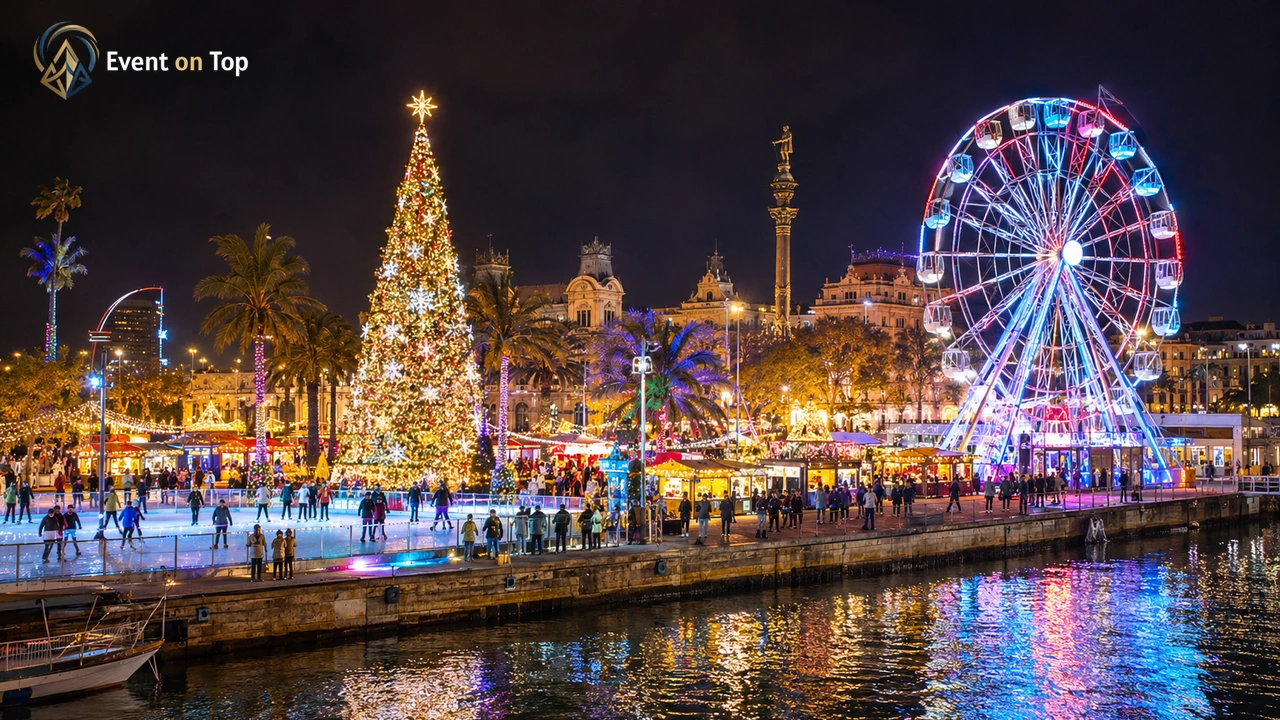
Down at the harbour, Nadal al Port Vell is Barcelona’s most modern Christmas event — less a market, more a full festive fair. It runs daily from November 27, 2026 to January 6, 2027, from 11:00 am to 11:00 pm, at Moll de la Fusta in Port Vell, and it is one of the rare Christmas attractions in the city that stays open on December 25. A giant LED-lit Christmas tree, a Ferris wheel, an ice skating rink, a nativity scene floating on the water, artisan stalls and live performances fill the waterfront, and entry to the fair itself is free.
The Ferris wheel and the ice rink are the two things to book ahead for — the wheel is at its best under the evening LED lights, and the rink runs about 10 euros an hour, with shorter waits on weekday afternoons. The light shows after 7:00 pm are the evening highlight, and the first week of January is lively right up to the Three Kings. Bring a heavier layer than you would in the Gothic Quarter: the coastal breeze off the harbour is noticeable after dark.
For families this is the easiest Christmas stop in the city — rides, workshops, live music and food stalls serving churros, chestnuts and hot drinks, all in one flat, pushchair-friendly space. Drassanes on metro line L3 or Barceloneta on L4 are a five- to eight-minute walk, and it is about 15 minutes towards the sea from La Rambla.
The Lights Walk: Passeig de Gràcia, Casa Batlló & Els Llums de Sant Pau
Barcelona’s lights are the city’s Christmas showpiece in 2026, and the European Capital of Christmas title has expanded them to more than 130 kilometres of illuminated streets. The lights run from late November to January 6, on weekday evenings from about 5:30 pm to 11:00 pm and until midnight on Fridays and Saturdays. The switch-on ceremony itself had not been announced by the City Council when this guide was written in early November — recent years have held it on Passeig de Gràcia in the last week of November, and one listings site gives November 26, but that date is unconfirmed, so check the official Barcelona Christmas page before planning around it.
The classic walk starts at Plaça de Catalunya and runs up Passeig de Gràcia, past the illuminated facades of Casa Batlló and Casa Milà, then detours through the Gothic Quarter and along La Rambla and Portal de l’Àngel, with Gran Via as the grand finale. Casa Batlló is the star of the walk: its facade comes alive with a Christmas light show every evening, a short light-and-music show repeating roughly every 30 minutes, and the full Casa Batlló: A Winter Night experience runs from November 14, 2026 to January 13, 2027.
The second light show worth a ticket is Els Llums de Sant Pau at the Sant Pau Art Nouveau Site, running November 19, 2026 to January 10, 2027 — a walk-through festival of light installations across one of the city’s most beautiful modernist complexes. Book both in advance: December weekends sell out, and both are ticketed while the street lights are free.

Catalan Christmas Traditions: Caganer, Tió de Nadal & the Pessebre
Barcelona’s Christmas is built on traditions the rest of Europe does not share, and understanding them is what turns a market visit into a cultural one. The pessebre, the nativity scene, is the centrepiece of a Catalan Christmas home — families build elaborate scenes with moss, cork, miniature houses and dozens of figures, and the markets exist to supply them. The caganer, the squatting peasant hidden somewhere in the scene, is the joke at its heart: a symbol of fertility and the natural cycle that has been part of Catalan nativity scenes for centuries, and today produced in hundreds of celebrity and character versions.
The Tió de Nadal is the tradition children remember longest. The log arrives in the home from December 8, wearing a red hat and a smiling face, and children feed it every night until Christmas Eve, when they beat it with sticks while singing — and it “delivers” the sweets and small presents hidden under its blanket.
The season’s rhythm is different from northern Europe too. Christmas Eve is a family night, December 25 is the big family lunch — escudella, the traditional meat and macaroni soup, is the Christmas Day dish, more common in homes than in restaurants — and December 26, Sant Esteve, is a second public holiday in Catalonia, a day for leftovers and family. The markets mostly close by December 23, the Fira de Reis opens for the gift season, and the whole city turns towards January 5.
What to Eat: Turrón, Churros con Chocolate & Vi Calent
Start with turrón, the almond nougat that is Spain’s Christmas sweet: soft (blando) and hard (duro), sold by the slab at every market, with Vicens the best-known maker. Then churros con chocolate — freshly fried churros dipped in thick hot chocolate — the market break that works at any hour. Roasted chestnuts are the scent of the squares, neules are thin crispy rolled cookies traditionally eaten with cava, and polvorones are almond cookies that melt in the mouth.
To drink, try vi calent, the Catalan spiced hot wine with cinnamon, cloves and orange — Barcelona’s answer to mulled wine — or a glass of cava, the Catalan sparkling wine that accompanies every festive meal. On Christmas Day itself, escudella is the traditional soup, and the season ends with roscón de reyes, the ring-shaped Epiphany cake eaten on January 6, hiding a small figure inside — whoever finds it is king for the day.
Eating well at Christmas in Barcelona means eating at market stalls and in the old town’s taverns rather than on La Rambla, where the tourist menus are at their worst. Book restaurants ahead for December 24 to 26 and January 1: many close on the holidays, and the good ones fill up weeks in advance.
New Year’s Eve & Three Kings: The Season’s Loudest Nights
New Year’s Eve in Barcelona follows the Spanish custom: twelve grapes, one for each chime of the clock at midnight, eaten with the crowd. The city’s official New Year’s Eve show had no confirmed date or location when this guide was written — check the official listings before you go — but the squares and the harbour fill up regardless, and many visitors head to Port Vell or Plaça d’Espanya for the midnight moment. Book dinner early, expect the metro to run late, and buy your grapes in advance: supermarkets sell them in twelve-grape packs for exactly this night.
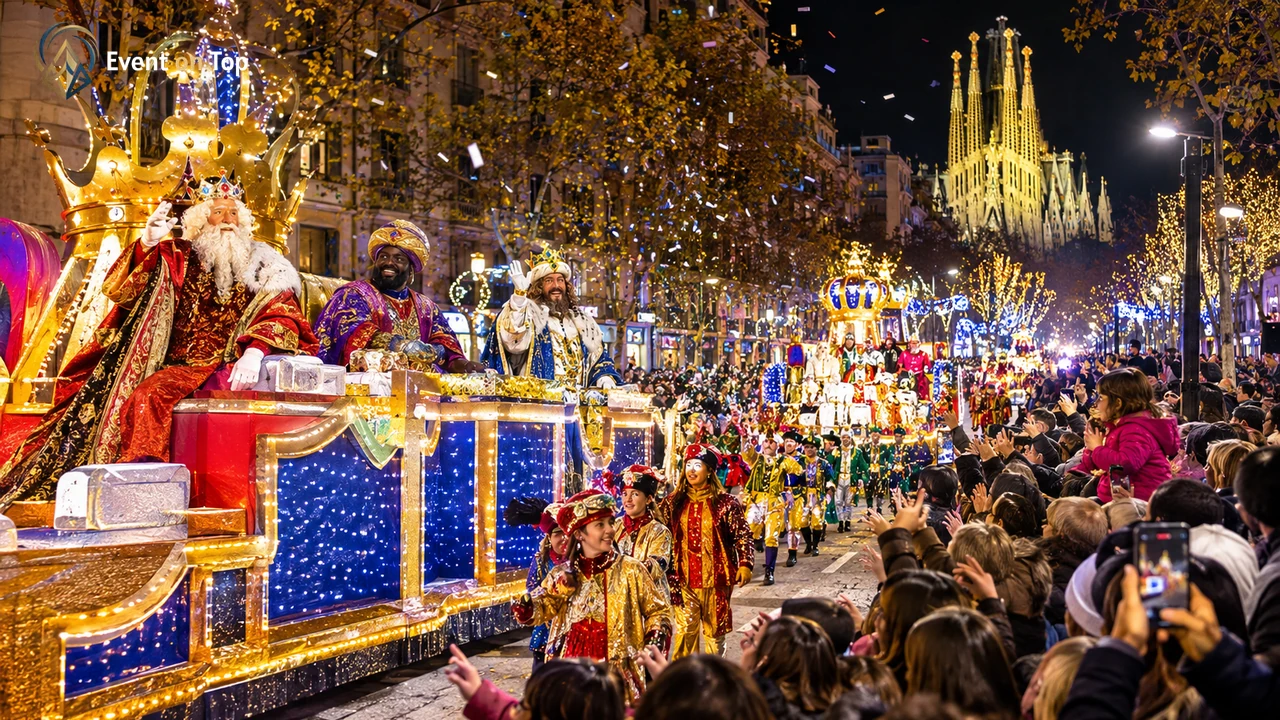
Then comes the night Barcelona waits for all season. The Cabalgata de Reyes, the Three Kings parade, takes place on the evening of January 5: illuminated floats carrying Melchior, Gaspar and Balthazar through the streets, throwing sweets to the crowds, with the Fira de Reis market on Gran Via open late into the night for last-minute gifts. The Kings leave their presents in children’s homes overnight, and January 6, Epiphany, is the gift morning — celebrated with roscón de reyes and a public holiday.
Fira de Reis: Last-Minute Gifts on Gran Via
Stretching along Gran Via de les Corts Catalanes, usually between Muntaner and Rocafort, the Fira de Reis is the market where locals buy their Christmas gifts — a tradition dating back to 1877, and the least touristy market in the city. It opens in mid-December, around December 14 to 18, and runs to January 6, usually 10:00 or 11:00 am to 9:00 pm, later on Saturdays and on Christmas and New Year’s Eves, and until late at night on January 5. The stalls are packed with toys, electronics, books, clothing and sweets — a wider, more practical range than the craft-heavy markets, and prices are more reasonable. This is the place for last-minute shopping before the Cabalgata de Reyes, and the place to hear Catalan spoken at the stalls rather than English. Plaça de la Universitat (lines L1 and L2) or Plaça d’Espanya (lines L1, L3 and L8) are the nearest metro stations. Weekday lunch hours are quiet; late December, and especially the days before January 5, are crowded.
A One-Day Barcelona Christmas Walking Plan
If you have one full day, do it in this order. Morning: the Fira de Santa Llúcia while it is quiet — buy the pessebre figures, the caganer and the Tió here — then step inside the cathedral and wander the Gothic Quarter’s lanes. Afternoon: the Sagrada Família market and the basilica, then churros con chocolate as the light fades. Evening: the lights walk from Plaça de Catalunya up Passeig de Gràcia past Casa Batlló, then down to Port Vell for the Ferris wheel and the harbour lights, finishing with dinner booked ahead in El Born.
For more European Christmas cities after Barcelona, see Christmas in Madrid, Christmas in Paris and our best Christmas markets in Europe guide; for the season’s biggest nights, best New Year’s Eve events in the world; and for presents, Christmas gift ideas 2026.
Staying longer? Add Els Llums de Sant Pau for a second evening of lights, and the Fira de Reis on Gran Via for gift shopping.
Practical Tips: Closures, Weather & Getting Around
Closures matter more than stalls in Barcelona, because the big days shut the city down. December 25 is a public holiday and many restaurants and museums are closed or limited — treat it as a walking day, with Port Vell open as the exception, and the lights still up in the squares. December 26, Sant Esteve, is a second public holiday in Catalonia, and January 1 and January 6 are public holidays too; December 8, the Immaculate Conception, closes much of the city as well. Plan museum days for the days between, and book timed tickets in advance — the stretch from December 23, 2026 to January 6, 2027 is the busiest of the season.
Barcelona in December is mild by northern European standards — daytime highs of 10 to 14 degrees Celsius, evenings around 8 to 10 degrees — so layers and a waterproof jacket matter more than a heavy coat, and comfortable walking shoes are essential: the old town is a walking neighbourhood. The metro covers the longer hops — Jaume I for the cathedral market, Sagrada Família for the basilica market, Drassanes or Barceloneta for Port Vell — and a T-Casual ten-journey ticket or a Hola Barcelona unlimited card are the economical choices.
Money is simple: most markets are free to enter, the light shows and the Port Vell rides are the only paid parts, and cash is preferred at the smallest stalls, though cards are widely accepted.
FAQs
When is the Fira de Santa Llúcia Christmas market in 2026?
It runs from November 27 to December 23, 2026, daily 10:00 am to 9:00 pm, in front of Barcelona Cathedral on Plaça de la Seu, according to the Catalan government’s cultural agenda. A couple of guides list November 28 as the opening day and slightly shorter hours, so check the official listing before you go. Entry is free, and the market has around 300 stalls selling nativity figures, decorations, gifts and traditional sweets.
What makes Christmas in Barcelona different from other European Christmas cities?
The mild Mediterranean winter — daytime highs of 10 to 14 degrees — and the Catalan traditions: the pessebre nativity scene is the centrepiece, the caganer and the Tió de Nadal log are the signature characters, and the Three Kings, not Santa, bring the gifts on January 6. Barcelona is also European Capital of Christmas for 2026, with more than 130 km of illuminated streets.
Which Barcelona Christmas market should I visit first?
Start with the Fira de Santa Llúcia at the cathedral for the most traditional experience — it has run since 1786 and sells the nativity figures, caganers and Tió logs you will not find elsewhere. Then visit the Sagrada Família market for the Gaudí backdrop, and Nadal al Port Vell in the evening for the Ferris wheel, ice rink and harbour lights. The Fira de Reis on Gran Via is the local choice for gift shopping.
Is there ice skating in Barcelona at Christmas?
Yes — Nadal al Port Vell at the harbour has the city’s main Christmas ice rink, alongside a Ferris wheel, a giant LED-lit tree and food stalls, running November 27, 2026 to January 6, 2027, daily 11:00 am to 11:00 pm. The fair is free to enter and the rink costs about 10 euros an hour; weekday afternoons have the shortest waits.
When is the Three Kings parade in Barcelona?
The Cabalgata de Reyes takes place on the evening of January 5, 2027, with illuminated floats carrying the Three Kings through the streets and sweets thrown to the crowds. The Fira de Reis market on Gran Via stays open late that night, the Kings leave gifts overnight, and January 6, Epiphany, is a public holiday celebrated with roscón de reyes.