










Christmas Gift Ideas for Kids 2026: Thoughtful Gifts by Age, Toddler to Teen

Children are the easiest people on your Christmas list to buy for, and the easiest to get wrong. The toy that looks magical in the shop window can be forgotten by New Year, while the simple thing that matches how a child actually plays gets used every single day until it falls apart. The difference is almost never money. It is age, interest, and whether the gift fits the child’s real life: the space in the house, the younger siblings, the things they already love.
This guide is organized the way a good toy shop is: by age — toddlers, ages 4 to 7, ages 8 to 12, and teens — with ideas inside each band for builders, readers, makers, movers, and dreamers, plus experience gifts, stocking fillers, budget bands, and an honest list of what to skip. It is idea-first on purpose: no prices, because prices change weekly in December and a gift guide that lists them goes stale before Christmas. Christmas Day 2026 falls on Friday, December 25, so anything popular or personalized needs to be bought early. If you are still building your whole list, start with our general Christmas gift ideas for 2026, then come back here for the children on it.
How to Choose: Start With the Age on the Box
Before you browse a single gift guide, answer three questions. How old is the child, exactly? What are they into right now — not last year, right now? And what do the parents actually want in the house? A drum kit is a wonderful gift for a six-year-old and a hard one for the parents of a six-year-old in a small apartment.
Age ratings are safety first, not a difficulty suggestion. The American Academy of Pediatrics says age recommendations help you judge how safe a toy is and whether a child will be able to understand how to play with it. A “3+” label usually means small parts, so it is not a safe choice for a two-year-old, even a clever one. For children under three, every gift should be rated for their age, which means no small parts by design.
Two rules will save you from most bad gifts for children. First, for any child under ten, ask the parent before you buy — they know what the child already owns and what is banned from the house. For teens, ask the teen. Second, check the recall list before buying anything secondhand, and keep the gift receipt in the box.
Christmas Gifts for Toddlers (Ages 1 to 3)
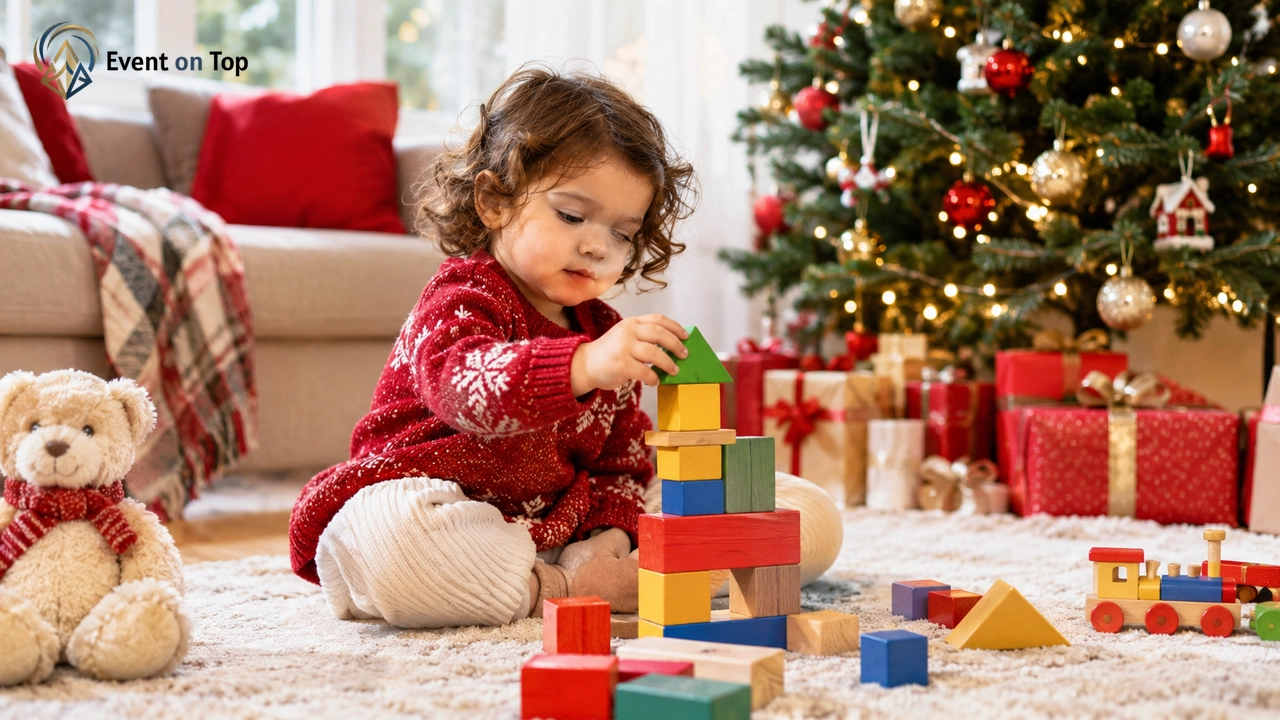
Toddlers want to push, pull, stack, pound, and dump — then do it all again. The best gifts for this age are sturdy, simple, and built for repetition. Large building bricks sized for little hands are the classic first building toy: they click together, survive being thrown, and later click onto regular bricks as the child grows. A wooden pounding bench, a stacking ring set, or a shape sorter all do the same job — they teach cause and effect without a screen and without batteries.
Books still beat gadgets at this age. A sturdy interactive board book that asks a child to press, shake, or tilt the page is a gift that gets read a hundred times, and it survives chewing and dropping in a way a tablet never will. Screen-free audio players are the modern version of the same idea: a soft cube or pocket player where a child places a character figure or a card to hear a story or a song. They suit car rides and bedtime, and the child chooses the story without touching a phone. The big-ticket toddler gift is usually a balance bike — the pedal-free bike that teaches steering and balance first, so many children skip training wheels later — and it needs a properly fitted helmet bought at the same time.
Christmas Gifts for Kids Ages 4 to 7
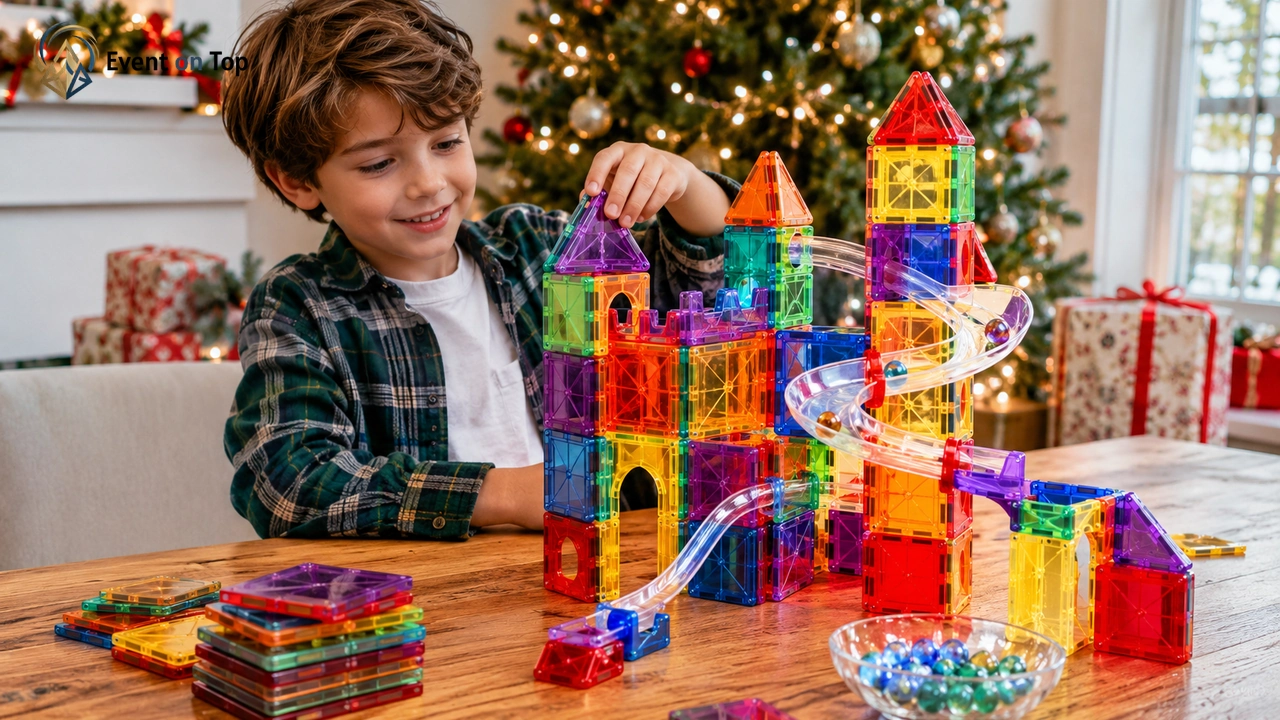
This is peak pretend play and the start of real building — and the age when interests sharpen fast, so a child who loves dinosaurs really loves dinosaurs. Open-ended building sets are the safest bet: a classic brick box turns into whatever the child wants this week, and magnetic tiles snap into towers, houses, and rockets. Both mix with sets the child already owns.
First board games belong here too, and cooperative games are the smart pick: everyone works together to solve the mystery or reach the goal, so nobody loses to a sibling on Christmas morning. A simple whodunit or a color-matching game that takes about twenty minutes is right for this age. A small kids’ digital camera is another strong idea for the child who keeps grabbing a parent’s phone to take photos.
Outdoor gifts work at this age if you buy the safety gear with them. A three-wheeled lean-to-steer scooter is easier for young children than a two-wheeler, but a helmet is not optional — it is part of the gift. Craft kits with a clear ending also do well: a candle-making kit, a painting set with proper paper, or a puzzle the family can finish together over the holidays.
Christmas Gifts for Kids Ages 8 to 12
Eight- to twelve-year-olds want real versions of things: real circuits, real code, long book series, and building sets that take a whole afternoon. This is the age for a first electronics kit, where snap-together parts and a full-color manual teach how circuits work with no soldering. A small programmable robot ball that children drive and code by drawing paths is the same idea in a different shape, and a marble run with tracks and a magnetic cannon rewards patience and teaches a little physics along the way.
Building gets bigger here too. A larger brick set that rebuilds into three different models, or a themed set tied to a film or a game the child loves, is the step up from starter sets without the price of the biggest licensed ones. For readers, a box set of a long series gives weeks of material — dragon adventures, fantasy quests, and funny school stories are the ones that get passed around whole classrooms. A science kit, a first microscope, or a book of experiments for the kitchen table suits the child who takes things apart to see how they work.
The 2026 trends to know in this band are building sets, collectible card games, and squishy sensory toys. Building bricks remain the most-searched toy category, collectible trading cards are having a big year with a major anniversary, and soft stretchy sensory toys have gone from niche to mainstream in a single year. One warning for this age band: several of these gifts are rated 8+ for small parts, so think about younger siblings in the house before you buy marbles, tiny bricks, or small figures.
Christmas Gifts for Teens (Ages 13 to 17)
Teens are the hardest people on this list, and the data says why: in the National Retail Federation’s 2025 holiday survey, the most-wanted gifts were gift cards (50%), clothing or accessories (46%), books and other media (27%), and electronics (22%). The honest translation is that teens know what they want, and the best gift is usually the thing they use every day, chosen with them rather than for them.
Practical daily-use gifts land best. An insulated bottle that keeps drinks cold all day suits a teen who plays sports. A compact power bank with a built-in cable is the gift that saves a dead phone on the way home. A small clip-on Bluetooth speaker goes on a backpack or a shower rod and gets used daily. An instant camera with a pack or two of film is the gift that turns a school trip or a holiday into a pile of real photos — just remember the film is sold separately and adds up fast, so include it. A flexible neon-style light for a bedroom wall is an easy room upgrade that teens actually ask for. Games need one check before you buy: which console does the teen actually own? A game for the wrong system is an expensive mistake. The same applies to gift cards — buy the card for their actual shop or game store, not a generic one, and pair it with a small physical gift so there is something to open.
Experience Gifts for Kids: Time, Not Things
For the child who has everything, the answer is not another thing — it is time. An experience gift cannot be the wrong size, cannot duplicate something they already own, and cannot sit in a drawer. A pantomime or a theatre show, an ice-skating session, a trip to a Christmas market in another city, an evening at a zoo lights display, or a cooking or pottery class are all gifts of an afternoon a child will remember long after the wrapping paper is gone. If you are planning a trip around one, our best Christmas events in the USA and best Christmas shows in the USA guides are built for exactly that kind of planning. Match the experience to the child: a child who loves animals wants a zoo day, a maker wants a workshop with a skill at the end of it, and a sporty child wants a match or a day at an ice rink. Always pair it with something small to open on the day — a printed ticket in a card — so Christmas morning still has wrapping paper to tear.

Stocking Fillers That Are Not Junk
Stocking fillers fail when they are novelty for novelty’s sake. The ones that work are small, useful, and used within a week. A card game the whole family can play — a matching game, a classic card game, a fast party game — is the stocking filler that comes out on Christmas night and stays out all year. A puzzle cube, a tin of thinking putty, a small plush toy, a bath bomb, a pair of fun socks, or a hot chocolate kit all pass the same test: the child will use it, not just look at it once. Books make the best stocking fillers of all: a funny story collection, the first book in a series, or a joke book for the dinner table. The rule is simple: if it would not be worth buying on its own, it is not worth putting in a stocking either.
Budget & When to Order
You do not need a big budget to give a good gift to a child — you need a clear one. Think in bands, not price tags. Small gifts — a book, a card game, a puzzle, a pair of warm socks — cover the thoughtful thank-you and suit most relationships. Mid-range gifts — a building set, a board game, a craft kit, a scooter with a helmet, a screen-free audio player — suit a close relationship. Splurge gifts are for your own child or grandchild, or for several relatives going in together: a balance bike, a big building set, a programmable robot, or a console game for a system they already own.
When to order matters as much as what to order. The popular toys sell out, and the best stock tends to go by mid-December — if a child has named one specific toy, buy it when you see it in stock. Personalized gifts need the most time: order those in the first week of December at the latest, because production adds days on top of shipping. Check whether batteries are included and buy them at the same time if they are not. If you are buying online, check the delivery date before you check out, and keep the gift receipt in the box.

What Not to Buy Kids
Some gifts for children fail so reliably that they deserve their own section. Do not buy anything below the child’s age rating — a toy labelled 3+ is not safe for a two-year-old, however advanced they seem. Do not buy a loud toy with no volume control; the parents will remember it long after the child has moved on. Do not buy a toy that needs batteries, figures, cards, or film to work without buying those too — a player with nothing to play, or a camera with no film, is a gift that cannot be used on the day. Do not buy a gift that is really for the parents — the “educational” toy nobody asked for, the instrument nobody has room for. Do not buy a duplicate of something the child already owns, and do not buy clothes unless you know the child’s exact size; a fun pair of socks is safe, a whole outfit is a gamble.
Finally, two things that should never be surprise Christmas gifts: a pet, and a screen. A pet is a family decision about years of care, not a present. A tablet or a phone is a family decision about screen time, accounts, and rules — and a child who receives one from a relative while the parents had said no is a gift that causes an argument, not joy. If you are unsure about anything on this list, go back to the rule from the start of this guide: ask the parent for a child under ten, ask the teen directly, and buy the thing they will still be playing with in February. For the adults on your list, our gift ideas for Mom, for Dad, for him, and for her use the same idea-first approach.
FAQs
What are the best Christmas gift ideas for kids in 2026?
Match the gift to the age on the box. For toddlers, large building bricks, a stacking or pounding toy, a sturdy board book, or a screen-free audio player. For ages 4 to 7, an open-ended building set, magnetic tiles, a first cooperative board game, or a kids’ camera. For ages 8 to 12, a first electronics kit, a programmable robot, a marble run, or a book series box set. For teens, ask them directly — a gift card for their actual shop paired with a practical daily-use gift is usually the safest bet.
How much should I spend on a Christmas gift for a child?
It depends on the relationship, not on a rule. A small, thoughtful gift is plenty for a classmate or a distant cousin. A mid-range gift suits a niece, a nephew, or a godchild. A splurge is for your own child or grandchild, or for several relatives going in together on one big gift.
Are experience gifts good Christmas gifts for kids?
Yes — experience gifts are one of the strongest choices for a child who already owns the obvious things. A pantomime or theatre show, an ice-skating session, a trip to a Christmas market, or a workshop cannot be the wrong size or a duplicate. Pair the experience with something small to open on Christmas morning, such as a printed ticket in a card.
When should I order Christmas gifts for kids?
Buy the one specific toy a child has named as soon as you see it in stock, because popular toys sell out by mid-December. Order personalized gifts with a name on them in the first week of December at the latest. Check whether batteries are included and buy them at the same time if they are not, and always check the delivery date before you check out online.
What Christmas gifts should I avoid buying kids?
Avoid anything below the child’s age rating, especially small parts for under-threes; loud toys with no volume control; toys that need batteries, figures, cards, or film you did not buy; duplicates of things they already own; and clothes in an unknown size. Never give a surprise pet, and never give a tablet or phone without the parents’ agreement — both are family decisions, not presents.

