





Christmas in Madrid 2026: Plaza Mayor Market, Lights, Ice Rinks & the Honest Guide


Madrid does Christmas in sunshine and nativity scenes, not snow — and that is exactly why it works. This is the warmest of Europe’s great Christmas cities: a December afternoon can still reach 10 degrees under a clear blue sky, the markets sell hand-painted figures for the belén rather than mulled wine by the litre, and the season ends not with a quiet Boxing Day but with the loudest night of the year — twelve grapes at midnight in Puerta del Sol, then the Three Kings riding through the city on January 5. A market of some kind has stood in Plaza Mayor since the 17th century, and today it fills the square with 104 red wooden stalls, an ice rink glows at Plaza de España, and some fourteen million LED lights shine across all 21 districts.
The guides already ranking for this topic are mostly market lists: they give you Plaza Mayor’s dates and stop there. This guide is a full city guide instead — all the markets, the lights walk, the nativity scenes, the food, New Year’s Eve and the Three Kings, plus the closures that catch visitors out — with dates checked against the city’s own tourism listings and Spain’s official tourism site, and anything still unannounced flagged rather than guessed. The city confirms its exact 2026 opening dates in November, so check the official esMadrid page before you go.
Christmas in Madrid 2026 at a Glance
- Season: late November 2026 to January 6, 2027 (Epiphany, Three Kings Day); the lights stay on until January 6.
- Main market: Plaza Mayor, late November to December 31, 2026 — listings give November 24 to 27 as the opening window; the city confirms the exact day in November. Free entry, Sunday to Thursday 10:00 am to 9:00 pm, Friday, Saturday and eves of public holidays 10:00 am to 10:00 pm.
- Ice rink: La Navideña at Plaza de España, late November to early January — listings differ between November 20 to January 6 and November 25 to January 11, so confirm before you go. Free to enter; the rink is ticketed.
- Craft fair: Feria Mercado de Artesanía on Paseo de Recoletos, December 1 to 30, 2026 (39th edition), between Plaza de Colón and Plaza de Cibeles — handmade gifts, free entry, closed December 25.
- Lights: around fourteen million LED bulbs across more than 250 locations in all 21 districts, switched on in the last days of November (in 2025, November 22 at Plaza de Cibeles) and lit from about 6:00 pm until January 6.
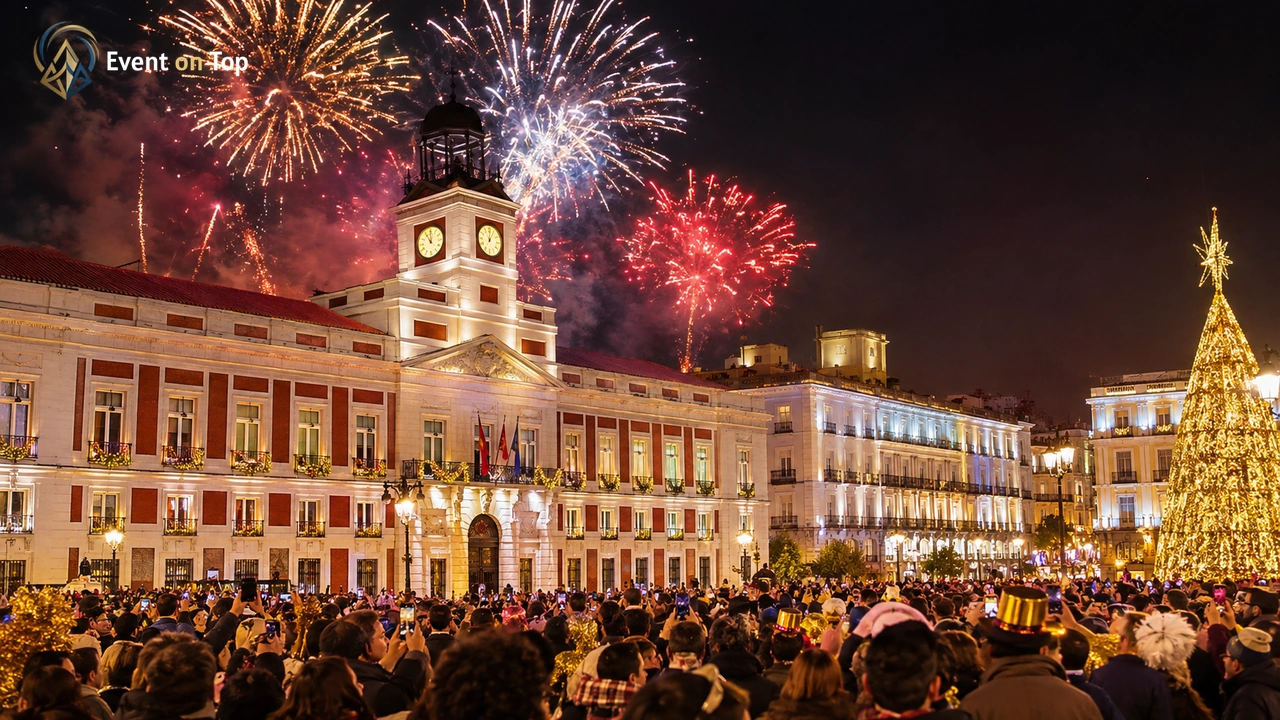
- New Year’s Eve: twelve grapes at midnight under the clock of Puerta del Sol, December 31 — plus the “preuvas” rehearsal at midnight on December 30, and the San Silvestre Vallecana 10 km race earlier that day.
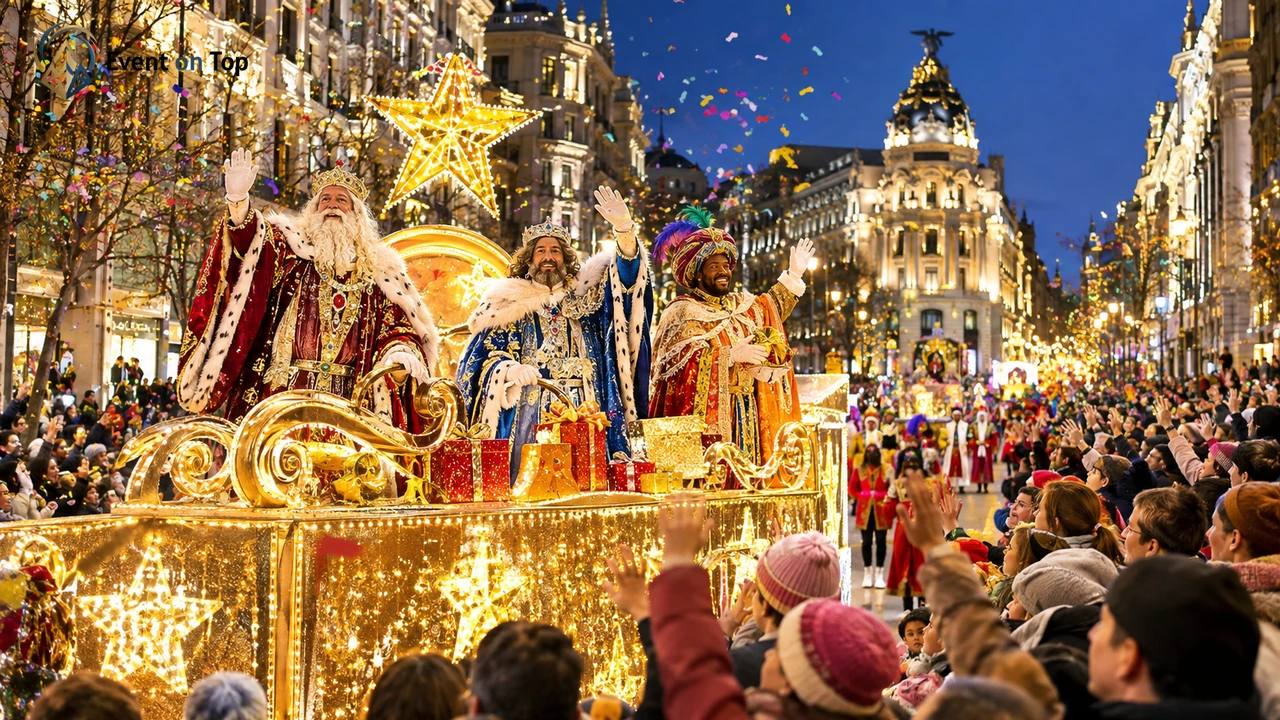
- Three Kings: the Cabalgata de Reyes parade on the afternoon of January 5, ending at Plaza de Cibeles; gifts arrive overnight, and January 6 brings the roscón de Reyes.
- Long weekend: December 6 (Constitution Day) falls on a Sunday in 2026 and moves to Monday, December 7, followed by the Immaculate Conception on Tuesday, December 8 — a four-day puente.
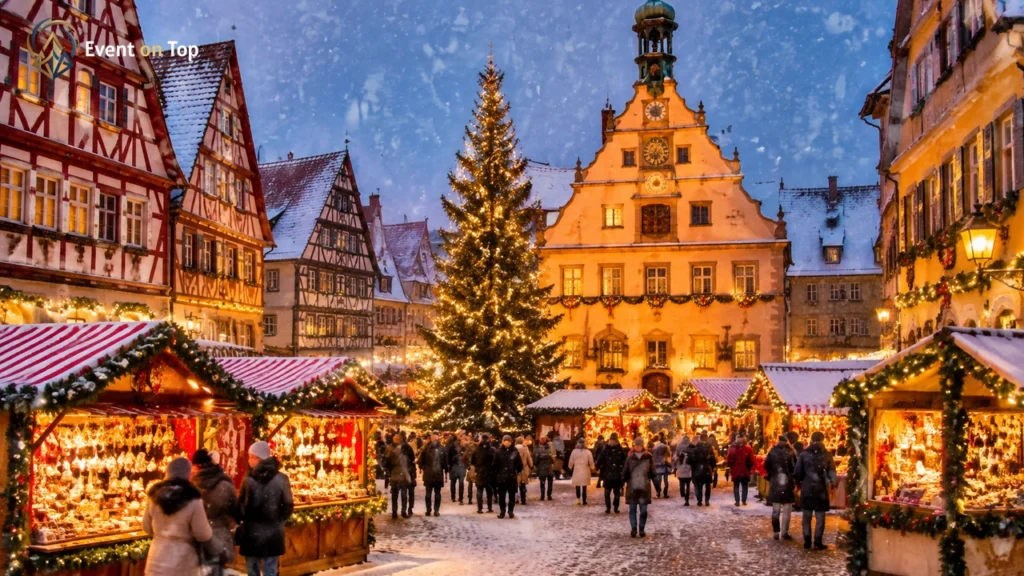
- Honest note: Madrid has no German-style chalet market and no snow — if that is the whole trip for you, our best Christmas markets in Europe guide points to the cities that do. Madrid’s Christmas is sunnier, older and built around the belén — and most of it is free.
Plaza Mayor: Madrid’s Christmas Market Since the 17th Century
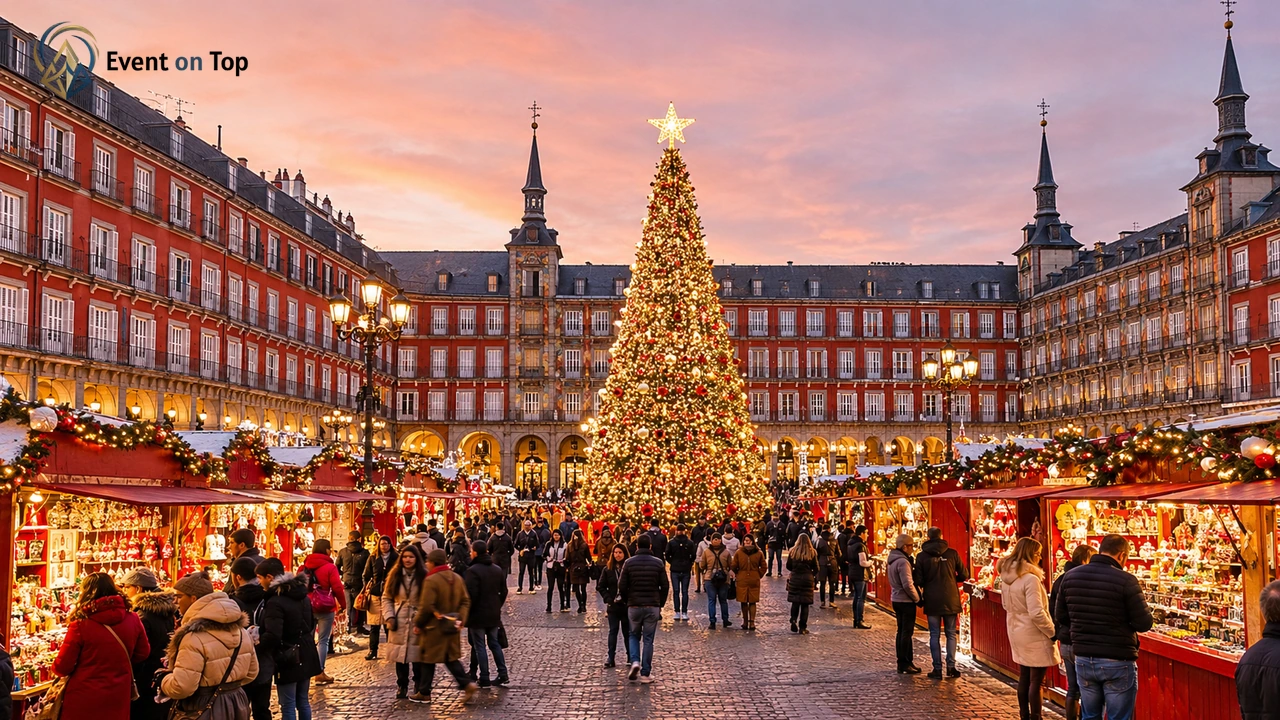
The Plaza Mayor market is the quintessential Madrid Christmas market — a market of some kind has stood in this arcaded square since the 17th century, and the Christmas market has occupied it in its present form since the 19th. For 2026, listings give an opening in the last week of November — November 24 in some, November 27 in others — and a close on December 31; the city confirms the exact opening day in November. Entry is free, and hours run Sunday to Thursday 10:00 am to 9:00 pm, and Friday, Saturday and the eves of public holidays 10:00 am to 10:00 pm.
What you find is not a food hall. Around 104 stalls — about 90 of them selling traditional Christmas products — are packed with figures for the belén, the Spanish nativity scene: the Holy Family and the Three Kings, shepherds, animals, cork for the hills, moss, tiny wells and bridges, plus decorations, toys and joke gifts for December 28, the Day of the Holy Innocents, when Spaniards play pranks on each other. Go after dark, when the giant tree and the nativity scene are lit and the arcades fill with families: this is where madrileños buy their belén figures, so the best stalls are the ones with the queues of locals.
La Navideña: Ice Skating at Plaza de España
A fifteen-minute walk from Plaza Mayor — along Calle Mayor past the Royal Palace, or up the Gran Vía with its Christmas lights — brings you to La Navideña, the holiday installation at Plaza de España. It is the more classic Christmas-market experience of the two, with food stalls, a big tree, and an ice rink glowing under the lights. Listings for 2026 differ on the exact run — November 20 to January 6 in one, November 25 to January 11 in another — so treat it as late November to early January and confirm before you go. Entry is free; the rink is ticketed, so book a slot rather than turning up and hoping.
The rink is the point for families, but the square is worth an evening even without skates. Pair it with the Plaza Mayor market in a single evening — market first, then the rink and the lights.

The Recoletos Craft Fair and Madrid’s Other Markets
If Plaza Mayor is where Madrid buys its nativity figures, Paseo de Recoletos is where it buys its presents. The Feria Mercado de Artesanía de la Comunidad de Madrid runs its 39th edition from December 1 to 30, 2026, along the Paseo de Recoletos between Plaza de Colón and Plaza de Cibeles. It is about craftsmanship rather than Christmas kitsch: handmade ceramics, jewellery, leather, textiles and toys from artisans across the region, free to enter, closed on December 25. It is the best place in the city for a gift that was actually made in Madrid.
The smaller markets fill out the map. Around Plaza de Callao and the Gran Vía, the lights are at their most extravagant and the El Corte Inglés department store runs Cortylandia, its animated Christmas show on Calle de Preciados — a Madrid institution that draws queues of families every year. Design fairs and young makers’ markets pop up across the centre through December. None charges entry — do them on foot, in one long evening walk.
The Lights Walk: Sol, Gran Vía and Alcalá
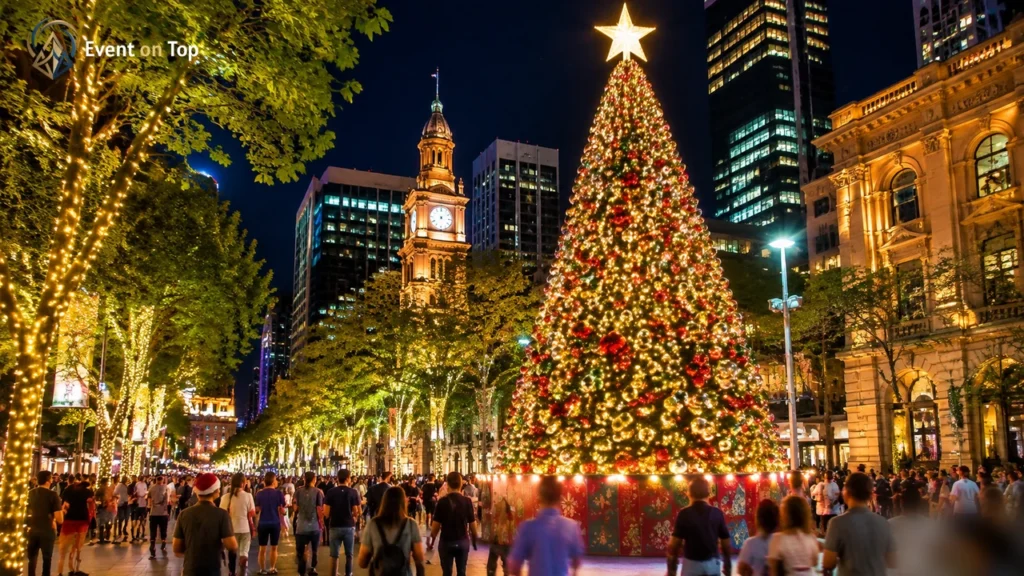
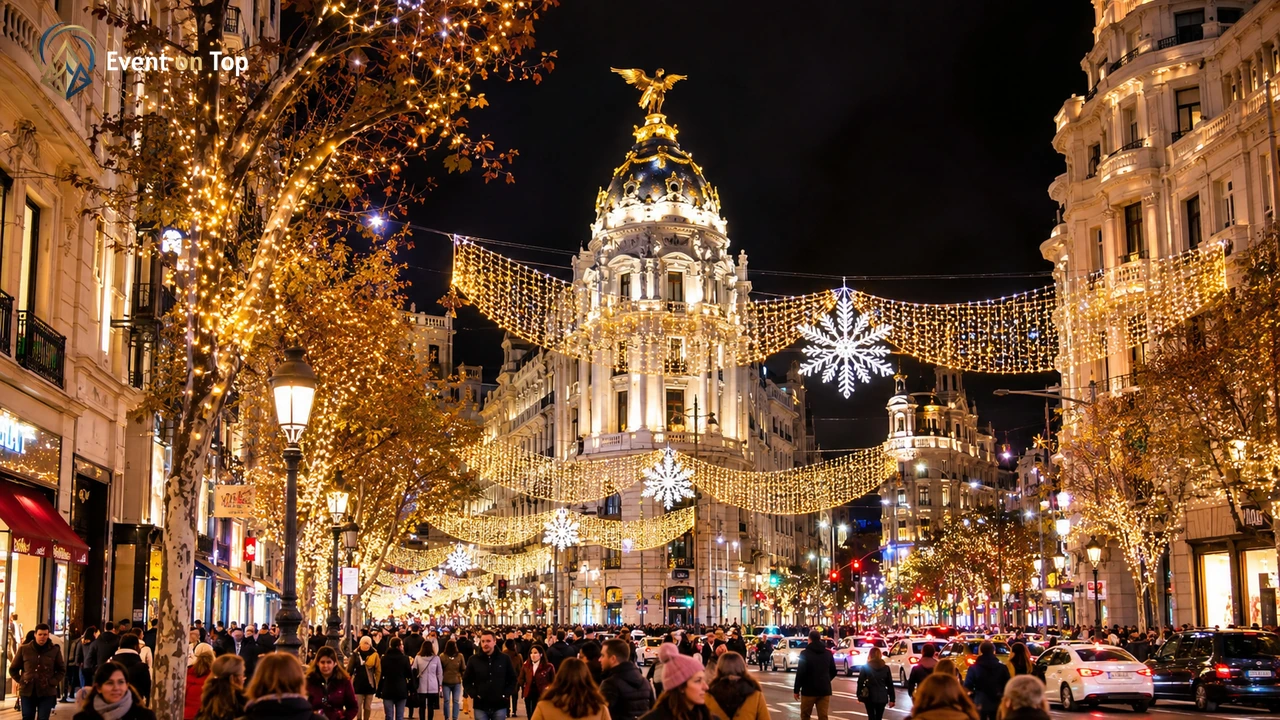
Madrid’s lights are as much a part of its Christmas as the markets. The city switches them on in the last days of November — in 2025 the switch-on was on November 22 at Plaza de Cibeles — and they stay lit until January 6, every evening from about 6:00 pm. The 2026 programme announced around fourteen million LED bulbs across more than 250 locations in all 21 districts: look for the giant 3D Christmas bauble that lights up in time to the music.
The walk to do is simple. Start at the Puerta de Alcalá, walk down Calle de Serrano, then along the Gran Vía to Callao, and finish at the great tree in Puerta del Sol — then continue to Plaza Mayor, which is at its best after dark. The best streets in the evening are Calle de Alcalá, Gran Vía, Preciados, Calle Mayor and Calle del Arenal. Begin at dusk, when the bulbs come on around 6:00 pm, and give it two unhurried hours. Two other ways to see the lights: the Naviluz, a double-decker bus that travels the main decorated streets, and the rooftop terraces along the Gran Vía, where you can watch the lights come on over a drink. The Christmas Train, run by the Spanish Railways Foundation aboard the historic Strawberry Train from the Railway Museum, is the family alternative.
The Belén: Nativity Scenes Are Madrid’s Oldest Christmas Tradition
Christmas in Madrid is built around the belén, and understanding it changes how you see the whole season. Spanish families build elaborate nativity scenes at home — whole miniature villages with hills of cork, moss, wells, bridges and dozens of figures — and the Plaza Mayor market exists largely to supply them. The city answers with public displays: a large nativity scene in Plaza Mayor itself, and others at the Casa de Correos in Puerta del Sol and the Royal Palace.
The tradition runs deeper than the squares. Churches and cultural centres across the city mount their own belenes through the season, and the concert life follows the same calendar: La Almudena Cathedral and the city’s great churches organise Christmas concerts, the Circo Price and Matadero run children’s workshops, and the Teatro Real stages classical Christmas performances. If you only do one belén, make it the Plaza Mayor display after dark.
What to Eat: Turrón, Churros con Chocolate and Roscón de Reyes
Madrid’s Christmas food is its own tradition. Turrón — the almond nougat that is the best-known Spanish Christmas sweet — and marzipan lead the season, Polvorones, the crumbly almond shortbreads, are everywhere in December, and the stalls at Plaza Mayor lean sweet too: roasted chestnuts and sugar figures for the belén table.
For the classic Madrid moment, go for churros con chocolate at San Ginés, the legendary chocolatería a few steps from Puerta del Sol — hot, thick chocolate and fresh churros, at any hour, and busiest after midnight. The roscón de Reyes, the ring-shaped Epiphany cake with candied fruit, belongs to January 6: try it at one of the city’s century-old patisseries, such as the Antigua Pastelería del Pozo, considered the oldest in Madrid. Book ahead for Christmas Eve and New Year’s Eve, when restaurants fill and many close early, and remember that December 25 itself is a quiet day for eating out: most restaurants close, and the city eats at home. If you are still choosing presents, our Christmas gift ideas guide covers experience gifts that pair well with a Madrid trip.

New Year’s Eve: Twelve Grapes at Puerta del Sol
Madrid’s New Year’s Eve is one of the great free nights in Europe, and it belongs to Puerta del Sol. Hundreds of people gather in the square at midnight to bid farewell to the year to the sound of the twelve chimes of the clock — tradition dictates that you eat a grape for each chime, and every national television channel broadcasts the clock so the whole country can follow it at home. Buy your twelve grapes in advance and get to the square early: the good spots fill hours before midnight, and the crowds leaving afterwards are the real bottleneck, so plan the walk home in advance.
There is also a dress rehearsal. The “preuvas” — the practice run held at midnight on December 30 — has become very popular in its own right, and it is the calmer way to do the ritual. Earlier on December 31, the San Silvestre Vallecana takes over the city: since 1964, thousands of runners — professionals running separately, families and friends in fancy dress — have run 10 kilometres from near the Santiago Bernabéu Stadium to the Vallecas Stadium. It is the most popular athletic event in Spain, and the fancy dress is half the point. For the wider New Year picture, our best New Year’s Eve events in the world guide covers London, Sydney and Times Square.
Three Kings: The Parade, the Gifts and the Roscón
Madrid saves its biggest parade for last. On the afternoon of January 5, the Three Kings travel through the streets in the Cabalgata de Reyes — a parade of fantastic floats considered one of the most spectacular in Spain — ending at Plaza de Cibeles, where the Kings speak to the crowds. Arrive early for a place along the route, dress warmly, and expect sweets thrown from the floats.
The night of January 5 to 6 is when the Three Kings leave gifts in the homes of all children while they sleep — in Spain, this is the gift-giving night, not Christmas morning — and January 6, Epiphany, is the day of the roscón de Reyes, eaten for breakfast with hot chocolate. If you can only be in Madrid for one part of Christmas, choose the last week of December: the markets are still open, the lights are at their best, and the Three Kings are still to come.
A One-Day Madrid Christmas Walking Plan
If you have one full day, do it in this order. Morning: the Recoletos craft fair for presents, then the Royal Palace area and the belén displays at the Casa de Correos. Afternoon: Plaza Mayor for the market in daylight — buy the belén figures and the joke gifts here — then churros con chocolate at San Ginés as the light fades. Evening: the lights walk — Puerta de Alcalá down Serrano, along the Gran Vía to Callao and the Cortylandia show, finishing at the great tree in Puerta del Sol — then back to Plaza Mayor after dark, with dinner booked ahead in the streets behind the square.
Staying longer? Add La Navideña and its ice rink for a family morning. And if you have a spare day, the official tourism site suggests Torrejón de Ardoz, home to one of Spain’s largest Christmas parks, and Buitrago de Lozoya, famous for its living nativity scene.
Practical Tips: Closures, Weather & Getting Around
Closures matter more than stalls in Madrid, because the big days shut the city down. December 25 is a public holiday and nearly everything is closed — museums, shops and most restaurants — so treat it as a walking day: the lights are still up and the squares are calm. January 1 and January 6 are public holidays too, and December 8, the Immaculate Conception, closes much of the city as well. Plan museum days for the days between, and book timed tickets in advance — the stretch from December 23, 2026 to January 6, 2027 is the busiest of the season.
Madrid in December is mild by northern European standards — afternoons barely exceed 10 degrees Celsius and mornings approach 3 degrees, but the sky is often clear — so layers and a waterproof jacket matter more than a heavy coat, and comfortable walking shoes are essential. The metro covers the longer hops — Sol or Ópera for Plaza Mayor, Plaza de España for La Navideña, Colón or Banco de España for Recoletos — but the centre itself is a walking neighbourhood.
FAQs
When is the Plaza Mayor Christmas market in 2026?
It runs from late November to December 31, 2026 — listings give November 24 to 27 as the opening window, and the city confirms the exact day in November. Entry is free, open Sunday to Thursday 10:00 am to 9:00 pm and Friday, Saturday and eves of public holidays 10:00 am to 10:00 pm. The market has 104 stalls, mostly selling belén figures, decorations, toys and joke gifts.
What are the best Christmas lights to see in Madrid?
The lights switch on in the last days of November and stay lit until January 6, every evening from about 6:00 pm — around fourteen million LED bulbs across more than 250 locations in all 21 districts. Walk from the Puerta de Alcalá down Calle de Serrano, along the Gran Vía to Callao, and finish at the great tree in Puerta del Sol, then continue to Plaza Mayor after dark.
Is there ice skating in Madrid at Christmas?
Yes — La Navideña at Plaza de España has the city’s main Christmas ice rink, alongside food stalls and a big tree, running from late November to early January. Entry to the installation is free but the rink is ticketed, so book a slot in advance. Listings differ on the exact 2026 dates, so confirm before you go.
How does Madrid celebrate New Year’s Eve?
At midnight on December 31, crowds gather in Puerta del Sol to eat twelve grapes, one for each chime of the square’s clock. There is a dress rehearsal, the “preuvas”, at midnight on December 30. Earlier that day, the San Silvestre Vallecana 10 km race runs from near the Santiago Bernabéu Stadium to Vallecas, in fancy dress since 1964.
What is the Three Kings parade in Madrid?
The Cabalgata de Reyes on the afternoon of January 5 is Madrid’s biggest Christmas parade — floats carrying the Three Kings through the streets, ending at Plaza de Cibeles. The Kings leave gifts in children’s homes overnight, and January 6, Epiphany, is celebrated with roscón de Reyes, the ring-shaped Epiphany cake.

Christmas in Barcelona 2026: Markets, Lights & Three Kings
07th Nov 2026[…] Christmas in Madrid 2026: Plaza Mayor Market, Lights, Ice Rinks […]
Christmas in Lisbon 2026: Wonderland Lisboa, Rossio Market, Lights & NYE
07th Nov 2026[…] Christmas in Madrid 2026: Plaza Mayor Market, Lights, Ice Rinks […]