





Maximalist Christmas Decor Ideas 2026: More Is More — Bold Trees, Layered Lights & Colour That Works

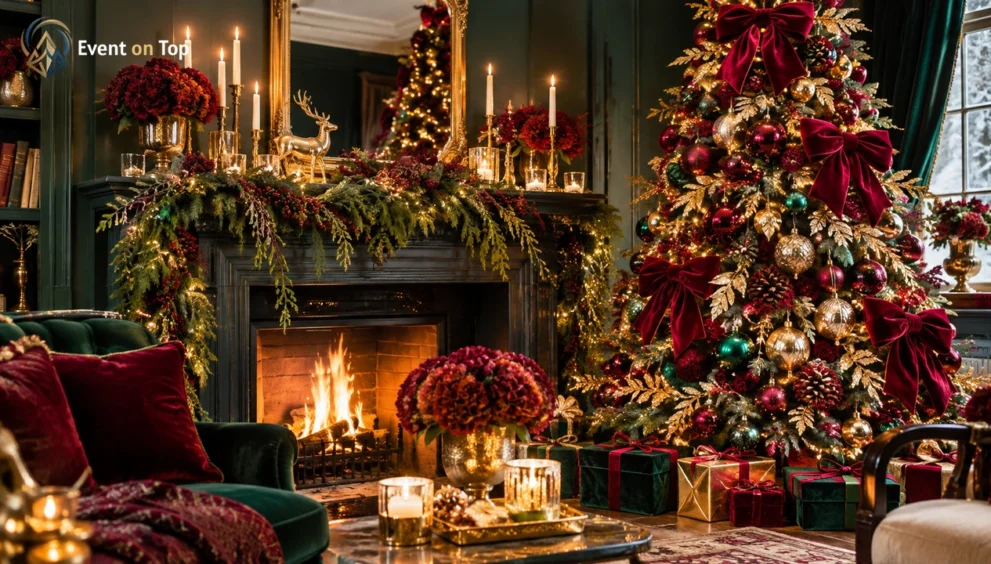
Minimalism had its decade. For Christmas 2026, the look winning the season is the opposite: more colour, more texture, more light, more ornaments — and, crucially, more intention. Maximalist Christmas decor is not a pile of decorations thrown at a room. It is a generous, layered look built on one clear idea, repeated through the whole house until every corner feels like it belongs to the same celebration. Done well, it feels warm, collected and joyful. Done without a plan, it feels like a storage cupboard exploded.
This guide is the plan. It covers what maximalism actually means this year, the three rules that keep it from tipping into clutter, five palettes that work, and then the whole house room by room: the tree, the mantel and shelves, the table, and the outside. It finishes with budget advice, small-space tricks and what to skip. Christmas Day 2026 falls on Friday, December 25, so a house dressed the weekend after Thanksgiving gives you about four weeks to enjoy it. If you want the calmer version of the season first, our Christmas decor ideas for 2026 guide covers the looks that sit underneath this one — and our tree decorating guide covers the lights math and the professional order in detail.
What Maximalist Christmas Decor Actually Is in 2026
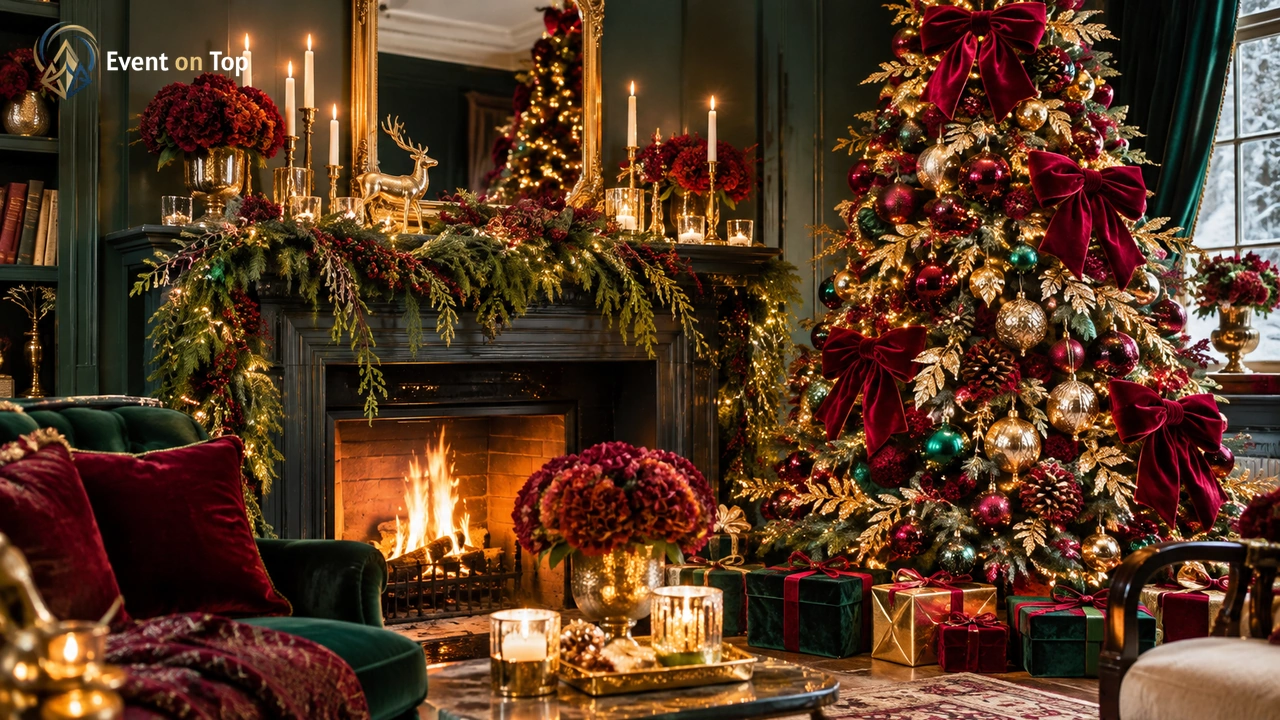
The 2026 version of maximalism is more refined than the anything-goes version of a few years ago. The trend reporting from the Christmasworld trade fair and the season’s retailer collections all point the same way: layered, expressive and generous, but with a clear visual idea holding it together. A maximalist tree might combine velvet ribbons, jewel-tone baubles, metallic ornaments, fruit decorations, vintage pieces and warm lights — but the pieces share a palette, and the same palette shows up again on the mantel, the table and the stairs. Pinterest’s 2026 predictions named the same instinct in three themes: Fun Haus, playful “dopamine decor” with circus-like sophistication; Brooched, treating accents like jewellery for the home; and Gimme Gummi, squishy candy-coloured textures you want to touch.
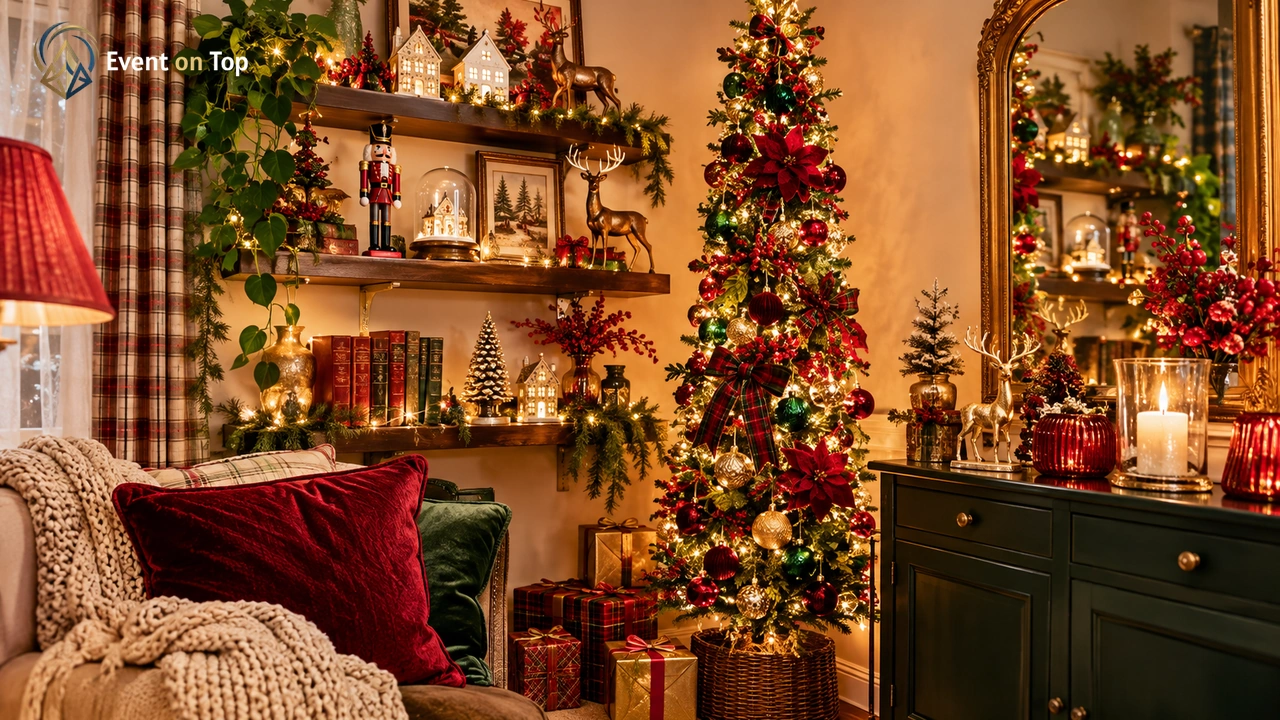
There are three flavours worth knowing, because they take the same house in different directions. Jewel-tone maximalism is the most elegant: burgundy, emerald and deep plum in matte, shiny and glitter finishes, with gold to keep it rich rather than rainbow. Maximalist nostalgia is the most forgiving: traditional red and green, layered ribbons, fruit and berry picks, glitter accents and warmth everywhere — the Christmas you remember from childhood, rebuilt with better pieces, and the look where almost every ornament you already own fits. And merry maximalism, sometimes called kitschmas, is the most playful: rainbow and neon, candyland and peppermint, gingerbread and circus themes, multicoloured lights and oversized ornaments, where the goal is personality over matching. Pick one flavour as your lead. You can borrow details from a second, but three flavours in one room is where the look falls apart.
The Three Rules That Keep It From Looking Like Clutter
Maximalism fails in exactly one way: it becomes clutter. Three rules stop that, and they are worth following even if you ignore everything else in this guide. First, repeat a few elements through the room. If you use burgundy velvet bows on the tree, echo the same burgundy in the napkins, the gift wrap or the berries on the mantel. If you choose gold accents, repeat them in the candleholders, the ornaments and the picture frames. Repetition is what makes a room full of things read as one room instead of ten separate shopping trips.
Second, pick a palette and defend it. Three main colours plus one metallic is the working limit: burgundy, emerald and plum with gold, or red, green and cream with brass, or cherry red, hot pink and emerald with gold. Every new piece has to earn its place against that palette. If it does not match, it goes in a different room or stays in the box this year. Third, vary the heights and the textures, not just the colours. A mantel works because the candlesticks are tall, the garland is low, the framed art is behind and the figurines are in front. Velvet next to mercury glass, chunky knit next to glossy ceramic, matte baubles next to glitter — the contrast between textures is what makes a layered room feel rich instead of flat. And leave a little breathing room on purpose: one bare patch of wall, one unfilled shelf edge. The eye needs somewhere to rest, and a room with nowhere to rest is a room people leave.

Five Palettes That Work
A palette is the fastest decision you will make, and it decides everything after it. These five are the ones the 2026 collections keep returning to, and each one works across the tree, the mantel and the table without a single extra purchase of a new colour.
1. Jewel tones with gold. Burgundy, emerald and deep plum, in matte, shiny and glitter finishes, with gold as the only metallic. The most elegant maximalist look, and the easiest to keep rich rather than rainbow. Warm white lights only.
2. Traditional red and green, turned up. Cherry red and deep green with gold, layered ribbons, berry picks and glitter. The nostalgic maximalist look, and the most forgiving — every ornament you already own probably fits it. Multicoloured or warm white lights both work here.
3. Candyland brights. Hot pink, cherry red, mint and gold, with candy canes, gingerbread and peppermint ornaments. The playful one, and the best choice for a family tree or a house with children. Multicoloured lights suit it best.
4. Pink and champagne. Blush pink, champagne and cream with gold, velvet and candlelight. Softer and more romantic, and it works best on a white or flocked tree, where the pink reads as a deliberate palette rather than an accident.
5. Neon Noel. Bold brights with metallic shine — hot pink, electric blue and lime against black or deep green, with iridescent ornaments. The boldest of the five, and the one that needs the most discipline: keep the palette to three brights plus one metallic, and let the lights do the talking.
Whichever palette you choose, buy the ribbon first and the ornaments second. Ribbon is the cheapest way to flood a room with a colour, and a roll of wide velvet ribbon in your lead colour will do more for the look than a bag of baubles in the wrong one.
The Tree, Maximalist Style
The maximalist tree is layered, eclectic and packed with personality: glass ornaments mixed with felt critters, vintage-inspired baubles beside sparkly mercury glass, and ribbon woven through every branch. The method is the same as any good tree — lights first, then the topper, then ribbon, then ornaments biggest to smallest — but the quantities change. Use the standard lights rule of about 100 small lights for every foot of tree height, so a 7-foot tree wants around 700 lights, and add a second strand before the ornaments go on if the tree still looks patchy; ornaments will not hide thin lighting. Cluster lights, with a tiny bulb every half inch or so, give a thicker glow than standard string lights and suit this look better than any other.
Hang ornaments in three layers: big, plain baubles deep inside the tree first, where they fill gaps and bounce the light back out; medium ornaments in the middle branches, where they are most visible; small and delicate ornaments at the tips. A useful guide is 10 to 15 ornaments per foot of tree — and for a maximalist tree, take the top of that range and then add the extras that make it yours: fruit picks, berry sprays, oversized bows, tinsel in long even strands, and the sentimental pieces with visible wear and stories. Mix textures on purpose: shiny glass next to matte baubles, wood next to metal, a handmade ornament next to a bought one. Step back every few minutes and look at the tree as a whole — the gaps you cannot see up close are obvious from the sofa, and a maximalist tree still needs its green showing between the ornaments. If you cannot see any green at all, take a third of them off and put them in a bowl on the table instead.

Mantel, Stairs, Shelves & Every Flat Surface
Maximalism means no surface left undecorated — but decorated, not buried. The mantel is the stage set: garlands layered, evergreen plus beads plus ribbon plus twinkle lights, with nutcrackers, candlesticks and figurines lined up shoulder to shoulder, framed art behind and berries tucked in front. Build it in layers from the back: the tallest pieces at the back, the garland draped along the front edge, the small pieces in front where they can be seen. Vary the heights deliberately — three candlesticks of different heights beat three identical ones — and repeat your palette here, because the mantel is the piece of the room everyone photographs.
Staircases wear their tinsel proudly: a thick garland along the banister, ribbon tied at intervals, and a few ornaments or berry picks tucked in. Keep the walking side clear and the decorations on the outer rail, so nobody catches a sleeve. Shelves go oversized and double-stacked: wreaths hung in pairs, figurines grouped in threes, and one shelf left slightly calmer than the others so the display has a rhythm. Wreaths go big in a maximalist house — oversized, double-stacked, or hung in a pair on a wide wall — and a wreath on every door is the cheapest way to carry the look through the house. The rule for every surface is the same: layer three things, repeat one colour, and leave one edge breathing.
The Table That Throws a Party
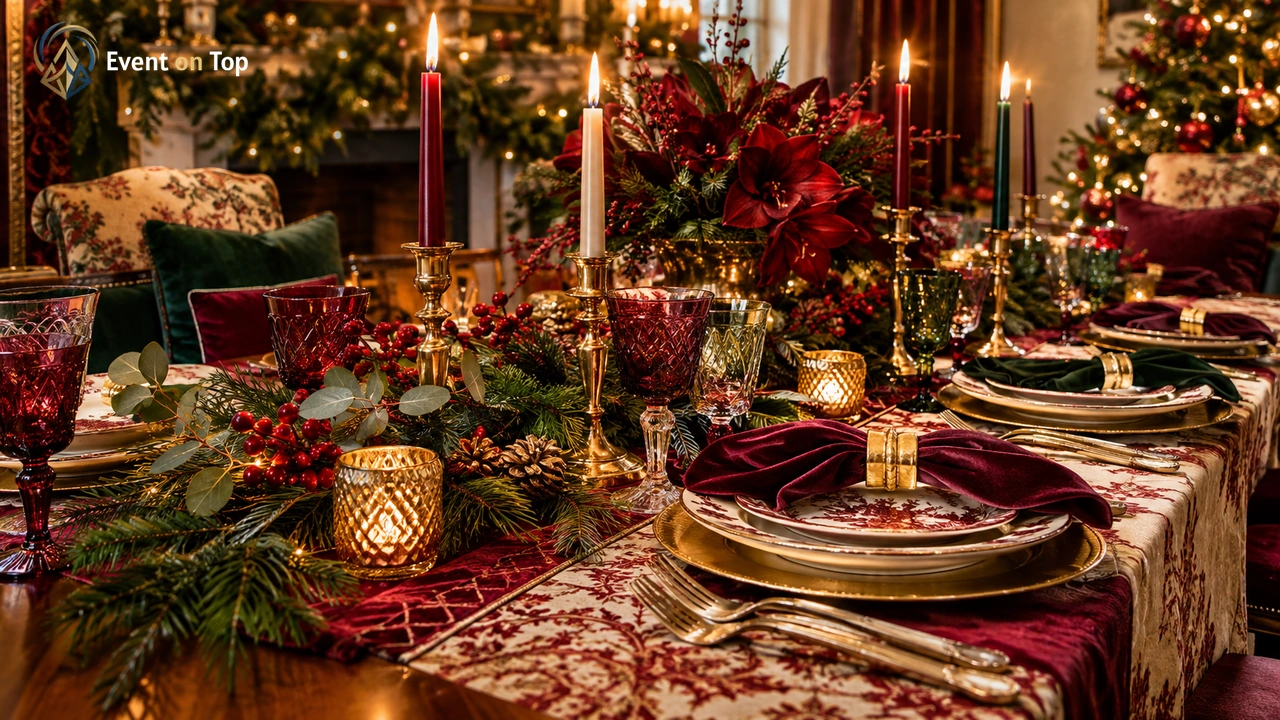
With entertaining on everyone’s list, the holiday table is a prime spot for maximalism. Start with the linens: a layered runner over a tablecloth, or a patterned runner over a plain cloth, in your palette. Then the dinnerware — mix and match rather than matching exactly, patterned plates beside plain ones, coloured glassware beside clear. Brass candleholders in varied heights, taper candles in your lead colour, and personalised place cards are the details that make a crowded table feel considered rather than cluttered.
Build the centrepiece low and long, so people can see each other across it: a garland runner down the middle, berries and pinecones tucked in, candles at intervals, and a few ornaments scattered along the garland. Keep the centrepiece under about 30 centimetres — a foot — high, and keep the serving dishes off the table or on a sideboard, because a maximalist table still has to function as a table. A small bowl of spare ornaments at each place setting doubles as a favour guests can take home, and it is the easiest way to use the ornaments that did not fit on the tree.
Outside: Maximalist Outdoors
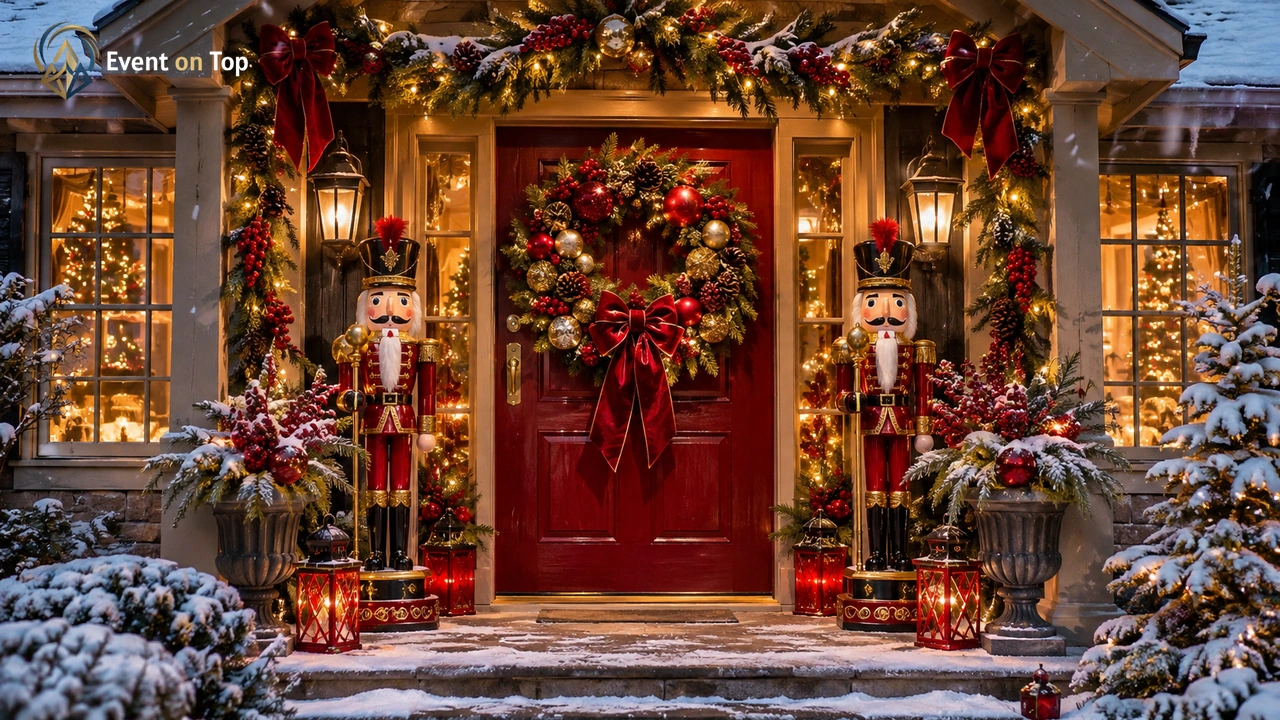
Outdoor decorating is going bold this year, and the maximalist garden is the loudest version of it: oversized yard figures, bright cluster lights and statement inflatables, with vibrant colour combinations and retro-inspired pieces. The trick is the same as indoors — cluster rather than scatter. Group warm white or multicoloured string lights around a doorway, a tree or a single feature, and the display has far more impact than the same number of lights spread thinly across the whole garden. One oversized wreath on the door, a pair of nutcrackers flanking it, and a lit garland over the porch is a complete maximalist entrance; add one statement piece — an oversized figure, a light-up reindeer, a retro inflatable — and stop. Two statement pieces compete; one statement piece wins.
Keep the palette outside the same as inside, or at least in the same family, so the house reads as one celebration from the street. And be a good neighbour about the practical side: check the lights work before they go up, use outdoor-rated extension leads, and put the lights on a timer so the display switches itself off late at night.
Budget: How to Go Maximalist Without Spending Like It
Maximalism looks expensive and does not have to be. The pieces that do the most work are also the cheapest: ribbon, garland, berries, pinecones, candles and tinsel. Buy ribbon by the roll in your lead colour and use it everywhere — tree, mantel, stairs, wreaths, gift wrap — because repetition is the rule that makes the look work, and ribbon is the cheapest repetition there is. Dried orange slices and cinnamon sticks tied with twine cost almost nothing, smell wonderful and fill a tree or a garland beautifully; make the slices a week ahead so they are fully dry.
Shop your own house first. Vintage finds, heirlooms and one-of-a-kind pieces are back in the spotlight, blended with modern accents for a layered, lived-in look — and the ornaments in the attic, the candlesticks in the cupboard and the fabric in the drawer are already in your palette or they would not be in your house. Buy secondhand where it suits you: charity shops and flea markets are full of glass ornaments, brass candlesticks and figurines for a fraction of retail. And buy after Christmas for next year: the ornaments, ribbon and lights that go on sale in January are the same ones, and a maximalist house needs volume more than it needs this season’s exact shade.
Small Spaces & What to Skip
Maximalism works in a small flat — it just needs to be concentrated rather than spread. Pick one corner and make it the whole celebration: a slim pencil tree or a half tree flat against the wall, a mantel or shelf dressed to the full, and the table set for the night itself. A small room with one rich, layered corner feels festive; a small room with a little bit of everything on every surface feels crowded. Mirrors help: a mirror behind the tree or the mantel doubles the light and the colour without taking up any floor space.
What to skip: the fourth colour. Three colours plus one metallic is the limit, and the fourth colour is the one that turns a palette into a jumble. Skip the matching set — a room where every ornament comes from the same box looks like a shop window, and the collected look is the whole point. Skip anything that blocks a doorway, a light switch or a chair, no matter how beautiful it is. And skip the urge to fill the last bare patch: the one bare wall and the one unfilled shelf edge are not unfinished, they are the breathing room that makes everything else look deliberate. More is more — but only when every more has a reason to be there.
Frequently Asked Questions
What is maximalist Christmas decor?
Maximalist Christmas decor is a generous, layered style: lots of colour, texture, light and ornaments, built on one clear palette and repeated through the house. The 2026 version is curated rather than chaotic — the pieces share a palette, heights and textures vary on purpose, and every surface is decorated without being buried.
How do I decorate maximalist without it looking cluttered?
Follow three rules: repeat a few elements through the room, defend a palette of three colours plus one metallic, and vary heights and textures while leaving a little breathing room. If a new piece does not match the palette, it goes in a different room or stays in the box.
What colours work best for maximalist Christmas decor in 2026?
What colours work best for maximalist Christmas decor in 2026?
The five palettes leading the season are jewel tones with gold, traditional red and green turned up, candyland brights, pink and champagne, and Neon Noel. Jewel tones with gold is the most elegant; red and green is the most forgiving, because almost every ornament you already own fits it.
Can maximalist Christmas decor work in a small space?
Yes — concentrate it. Pick one corner with a slim or half tree, dress one mantel or shelf to the full, and set the table for the night. A mirror behind the tree or mantel doubles the light and colour without taking floor space, and one rich corner beats a little bit of everything on every surface.
Is maximalist Christmas decor expensive?
It does not have to be. Ribbon, garland, berries, pinecones, candles and tinsel do the most work for the least money, and vintage finds, heirlooms and secondhand pieces are central to the look. Shop your own house first, buy ribbon by the roll in your lead colour, and buy ornaments and lights in the January sales for next year.