


Christmas Tree Decorating Ideas 2026: 12 Looks, the Lights Math & the Pro Order

Most Christmas trees do not fail because the ornaments are wrong. They fail because the order is wrong: ornaments go on before the lights are fixed, ribbon goes on before the lights are even in, and the whole thing ends up looking crowded instead of finished. A beautiful tree is not about buying more. It is about picking one clear look and building it in the right order — lights first, then the topper, then ribbon, then ornaments from biggest to smallest.
This guide covers the whole job: choosing the right tree, the step-by-step order professionals use, the lights math that stops a tree looking patchy, and the 12 looks worth trying in 2026. It finishes with the base, small-space trees, real versus artificial care, safety and budget advice. Christmas Day 2026 falls on Friday, December 25, so a tree put up the weekend after Thanksgiving gives you about four weeks to enjoy it. If you are decorating the whole house, our Christmas decor ideas for 2026 guide covers the mantel, the table and the outside to match.

Before You Hang Anything: Choose the Right Tree
Choose the tree for the room, not for the photograph. Measure the ceiling and the floor space first: a tree that brushes the ceiling looks cramped, and one that blocks a doorway will annoy you for a month. Leave at least 15 centimetres — about six inches — above the topper, and remember the stand and the skirt add width at the base. A full, bushy tree suits a big living room; a slim pencil tree suits a corner or a small flat; a half tree, flat at the back, is made for pushing against a wall.
Shape matters as much as size. Dense, symmetrical trees hide gaps and suit heavy ornament looks, while sparse, alpine-style trees are the 2026 favourite for heirloom ornaments, because each piece can dangle freely and be seen. If you are buying artificial, fluff it properly first: spread every tip, top and bottom, left and right, working from the inside out. An unfluffed artificial tree is the most common reason a new tree looks thin. If you are buying real, check the needles — they should bend, not snap.
The Order That Makes It Look Professional
Every professional decorator works in the same order, and it is worth copying exactly. First, lights. Then the topper. Then ribbon or garland. Then ornaments, biggest to smallest. Then the base — the skirt or collar — last, because you will be stepping around the tree the whole time.
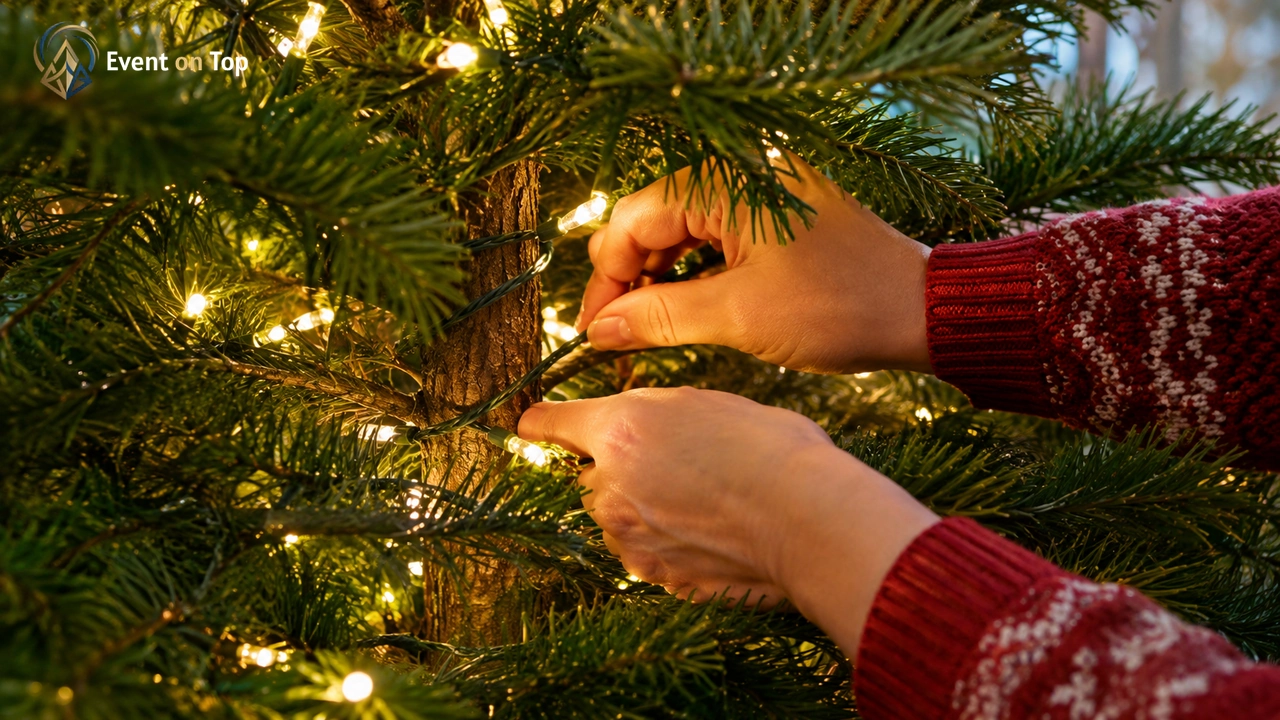
Place the tree in its stand and check it from every angle, including the side nobody photographs. A tree that leans slightly is easy to fix now and impossible to fix later. Fluff the branches, then do the lights in the dark if you can: switch the room lights off, plug the strand in, and you will see every gap immediately. Work from the bottom up, weaving the lights in and out along each branch, close to the trunk and out to the tip. The trunk-to-tip method — running the lights deep into the branches so the glow comes from inside the tree — is what gives a professional tree its depth. Test every strand before it goes on the tree.
Lights: The Math and the Method
The most common tree mistake is too few lights. A widely used rule of thumb is about 100 small lights for every foot of tree height, so a 7-foot tree wants around 700 lights. A tree with enough lights glows from within, while a tree with too few looks patchy no matter how good the ornaments are. If your tree still looks dark after the first strand, add a second one before you move on — ornaments will not hide patchy lighting.
Colour temperature matters as much as quantity. Warm white is the safest choice for almost every look: it makes gold glow, red look rich and wood tones look warm. Cool white can make gold look grey and a room feel icy, though it suits an all-white or silver tree. Multicoloured lights are back in 2026 with the 90s nostalgia trend, and they suit playful, family trees — but pick one or the other, not a mix on the same tree. Cluster lights, with a tiny bulb every half inch or so, give a thicker glow than standard string lights.
12 Christmas Tree Looks Worth Trying in 2026
The 2026 collections from retailers like John Lewis and The Range, and the trend reporting from the Christmasworld trade fair, all point the same way: pick one strong look — bows, colour, texture or sparkle — and let it lead. These twelve are the ones worth your time.
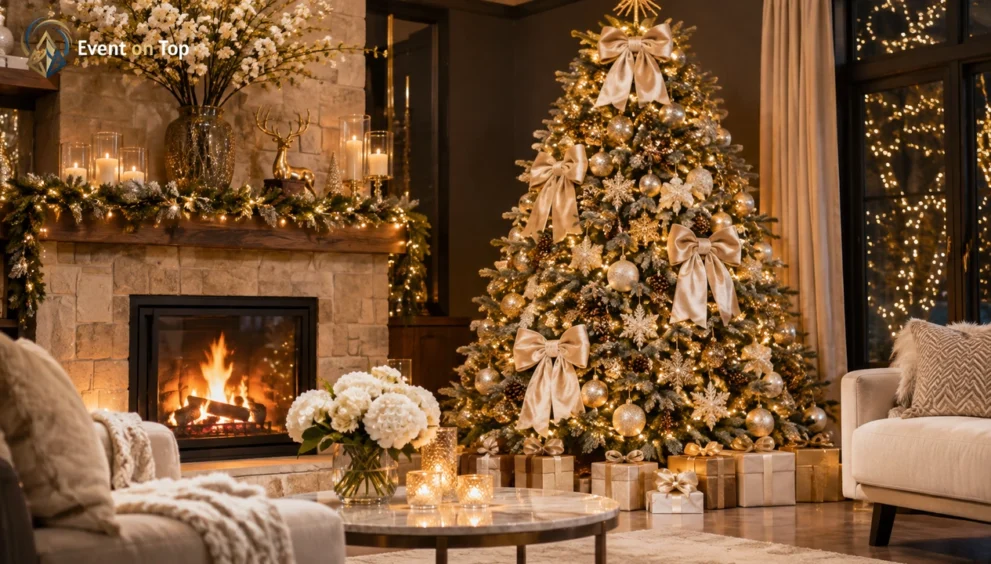
1. Gold and cream. The easiest elegant tree: shiny gold mixed with matte gold, cream or ivory glass, and velvet bows instead of shiny ribbon. Warm white lights only.
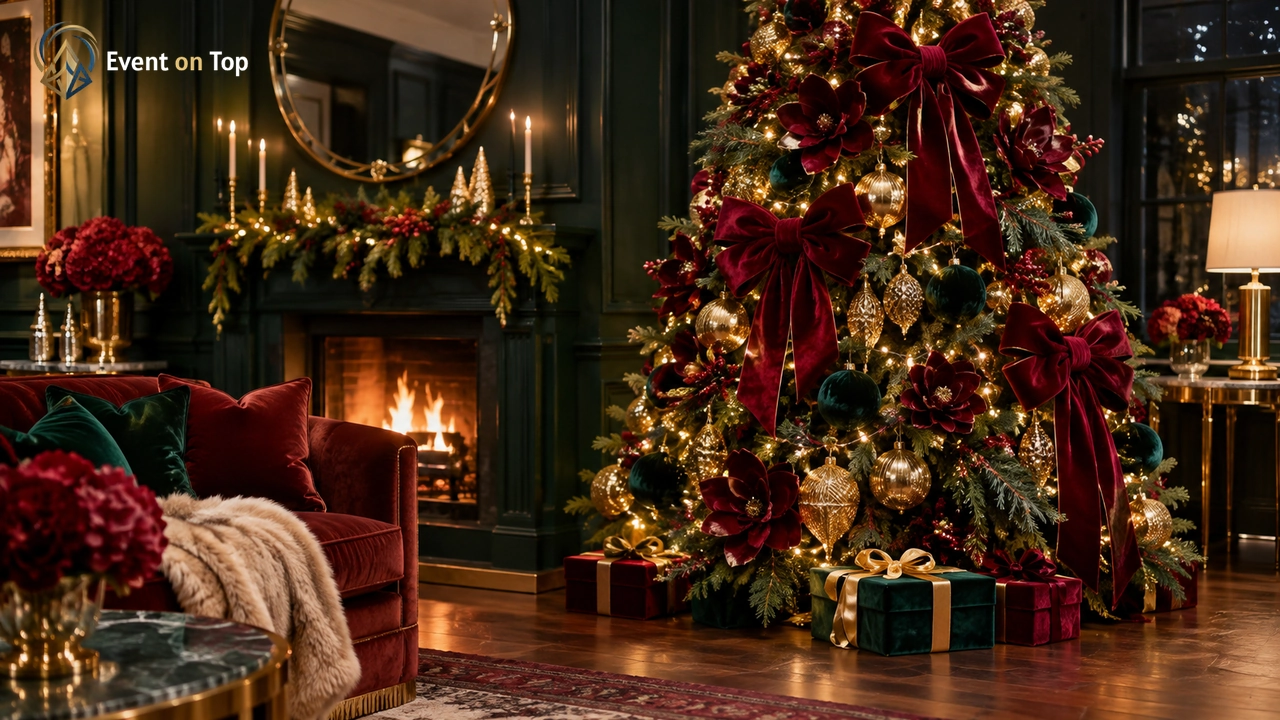
2. Oversized velvet bows. The defining detail of 2026. Tie 8 to 12 large velvet bows in burgundy, blush or forest green, wire them so the loops hold, and space them evenly top to bottom.
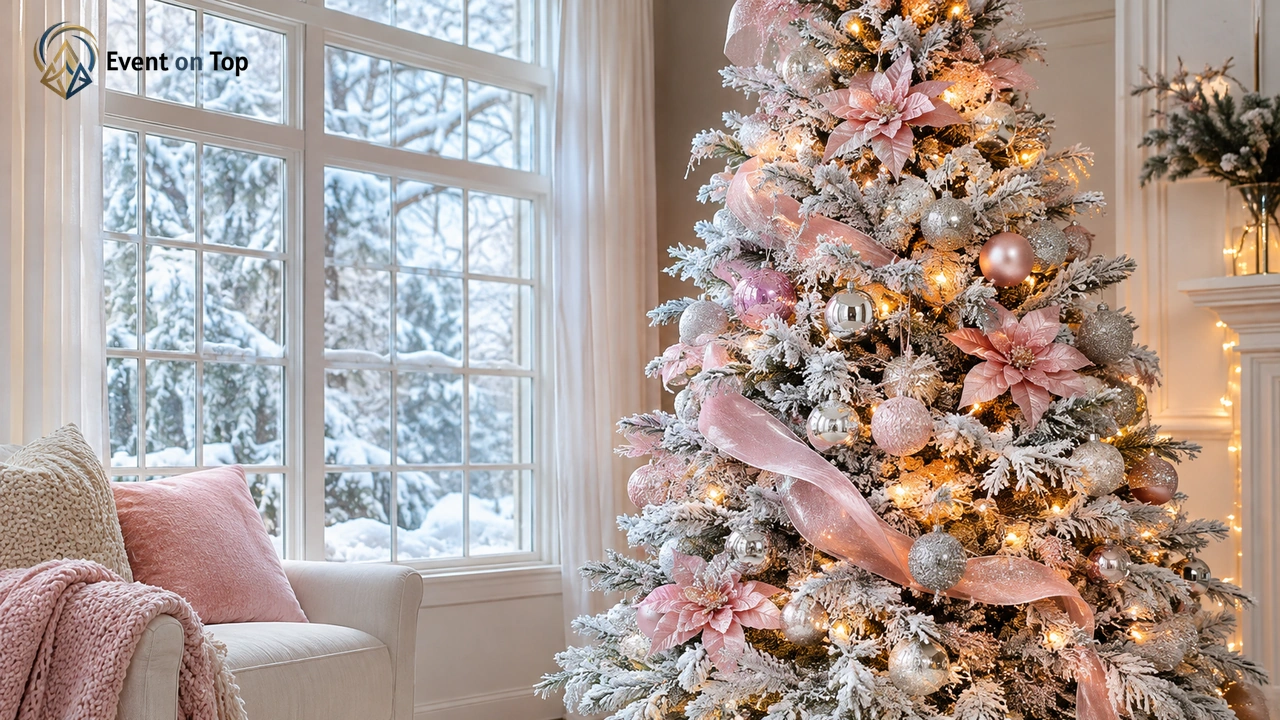
3. Flocked tree with warm amber lights. A heavily flocked tree with warm white lights woven deep inside and cream, gold and clear ornaments. Keep ornaments sparse so the white branches show.
4. Jewel-tone maximalism. Three jewel tones — burgundy, emerald and deep plum — in matte, shiny and glitter finishes, layered generously with gold accents to keep the palette rich, not rainbow.
5. Classic red with plaid ribbon. The look that never dates: wide tartan or gingham ribbon, red baubles in two finishes, and a few wooden or handmade pieces so it never feels like a shop window.
6. The nostalgic tree. The 1980s and 1990s are back: colourful glass ornaments, tinsel, multicoloured lights and the decorations you remember from childhood. Nothing has to match.
7. Ribbon cascading waterfalls. Cut wired ribbon into metre-long lengths, tuck the top into the tree near the crown, and let each length twist gently down, pinning it in two or three spots.
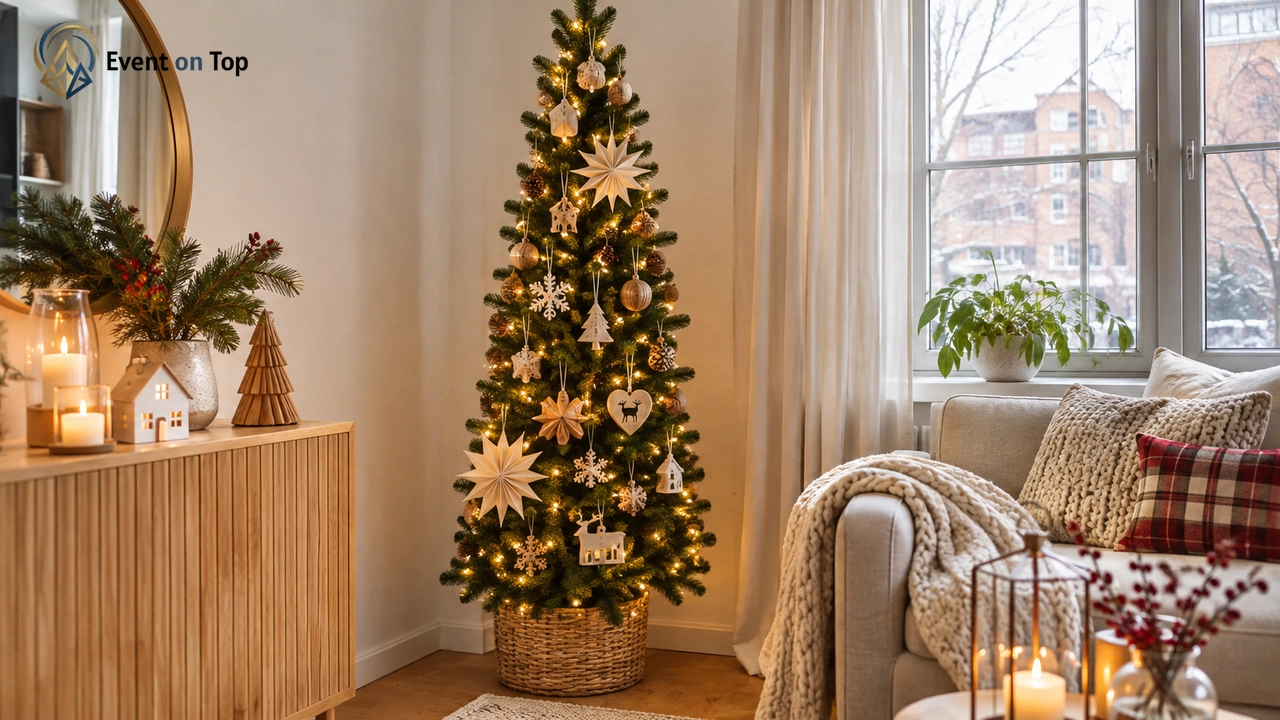
8. Scandinavian calm. Natural materials, simple shapes, evergreen and warm white with natural wood, lifted by red paper decorations. Wood, wool and paper ornaments, a few dried orange slices, nothing shiny except the lights.
9. Silver and frosted glass. Silver baubles, clear glass icicles and crystal drops that catch the light like real ice, on a green or white tree. Keep the palette to silver, white and clear glass.
10. Tinsel revival. Tinsel is back, applied with restraint: draped in long, even strands from the top branches, not dumped in clumps. It pairs well with colourful glass ornaments and a nostalgic tree.
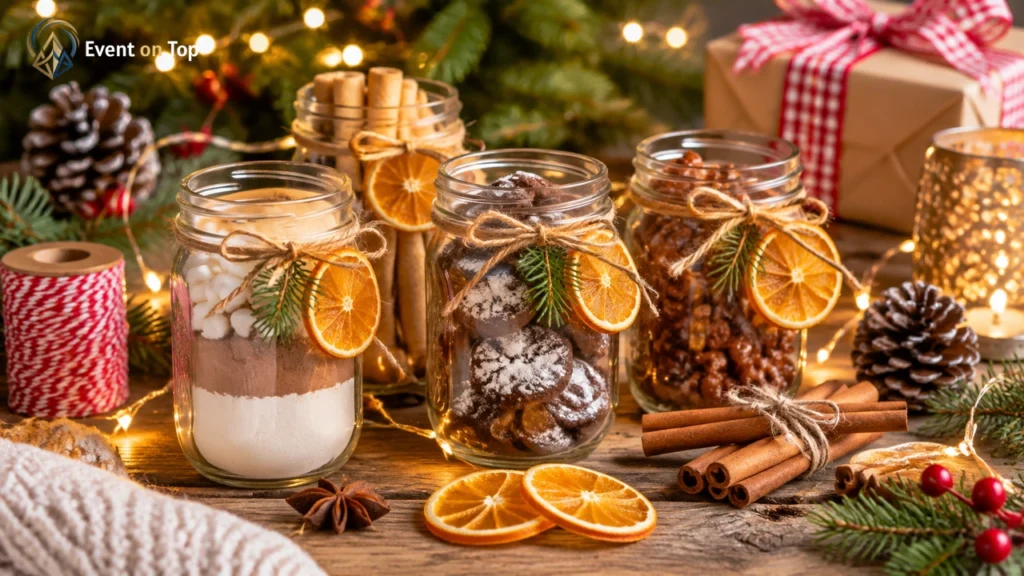
11. Dried orange and cinnamon. Dried orange slices, cinnamon sticks tied with twine, wooden ornaments and linen ribbon. It smells as good as it looks and costs almost nothing. Make the slices a week ahead so they are fully dry.
12. The pink tree. Blush pink with champagne and white, velvet and candlelight, for a softer, more romantic room. It works best on a white or flocked tree, where the pink reads as a deliberate palette.
Commit to one look and borrow details from one other at most. A jewel-tone tree with a velvet-bow topper works. A nostalgic tree with a ribbon waterfall works. All twelve in one living room does not.
Ribbon, Bows & the Topper
Ribbon is the fastest way to make a tree look styled, and the easiest to get wrong. Wide ribbon — at least 6 centimetres, about two and a half inches — reads from across the room; narrow ribbon disappears. Wired ribbon holds its shape; unwired ribbon flops. Cut it into manageable lengths, and tuck each one deep into the branches in a loose diagonal or a Z-pattern, billowing it out over a branch and pinching it back in. Horizontal wrapping traps the branches and flattens the tree’s shape.
One oversized bow at the top, instead of a star or an angel, is the 2026 topper of choice, and it is softer and more forgiving than a star that has to sit perfectly straight. If you prefer a traditional topper, put it on before the ornaments, while you can still reach the top easily, and check it from the doorway — the angle everyone actually sees it from. A topper that leans is the first thing people notice, so wire it firmly to the top branch.
Ornaments: Layering, Personal Pieces & the Bottom Branches
Hang ornaments in three layers. Big, plain baubles go deep inside the tree first, where they fill gaps and bounce the light back out. Medium ornaments go in the middle branches, where they are most visible. Small and delicate ornaments go at the tips, where they catch the light. A useful guide is 10 to 15 ornaments per foot of tree — fewer is fine if you use ribbon, picks or garland to fill the space. Mix textures on purpose: shiny glass next to matte baubles, wood next to metal, a handmade ornament next to a bought one. Step back every few minutes and look at the tree as a whole — the gaps you cannot see up close are obvious from the sofa.
The bottom branches deserve a plan of their own. If you have small children or pets, put the unbreakable ornaments low and save the glass for the top, where everyone can admire it and nobody can reach it. The lowest branches are also the best place for the biggest, plainest baubles, which anchor the tree visually and hide the stand. Leave a little green showing: if you cannot see any green between the ornaments, take a third of them off and put them in a bowl on the table instead.
The Base: Tree Skirts, Collars & the Floor
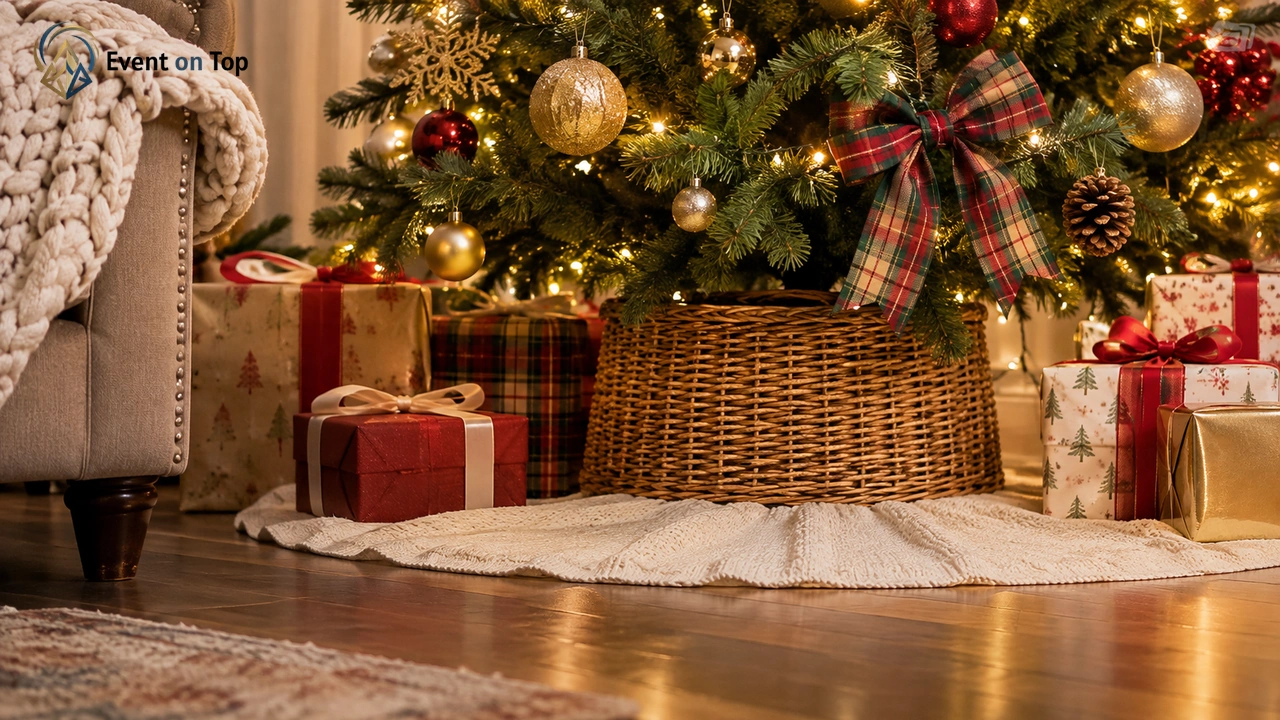
The base is the detail people forget until they photograph the tree. A tree skirt — fabric, faux fur, or a woven basket — hides the stand and finishes the look, and it should match the palette, not fight it: cream or natural linen for a Scandi tree, deep red velvet for a classic tree, gold or champagne for an elegant one. A metal or wooden collar does the same job in a cleaner, more modern way and suits homes with pets that sleep under the tree. Protect the floor, too: a real tree drops needles and can leak water, so a waterproof mat under the stand is worth having.
Small Spaces, Second Trees & Rentals
A small flat or a rented home can still do Christmas properly — it just needs a different scale. A slim pencil tree fits a corner without taking over the room. A tabletop tree, two or three feet tall, gives you the focal point on a sideboard or a console. A wall tree, made from lights and a few ornaments arranged in a triangle on the wall, works in a room with no floor space at all. The same order applies at any size: lights first, then the topper, then ribbon, then ornaments.
Second trees are a growing direction for 2026, and they work best when each one has its own job: the main tree in the living room, a small one in the hallway or the children’s bedroom, a slim one by the front door. Give each tree a different look rather than splitting one set of ornaments across two trees. Renters should stick to damage-free hanging — removable hooks, twine and ribbon tied rather than nailed — and choose decorations that pack flat and store small.
Real vs Artificial: Care, Safety & Storage
Real and artificial trees both work; they just need different care. A real tree lasts about four weeks indoors with water, so do not put one up too early — the weekend after Thanksgiving is about right for a tree that still looks fresh on Christmas Day. Water it daily, keep it away from radiators, fireplaces and candles, and take it down when the needles start dropping heavily. Many towns run a tree collection or recycling scheme in early January, so check your local council or city website before you drag it to the kerb.
An artificial tree can go up earlier and stay up longer, but it needs a proper fluff every year and a dry, cool place to store. Store ornaments in their original boxes or wrapped in tissue, with the fragile ones on top, and label the boxes by room so next year’s setup takes minutes instead of an afternoon. Safety is not optional on either kind of tree: check light strands for frayed wires or cracked bulbs before they go on, do not overload a single socket, keep candles well away from branches, and use a timer so the lights switch off by themselves late at night.
Decorating on a Budget: What to Buy, What to Skip
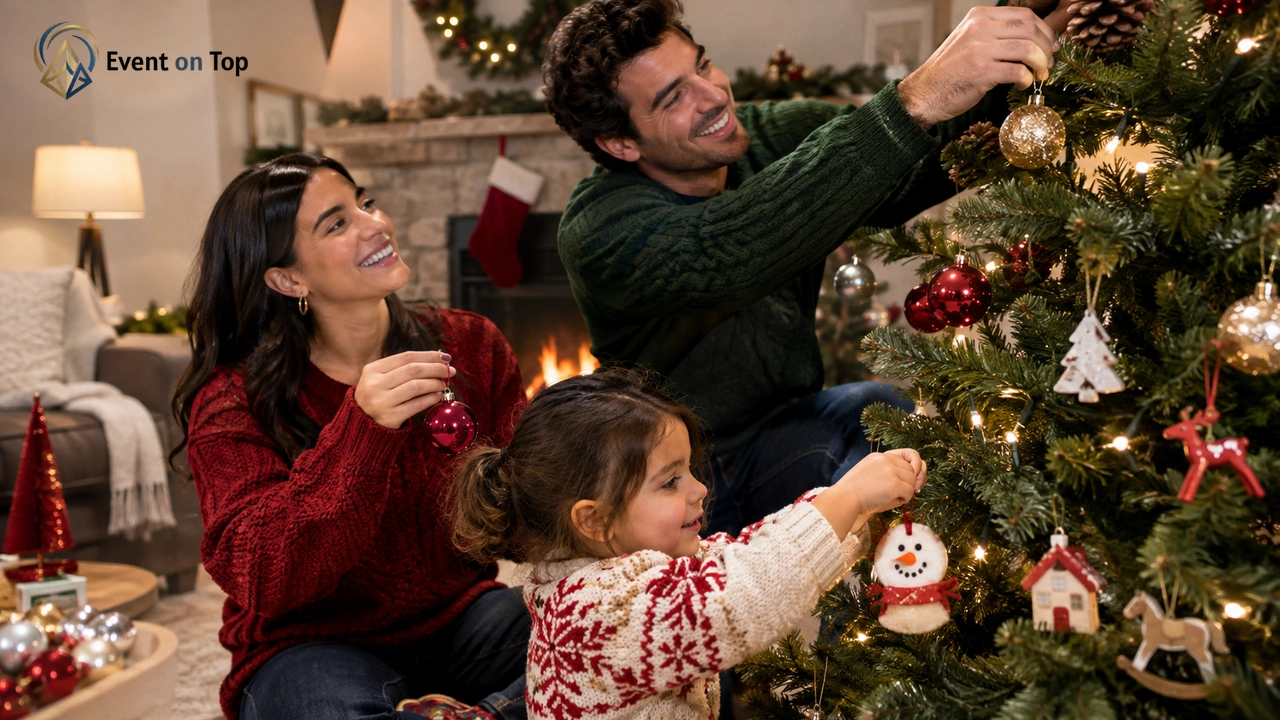
Christmas tree decorating does not need to be expensive, and the most charming trees are often the ones that cost the least. Buy the things that last: good warm white lights, a solid set of baubles in your palette, one wide wired ribbon, and one or two quality pieces each year rather than a whole new theme every December. Reuse everything that still works — last year’s ornaments in a new arrangement, with a new ribbon colour, look completely different. And make the fun things yourself: dried orange slices, paper stars, pinecone ornaments and salt-dough ornaments with the children cost almost nothing. Skip the things that fail reliably: a whole new theme every year, decorations that need an app or a subscription, and fragile ornaments on the bottom branches if you have small children or pets.
When to Put It Up & Take It Down
There is no single right date, but there is a rhythm that works for most households. Many families start the weekend after Thanksgiving — Thanksgiving Day 2026 is Thursday, November 26 — when the house is already full and the boxes are easy to reach. Others wait until the first weekend of December, which keeps the tree feeling fresh on Christmas Day itself. Either way, put the tree and the lights up first, then the mantel and the table, and leave the small finishing touches for last. If you are planning around public switch-ons, our Christmas tree lighting ceremonies guide covers the big ones, and our best Christmas light displays in the USA guide covers the shows worth a trip.
Taking it down is the part nobody enjoys, so make it easy on yourself: label the boxes by room as you pack, wrap ornaments in tissue, and coil lights around cardboard so they do not tangle. Many households take decorations down by Twelfth Night, which falls on January 5, 2027, with Epiphany on January 6 — a long-standing tradition in the UK and parts of Europe — while others keep the lights up through the first weekend of January. If you are still building your list, our Christmas gift ideas for 2026 pair with this guide.
FAQs
What goes on a Christmas tree first, lights or ribbon?
Lights always go first. Then the topper, then ribbon or garland, then ornaments from biggest to smallest. Putting ribbon on before the lights hides the lights and makes them hard to fix, and putting ornaments on before the lights means working around them for the whole job.
How many lights do I need for my Christmas tree?
About 100 small lights for every foot of tree height, so a 7-foot tree wants around 700 lights. Weave them in and out along each branch, close to the trunk and out to the tip, rather than wrapping them around the outside. If the tree still looks patchy after the first strand, add a second one before you hang any ornaments.
What colours look best on a Christmas tree in 2026?
Gold and cream, red and green, and silver and white are the classic winners, and the 2026 collections add burgundy, emerald and warm gold as the jewel-tone option. The real rule is to pick two or three colours and stick to them — one main colour, one metal, and maybe one accent.
When should I put my Christmas tree up in 2026?
Most people put their tree up between Thanksgiving weekend and early December. Thanksgiving Day 2026 is Thursday, November 26, and Christmas Day falls on Friday, December 25. Real trees usually last about four weeks indoors with water, so do not put one up too early.
How do I decorate a small Christmas tree or a tree in a small room?
Use a slim pencil tree, a tabletop tree, or a wall tree made from lights and a few ornaments. The same order applies at any size — lights first, then the topper, then ribbon, then ornaments — and a smaller tree needs fewer ornaments, so leave some green showing. Give each tree its own look rather than splitting one set of ornaments across two trees.


Christmas Mantel Decor Ideas 2026: Garland, Stockings, Candles & 15 Looks
07th Nov 2026[…] Christmas Tree Decorating Ideas 2026: 12 Looks, the Lights Math […]