



Christmas in Reykjavik 2026: Markets, Yule Lads, Northern Lights & the Honest Guide


Reykjavik does Christmas the way only a city this far north can: in near-darkness, lit from the inside. In December the sun is up for barely four or five hours, and the rest of the day belongs to the lights — strings of them across Laugavegur, the big tree on Austurvöllur, the market huts at Ingólfstorg, and, on a clear night, the northern lights themselves. It is a smaller, quieter Christmas than the great European markets, and that is the point. There is no single giant market to fight through. Instead there are five small ones, thirteen Yule Lads who arrive one by one, a giant Yule Cat watching over the shoppers, and a city that treats Christmas Eve at six o’clock in the evening as the main event.
This is the full guide: the confirmed 2026 dates and the ones still expected, the markets square by square, the Yule Lads and the food, the northern lights, a timed one-day plan, and the practicals that will save your trip. One honest flag up front: Reykjavik’s city Christmas programme is confirmed for December 1–23, 2026, but several individual market timetables had not yet been published when this guide was written, so dates marked “expected” follow each market’s usual pattern and last year’s schedule. Check the organiser’s page on the week you travel.
Christmas in Reykjavik 2026 at a Glance
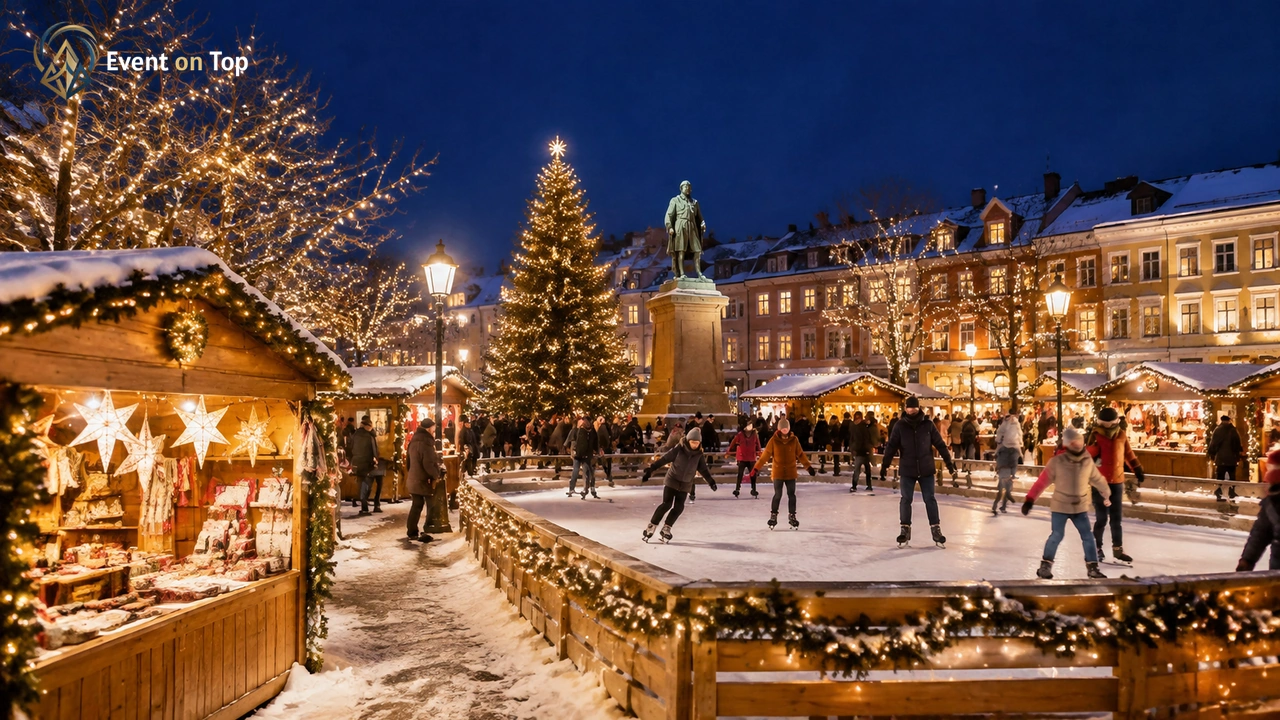
- Jólakvösin, Ingólfstorg: expected Sat Nov 28 – Wed Dec 23, 2026, 12:00–20:00, longer at weekends. The main downtown market, with the ice rink in the middle of the square.
- Austurvöllur market: expected from Sat Nov 28; weekends, then daily Dec 18–23. The Oslo tree is lit on the first Sunday of Advent — Nov 29, 2026, expected.
- Christmas Village, Hafnarfjörður (Jólaþorpið): confirmed Fri Nov 13 – Wed Dec 23, 2026. Fri 17:00–20:00, Sat 13:00–20:00, Sun 13:00–18:00; Dec 23 13:00–21:00. About twenty wooden huts on Thorsplan.
- Kolaportið Christmas market: from Sat Nov 14, every weekend to Dec 20, 11:00–17:00. Indoors, by the Old Harbour.
- Árbær Open Air Museum Christmas: Sundays Dec 13 & 20, 13:00–16:00.
- Yule Lads: thirteen of them, one arriving each night from Dec 12 to Christmas Eve.
- Þorláksmessa, Dec 23: the busiest shopping night of the year. Christmas Eve, Dec 24 at 18:00: the main event — Iceland celebrates then, not on the 25th.
- Daylight: about 4–5 hours; the winter solstice is Dec 21, 2026. Temperatures around 1–3°C, rarely below −5°C.
- Northern lights: best roughly 21:00–02:00; darkest skies in the first half of December (new moon Dec 9; full moon Dec 24).
- Getting there: Keflavík airport is about 45 minutes by bus; the centre is a walk, and bus 1 reaches Hafnarfjörður in about 20 minutes.
The Markets: Small, Scattered and Better for It
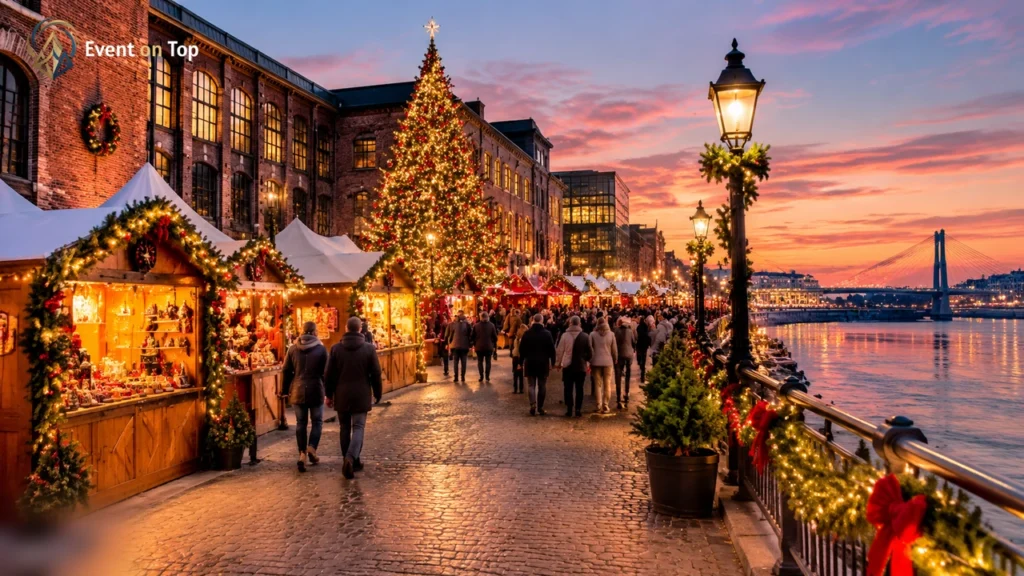
Reykjavik does not have one big Christmas market, and once you stop looking for it, that turns out to be the charm. The city has several small ones, each with its own character, and walking between them is the experience. Start at Ingólfstorg, where Jólakvösin sets up its wooden huts selling handmade crafts, Icelandic wool goods and warm drinks, with a small ice rink in the centre of the square. It is expected to run from Saturday, November 28 to Wednesday, December 23, 2026, opening around noon and running to eight in the evening, longer at weekends. Skate a few laps, then warm up with hot chocolate from a stall while the lights come on.
Two minutes away is Austurvöllur, the square in front of Parliament, where the market sets up around the city’s Christmas tree. The tree is still called the Oslo tree, a gift from Norway that marked the start of the holidays for generations — though these days it is felled in Heiðmörk, just outside the city, and Oslo sends books to Reykjavik’s schools instead. Its lights are expected to go on at the start of Advent, on Sunday, November 29, 2026, and the market is expected to run on weekends from November 28 and every day from December 18 to 23. Hjartatorg, the small square just off Laugavegur, hosts a weekend market too, on December 5–6, 12–13 and 21–23.
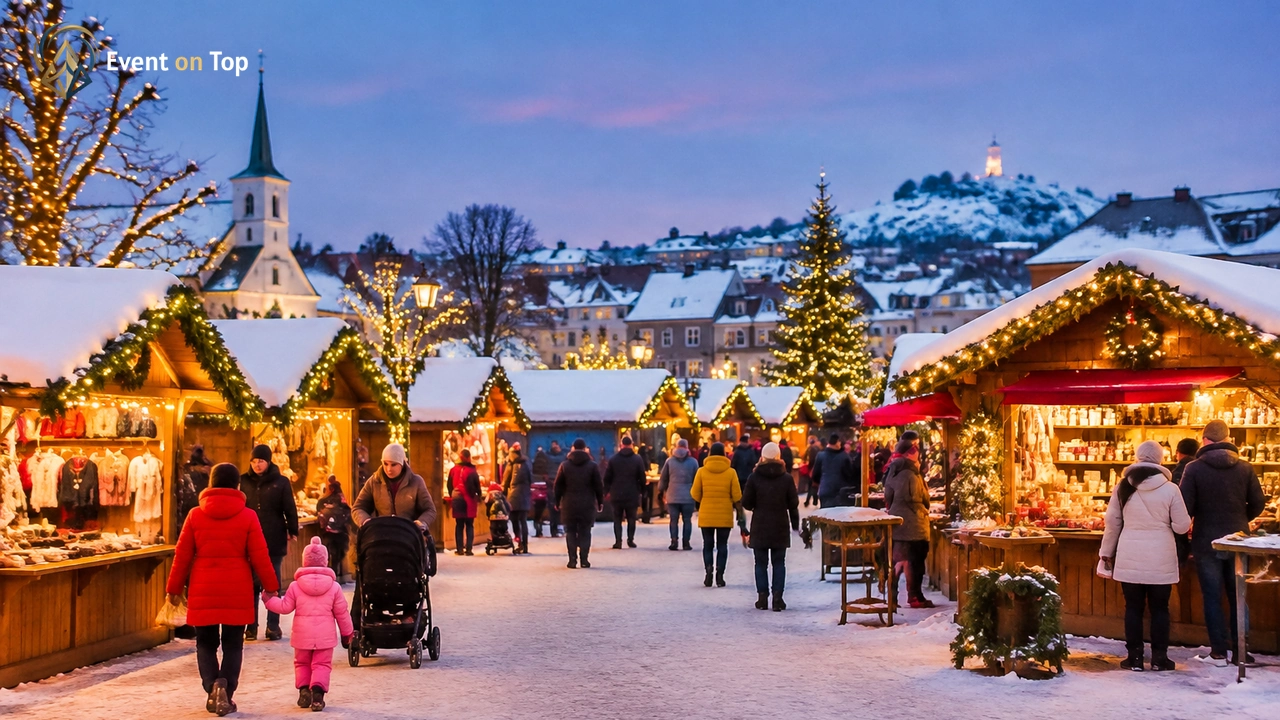
The best market of all is not in Reykjavik at all. The Christmas Village — Jólaþorpið — in Hafnarfjörður, the harbour town about twenty minutes south on bus 1, fills Thorsplan square with around twenty small wooden huts selling Christmas food, crafts and Icelandic design, and it has been running for more than twenty years. Its 2026 dates are confirmed: it opens on Friday, November 13 and runs through Advent on Friday evenings (17:00–20:00), Saturdays (13:00–20:00) and Sundays (13:00–18:00), with a long final day on Þorláksmessa, December 23 (13:00–21:00). Go on a Saturday afternoon, when there is live music, and stay until the lights come on. Two more worth knowing: Kolaportið, the indoor weekend flea market by the Old Harbour, becomes a Christmas market from Saturday, November 14, every weekend until December 20, open 11:00–17:00 — the warm, dry option on a bad-weather day — and the little market at Elliðavatnsbær in the Heiðmörk forest runs on the four Advent weekends, 12:00–17:00.
The Thirteen Yule Lads, the Yule Cat and Grýla
Iceland does not really do Santa Claus. It has thirteen Yule Lads — the Jólasveinar — who live in the mountains with their mother, the ogress Grýla, and their giant black Yule Cat. One Lad comes down from the mountains each night from December 12, and the last arrives on Christmas Eve. Each has a name and a habit: Stekkjastaur, the Sheep-Cote Clod; Stúfur, the Stubby, who steals pans to lick; Þvörusleikir, the Spoon-Licker; Pottaskefill, the Pot-Scraper; Askasleikir, the Bowl-Licker; Hurðaskellir, the Door-Slammer; Skyrgámur, the Skyr-Gobbler; Bjúgnakrækir, the Sausage-Swiper; Gluggagægir, the Window-Peeper; Gáttaþefur, the Doorway-Sniffer; Ketkrókur, the Meat-Hook; and Kertasníkir, the Candle-Stealer. Children leave a shoe in the window, and a good child finds a small gift in it each morning; a naughty one finds a potato.
You will meet them everywhere in December: as figures in shop windows, on the Árbær Open Air Museum’s Christmas programme (Sundays December 13 and 20, 13:00–16:00, with Yule Lads, a church service and dancing around the tree), and at the Hafnarfjörður Christmas Village, where Grýla and the Lads turn up in person. The Yule Cat itself stands, giant and lit up, on Lækjartorg at the end of Austurstræti all through December — the folk tale says it eats anyone not wearing new clothes for Christmas, which is as good a reason as any to buy an Icelandic wool sweater. The Lads are the reason Icelandic Christmas feels different from anywhere else in Europe, and the shoe in the window is the detail to watch for on Laugavegur in the mornings.
What to Eat and Drink at Christmas in Reykjavik
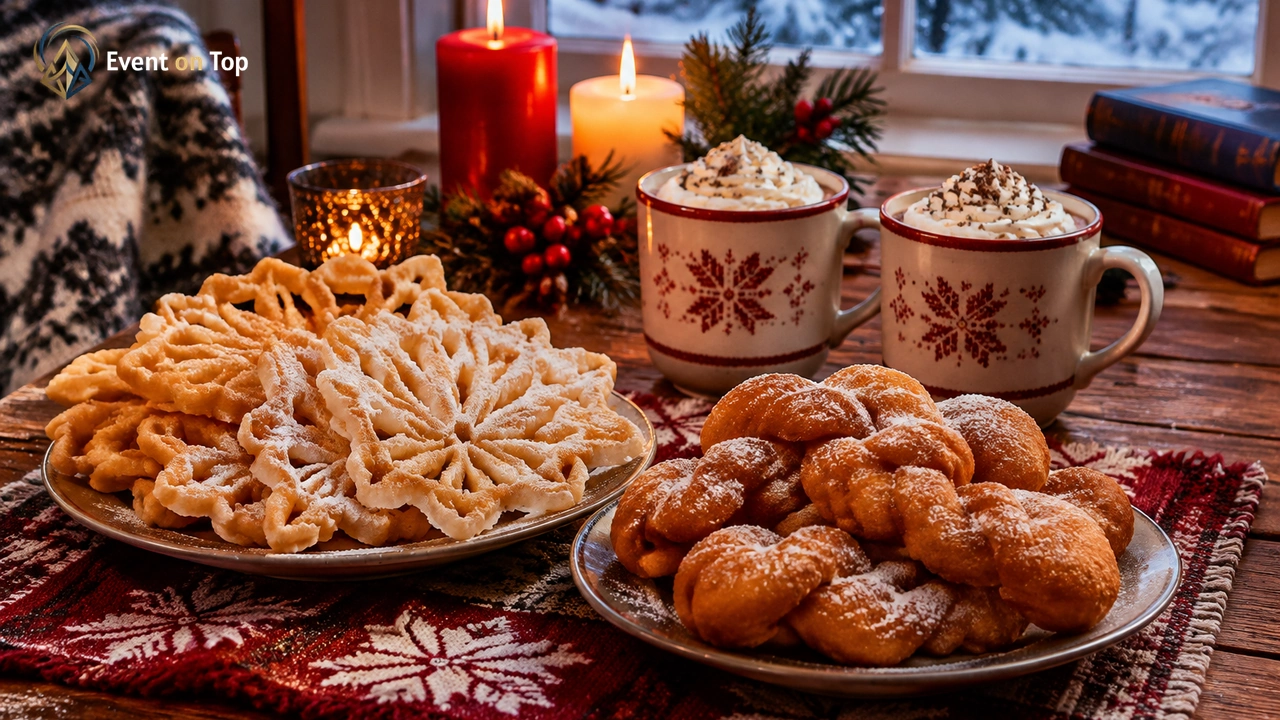
Icelandic Christmas food is hearty, old-fashioned and worth planning a meal around. The centrepiece is hangikjöt, smoked lamb, traditionally served with potatoes in béchamel sauce, green peas and pickled red cabbage. It is on Christmas buffets across the city all through December — book a Christmas buffet (jólahlaðborð) at a downtown restaurant and you will get the full spread in one sitting. Alongside it comes laufabrauð, the thin “leaf bread” cut into delicate patterns and fried crisp, which families make together in the run-up to Christmas, and kleinur, twisted doughnuts dusted with sugar, sold at market stalls and bakeries. Wash it down with jólaöl, the dark Christmas ale, or with malt og appelsín, the non-alcoholic Christmas drink of malt and orange soda that Icelanders mix at home and order everywhere in December.
For grazing, the markets are the place: hot chocolate thick enough to stand a spoon in, kleina and waffles from the stalls, and Icelandic skyr in festive flavours. And then there is Jólabókaflóð, the Christmas Book Flood — Iceland’s lovely tradition of giving books on Christmas Eve and spending the evening reading them. Bookshops on Laugavegur stay open late on Þorláksmessa, December 23, the busiest shopping night of the year, when the whole street is out buying last-minute gifts, listening to live music and drinking hot chocolate. If you buy one thing in Reykjavik at Christmas, make it a book, and read it the Icelandic way: on Christmas Eve, in the warm, while the dark presses against the window.
Chasing the Northern Lights
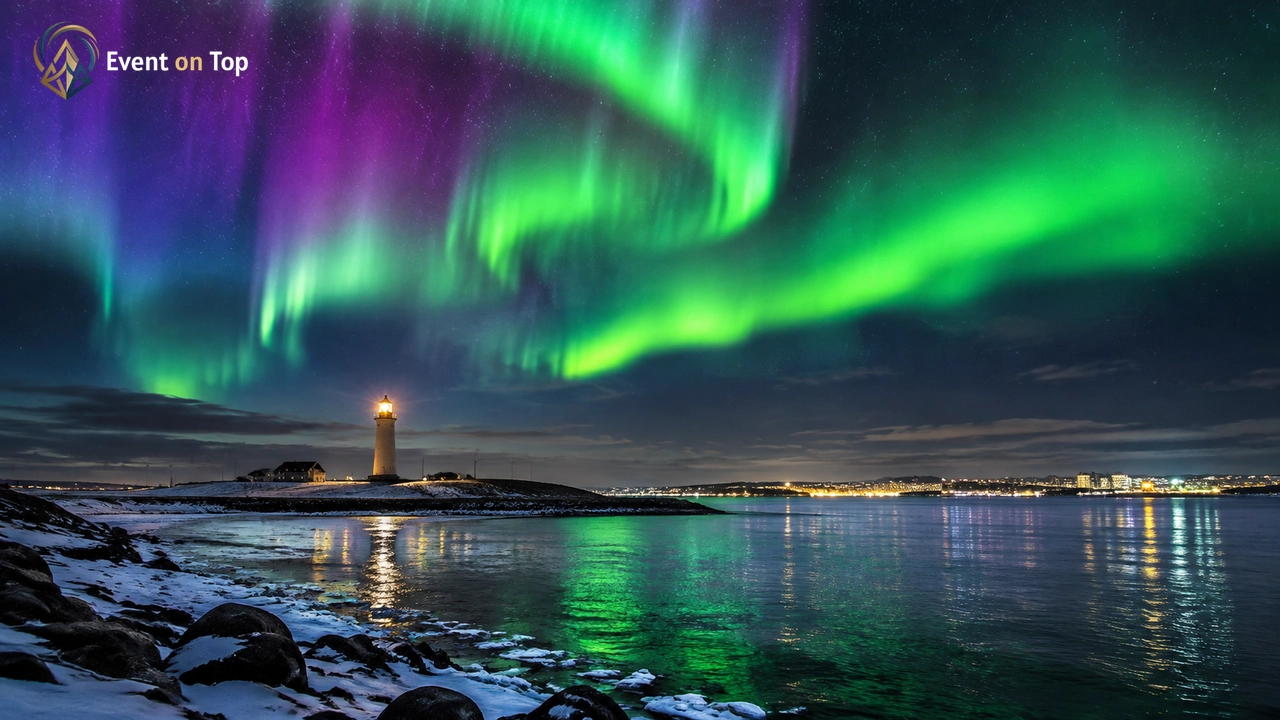
December is one of the best months of the year to see the northern lights in Iceland, because the nights are so long — and 2026 falls in a high solar activity phase, so displays are expected to be frequent and bright. The best hours are usually between about nine in the evening and two in the morning, and the darkest skies fall in the first half of the month: the new moon is December 9, while the full moon on December 24 makes faint displays harder to see around Christmas itself. Check the aurora and cloud forecasts from the Icelandic Met Office (vedur.is) each afternoon before you decide whether to go out.
You can sometimes see the lights from inside the city, but your chances are far better away from the streetlights. The easiest do-it-yourself spot is Grótta lighthouse, at the tip of Seltjarnarnes, a short drive or bus ride from the centre — dark enough, with the sea in front of you and the city behind. Dress far warmer than you think you need: standing still in the wind at midnight is colder than walking around a market, and the wait can be an hour or more. A guided tour is the simpler option on a short trip: local guides track the live forecasts, drive to the clearest skies, and many offer a free re-run if no aurora appears. Either way, treat the lights as a bonus, not a promise — clear skies and solar activity both have to cooperate. The boat option is worth knowing too: northern lights cruises leave from Reykjavik harbour, and watching the aurora ripple above the dark North Atlantic is a different experience from seeing it over land.
Reykjavik Beyond the Markets
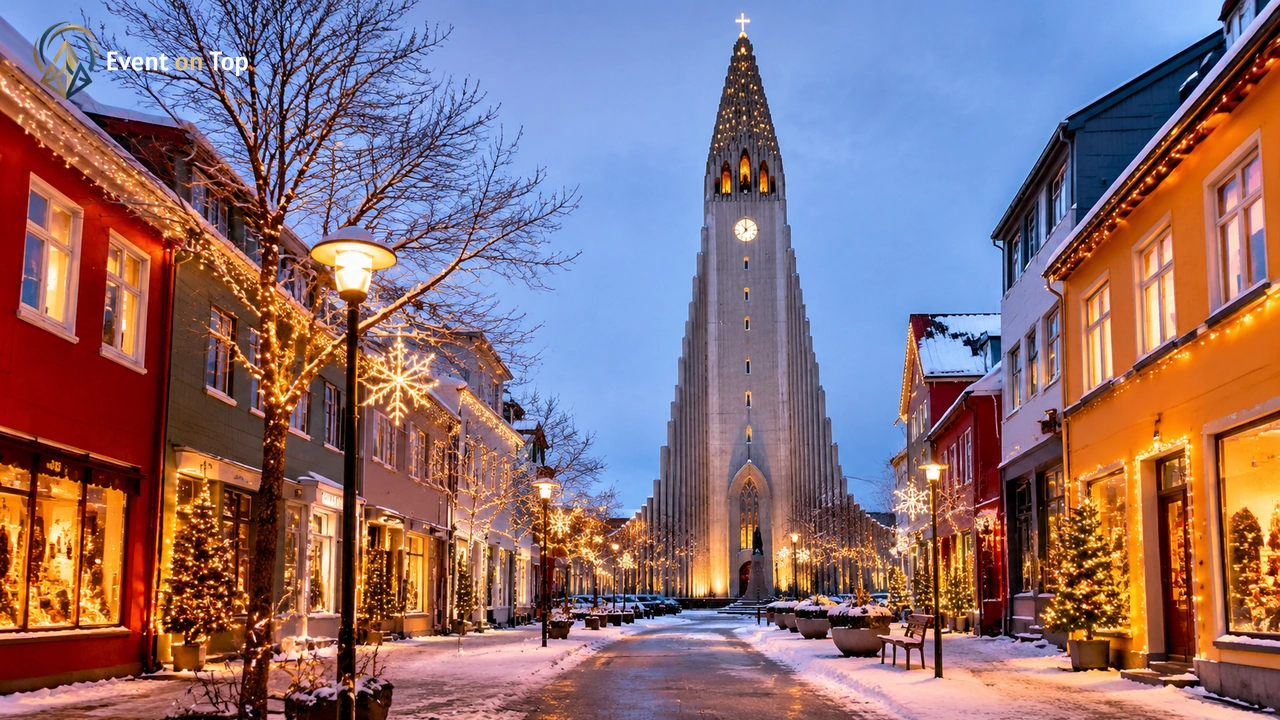
The markets are the reason to come in December, but Reykjavik is the reason to stay a second day. Walk up Skólavörðustígur to Hallgrímskirkja first: the great concrete church is the city’s landmark, and the tower lift gives you the view of the whole lit-up centre, the harbour and the mountains beyond. Then walk down Laugavegur, the main shopping street, where the shops stay open late in the run-up to Christmas and every window is dressed for the season. The street is at its best in the early evening, when the lights are on and the crowds are out, and the side streets off it hold the city’s best cafés for warming up between stops.
From the centre, walk to the harbourfront for Harpa, the concert hall whose glass facade glows over the water, and the Sun Voyager sculpture a little further along the shore — at dusk, with the lights coming on across the bay, it is the most photographed corner of the city. If the weather turns, as it often does, the fallback is Perlan, the glass dome on Öskjuhlíð hill, with its ice cave and observation deck, or the city’s museums and the warm water of the local swimming pools — the sundlaugar — which Icelanders use all winter and which are the most local experience in the city. On a second day, the Golden Circle or the Blue Lagoon make the classic day trips, and the South Coast’s waterfalls are at their most dramatic under snow — but check road conditions on vedur.is and road.is first, because winter weather closes roads with little warning.
A One-Day Plan for Christmas in Reykjavik
Here is the day that works, built around the four hours of daylight. Start late — there is no point rushing out in the dark — and spend the short daylight on Hallgrímskirkja: up the tower for the view while you can still see it, then down Laugavegur as the shops open, buying the wool sweater the Yule Cat demands and a book for the Christmas Eve reading. Have lunch somewhere warm — a Christmas buffet if you can book one — and be at Ingólfstorg by mid-afternoon, when the light is already fading and the market lights come on. Skate on the rink, then walk the two minutes to Austurvöllur for the tree and the market there.
As full dark settles, walk to the harbourfront: Harpa glowing, the Sun Voyager, and the lights across the bay. Dinner is a proper Icelandic meal — hangikjöt if you can find it — and then the evening’s decision: a northern lights tour if the forecast is good (book in the morning, check vedur.is in the afternoon), or a quiet night in a Laugavegur café with hot chocolate and your new book. If you have a second day, take bus 1 to Hafnarfjörður on a Saturday afternoon for the Christmas Village, and spend the morning at Árbær Open Air Museum if it is a Christmas-programme Sunday. Our guides to Christmas in Stockholm, Christmas in Copenhagen and Christmas in Helsinki cover the other Nordic capitals, and the best Christmas markets in Europe guide compares Reykjavik with the big continental markets. For more ice rinks, see our best ice skating rinks guide.
Where to Stay, Getting There and Practicals
Stay in the centre if you can — anywhere between Laugavegur and the harbour puts the markets, the restaurants and the tower on foot, and in four hours of daylight you do not want to waste any of it on buses. If the centre is booked, the streets around the bus station are the practical fallback. Book early for December weekends: Reykjavik is small, the hotels are few, and the weekends closest to Christmas sell out first. Getting there is simple: Keflavík airport is about 45 minutes by bus, with regular airport buses to the city, and from there everything in the centre is a walk. Inside the city, the bus network covers the suburbs — bus 1 to Hafnarfjörður takes about twenty minutes — but you will barely need it.
A few practicals that matter. Iceland is expensive, and Christmas week is the most expensive week of the year — budget for it, and book restaurants in advance, because many places close or cut their hours between December 24 and 26, and the ones that stay open fill up. Christmas Eve is the main celebration, rung in at 18:00 on December 24, and the city goes quiet after that; plan a quiet evening, a book and a warm room, and do not expect to eat out late. The markets are free to enter — you pay only for the rink, the tower and what you eat and drink — and cards are accepted everywhere, even at the smallest stalls. December days are short: it is dark by about 3:30pm, which is good news, because the city is at its best after dark and you do not have to wait long for it. And check vedur.is every morning: the weather changes fast, and wind and sleet are more common than calm snow.
The Honest Notes
Three things to know before you go, because the guides that only praise Reykjavik at Christmas do you no favours. First, the dates. The city’s Christmas programme is confirmed for December 1–23, 2026, and the Hafnarfjörður village dates are confirmed — but the Ingólfstorg and Austurvöllur market timetables had not been published when this guide was written, and the tree-lighting date is expected, not confirmed. Treat every date marked “expected” as the usual pattern and check the organiser’s page on the week you travel. Second, the weather. December in Reykjavik is cold, dark and often wet rather than postcard-snowy: temperatures hover around freezing, the wind is real, and grey sleet is more likely than a silent snowfall. Pack a waterproof coat, warm layers and proper shoes, and plan on warming up indoors between stops. Third, the darkness. Four hours of daylight is not a metaphor — it shapes the whole trip, and if you need long bright days to enjoy a city, Reykjavik in December will frustrate you. But if you like the dark, the lights, and a city that leans into winter instead of fighting it, there is nowhere quite like it.

Christmas in Reykjavik 2026 — FAQs
When are the Reykjavik Christmas markets in 2026? The main downtown market, Jólakvösin at Ingólfstorg, is expected to run from Saturday, November 28 to Wednesday, December 23, 2026. The Austurvöllur market is expected from November 28 on weekends, then daily December 18–23. The Christmas Village in Hafnarfjörður is confirmed from Friday, November 13 to December 23, on Advent weekends. The city’s programme is confirmed for December 1–23, but individual market timetables were still unannounced when this guide was written — confirm on the organiser’s page before you travel.
What are the Yule Lads? Iceland’s thirteen Yule Lads (Jólasveinar) are the country’s traditional Christmas figures — not Santa Claus. One arrives from the mountains each night from December 12 to Christmas Eve, and children leave a shoe in the window for a small gift. Their mother is the ogress Grýla, and the giant Yule Cat stands on Lækjartorg through December.
Can you see the northern lights in Reykjavik at Christmas? Yes — December has the longest nights of the year, and 2026 is in a high solar activity phase. The best hours are roughly 21:00–02:00, and the darkest skies are in the first half of the month (new moon December 9; full moon December 24). Grótta lighthouse is the easiest dark spot near the city, and guided tours drive to the clearest skies. Sightings are never guaranteed — check vedur.is each afternoon.
What is Þorláksmessa? December 23, St Thorlak’s Day, is the busiest shopping night of the Icelandic year. Shops on Laugavegur stay open late, there is live music and hot chocolate on the street, and families do their last-minute buying. Christmas Eve itself, December 24, is rung in at 18:00 and is the main celebration — most businesses close early that afternoon.
Is Reykjavik worth visiting at Christmas, and how cold is it? Yes, if you like the dark and the lights — the markets, the Yule Lads, the northern lights and the New Year’s Eve bonfires and fireworks make it unlike anywhere else in Europe. Temperatures are usually around 1–3°C and rarely below −5°C, but wind and sleet are common, so pack waterproof layers and proper shoes. Expect about four to five hours of daylight and plan your days around it.
Reykjavik at Christmas is a city that has made peace with the dark and then lit it up — market huts and ice rinks in the squares, thirteen Yule Lads coming down from the mountains, a book for Christmas Eve, and the northern lights overhead if the sky clears. Walk the markets, skate at Ingólfstorg, eat hangikjöt, and stand at Grótta at midnight watching the sky. That is the whole trip, and it is a good one.