
Christmas in Ghent 2026: Winter Festival, Markets, Ice Rink & the Honest Guide

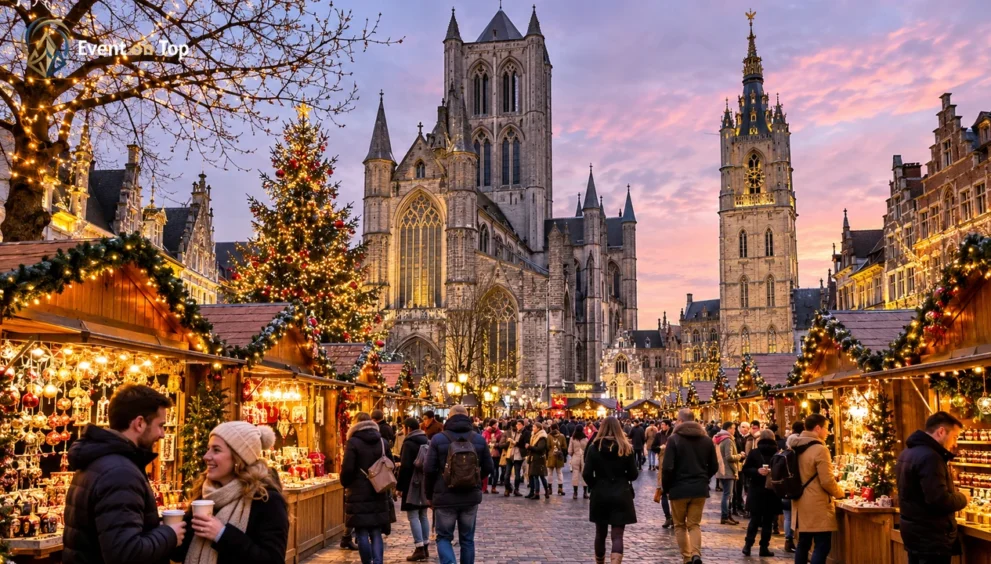
Ghent does Christmas differently from every other Belgian city, and that is exactly why it is worth the trip. There is no single market square to tick off and leave. Instead the Gentse Winterfeesten — the Ghent Winter Festival — spreads more than 150 wooden chalets along a trail through the car-free historic centre, from Sint-Baafsplein past the Belfry to the Korenmarkt, with a 44-metre Ferris wheel, an ice rink under the Stadshal, and a medieval castle turned into a Winter Wonder Castle along the way. It is livelier and a little edgier than Bruges, less crowded than Brussels, and it runs from December 3, 2026 all the way to January 3, 2027 — so it works for a pre-Christmas weekend and for a New Year break alike.
This is the full guide: the confirmed 2026 dates and the hours (with the honest warning that sources disagree on the details), the festival square by square, the three big experiences, what to eat and drink, Ghent beyond the market, a timed one-day plan, and the practicals that will save your trip. Christmas Day 2026 falls on Friday, December 25, and the market is open on the day itself, on reduced hours — so a trip built around the weekend of December 5–6, when everything is running and the crowds are still manageable, gives you the best of it.
Christmas in Ghent 2026 at a Glance
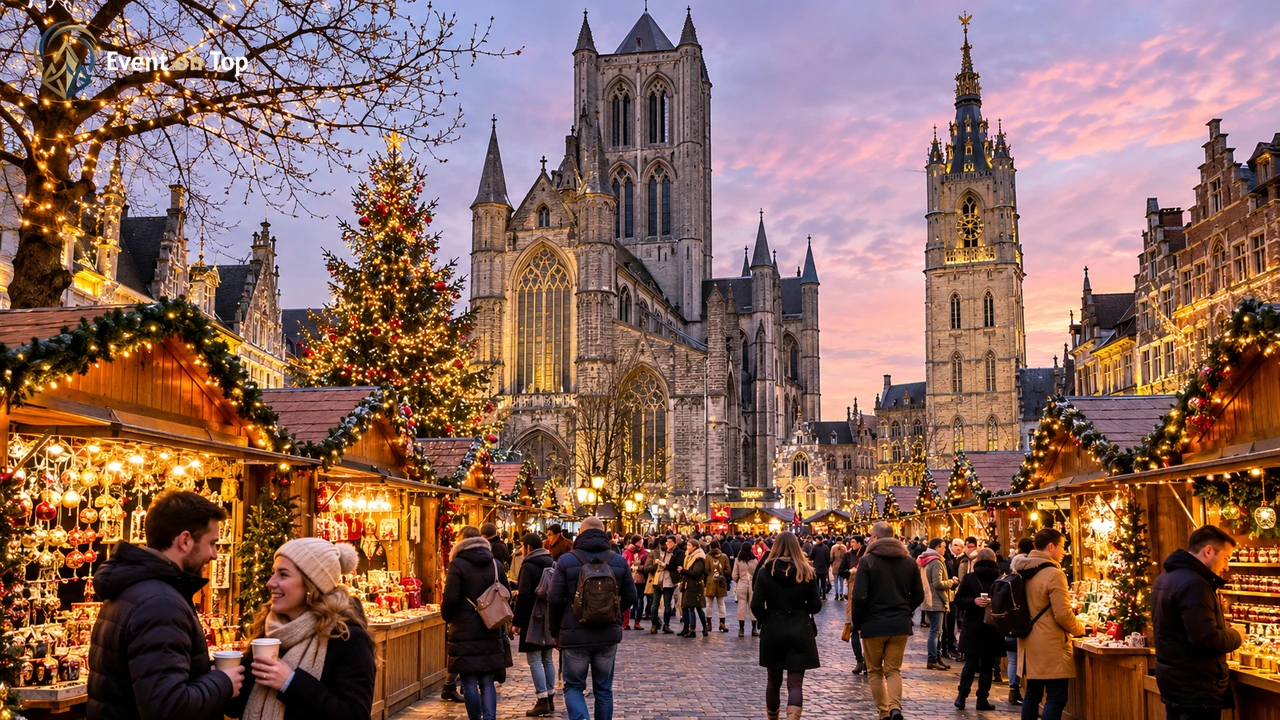
- Gentse Winterfeesten (Ghent Winter Festival): Thu Dec 3, 2026 – Sun Jan 3, 2027. More than 150 wooden chalets across six squares in the historic centre. Free entry.
- Hours (usual pattern): Mon–Thu 12:00–midnight, Fri 12:00–1am, Sat 11:00–1am, Sun 11:00/12:00–midnight; 24 & 31 Dec reduced (11:00–5/6pm); 25 Dec & 1 Jan from 2pm. Sources differ slightly — confirm on the official site before you travel.
- Ferris wheel: the 44-metre Grand Soleil on the Korenmarkt, all festival long.
- Ice rink: under the Stadshal (City Pavilion), Emile Braunplein — proper ice skating is back.
- Winter Wonder Castle: Gravensteen, Fri Dec 4, 2026 – Sun Jan 3, 2027.
- New Year’s Eve: fireworks at the Portus Ganda marina.
- Getting there: Brussels to Ghent is about 35 minutes by train; the historic centre is largely car-free, so the whole festival is a walk.
- Weather: December in Ghent is cold and often damp — pack a waterproof coat and warm layers, and plan on warming up indoors between squares.
The Festival Is a Trail, Not a Square
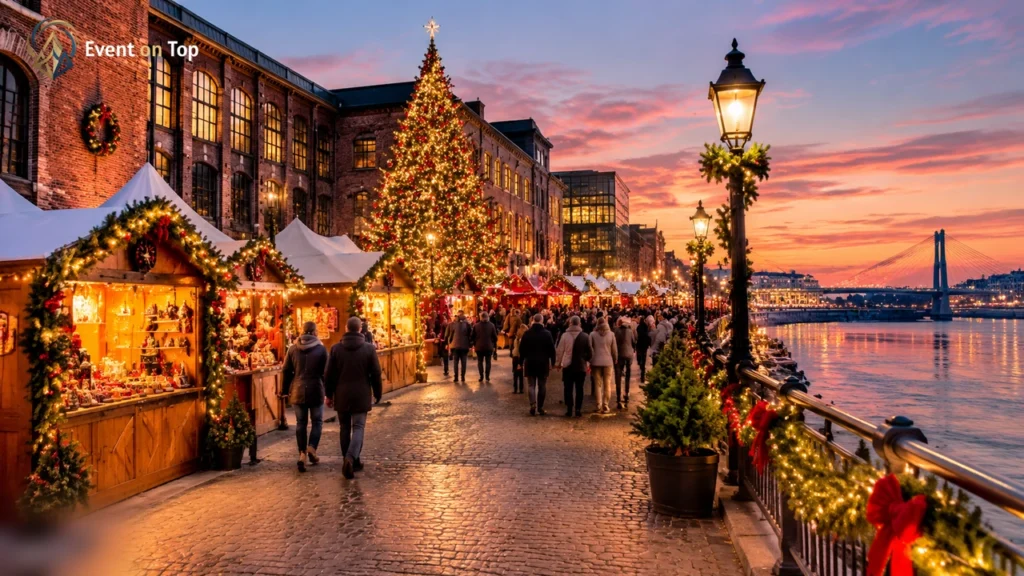
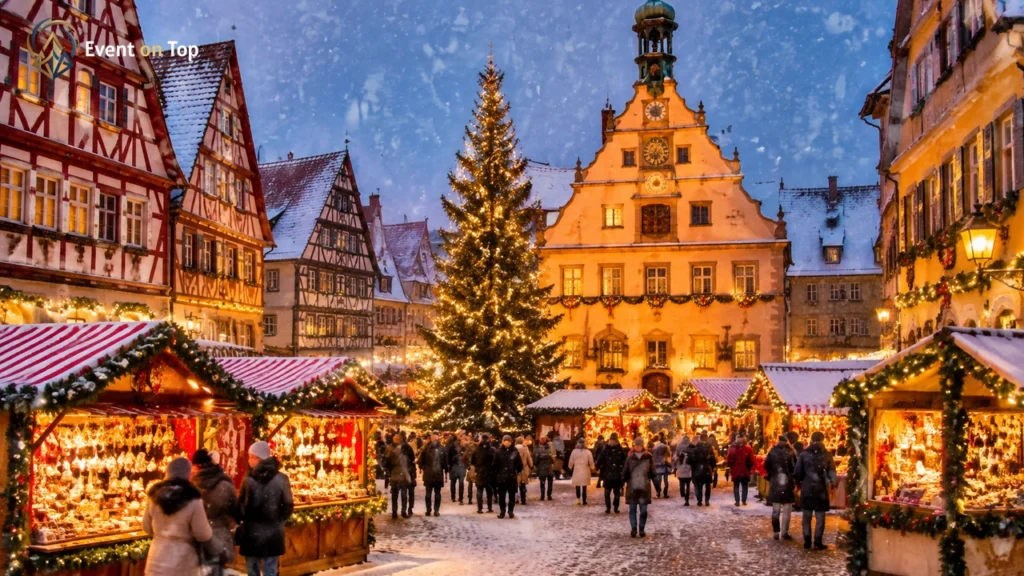
The first thing to understand about Ghent at Christmas is that there is no “the market” in the singular. The Gentse Winterfeesten is a route, and the route is the experience. It starts at Sint-Baafsplein, the grand square framed by St Bavo’s Cathedral, the Belfry and St Nicholas’ Church — the three towers that define Ghent’s skyline — and winds through Botermarkt and Klein Turkije to the Korenmarkt, with stalls, bars and fairground rides the whole way. The chalets are the classic wooden kind, selling handmade gifts, woollen hats and scarves, leather goods, ornaments and local crafts, and because the trail passes the city’s best-known landmarks, you see Ghent properly while you shop. Around 2.5 million people visited in 2024, making it the most visited event in the city’s calendar, and yet the spread-out layout means it never feels like one crush of people the way a single-square market can — except on weekend evenings, when it does. Go on a weekday, or during the day, and the same trail feels almost leisurely.
Each square has its own character. Sint-Baafsplein is the grand entrance, the biggest cluster of chalets with the cathedral and the Belfry behind them and fairground rides outside St Bavo’s. Botermarkt is a shorter stop, with the Moose Bar pouring Christmas beers and mulled wine. The Korenmarkt is the lively heart: the Ferris wheel, the Husky Bar, and the widest choice of food stalls. Goudenleeuwplein has the Sapin Magique, a Christmas-tree carousel with seats shaped like baubles. And Emile Braunplein, under the modern Stadshal, is where the ice rink and the Chez Babette winter bar give the festival its après-ski corner. Walk it end to end and you have done the festival; stop at every square and you have done Ghent.
The Three Big Experiences: Wheel, Rink and Castle
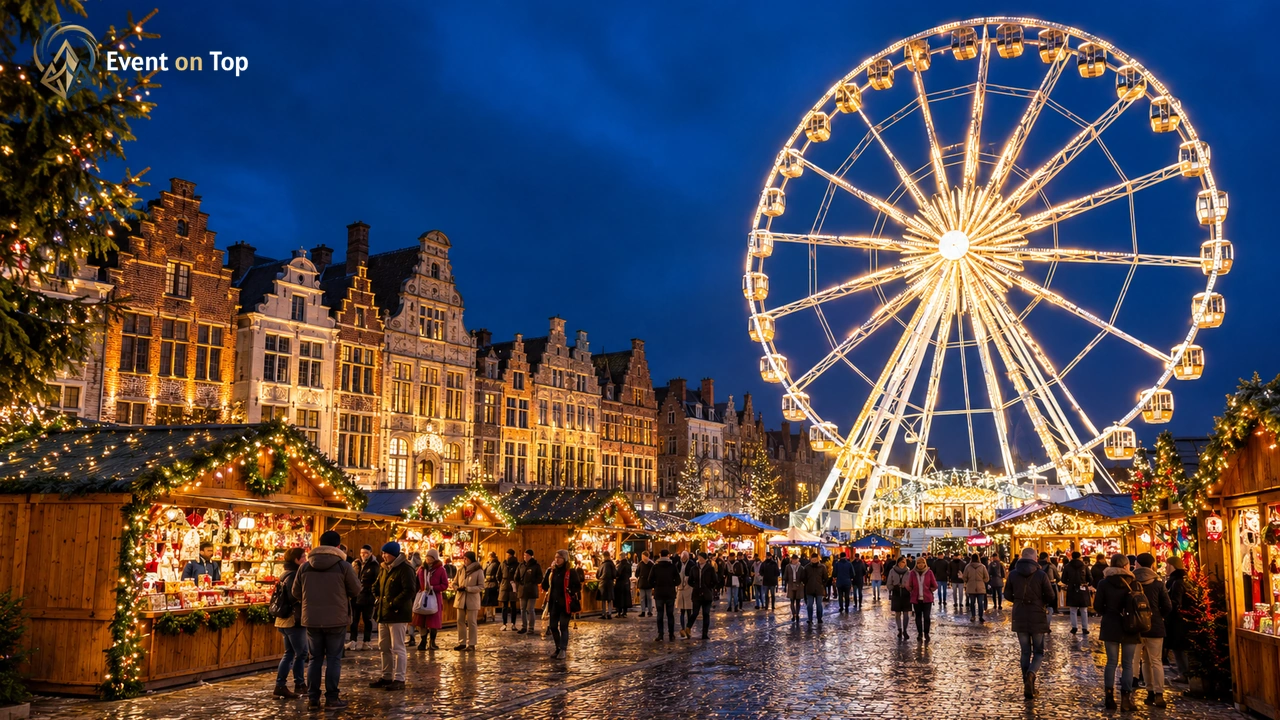
Three things lift Ghent’s festival above a standard market, and all three are worth planning your day around. The first is the Grand Soleil Ferris wheel on the Korenmarkt. At 44 metres it is tall enough to lift you above the rooftops, and from the top you get the view the market was designed around: the illuminated old town, the three towers, and the trail of lights winding between them. Ride it at dusk, when the lights have just come on and the sky is still blue, and go on a weekday if you can — the queue on a Saturday night is the longest in the festival.
The second is the ice rink under the Stadshal on Emile Braunplein. For several years Ghent made do with roller-skating here; proper ice skating has now returned beneath the timber roof of the City Pavilion, and it changes the square completely. It is a real rink, with skate hire on site and the Chez Babette winter bar right beside it, so the pattern writes itself: a few laps, then a hot drink under the lights while the next group takes the ice. It is the most relaxed corner of the festival — the one place where nobody is in a hurry.
The third is the Winter Wonder Castle at Gravensteen, the Castle of the Counts, running from Friday, December 4, 2026 to Sunday, January 3, 2027. Gravensteen is a genuine 12th-century fortress in the middle of the city, all grey stone towers and a moat, and for the festival it is dressed as a winter castle: festive decor, candlelit rooms, and a cosy winter bar inside the keep where you can drink something warm inside medieval walls. Go after dark, when the floodlit towers reflect in the moat, and allow at least an hour. The castle sits just off the market trail, a short walk from the Korenmarkt, so it slots naturally into the afternoon.
What to Eat and Drink at the Market
Belgian Christmas food is the festival’s quiet superpower, and Ghent does it better than most because the city takes food seriously all year. Start with the obvious: a fresh waffle, eaten standing up with powdered sugar and steam coming off it, and a cone of frites with mayonnaise from a stall that has a queue — the queue is the review. Then move on to the warming drinks. Hot chocolate in Belgium is thick, dark and serious, poured by the mug, and the winter bars pour Belgian Christmas beers that are stronger and spicier than the summer lagers — sip, do not gulp. If you see jenever, the Dutch-Belgian gin, offered in small glasses at a spirits stall, try one; it is the old Flemish winter warmer.
Ghent has one sweet that is its own. Cuberdons — cone-shaped, raspberry-flavoured sweets known locally as “neuzekes”, little noses — are a Ghent speciality, sold in paper cones at market stalls and sweet shops across the centre. They are the gift to take home, along with speculoos biscuits and a box of Belgian chocolates. For a proper sit-down meal, leave the stalls behind and walk into Patershol, the medieval quarter of narrow lanes beside Gravensteen, where small restaurants serve Flemish stews, mussels and winter menus in centuries-old houses. The stalls are for grazing; the restaurants are for dinner.

Ghent Beyond the Market: Belfry, St Bavo’s, the Canals and Chocolate
The market is the reason to come in December, but Ghent is the reason to stay a second day. Climb the Belfry first. The 14th-century tower is a UNESCO World Heritage site, and the 366 steps to the top are the best money you will spend in Ghent — go around sunset and the whole festival, the three towers and the river are laid out below you. Then step into St Bavo’s Cathedral, right beside the market on Sint-Baafsplein, to see the Ghent Altarpiece — the Adoration of the Mystic Lamb, one of the most famous paintings in the world, finished in 1432. It is inside the cathedral where the market crowds are outside, which makes it the calmest half-hour of the day.
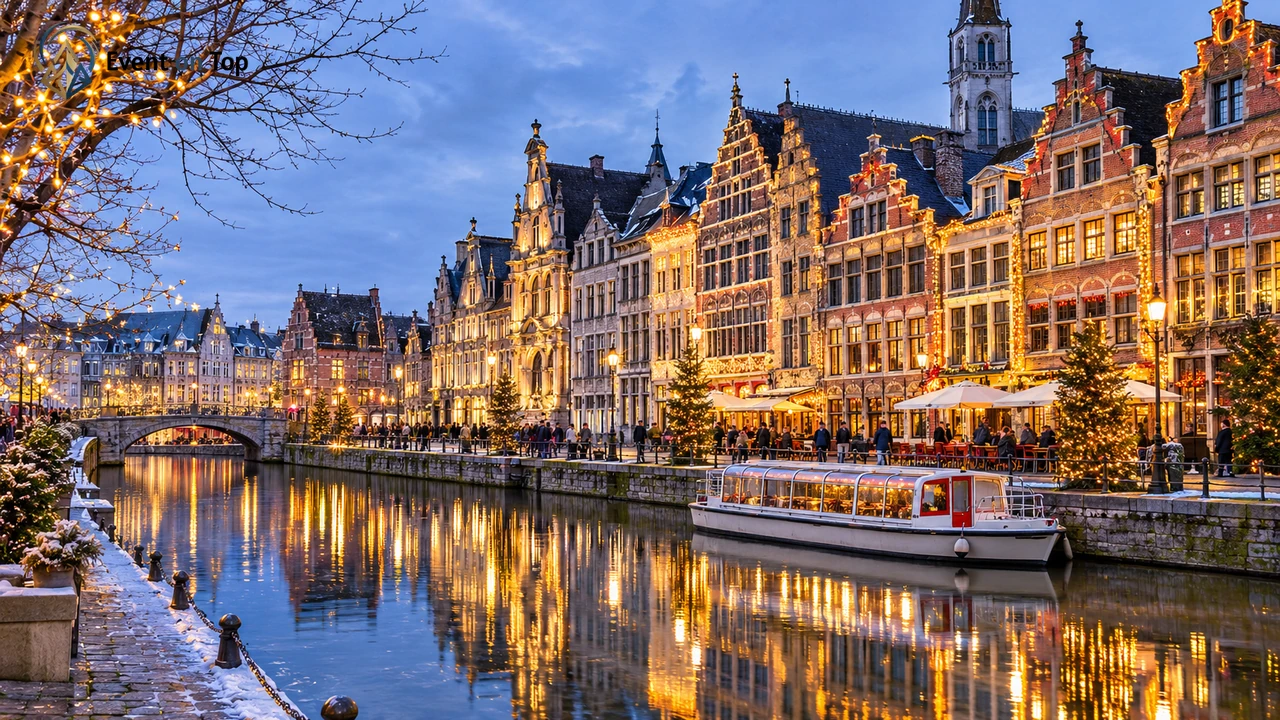
From the cathedral, walk ten minutes to the Graslei and Korenlei, the medieval harbour quays where the old guild houses lean over the River Leie. This is the prettiest corner of Ghent, and at Christmas the gabled houses are strung with lights that reflect in the water. Canal boat trips run through the winter from the quays, and a forty-minute cruise is the easiest way to understand the city. If the weather turns, as it often does, the museums are the fallback: note that most are closed on Mondays, on Christmas Day and on New Year’s Day, so plan around that.
Then go and eat chocolate properly. The Chocolade Ambassade — the Chocolate Embassy — in Patershol brings four expert chocolatiers with contrasting styles together in one historic building, and runs tasting sessions where you learn how the stuff is actually made. It is the single best rainy-afternoon activity in the city, and the pralines you buy there are a better souvenir than anything on a market stall. After dark, follow the city’s permanent light trail: a 3.2-kilometre loop around the centre highlights that runs all year, and which at Christmas, with the market lights added, turns the whole old town into a walk of light. One honest flag: Ghent’s famous triennial Light Festival is not running in 2026 — the next edition has been postponed from 2027 to 2029 — so do not plan your trip around it. The market and the permanent trail are the lights this year, and they are plenty.
A One-Day Plan for Christmas in Ghent
Here is the day that works, timed to the festival’s own rhythm. Arrive by late morning — the train from Brussels takes about 35 minutes, and the walk from Ghent-Sint-Pieters station to the centre is about half an hour, or a short tram ride. Start at Sint-Baafsplein around noon, when the stalls open, and walk the trail downhill toward the Korenmarkt, grazing as you go: a waffle, a hot chocolate, a cone of cuberdons. Climb the Belfry in the early afternoon for the daylight view, then visit St Bavo’s and the Ghent Altarpiece while the light is still good.
At about 3:30pm, walk to Gravensteen for the Winter Wonder Castle, and give it a full hour — the rooms, the winter bar, the moat at dusk. Come back to the Korenmarkt as the lights come on, ride the Ferris wheel at dusk, then skate under the Stadshal or take a drink at the Chez Babette bar. Dinner is in Patershol, in one of the small restaurants in the lanes beside the castle. After dinner, walk the Graslei and the light trail, and finish with a last mulled wine at the Moose Bar on Botermarkt. If you have a second day, spend the morning on a canal boat trip and the Chocolade Ambassade, and use the afternoon for the Winter Forest pop-up at Zebrastraat or a train to Bruges — 25 minutes away — for a second Belgian market in the same trip. Our guides to Christmas in Bruges and Christmas in Brussels cover both, and the best Christmas markets in Europe guide compares all three. For more ice rinks, see our best ice skating rinks guide.

Where to Stay, Getting There and Practicals
Stay in the historic centre if you can — anywhere between Sint-Baafsplein and the Graslei puts the whole festival on foot, and the centre is largely car-free, so the streets are quiet at night once the stalls close. If the centre is booked, the streets around Ghent-Sint-Pieters station are the practical fallback: a tram ride from the market, and an easy start on the morning you leave. Book early for December weekends; the festival’s 2.5 million visitors are not spread evenly, and the weekends closest to Christmas sell out first.
Getting there is simple. Ghent is about 35 minutes by train from Brussels, and direct trains run from Brussels Airport, so it works as a day trip from the capital or as the middle stop on a Belgium run — Brussels, then Ghent, then Bruges, all by train, with no car at all. From London, the Eurostar to Brussels and a change to Ghent is the comfortable route. If you are driving, leave the car at a park-and-ride on the edge of the city: the centre is car-free and the festival closes streets you would otherwise need. Inside the festival, everything is on foot; the whole trail from Sint-Baafsplein to the Korenmarkt is under ten minutes, and the castle is a few minutes more.
A few practicals that matter. The festival is free — there is no entry ticket, and you pay only for the wheel, the rink, the castle and what you eat and drink. The chalets take cards, but carry some cash for the smallest stalls. December days are short: it is dark by about 4:30pm, which is good news, because the festival is at its best after dark and you do not have to wait long for it. Toilets are the usual market problem — use the cafés and the winter bars. And check the official site before you travel: gentsewinterfeesten.be or visit.gent.be carries the confirmed hours for the year, and the ranking guides disagree with each other on the details, especially the Sunday opening time and the Christmas Eve hours.
The Honest Notes
Three things to know before you go, because the guides that only praise the festival do you no favours. First, the crowds. Weekend evenings between 5pm and 8pm are the festival’s busiest hours, and the Korenmarkt and Sint-Baafsplein can feel packed. If you can choose, come on a weekday, or come during the day and stay for the lights — the same trail with half the people. Second, the hours. The guides disagree on whether Sunday stalls open at 11:00 or noon, and on the exact Christmas Eve closing time, because the festival’s own timetable is confirmed close to opening. Treat every hour in this guide as the usual pattern and check the official site on the week you travel. Third, the Light Festival. Ghent’s triennial Light Festival is famous, and some older guides still list it as a reason to visit — it is not running in 2026, and the next edition has been postponed from 2027 to 2029. The permanent light trail and the market lights are what you get, and they are genuinely beautiful, but do not book a trip expecting the festival of light installations.
Christmas in Ghent 2026 — FAQs
When is the Ghent Christmas market in 2026? The Gentse Winterfeesten runs from Thursday, December 3, 2026 to Sunday, January 3, 2027. The stalls are spread across six squares in the historic centre — Sint-Baafsplein, Botermarkt, Klein Turkije, Korenmarkt, Goudenleeuwplein and Emile Braunplein — and entry is free.
What are the opening hours of the Ghent Christmas market? The usual pattern is Monday to Thursday noon to midnight, Friday noon to 1am, Saturday 11am to 1am and Sunday 11am or noon to midnight, with reduced hours on Christmas Eve and New Year’s Eve (about 11am to 5pm) and a 2pm start on Christmas Day and New Year’s Day. The guides disagree on the details, so confirm the year’s hours on gentsewinterfeesten.be or visit.gent.be before you travel.
Is there a Ferris wheel and an ice rink in Ghent at Christmas? Yes, both. The 44-metre Grand Soleil Ferris wheel stands on the Korenmarkt for the whole festival, and the ice rink is under the Stadshal (City Pavilion) on Emile Braunplein, with the Chez Babette winter bar beside it. Both are paid attractions inside the otherwise free festival.
What is the Winter Wonder Castle? It is the Christmas version of Gravensteen, the Castle of the Counts — Ghent’s 12th-century fortress, dressed for the festival from December 4, 2026 to January 3, 2027, with festive decor, candlelit rooms and a winter bar in the keep. Allow at least an hour, and go after dark when the floodlit towers reflect in the moat.
Is Ghent worth visiting at Christmas, and is it better than Bruges or Brussels? Yes, and it depends what you want. Ghent is livelier and less polished than Bruges, with a real city underneath the festival — a university, a food scene, a castle — and it is less crowded than Brussels. If you want the prettiest market, Bruges wins; if you want the biggest, Brussels wins; if you want the most fun day out, Ghent is the pick. All three are under an hour apart by train, so the honest answer is to do two of them.
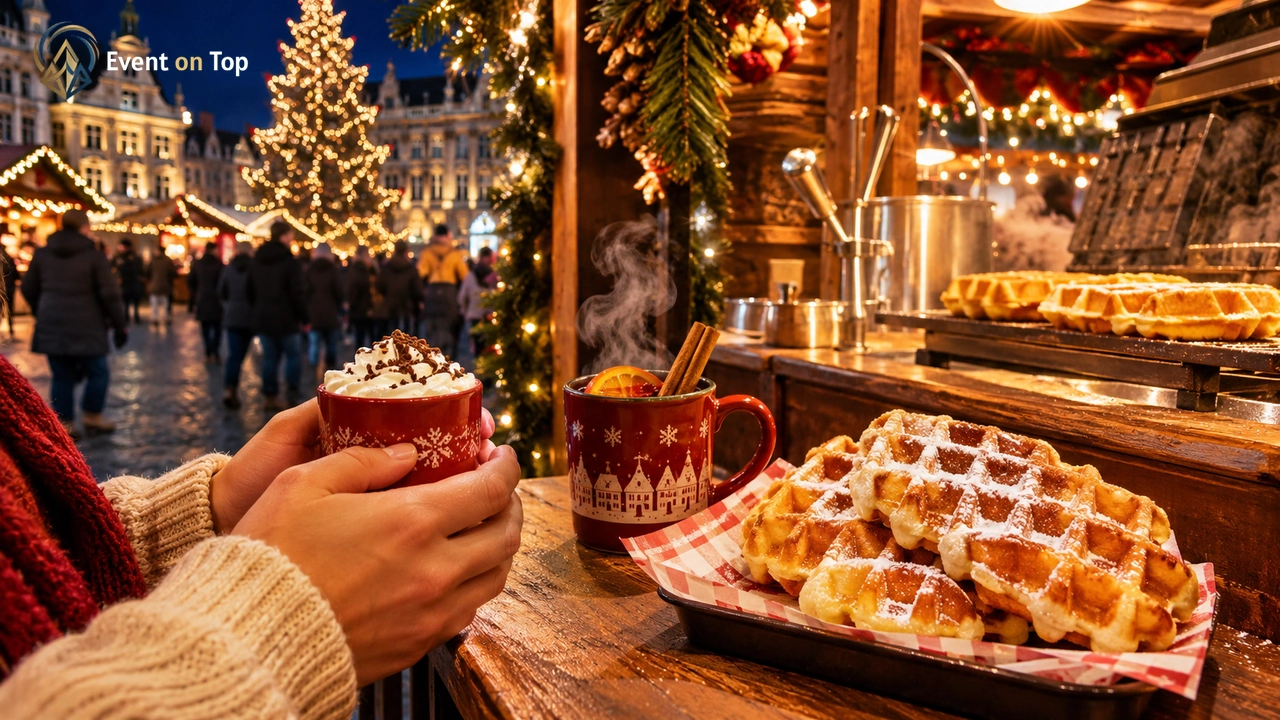
Ghent at Christmas is a city that already knows how to be beautiful, dressed up for a month and lit from the inside. Walk the trail, ride the wheel at dusk, skate under the Stadshal, eat a waffle standing up in the cold, and finish the day in a medieval castle with a hot drink in your hands. That is the whole trip, and it is a good one.