



Christmas in Salzburg 2026: Christkindlmarkt, Turmblasen & the Honest Guide


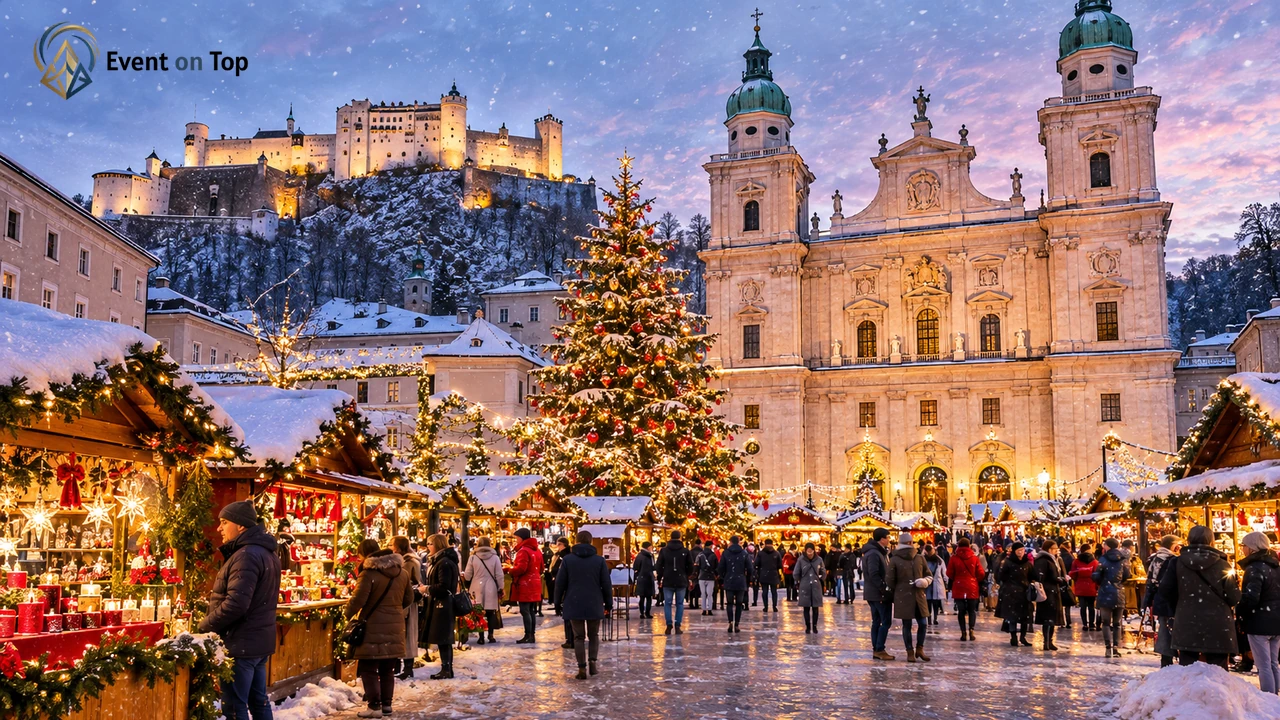
Salzburg does Christmas the way it has done it for centuries — slowly, musically, and in the open air. The Christkindlmarkt fills the two squares on either side of the cathedral, Domplatz and Residenzplatz, with around a hundred wooden stalls, the smell of Glühwein and gingerbread, and the fortress lit up on the hill above. At half past six most evenings, brass players climb the towers and play over the rooftops. On 5 December the Krampus runs through the old town. And on Christmas Eve, the most famous carol in the world was first sung half an hour from here.
This guide is a full city guide, not a market listing: the confirmed 2026 dates and hours for every market, the Turmblasen schedule, what to eat, ice skating on Mozartplatz, Mozart and the fortress in December, day trips to the Silent Night chapel and Hallstatt, and the practical details that actually change a trip — including the tunnel closure that reroutes traffic this winter. Dates come from the market organiser and Salzburg’s tourism listings as reported at the time of writing; anything still unannounced is flagged, not guessed.
Christmas in Salzburg 2026 at a Glance
- Main market: Salzburger Christkindlmarkt, Domplatz and Residenzplatz, Thursday 19 November 2026 to Friday 1 January 2027. Mon–Thu 10:00–20:30, Fri 10:00–21:00, Sat 09:00–21:00, Sun and holidays 09:00–20:30. Free entry. Opening ceremony with the tree lighting on 19 November at 18:00.
- Other markets: Mirabellplatz, 19 November–31 December; Hellbrunner Adventzauber at Hellbrunn Palace, 19 November–24 December; Sternadvent, 19 November 2026–6 January 2027; the Fortress Advent in the Hohensalzburg courtyard, weekends 27 November–20 December.
- Turmblasen: brass music from the towers around Residenzplatz, 19 November–23 December, most evenings at 18:30, Wednesdays at 18:00. The Christkind appears on Advent Sundays at 16:00.
- Krampus: the Krampus run through the old town is listed for Friday 5 December 2026; reported times differ between sources, so check the week before you go.
- Ice skating: Ice Magic on Mozartplatz, from 12 November 2026 to 31 January 2027, daily 10:00–22:00. Adults €6.50, children €4.00 for a 45-minute session.
- Silent Night: the carol was first performed on Christmas Eve 1818 in Oberndorf, about 30 minutes from Salzburg — an easy half-day trip.
- Getting around: the Neutor tunnel has been closed to cars, motorbikes and buses since 14 September 2026, probably until spring 2027, so driving in the old town is rerouted. Public transport is free on Advent Saturdays.
- Weather: December days average around 2–5°C, nights around −2°C. Snow is possible but never guaranteed, and the light goes early — sunset is before 16:30.
The Christkindlmarkt on Domplatz & Residenzplatz
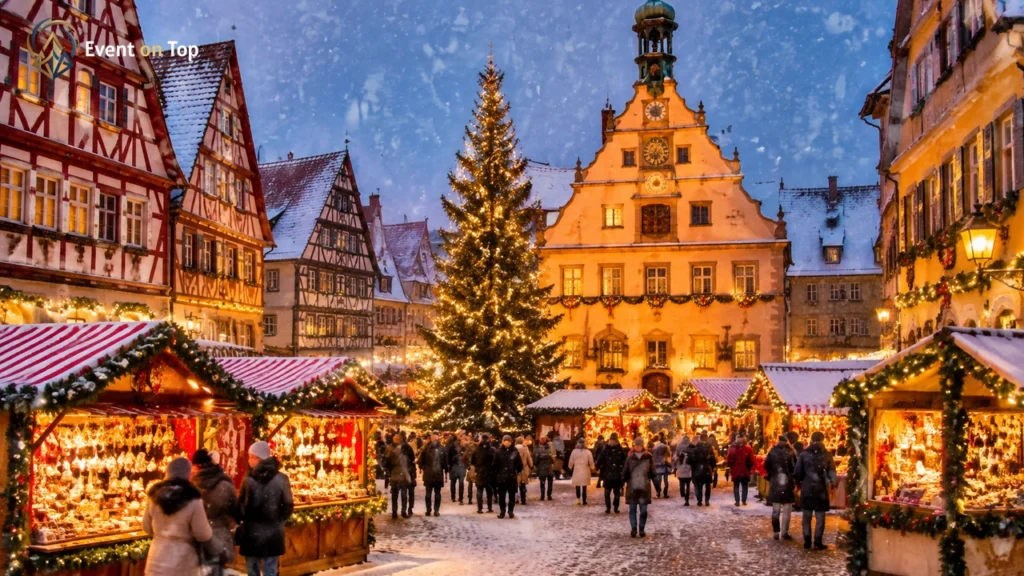
The main market is the reason most people come, and the setting is the reason it works. The stalls fill the two squares on either side of Salzburg Cathedral — Domplatz facing the cathedral’s Baroque front, Residenzplatz ringing the fountain in front of the Residenz — with the arches between them strung with lights and the Hohensalzburg Fortress lit above the rooftops. The market’s roots go back to the 15th century, making it one of the oldest in the German-speaking world, and it has stood in its current form on these squares since 1974. Unlike most European markets it runs past Christmas and into the new year, closing on 1 January, so it is still there for New Year’s Eve.
There are around 100 stalls: hand-painted baubles, wooden toys, woollen hats and scarves, beeswax candles, nativity figures, and the local crafts Salzburg is known for. Food stalls sell Glühwein, Lebkuchen gingerbread, roasted chestnuts, Bosna sausage and Kaiserschmarrn, and the drink to know is the market’s own — hot, spiced, and sold in mugs you can keep or return for the deposit. A stage near the market hosts choirs and live performances through December, and on Advent Sundays at 16:00 the Christkind — the Christ Child, played by a local girl in white and gold with angels — appears to the children. Entry is free, and the market is at its best after dark, when the lights come on and the brass starts. Go on a weekday evening: December weekends are the busiest days of the year in the old town, and Saturdays are wall-to-wall. One honest flag: stall food is market food — warming and fun, but the best dinners in Salzburg are in the side streets off the squares and across the river, not at the stalls. Eat at the market, dine in the old town.
Turmblasen, the Christkind & Krampus
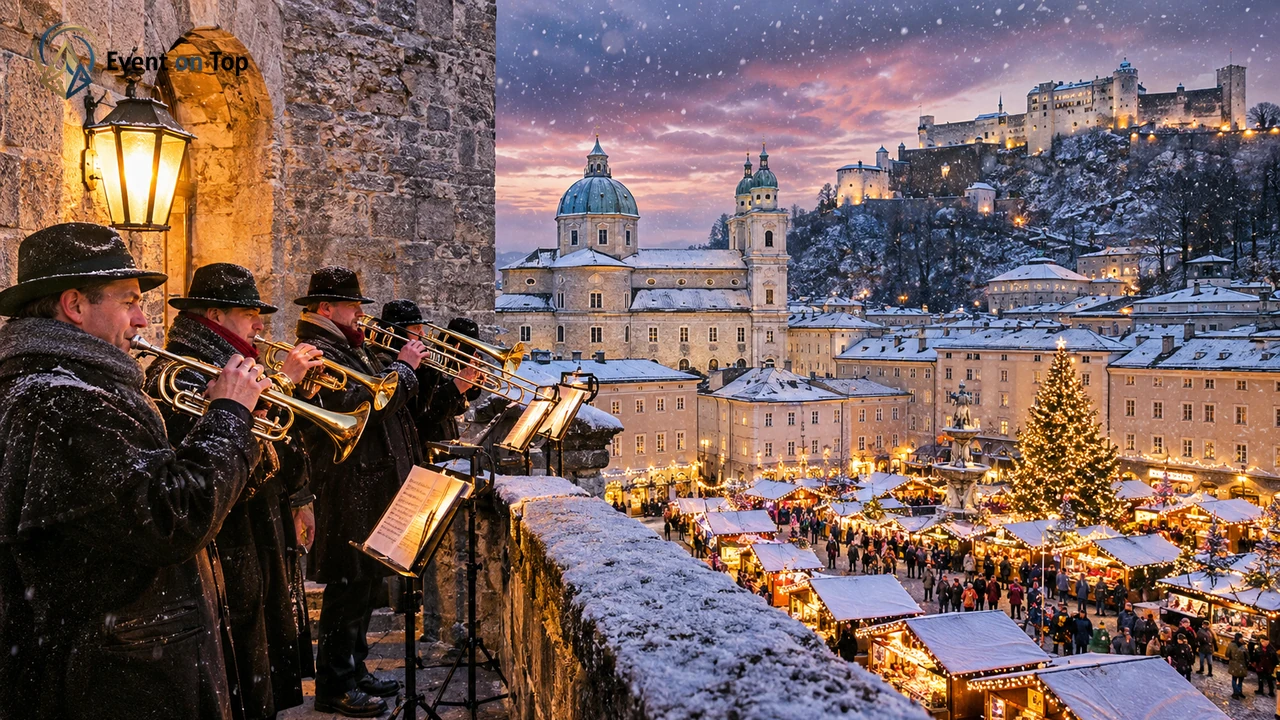
If the market is Salzburg’s Christmas, the Turmblasen is its sound. Every Advent, brass groups from across the province climb to three high points around Residenzplatz — the terrace above the cathedral arches, the terrace of the Christmas Museum and the Glockenspiel tower — and play traditional Advent music down over the market. It is free, it lasts about half an hour, and it is the single best thing in the city that costs nothing.
The 2026 programme runs from the opening on 19 November to 23 December. The traditional Turmblasen plays on Saturdays 21 and 28 November and 5, 12 and 19 December, and on Thursdays 19 and 26 November and 3, 10 and 17 December, each at 18:30. The Junges Turmblasen — young brass players — plays on Wednesdays 25 November and 2, 9, 16 and 23 December at 18:00. On Tuesdays the market runs a public sing-along from 18:00 to 20:00, where anyone can join the choir. The schedule varies by week, so check the Christkindlmarkt or Salzburg tourism event calendar on the day — but the rule of thumb is simple: be on Residenzplatz at 18:30 and look up.
The other date to know is 5 December. Krampus is the horned, fur-covered companion of St Nicholas in Alpine folklore, and the days around Krampus Night — the eve of St Nicholas Day on 6 December — are when the Krampus and Perchten groups come out. The old-town Krampus run is listed for Friday 5 December 2026, with Nikolo and the children’s Krampus following on 6 December in the afternoon, and a Perchten run on 21 December. Two cautions: reported times for the 5 December run differ between sources, so confirm the time the week before; and the Krampus runs are loud, crowded and genuinely frightening for small children — the children’s version on the 6th is the family-friendly one. For the wider European picture, pair this with our guides to the best Christmas markets in Europe and to Christmas in Vienna and Christmas in Prague.
The Other Markets: Mirabellplatz, Hellbrunn, Sternadvent & the Fortress
The Domplatz market is the big one, but four smaller markets are worth the short walk or the short bus ride, and they are where the city actually feels local. Mirabellplatz, in front of Mirabell Palace across the Salzach, runs from 19 November to 31 December 2026 — smaller than the main market, in front of the palace and its gardens, and the best first stop if you arrive in the evening, since it is a twelve-minute walk from the cathedral and far less crowded.
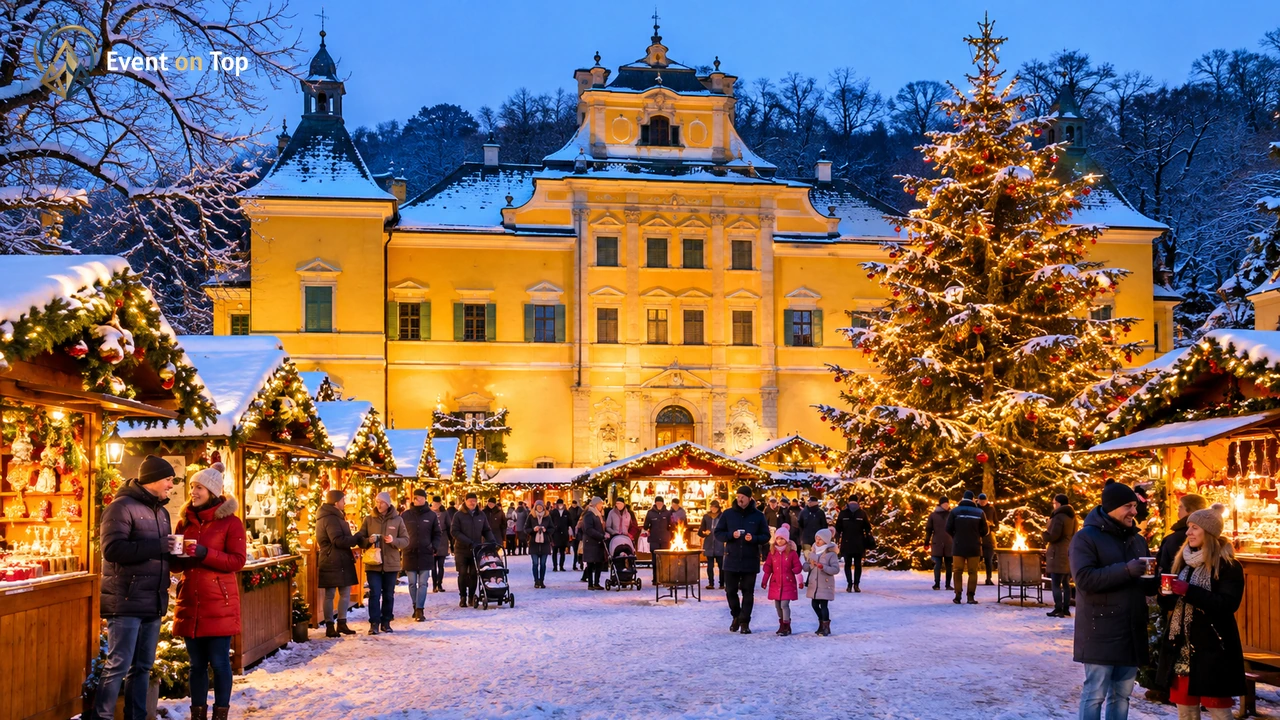
Hellbrunner Adventzauber, in the courtyard of Hellbrunn Palace south of the city, runs from 19 November to 24 December and is the one locals name when you push them past the obvious. The palace facade glows behind rows of stalls and a giant tree, there is a children’s Christmas world with activities and a petting zoo, and the whole thing feels like a village fair rather than a city market. Sternadvent, the star Advent market, runs from 19 November 2026 to 6 January 2027 — the longest of the lot, and the one still open after Christmas, when the others have closed. The Fortress Advent is the one people photograph: wooden huts in the courtyard of Hohensalzburg Fortress with the whole city laid out below, running Friday to Sunday only, 11:00 to 19:00, from 27 November to 20 December 2026 (plus Monday 7 and Tuesday 8 December). It closes earliest, so do it in the first three weekends. All of them are free to enter; you pay only for what you eat, drink or buy.
What to Eat & Drink: Glühwein, Lebkuchen & the Mozartkugel
Austrian Christmas food is the part of the season most visitors underrate, and the market is the easy way in. Start with Glühwein — red wine warmed with cinnamon, cloves and orange, sold in mugs at every food stall, with a non-alcoholic punch for children and drivers. Then Lebkuchen, the spiced gingerbread that comes in hearts, stars and hand-decorated slabs, and Maroni, the roasted chestnuts sold by the bag from street vendors all over the old town. Bosna is the local sausage — a grilled bratwurst in a white roll with mustard, onions and curry powder — and Kaiserschmarrn, the torn-up caramelised pancake with plum compote, is the sweet to sit down for.
The sweet to take home is the Mozartkugel: the marzipan, pistachio and nougat chocolate ball invented in Salzburg in 1890, sold everywhere from market stalls to the original Fürst shop on Brodgasse. The deeper tradition is the Christmas Eve table — carp, or a meatless supper, eaten on 24 December — but that is a family meal at home, not a market one. For the wider food picture, the city’s restaurants serve Christmas menus through December, so book a Christmas Eve dinner well ahead: 24 December is the main celebration in Austria, and restaurants are heavily booked. And one practical note: the market mugs carry a deposit — keep one as a souvenir, or return it for the money back.
Ice Skating & Winter in the City
Salzburg’s winter is a skating winter, and the rink is right in the old town. Ice Magic on Mozartplatz — a few steps from the market, next to the Mozart monument that has stood there since 1842 — runs from 12 November 2026 to 31 January 2027, daily 10:00 to 22:00. Adults pay €6.50 and children €4.00 for a 45-minute session, skate hire is available, and there are penguin and bear supports for children and anyone who is not confident on the ice. There is a punch stand on the square, so you can decide on the day whether to skate or just watch with a warm drink.
The second rink is out in the Volksgarten, where the Eiszauber follows a winding track through the park by the Red Bull Arena — open late, and at its best in the dark when the lights are on. Beyond the rinks, the city itself is the winter activity. December is one of the best months to walk the old town: the crowds are thinner than in summer, the light is low and golden for an hour in the afternoon, and the Christmas lights come on early. Winterfest, the contemporary circus festival in the Volksgarten, runs from late November into early January with evening shows of acrobatics, juggling and tightrope — book ahead. And if the weather turns, the Christmas Museum on Mozartplatz — a year-round museum of antique ornaments and historic Christmas pieces — is the warm indoor break on a cold afternoon.
Beyond the Market: Mozart, the Fortress & the Old Town in December
Mozart is the other half of a Salzburg Christmas, and the city never lets you forget it. He was born here in 1756, in the yellow house on Getreidegasse, and the birthplace museum is a short walk from the market — go in the morning, while the light lasts, because the old town lanes are narrow and the light goes early. Concerts of his music run all through Advent, including in the baroque Marble Hall of Mirabell Palace, and they are worth booking: a Mozart concert in the city where he was born is the one souvenir that does not fit in a suitcase.
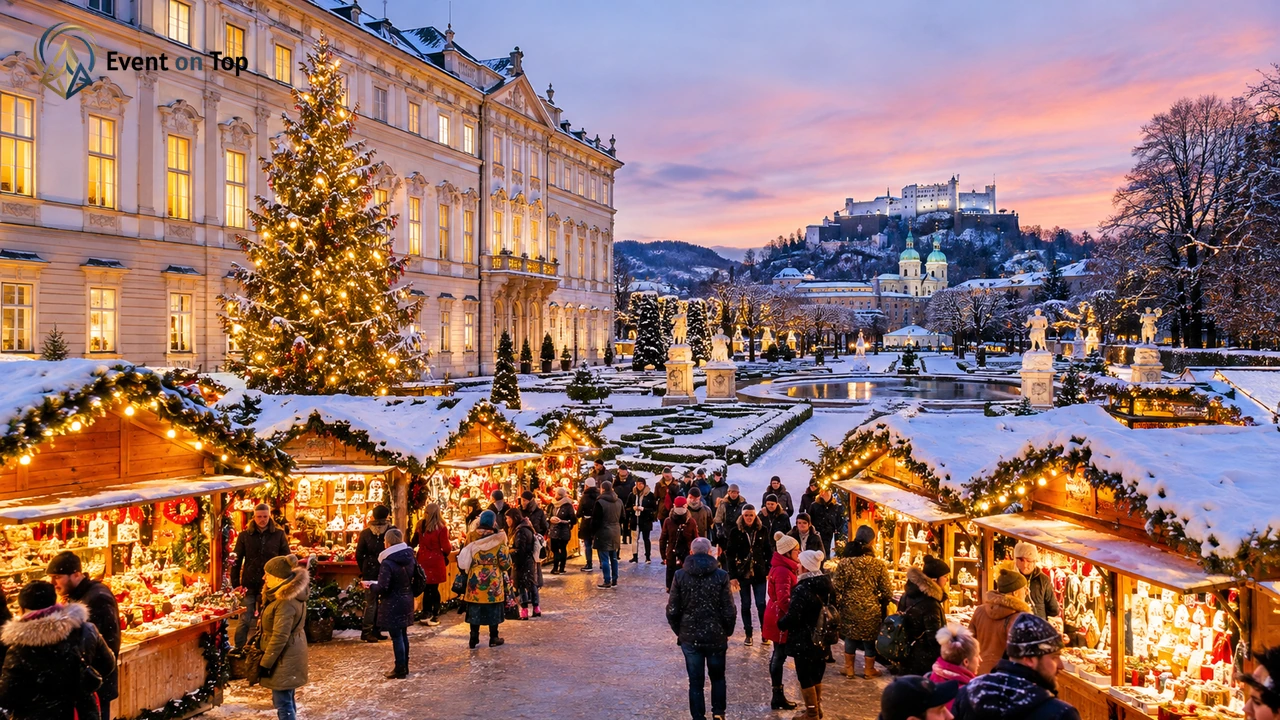
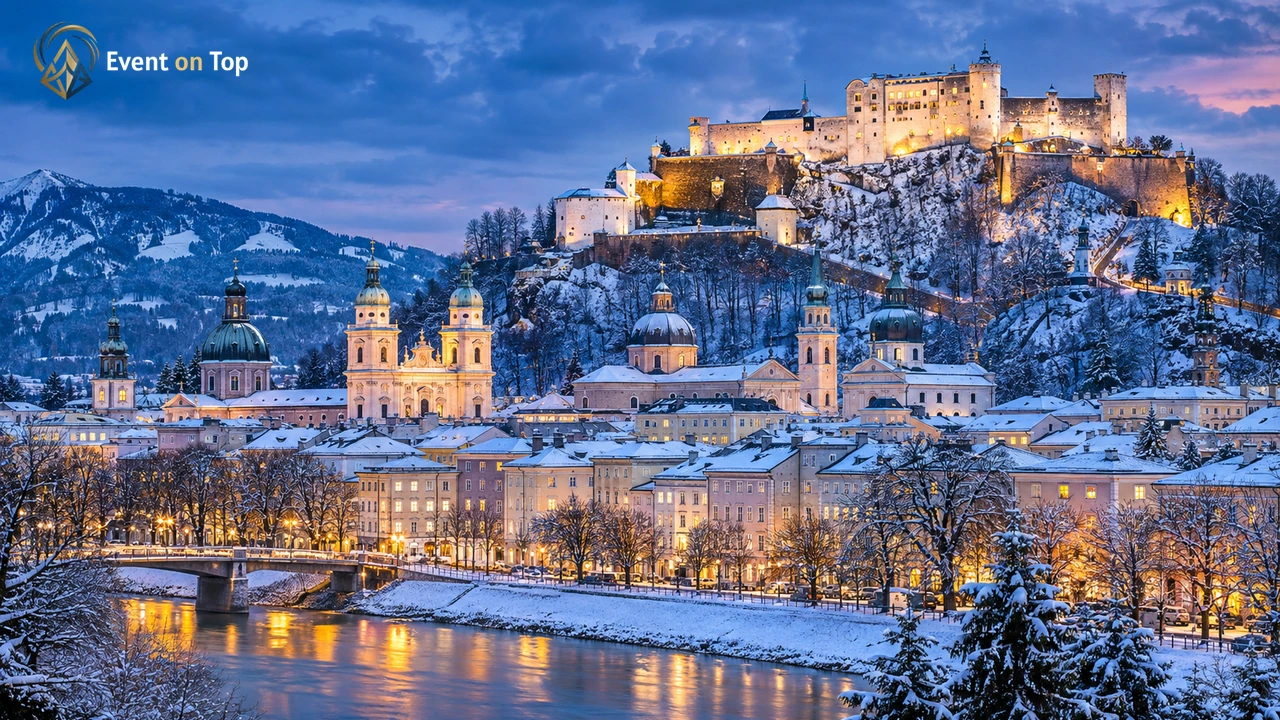
The fortress is the other landmark to do properly. Hohensalzburg, the castle on the hill above the old town, is open all year — from October to December, daily 09:30 to 17:00 — and the funicular from Festungsgasse takes two minutes. Go for the view at dusk, when the market lights come on below and the Alps turn pink behind the city, and stay for the fortress museums and the Marionette Theatre if the evening is free. From the fortress, the walk back through the old town is the route the market crowds never take: down through the lanes to Getreidegasse, then across the Salzach to the Mirabell Gardens, which are quieter in December and lovely in the snow. Many museums run reduced hours over Christmas and New Year, and some close on 25 and 26 December, so check each one before you build a day around it.
Day Trips: Oberndorf, Hallstatt & Munich
Three day trips define a Salzburg winter, and the first is the most Christmassy of all. Oberndorf, about half an hour from Salzburg on the German border, is where “Silent Night” was first performed — written by Joseph Mohr and Franz Xaver Gruber in 1818 and sung for the first time on Christmas Eve in the Church of St Nikola. The original church is gone, damaged beyond repair in 1906, but a memorial chapel stands on the site with a small museum, and a little Christmas market runs there from late November until just before Christmas, typically Thursday to Sunday. It takes the best part of a morning by train, so do it once you have seen the city’s own markets.
The second trip is Hallstatt, the lakeside village that looks like a Christmas card and photographs like one — about two hours by train and bus, and best done as a half-day trip with an early start, because the village is small and the crowds arrive by midday. The third is Munich, ninety minutes by train, with its own famous markets at Marienplatz and Tollwood — close enough to do in a day, and the easiest way to add a second country’s Christmas to the same trip. For the Munich picture, see our guide to Christmas in Munich, and for the wider New Year picture, our guide to the best New Year’s Eve events in the world.
Practical Tips: Weather, Transport & Getting There
Salzburg in December is properly cold: daytime highs around 2–5°C, nights down to −2°C, with damp air and wind off the river making it feel colder. Snow is possible but never guaranteed, so pack waterproof boots with grip, thermal layers, a warm hat and gloves, and a waterproof outer layer. The days are short — sunset is before 16:30 — so treat the fortress, the museums and the day trips as daytime activities, and the market, the rinks and the lights as the evening.
Getting there is easy: Salzburg’s airport is a short bus ride from the centre, and the main station is a fifteen-minute walk from the old town. The centre is compact and walkable — the old town, the fortress and Mirabellplatz are all within a half-hour walk of each other — and buses cover the rest. Two things that change a trip this year. First, the Neutor tunnel has been closed to cars, motorbikes and buses since 14 September 2026, probably until spring 2027, so driving into the old town is rerouted — if you are arriving by car, park outside the centre and walk or take the bus in. Second, public transport is free on Advent Saturdays, by city decision, which makes the bus to Hellbrunn free on the busiest shopping days. The Salzburg Card covers public transport and entry to the main attractions, but it explicitly excludes the S-Bahn local railways — check before you use it for a day trip. Finally, the closures: Christmas Eve, 24 December, is the main celebration, and the market closes early at 15:00; Christmas Day and Boxing Day, 25 and 26 December, the market runs 11:00 to 18:00; New Year’s Day, 1 January, the market’s last day, runs 11:00 to 18:00. The days between — 27 to 30 December — run on normal hours, and the market becomes a New Year market from 27 December, with lucky charms for the year ahead, so the week between Christmas and New Year is the sweet spot: the city is open, the market is on, and the crowds are thinner than the weekend before Christmas.

FAQs: Christmas in Salzburg 2026
When is the Salzburg Christmas market in 2026?
The main market, the Salzburger Christkindlmarkt on Domplatz and Residenzplatz, runs from Thursday 19 November 2026 to Friday 1 January 2027. Regular hours are Monday to Thursday 10:00–20:30, Friday 10:00–21:00, Saturday 09:00–21:00, and Sundays and holidays 09:00–20:30. Christmas Eve it closes at 15:00; Christmas Day, Boxing Day and New Year’s Day it runs 11:00–18:00. Entry is free.
What is the Turmblasen, and when can I hear it?
The Turmblasen is the tradition of brass groups playing Advent music from the towers around Residenzplatz — the terrace above the cathedral arches, the Christmas Museum terrace and the Glockenspiel tower. In 2026 it runs from 19 November to 23 December: traditional Turmblasen on Thursdays and Saturdays at 18:30, and the young players’ Junges Turmblasen on Wednesdays at 18:00. It is free, and the schedule varies by week, so check the day’s programme.
Are there other Christmas markets in Salzburg?
Yes — four more. Mirabellplatz runs 19 November–31 December; Hellbrunner Adventzauber at Hellbrunn Palace runs 19 November–24 December; Sternadvent runs 19 November 2026–6 January 2027, the longest of the lot; and the Fortress Advent in the Hohensalzburg courtyard runs Friday to Sunday only, 27 November–20 December. All are free to enter.
Is there ice skating in Salzburg at Christmas?
Yes — Ice Magic on Mozartplatz, a few steps from the main market, runs from 12 November 2026 to 31 January 2027, daily 10:00–22:00. Adults pay €6.50 and children €4.00 for a 45-minute session, with skate hire and penguin supports for beginners. There is also the Eiszauber ice track in the Volksgarten by the Red Bull Arena.
Can I visit where Silent Night was written?
Yes. “Silent Night” was first performed on Christmas Eve 1818 in Oberndorf, about 30 minutes from Salzburg by train. The original church is gone, but a memorial chapel stands on the site with a small museum, and a little Christmas market runs there from late November until just before Christmas, typically Thursday to Sunday. It is an easy half-day trip once you have seen Salzburg’s own markets.