



Christmas in Lapland 2026: Santa Claus Village, Northern Lights & the Honest Guide

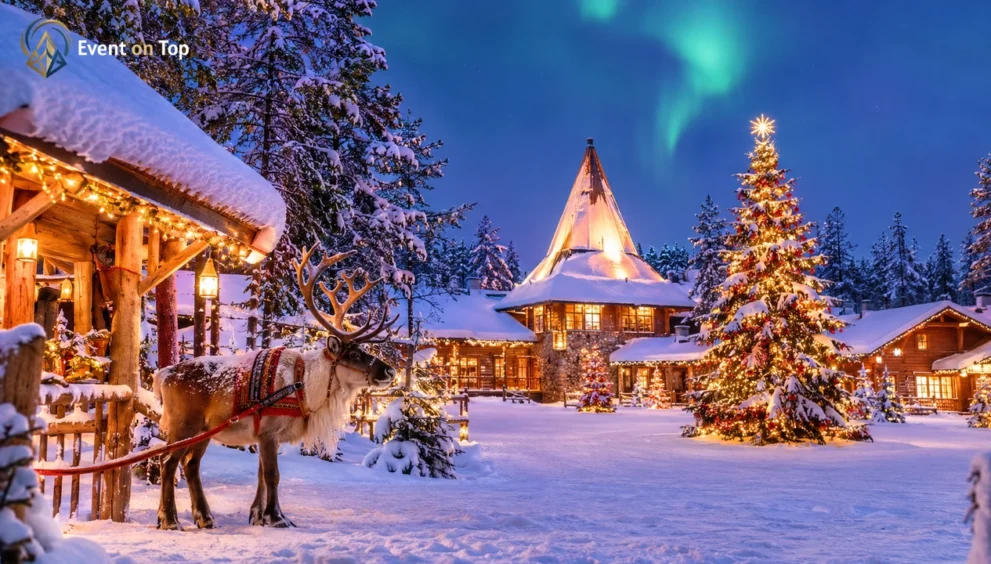
Lapland is the one Christmas destination that does not have to pretend. In Rovaniemi, the capital of Finnish Lapland, the snow is real, the daylight in December lasts about two and a half hours, the temperature sits between minus 10 and minus 20 degrees, and Santa Claus has an official address on the Arctic Circle where you can meet him every day of the year. This is not a market with a Santa grotto bolted on. It is a whole region — Rovaniemi, Levi, Ylläs and Saariselkä — built around one idea: Christmas as a place, not a weekend.
The guides already ranking for this topic mostly cover Rovaniemi alone, or sell a single tour. This guide is a full Lapland guide instead. It starts at Santa Claus Village, covers the underground SantaPark and the ice attractions, explains the Northern Lights honestly — including the fact that 2026-27 is a solar maximum, which is genuinely good news — then goes beyond Rovaniemi to Levi, Ylläs and the glass igloos of Saariselkä, and finishes with a realistic four-day plan and the honest notes that will save your trip.
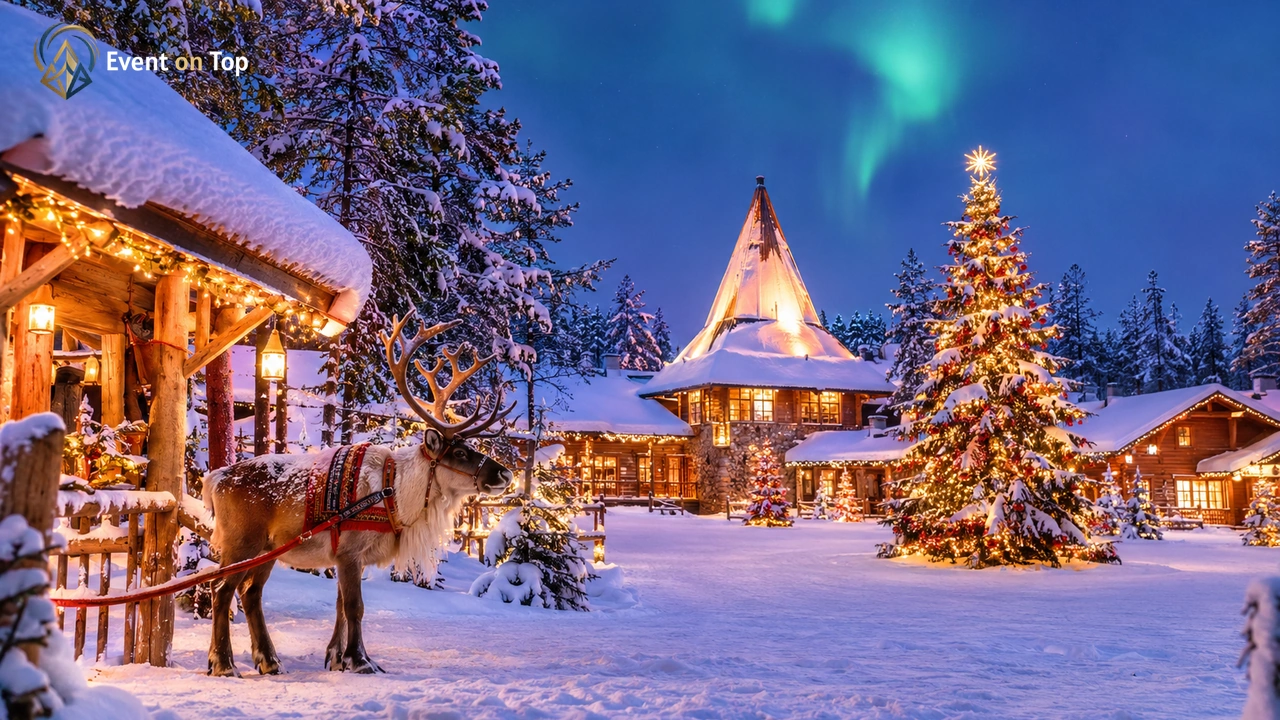
Santa Claus Village: the Heart of Christmas in Lapland
Start here, because Santa Claus Village is the reason the world comes to Lapland in December. The village sits directly on the Arctic Circle, about 8 kilometres north of Rovaniemi city centre, and it is open every day of the year with free entry. You cross a painted Arctic Circle line in the main square, and that small step is the photo most visitors remember. Rovaniemi calls itself the Official Hometown of Santa Claus, and the village is the address that backs the claim up: Santa’s Office, the Main Post Office, reindeer and husky yards, shops and restaurants, all in one snowy square.
Meeting Santa is free. Santa sees visitors at his office every day of the year, and in the peak Christmas season the office runs long hours: 8 a.m. to 8 p.m. from 30 November 2026 to 3 January 2027. You cannot use your own camera in the office — the official photo and video packages are the paid part, usually around 40 to 55 euros — so budget for that if the photo matters to you. Across the square, the Santa Claus Main Post Office handles around half a million letters a year from children and adults all over the world, and you can post a card from there with its own Arctic Circle postmark. In the Christmas season it opens 9 a.m. to 8 p.m. from 1 December 2026 to 6 January 2027.
Two dates anchor the season. Rovaniemi switches its tree and lights on at Lordi’s Square on 6 November 2026, from 5 p.m. to 7 p.m., and the Countdown to Christmas event follows at Santa Claus Village on Saturday 7 November, from 6 p.m. to 6:30 p.m. At the other end, Santa sets off on his journey from the village on 23 December — the exact time for 2026 is announced closer to the day, so check the village’s own listings before you plan around it. Allow two and a half to three hours at the village in the morning, then spend the rest of the day on a safari in the surrounding forest: the village is the ceremony, the forest is the experience.
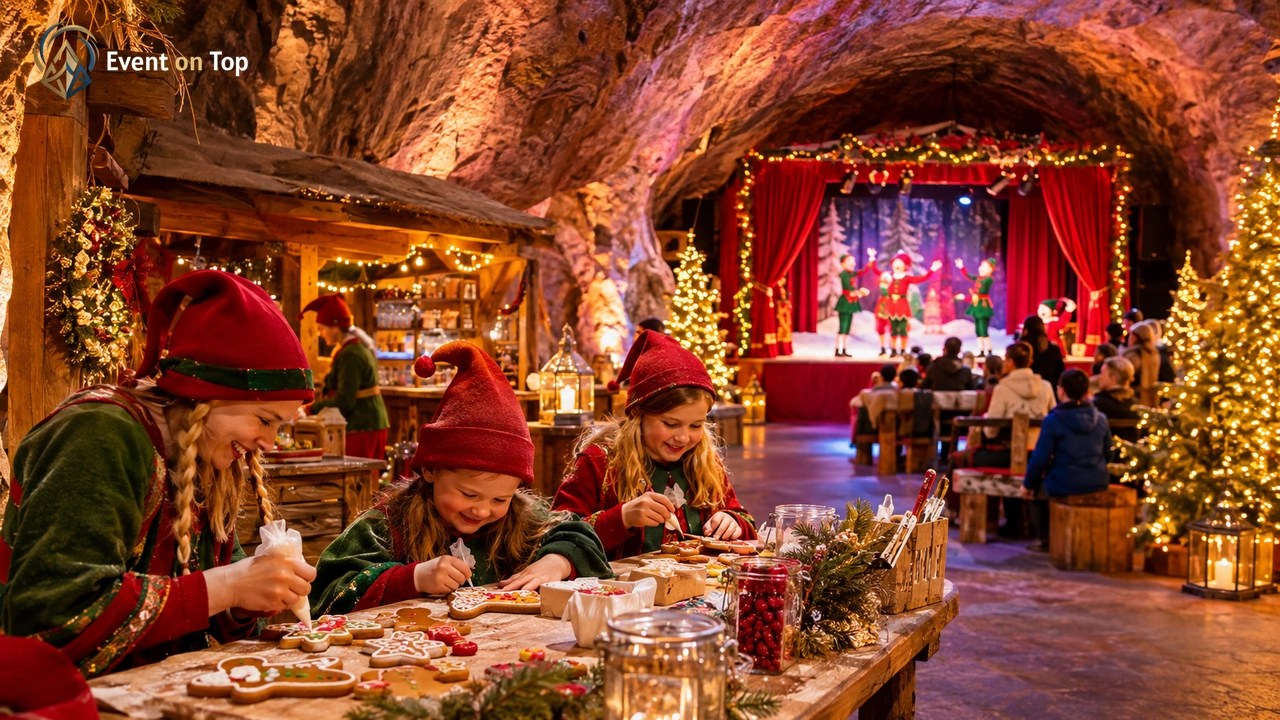
SantaPark and Snowman World: the Two Seasonal Extras
SantaPark is the part of Rovaniemi Christmas that most first-timers miss, and it is the best bad-weather plan in Lapland. Built inside a cavern near the airport, it describes itself as the world’s only underground Christmas theme park: children graduate from Elf School, roll and decorate gingerbread in Mrs Gingerbread’s Bakery, watch the Elf Show, see the workshop and ride the Magic Train, and there is a Santa of its own. Its winter season runs from 31 October 2026 to 23 January 2027. Tickets start from about 42 to 49 euros for adults depending on where you book, with children’s tickets lower — confirm the current price on SantaPark’s own site before you go, because listings disagree by a few euros.
Snowman World is the village’s own ice-and-snow activity park, and it opens for the season on 6 December 2026, weather permitting, running to 6 January 2027 from 10 a.m. to 8 p.m. Expect ice slides and snow activities right beside the village, which makes it the easiest add-on to a Santa Claus Village morning — no transfer, no extra planning. A third ice attraction opens a week later: the Arctic SnowHotel near Rovaniemi starts visits on 15 December 2026, daily from 10 a.m. to 8 p.m. until 31 March, with snow suites, an ice restaurant where dinner is served by candlelight on tables of ice, and an ice bar. Further west, Lapland Hotels SnowVillage opens on 25 December 2026 and runs to 4 April 2027.
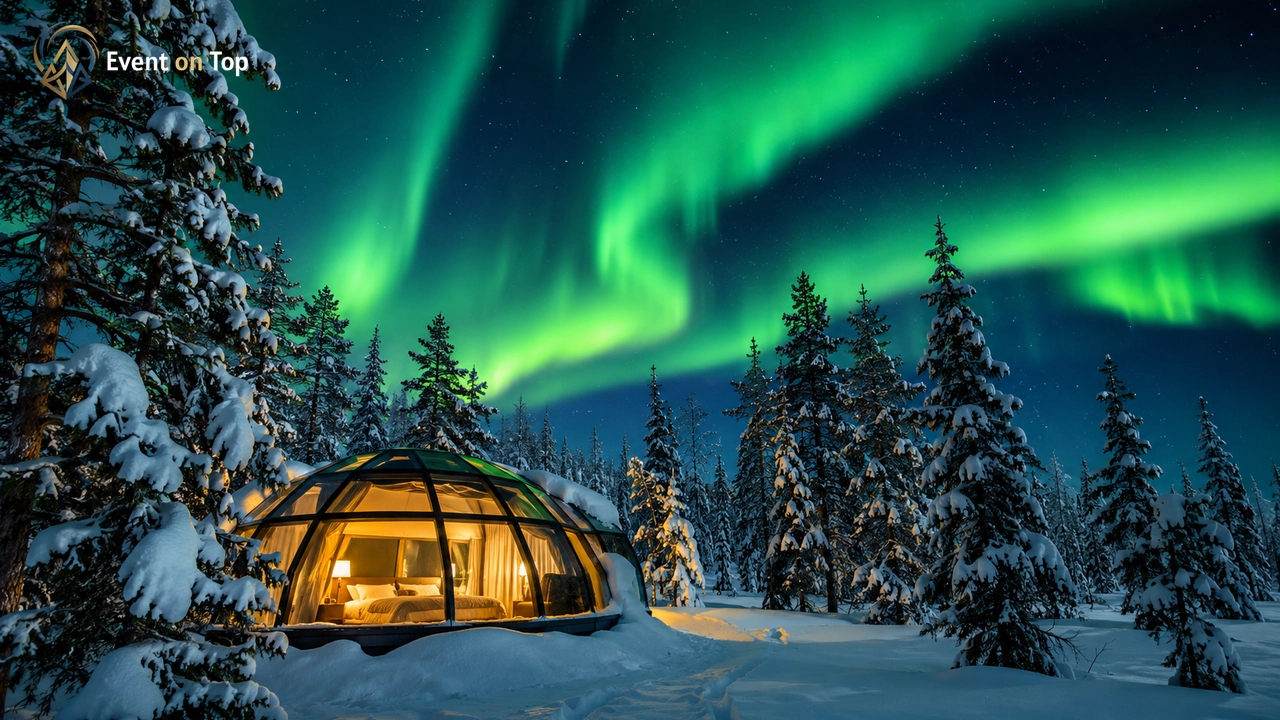
The Northern Lights in December: Solar Maximum, Honestly
December 2026 is an unusually good month to chase the aurora, and the reason is astronomy, not marketing. The 2026-27 season falls in a solar maximum, when the Northern Lights are brighter and more frequent than they will be again until around 2036. The aurora season in Finnish Lapland runs from late August to early April, and Visit Rovaniemi says the lights can appear on around 150 nights a year in Lapland when conditions are right. That is the good news. The honest part is that no operator can guarantee a sighting: what decides your luck is cloud cover and solar activity, and neither can be booked.
Your odds improve with nights, not money. A five-to-seven-night trip with a guide gives you a strong chance of at least one clear, active night, while a single night is a lottery ticket. Book a guided aurora hunt rather than standing outside your hotel: guides drive to where the sky is clear, and they know the difference between a faint glow and a real display. The other way to watch is from bed. The glass igloo was invented at Kakslauttanen in Finnish Lapland, and a night in one — thermal glass ceiling, warm bed, aurora alarm that wakes you when activity spikes — is the most comfortable way to see the lights. Kakslauttanen sits about 250 kilometres north of Rovaniemi near Saariselkä, with glass igloos open from around the third week of August to the end of April. Expect small glass igloos to run closer to 800 to 1,000 euros a night in peak season, and book six to twelve months ahead for Christmas week. Levin Iglut on the Levi fell summit is the main alternative near Levi, and Northern Lights Village in Saariselkä offers a similar setup. One honest warning: on an overcast night you see a white ceiling, and there is no refund for weather.
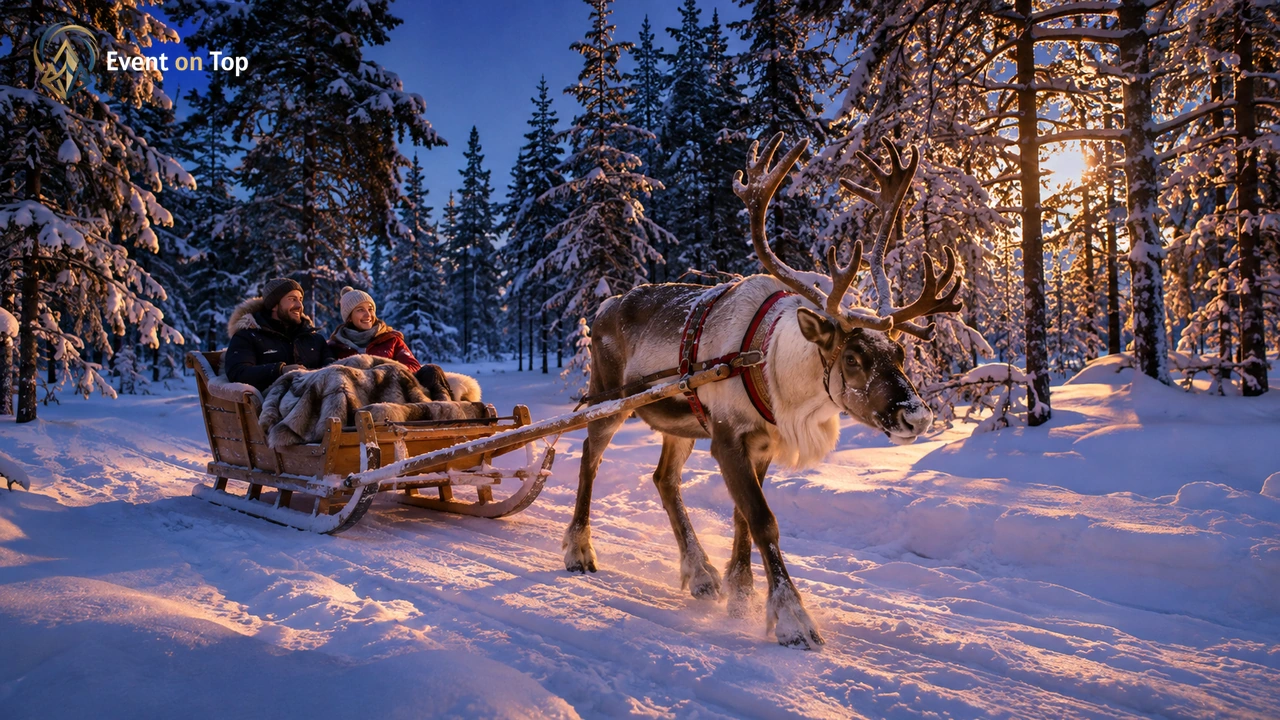
Beyond Rovaniemi: Levi, Ylläs and Saariselkä
Rovaniemi is the Santa capital, but Lapland is bigger than one town, and the best Christmas trips split their nights. Levi, about 170 kilometres north-west of Rovaniemi — roughly a two-and-a-half-hour drive, with its own airport at Kittilä — is Finland’s best-known ski resort and the liveliest alternative base. Its traditional Christmas market runs from 20 November 2026 to 6 January 2027, the Independence Day weekend on 5 and 6 December brings special events in the polar-night light, and the fell restaurants serve Christmas lunches and dinners through the season, with Santa visiting the Christmas Eve seatings. Levi is the pick if you want skiing, snowboarding, snowmobile safaris and a resort centre with bars and restaurants after dark, rather than a single attraction.
Ylläs, further north, is Finland’s largest ski area and the quieter choice: long slopes, cross-country trails and a slower pace, with husky and reindeer safaris running from the resort villages. Saariselkä, about 250 kilometres north of Rovaniemi with Ivalo as its airport, is the aurora pick — inland, far from town lights, and home to Kakslauttanen and Northern Lights Village. Two day trips from Rovaniemi deserve a mention of their own. Ranua Wildlife Park, about an hour south, is the Arctic zoo where you can see polar bears and other northern animals in snow. Korouoma Canyon, south-east of Rovaniemi, is a 30-kilometre canyon plunging 130 metres deep, and its frozen waterfalls are one of the most highly rated winter tours in the region.
Reindeer, Huskies and Snowmobiles: the Three Safaris
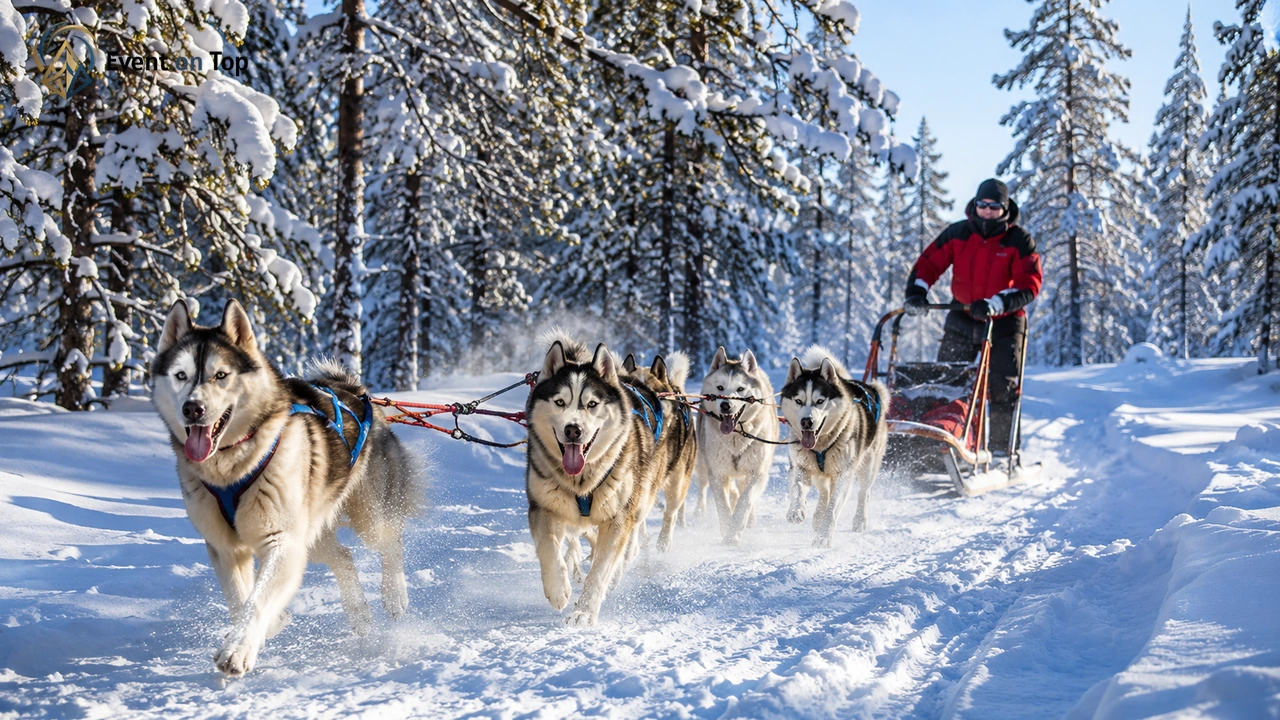
Three animals — and one machine — define a Lapland Christmas, and each one is a different kind of day. Reindeer are the gentle one. At Santa Claus Village, the family herders of Santa Claus Reindeer run a 400-metre first ride and an 800-metre forest path, plus longer winter safaris and night-time sleigh rides in search of the northern lights from their farm outside town. A reindeer ride is slow, quiet and deeply Christmassy, and it is the best safari for small children. Huskies are the fast one. Bearhill Husky in Rovaniemi runs short family rides with a musher on the sled and meet-and-greets for younger children, while longer self-drive safaris — you drive your own team — run from Levi and Saariselkä, typically two hours or more through forest tracks. Snowmobiles are the far one: a two-hour guided safari takes you further into the forest than any sleigh can, and the night-time snowmobile aurora hunts are the most adventurous way to chase the lights.
A Realistic Four-Day Christmas Plan
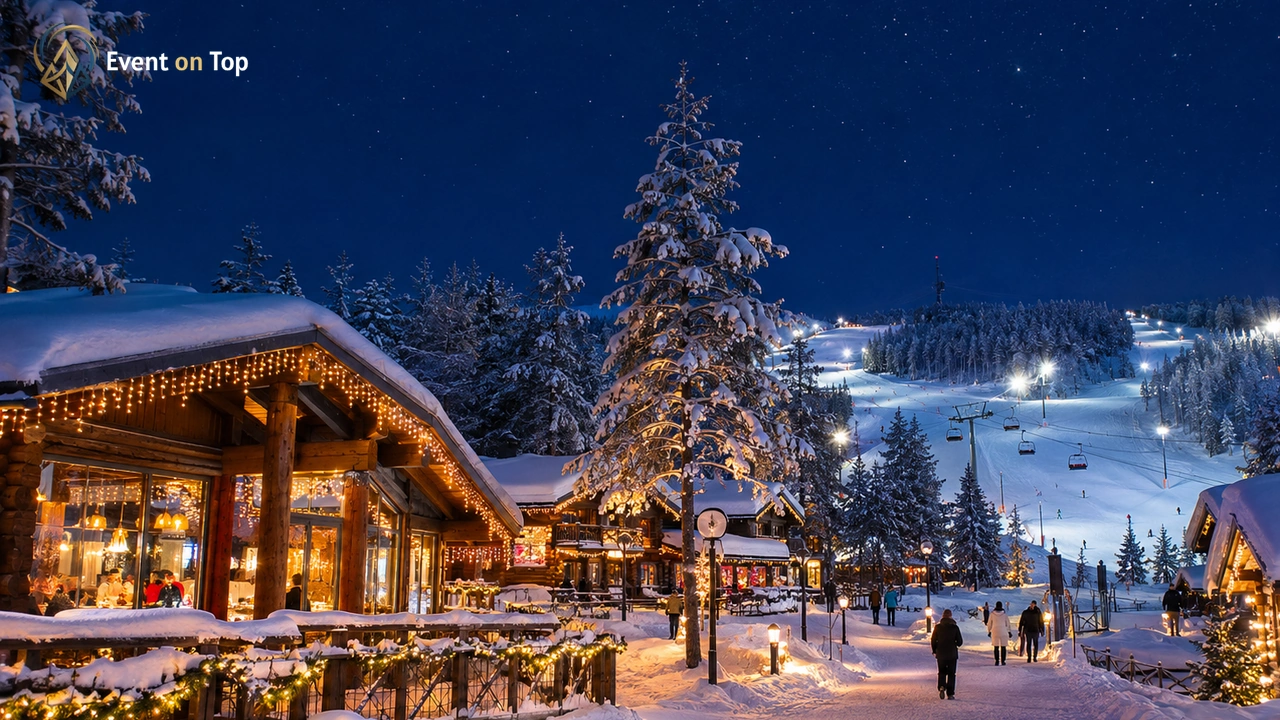
Three to four nights is the right length for a Rovaniemi Christmas trip, and this plan uses every one of them. Day one: arrive, settle in, and take the evening slowly — Rovaniemi’s lights switch-on energy is in the centre, and a gentle first night beats a rushed one after a flight. Day two is Santa Claus Village in the morning: cross the Arctic Circle, meet Santa, post cards from the Main Post Office, then Snowman World in the afternoon if it is open. Day three is SantaPark in the morning and a husky safari in the afternoon, with an aurora hunt after dark. Day four is the forest day: a reindeer safari in the morning, a snowmobile run in the afternoon, and a final evening in the village. If you have a fifth night, spend it in a glass igloo in Saariselkä or on the Levi fell — one night under the glass is enough to know whether the lights will show, and the transfer is part of the adventure. For a longer winter trip, our guide to the best winter festivals in the world covers Quebec, Harbin and Sapporo, and our Quebec Winter Carnival guide is the closest thing to a Lapland-style festival outside Finland.
The Honest Notes: No Big Market, Short Days and Real Prices
Three honest notes will save your trip. First, Rovaniemi does not have a large European-style Christmas market with rows of chalets — the village itself fills that role, with reindeer, huskies and Snowman World within a short walk. The closest thing to a traditional market is Levi’s, from 20 November to 6 January, and a small Lions Club Christmas market at Santasport in Rovaniemi on 5 and 6 December 2026, from 10 a.m. to 4 p.m., free entry. If a big market is the point of your trip, see our guides to Christmas in Stockholm and Christmas in Copenhagen instead — Lapland is about Santa, snow and lights, not shopping.
Second, the days are genuinely short. December in Lapland is kaamos, the polar night: around two and a half hours of daylight, temperatures typically minus 10 to minus 20 degrees, and around 21 December the sun barely rises at all. The Finnish Meteorological Institute’s 1991-2020 normals give December an average high of minus 4.9 degrees in Rovaniemi. The blue twilight is beautiful, and the dark is the point — it is what makes the lights, the village and the aurora work — but plan your days around it: outdoor activities in the brief daylight, village and SantaPark in the dark, and warm layers everywhere. Third, the prices are real. Christmas week, 21 to 27 December, is the peak: the best chalets and glass igloos are booked nine to twelve months ahead, and prices run 60 to 80 percent above November. The week of 18 to 21 December gives you Santa, snow and aurora at a softer price, and late November and early December are quieter and cheaper still.
Practical Tips: Getting There, Clothing and When to Book
Fly to Rovaniemi airport from Helsinki in about 90 minutes, or to Kittilä for Levi and Ivalo for Saariselkä, with daily connections to each. The romantic alternative is the overnight sleeper from Helsinki — the Santa Claus Express train to Rovaniemi takes around 12 hours and drops you in the city in the morning. Once there, everything runs on short transfers: the village is 8 kilometres from the centre, SantaPark is 2 kilometres from the airport, and the safaris pick you up from your hotel.
Clothing is not a detail in Lapland, it is the trip. Dress in layers with a proper winter jacket, insulated boots, thermal base layers, gloves and a hat — safari operators lend overalls and boots for their activities, but the walks between venues are yours. Book December stays and activities months ahead: the glass igloos, the SantaPark tickets and the Christmas-week safaris sell out first. And check the official sites before you travel — Santa’s departure time on 23 December, Snowman World’s weather-dependent opening and SantaPark’s ticket prices are all confirmed closer to the season.
FAQs
Where is Santa Claus Village and is it free?
Santa Claus Village is on the Arctic Circle, about 8 kilometres north of Rovaniemi city centre in Finnish Lapland. Entry to the village is free and it is open every day of the year. Meeting Santa at his office is also free; you pay only for the official photos and for activities like reindeer and husky rides.
When is the best time to visit Lapland for Christmas?
December is the month for Santa, snow and the Christmas programme, with the peak season from 30 November 2026 to 3 January 2027. For the best balance of atmosphere and price, aim for 18 to 21 December; Christmas week itself, 21 to 27 December, is the busiest and most expensive. February and March are better for snow and auroras with more daylight.
Can you see the Northern Lights in Lapland in December?
Yes — the aurora season runs from late August to early April, and the lights can appear on around 150 nights a year in Lapland. December 2026 falls in a solar maximum, so displays should be brighter and more frequent. Nothing guarantees a sighting: you need clear skies and solar activity, so a guided hunt and three or more nights give you the best odds.
How many days do you need in Lapland at Christmas?
Three to four nights in Rovaniemi covers Santa Claus Village, SantaPark, a husky safari, a reindeer ride and an aurora hunt. Add a fifth night in a glass igloo in Saariselkä or at Levi if you want skiing or a second base — and book Christmas-week stays six to twelve months ahead.
Is there a Christmas market in Rovaniemi?
Not a large European-style one. Santa Claus Village itself fills that role, with shops, reindeer, huskies and Snowman World in one square. Levi’s Christmas market runs from 20 November 2026 to 6 January 2027, and Rovaniemi has a small Lions Club market at Santasport on 5 and 6 December 2026.