




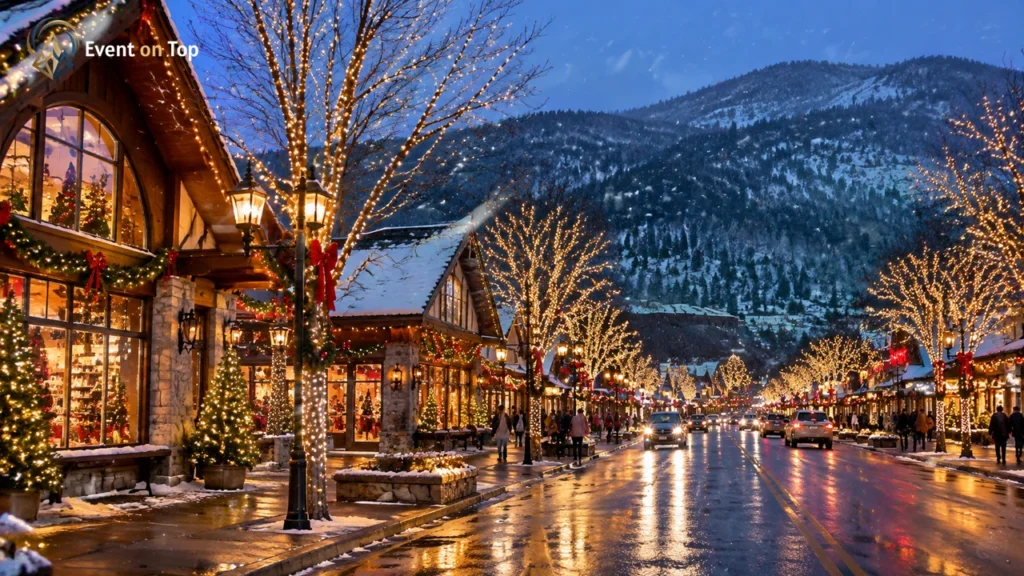
Christmas in Copenhagen 2026: Tivoli, Free Markets, Nyhavn & Hygge

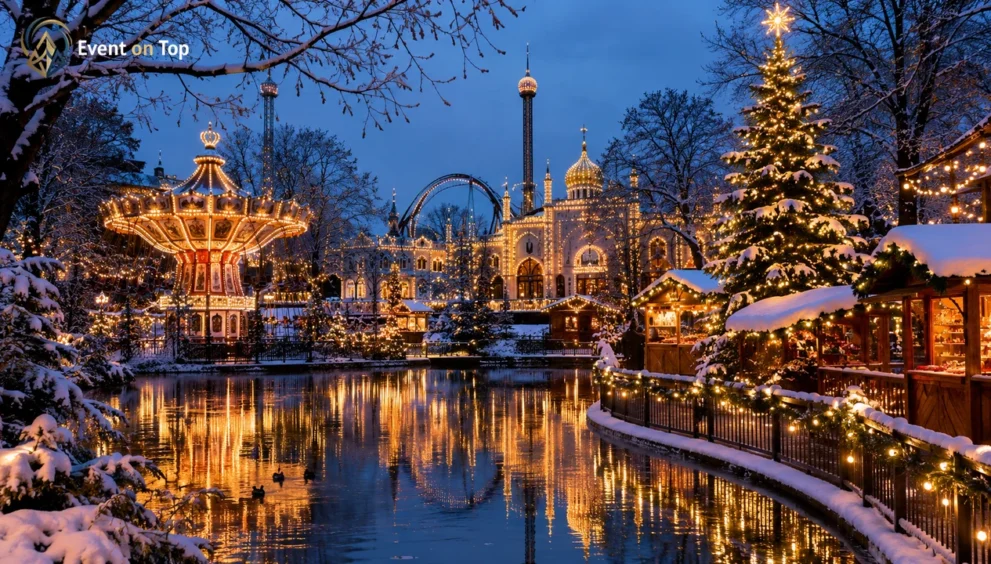
Copenhagen does Christmas the Danish way: small, walkable and warm against the cold, rather than one giant market to tick off. The headline is Tivoli Gardens, the 1843 amusement park opposite Central Station, which turns into a full Christmas village from November 13, 2026 to January 3, 2027. Around it, a string of free markets runs along Strøget, the city’s long pedestrian shopping street, from early November to December 21 — and the whole season is wrapped in hygge, the Danish art of candlelight, warm drinks and company on a dark winter evening. The catch, and the reason this guide exists, is that Copenhagen’s Christmas has traps for the unprepared: Tivoli is the only paid market and its tickets are dated, the free markets close before Christmas, and December 24 to 26 is a near-shutdown, when Danes celebrate at home and most shops and attractions close.
This guide sticks to what is confirmed for 2026 and says plainly where a detail was still unannounced at the time of writing — the Nyhavn market’s 2026 dates, for example, had not been published, so this guide does not invent them. Check each organizer’s site before you travel, especially Tivoli’s calendar, because its hours vary by day. For the wider European picture, pair this with our best Christmas markets in Europe, and for a German contrast, our Christmas in Berlin guide.
Christmas in Copenhagen 2026 at a Glance
- Christmas in Tivoli: November 13, 2026 to January 3, 2027, at Tivoli Gardens, Vesterbrogade 3, opposite Copenhagen Central Station. Paid entry; dated tickets; check tivoli.dk for that day’s hours. Closed December 24; open on Christmas Day.
- Free markets on Strøget: Nytorv and Gammeltorv, November 6 to December 21, 2026 — free entry, with a free ice rink and free skate rental. Hours roughly Monday to Wednesday 11:00 a.m. to 8:00 p.m., Thursday to 9:00 p.m., Friday and Saturday to 10:00 p.m., Sunday noon to 7:00 p.m.
- Jul på Højbro Plads (new for 2026): November 14 to December 20, on the square between Strøget and Gammel Strand — stalls and traditions from Denmark, Greenland and the Faroe Islands. Free.
- Rådhuspladsen market: December 11 to 20, in front of City Hall. Free. A short ten-day market for the final shopping weekend.
- Nyhavn: The harbour’s small market usually runs from late November through December, but its 2026 dates had not been announced at the time of writing — go for the lights and the postcard view, and check locally before planning around stalls.
- Lucia: Sunday, December 13 — Santa Lucia processions at Tivoli and a kayak parade through the canals at 5:00 p.m.
- Skating after Christmas: The Kongens Nytorv rink runs into mid-February 2027, so skating outlasts every market except Tivoli.
- December 24 to 26 warning: Denmark’s main celebration is the evening of December 24. Tivoli is closed that day, larger shops stay closed, and many attractions and restaurants close on December 24 and 25. Plan those days as walking, lights and Tivoli-from-December-25 days, and confirm anything ticketed in advance.
Christmas in Tivoli: The One You Pay For
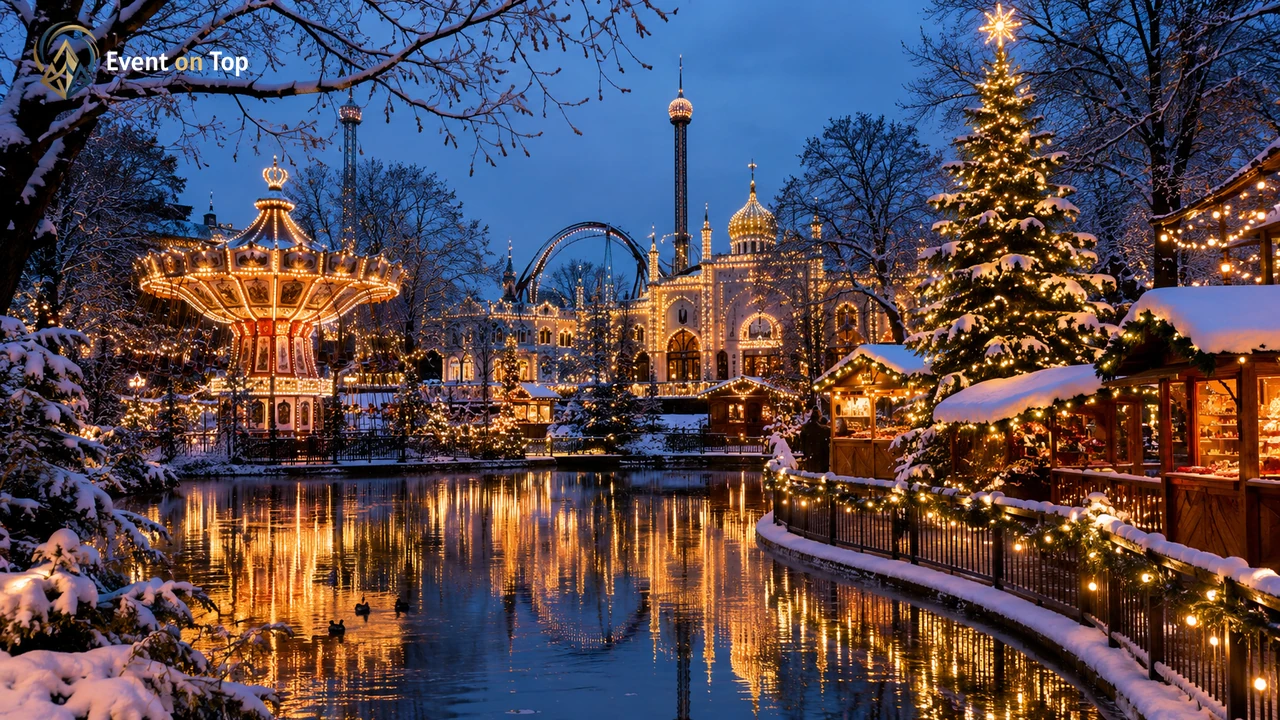
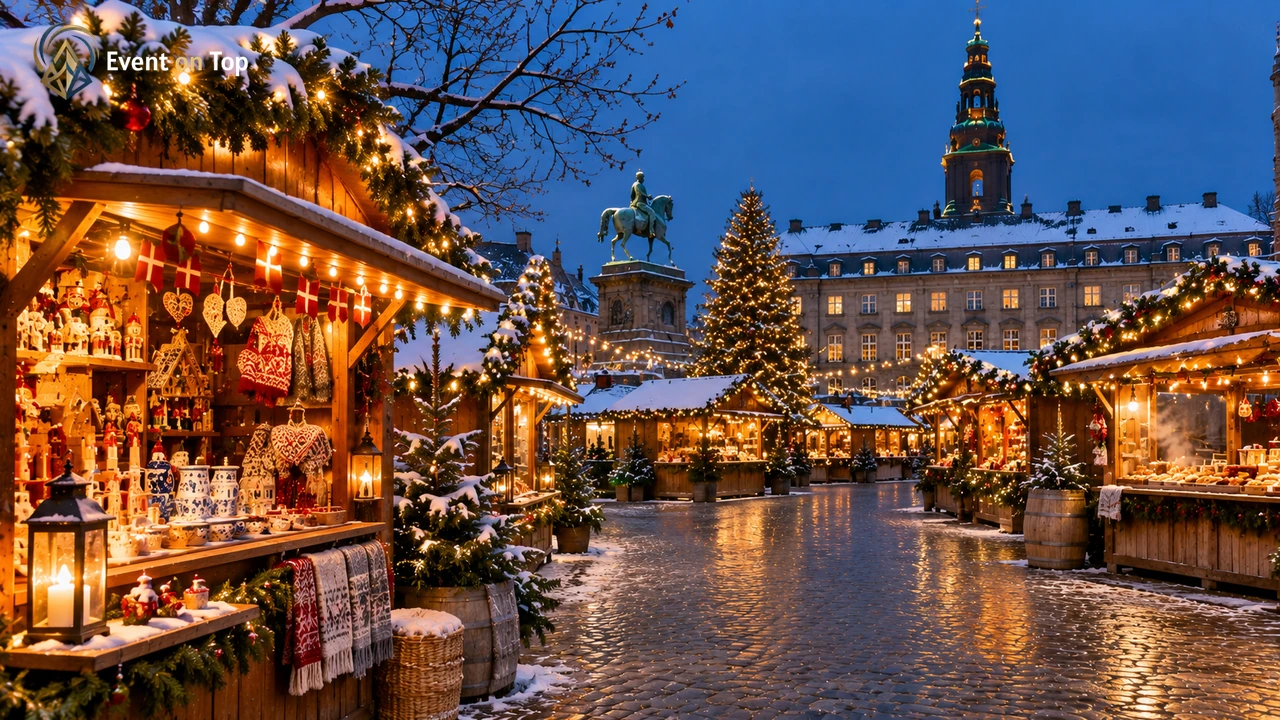
Tivoli is not really a market with rides attached; it is an amusement park that becomes a Christmas village, and that is why it costs money when every other Copenhagen market is free. The park, open since 1843, fills for the season with tens of thousands of lights, decorated trees, around 60 wooden stalls, rides running overhead, live music, and seasonal shows — and it stays open long after the free markets close, right through to January 3. Arrive in the late afternoon, before the light has fully gone, so you see the gardens change from dusk to full illumination, and stay for dinner: the park’s restaurants, food hall and stalls are part of the evening, not an afterthought.
The practical rules matter more than the atmosphere, because Tivoli is where visitors waste money. Entry is paid and tickets are dated, so buy online for your chosen day rather than assuming you can walk in at peak times, and check the day’s calendar on tivoli.dk before you go — hours vary by day, and the park has closed on some holidays in past seasons. Ride access is separate from garden entry, so if you want the rollercoasters, price the ride pass too rather than discovering it at the gate. Sources disagreed on 2026 entry prices at the time of writing, so this guide gives no price: treat any figure you see elsewhere as unconfirmed until tivoli.dk shows it. One date is fixed and non-negotiable: Tivoli is closed on December 24, but it reopens for Christmas Day and the days after, which makes it the anchor of any December 25 to January 3 trip, when the free markets have already closed.
The Free Markets: A Walk Down Strøget
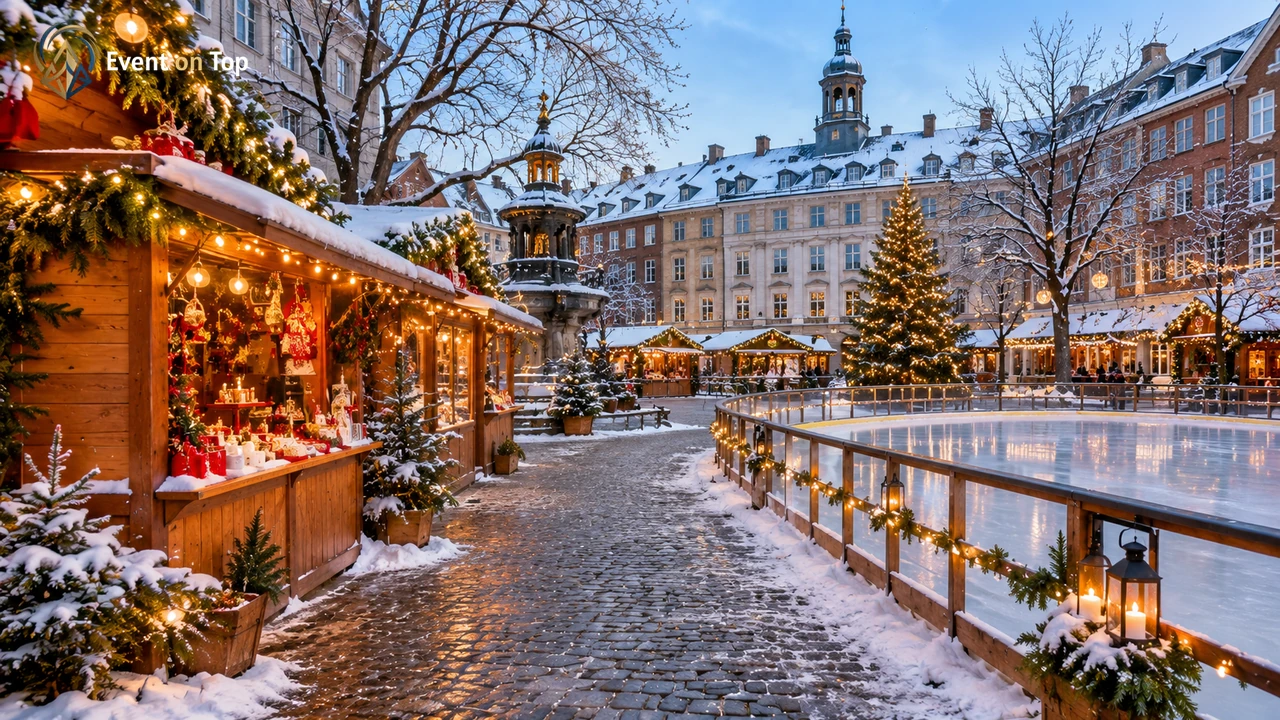
Copenhagen’s free markets are small by German standards, and that is the point — they sit within a fifteen-minute walk of each other along Strøget, so the walk between them, past lit shop windows and candlelit cafés, is half the experience. Start at Nytorv and Gammeltorv, the two connected squares by the old courthouse, which open first, on November 6, and run to December 21. This is the biggest free market in the city, with traditional stalls, festive food and lights — and, unusually, a free ice rink with free skate rental, which makes it the best family stop in the city and the best budget stop, since a family can skate, browse and eat gløgg-warmed without paying a krone to enter.
Continue to Højbro Plads, the new market for 2026, open November 14 to December 20 on the square between Strøget and the canal at Gammel Strand. Its angle is the Danish realm: food and crafts from Denmark, Greenland and the Faroe Islands, which makes it the most distinctive of the free markets and the one most unlike a generic European market. Note the change from past years that catches returning visitors: the old Højbro Plads market is not the 2026 offer, and a separate short market runs at Rådhuspladsen, in front of City Hall, from December 11 to 20 — useful if your trip falls in the final shopping weekend, when Nytorv and Gammeltorv are at their busiest. All three free markets close by December 21, so a trip after that date is a Tivoli trip, not a market-hopping trip.
Nyhavn, Kongens Nytorv and Christiania
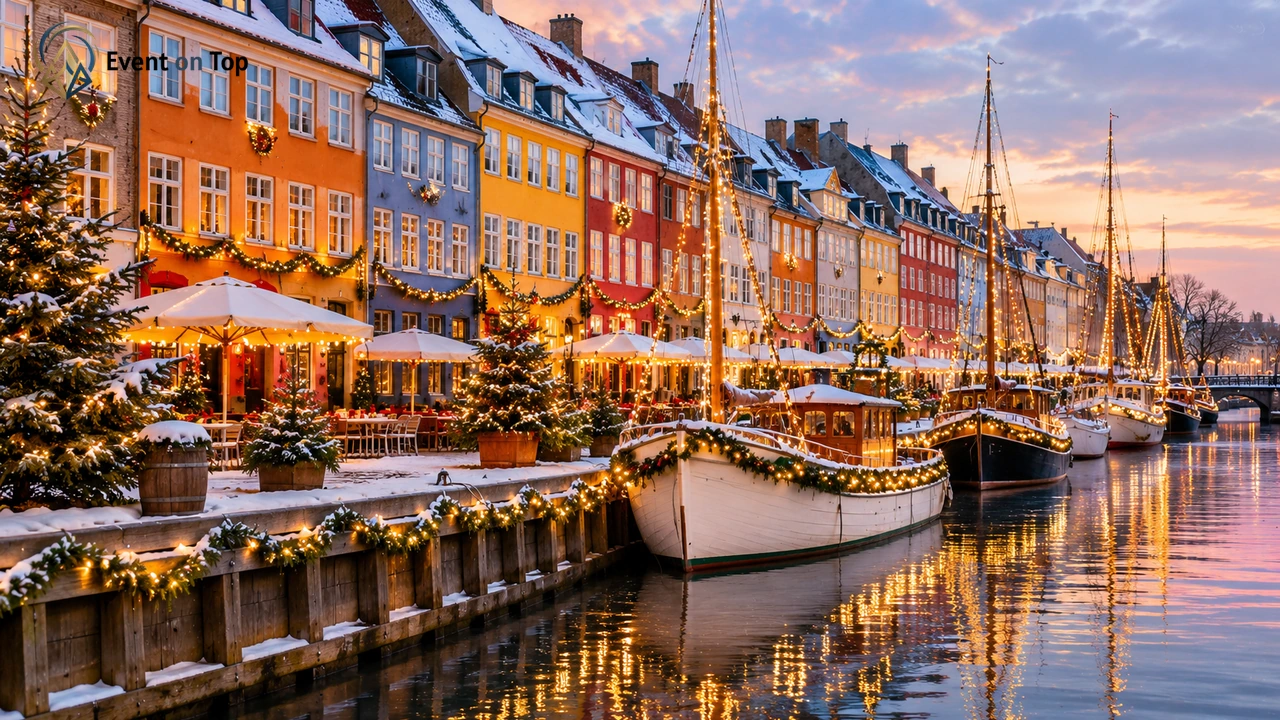
Nyhavn is Copenhagen’s postcard, and at Christmas it is worth visiting even though its market is the least certain part of the season. The 17th-century townhouses in yellow, red and blue, the wooden ships in the canal, and the quayside restaurants strung with lights make the best photograph in the city — better, honestly, than the market itself, which is small and whose 2026 dates had not been announced when this guide was written. Go in the late afternoon for the light, eat at a stall or walk a few streets inland for better prices, since the quayside restaurants are repeatedly flagged for tourist pricing, and pair it with Kongens Nytorv next door, where the Winter Wonderland ice rink runs into mid-February 2027, well after every market has closed.
For something unlike anywhere else, add the Christiania Christmas market, provisionally listed for December 7 to 20 in the freetown of Christiania, with independent crafts and an indoor bazaar in Den Grå Hal — but treat that date range as provisional, not confirmed, and check with the organizer before going. Christiania suits a rainy day and unusual gifts; it does not suit a tight schedule built around confirmed dates. The honest shape of a Copenhagen Christmas, then, is this: Tivoli for the spectacle, Strøget’s free markets for daytime browsing, Nyhavn for the photograph, and Kongens Nytorv for skating after the markets close.
What to Eat: Æbleskiver, Gløgg and the Julefrokost
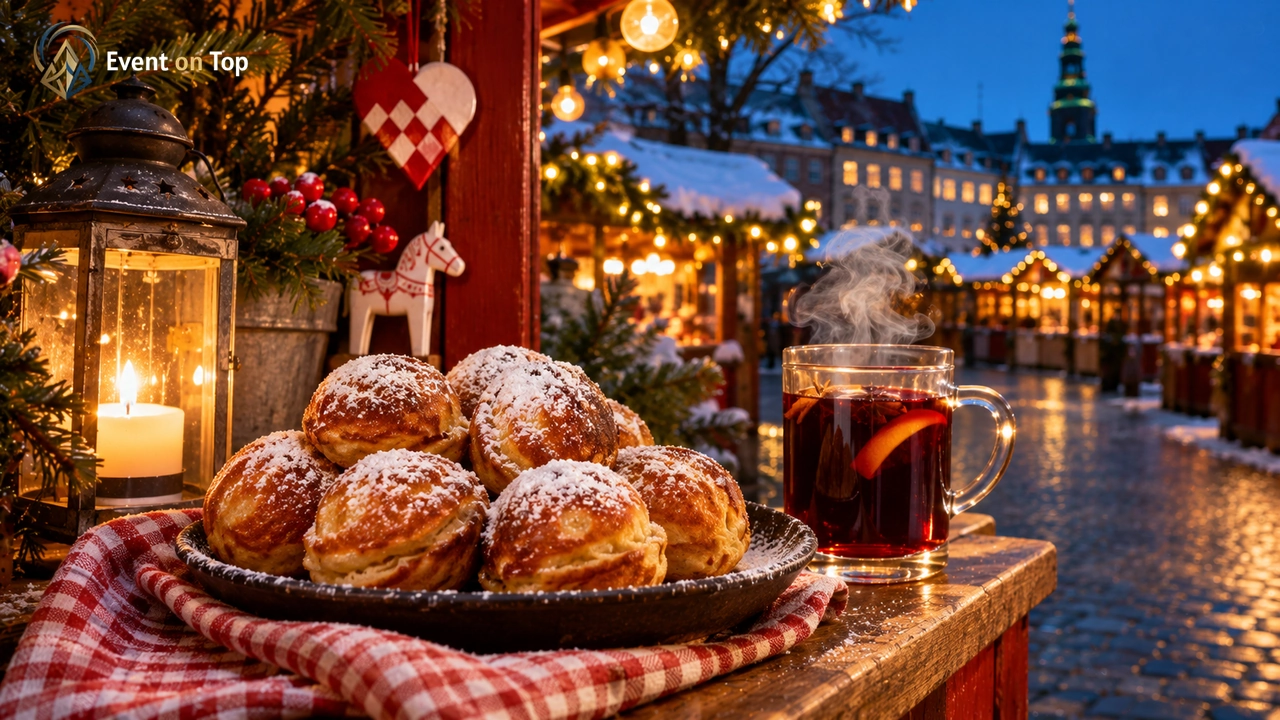
Danish Christmas food is generous and built for cold weather, and the markets are the cheapest place to try it. Start with æbleskiver, small round pancake balls cooked in a special pan, served with jam and icing sugar — the market snack that makes sense after an hour outside. With them, a mug of gløgg, Danish mulled wine spiced and served with raisins and almonds, or a non-alcoholic version, which stalls offer. Add honninghjerter, honey hearts, and caramelised almonds from the stalls, and you have eaten Christmas in Copenhagen for very little money. Beyond the stalls, the classic Christmas table runs to roast pork or duck with red cabbage, pickled vegetables and caramelised potatoes, herring and rye bread, and risalamande, the rice dessert, at family celebrations.
If you want one sit-down Danish Christmas experience, book a julefrokost, the festive lunch or dinner that runs through several servings of fish, meat and cheese, with beer and snaps, and that Danes hold through December rather than on a single day. Tivoli’s restaurants and food hall offer festive menus during the season, and the city’s food halls — Torvehallerne, near Nørreport station — are the backup when markets are crowded or closed. One honest note on budget: Copenhagen is expensive, and market food is priced like event food everywhere. The free markets, free skating at Nytorv and Gammeltorv, and free entry to Nyhavn’s quayside are what keep a Copenhagen Christmas affordable — spend the money on one Tivoli evening, not on every meal.
A Two-Day Christmas Plan, Where to Stay and Getting Around
A simple two-day plan covers the season without repeating yourself. Day one: start at Nytorv and Gammeltorv in the late morning, skate on the free rink, browse the stalls and eat æbleskiver for lunch, then walk Strøget to Højbro Plads and on to Nyhavn for the late-afternoon light and photographs. Finish at Tivoli after dark — arrive before full darkness, eat in the park, and stay for the lights and rides. Day two: return to the markets you liked best, add Christiania if its dates are confirmed, skate at Kongens Nytorv, and spend the afternoon indoors — a museum, a long café stop, a gallery — because Copenhagen winter days are short, around seven hours of daylight in December, and wet and cold. If your trip falls on December 13, build the evening around Lucia, with the kayak parade on the canals at 5:00 p.m. For the practical side, run through our event travel checklist before you leave — winter layers, waterproof boots and a plan for December 24 to 26 are the three things visitors most often forget.
Stay in the centre if you can — anywhere between Central Station, Tivoli, Strøget and Nyhavn puts every headline market within walking distance, and the metro and buses cover the rest. Copenhagen is a walking and cycling city, and in December walking between lit squares is the experience itself; the harbour buses, lines 991 and 992, run as ordinary public transport and stop at Nyhavn, if you want the water view without a sightseeing cruise. Getting there is easy from Copenhagen Airport, with trains to Central Station in about fifteen minutes, and the station sits directly opposite Tivoli — which is why a first evening at Tivoli, straight off the train, works so well. One final warning, repeated because it ruins trips: December 24 is Denmark’s main celebration evening, larger shops stay closed all day, and many attractions close on December 24 and 25. Enjoy the lights, the rink if it is open, and Tivoli from December 25 — and save the market-hopping for December 21 at the latest.

FAQs
When is Christmas in Copenhagen in 2026?
The season opens with the Nytorv and Gammeltorv market on November 6, 2026, and Christmas in Tivoli runs November 13, 2026 to January 3, 2027. The free central markets close by December 21, except the Rådhuspladsen market, which runs December 11 to 20.
Is Tivoli free at Christmas?
No. Tivoli is the only paid Christmas market experience in Copenhagen. Entry tickets are dated and prices vary by date, so check tivoli.dk for your day’s price and hours. Ride access is separate from garden entry. Tivoli is closed on December 24 and open on Christmas Day.
Which Copenhagen Christmas markets are free?
Nytorv and Gammeltorv (November 6 to December 21), Jul på Højbro Plads (November 14 to December 20) and the Rådhuspladsen market (December 11 to 20) are all free to enter. Nytorv and Gammeltorv also offers a free ice rink with free skate rental.
What is open in Copenhagen on Christmas Eve and Christmas Day?
Very little on December 24: Danes celebrate that evening, larger shops stay closed all day, Tivoli is closed, and many attractions and restaurants close. Tivoli reopens on December 25, and the Kongens Nytorv rink runs into February, but most shops stay closed on December 25 and 26 — treat those days as walking, lights and skating days.
What should I eat at a Copenhagen Christmas market?
Æbleskiver, round pancake balls with jam and icing sugar, with a mug of gløgg, spiced mulled wine served with raisins and almonds. Add caramelised almonds and honey hearts from the stalls, and book a julefrokost — the multi-course Danish Christmas lunch — for one sit-down festive meal.