








School-Safe Halloween Classroom Snacks: Nut-Free, No-Bake Ideas Teachers Actually Allow


School-Safe Halloween Classroom Snacks: Nut-Free, No-Bake Ideas Teachers Actually Allow
Every October, the same email arrives: the class Halloween party is on, parent volunteers are needed — and the snack rules are stricter than you remember. No nuts. Maybe no homemade food at all. Possibly no food, period. The rules are not there to ruin the fun; they exist because food allergies are now a normal part of classroom life, and a party snack that is fine for twenty-four kids can be genuinely dangerous for the twenty-fifth. This guide to halloween classroom party snacks school safe rules actually approve of covers what “school-safe” really means, the ideas that pass the test, drinks without the sugar crash, non-food treats for the strictest schools — and the sign-up checklist that stops six families all bringing the same thing. Halloween 2026 is Saturday, October 31, so most classroom parties land on Thursday or Friday, October 29–30.
What “School-Safe” Actually Means (Allergy Rules, Labels, Store-Bought vs Homemade)
“School-safe” is not one national rulebook. Allergy rules vary by school, district and sometimes individual classroom, because they are usually written around the specific children in the room. What follows is the common standard most teachers work to — confirm it against your own school’s rules before you buy anything.
Nut-free is the most common baseline. Peanut and tree nut allergies are among the most likely to cause severe reactions, so many classrooms are nut-free for all shared food, all year — not just at Halloween. But “nut-free” does not make a snack safe for every child: milk, egg, wheat and soy allergies are also common, and the allergens found most often in Halloween candy include milk, egg, soy, wheat, peanuts and tree nuts. Nut-free is the floor, not the whole building.
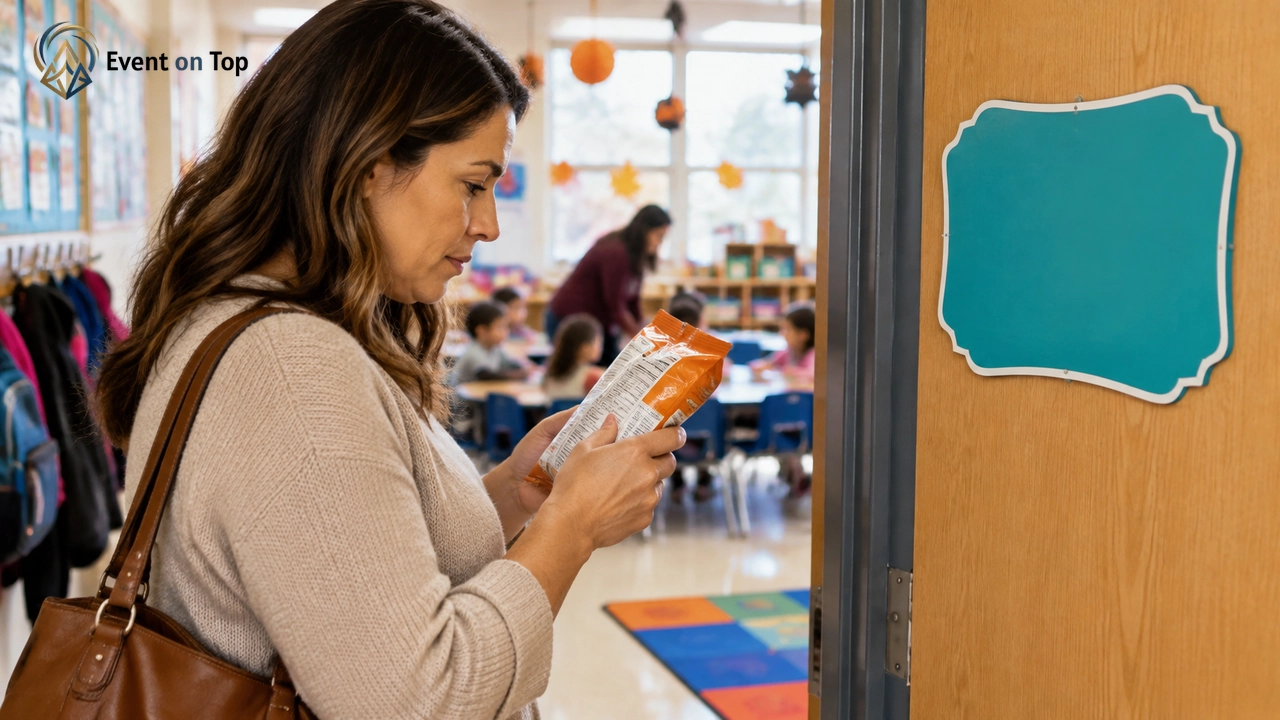
Store-bought, sealed and labeled beats homemade in most schools. Many schools now only allow commercially packaged food with a full ingredient label for parties, because a teacher can check a label in seconds but cannot verify a home kitchen. Some schools still welcome homemade treats; others ban them outright — ask which camp yours is in before you bake.
Read the label every single time — even on a product you always buy. Recipes change, and factories change. FARE (Food Allergy Research & Education) makes the Halloween-specific version of this point: miniature and “fun size” candies are sometimes made in different facilities, or with slightly different formulations, than the full-size versions — and the smallest packages may not carry a full ingredient list at all. No complete label to read means the item does not belong in a classroom.
Watch the warning lines, not just the ingredients. For a child allergic to that food, a “may contain peanuts” line means the product is out, however innocent the ingredient list looks.
Cross-contact is the quiet risk. Allergens transfer via hands, shared serving spoons and surfaces. If you portion snacks at home, wash hands with soap and water first (hand sanitizer does not remove food allergens), use clean utensils, and keep classroom snacks in their own clean bag or box.
When in doubt, ask the teacher — one short message with the ingredient list attached prevents every awkward party-day conversation.
Nut-Free Sweet Snacks
Sweet is the easy part of a Halloween party, and where nut-free choices are plentiful — as long as the label rule stays front and center. Nothing below promises a specific product is allergen-free; brands differ, so treat every idea as “check the label on the exact package in your hand.”
- Individually wrapped gummies and fruit snacks. A classroom staple because portions are sealed and labeled. Choose the retail box with the complete ingredient panel, not loose handfuls from a bulk bin.
- Lollipops and hard candies. Long-lasting, low-mess, easy to portion. Check labels anyway — some come from facilities that also handle nuts or milk.
- Marshmallow-based treats. Ghost-shaped marshmallows and marshmallow-cereal bars travel well and need no refrigeration. Buy them packaged, not homemade, if your school requires labels.
- Chocolate — with extra care. This is where milk and nut cross-contact warnings cluster most. Bring only a product whose label you have read end to end — and accept a strict classroom may say no anyway.
Portion tip for room parents: keep everything in its original packaging until the teacher has seen it. Once a snack leaves its labeled wrapper it becomes unverifiable — and unverifiable food is what teachers remove.
No-Bake Savory Snacks
Savory snacks balance the sugar, need no oven, and can be assembled the night before — or in the classroom itself as part of the party.
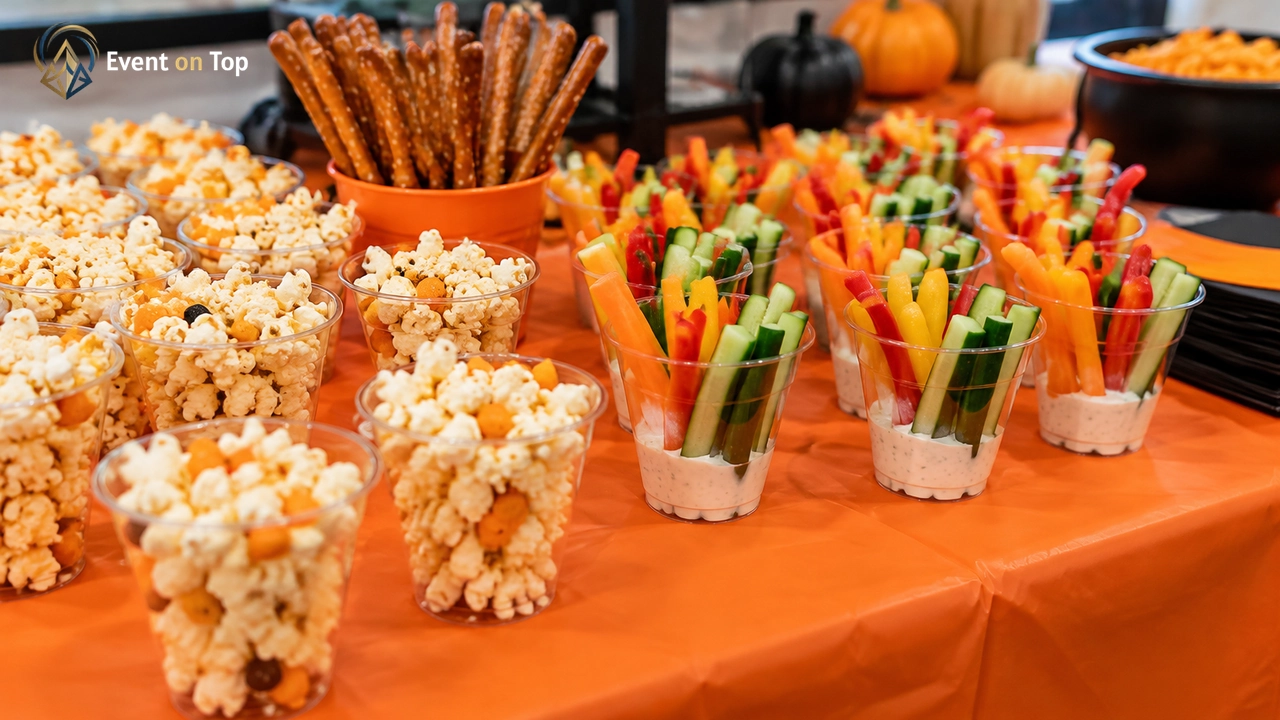
- Popcorn. Plain or lightly salted popcorn in individual bags is the no-bake workhorse: cheap, crunchy and easy to label. If you pop it at home and your school allows homemade, use clean equipment and plain oil — flavored microwave varieties need a label check for milk.
- Pretzel “witch fingers.” Pretzel rods in a cup with a spooky name card. Pretzels contain wheat, so they are not the pick for a wheat-allergy classroom — savory does not automatically mean allergen-light.
- Veggie cups with dip on the side. Carrot sticks, cucumber and bell pepper in individual cups. Serve dip in its own labeled container, so the teacher can approve or pull it without losing the whole snack.
- Cheese and crackers — only where dairy is allowed. Cheese is a milk allergen, full stop. In a room with no dairy restriction it is a party classic; in a dairy-free room it stays home.
- Rice-cake “mummies.” Plain rice cakes with a little label-checked frosting piping make a fun assemble-it-yourself station for older elementary kids — an activity and a snack in one.
Healthy & Fruit-Based Ideas
Fruit is the natural shortcut around half the allergy maze: whole fruit has no ingredient label to decode, and it gives kids something fresh between the candy rounds. It is not risk-free for every child — fruit allergies exist — but it sidesteps the nut, milk, egg and wheat tangle of baked goods.
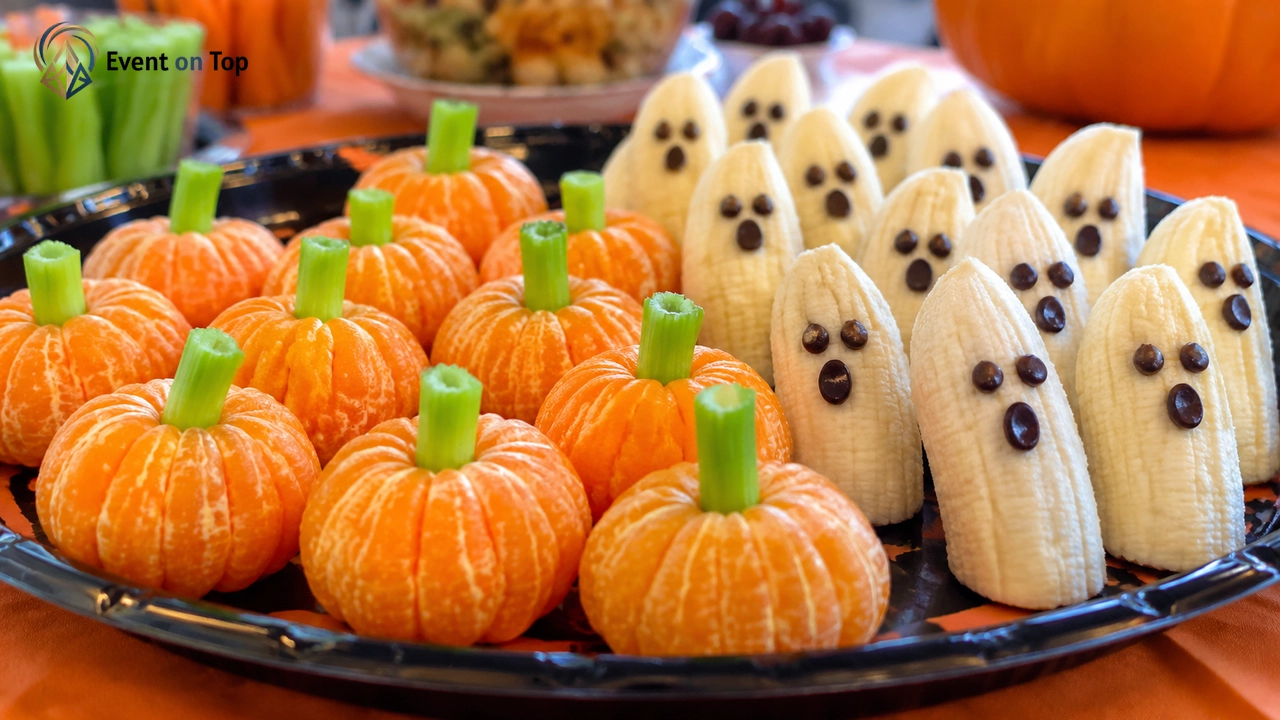
- Clementine “pumpkins.” The classroom classic: a clementine with a tiny celery-stick stem. Zero cooking, instantly on-theme, and kids actually eat them.
- Banana “ghosts.” Half a banana stood upright, with two small dots for eyes. Traditionally the eyes are chocolate chips — use only label-checked chips, skip them if chocolate is ruled out, or press in raisins instead.
- Apple-slice “monster mouths.” Apple wedges sandwiched into a grinning mouth. The classic filling is nut butter, which stays home in a nut-free room — use label-checked seed butter or jam where the teacher approves it, or serve the slices plain with monster faces drawn on the serving card.
- Fruit cups and applesauce pouches. Sealed, labeled, portioned and shelf-stable — the room parent’s best friend. Check the panel like everything else.
Presentation does the heavy lifting. Fruit gets eaten when it looks the part — draw pumpkin faces on clementines with a food-safe marker, or use orange and black cupcake liners.
Drinks Without the Sugar Crash
A room full of costumed seven-year-olds does not need a punch bowl of sugar on top of everything else, and homemade drinks carry the same problem as homemade food: nobody can verify what is in them. Sealed, single-serve drinks solve both.
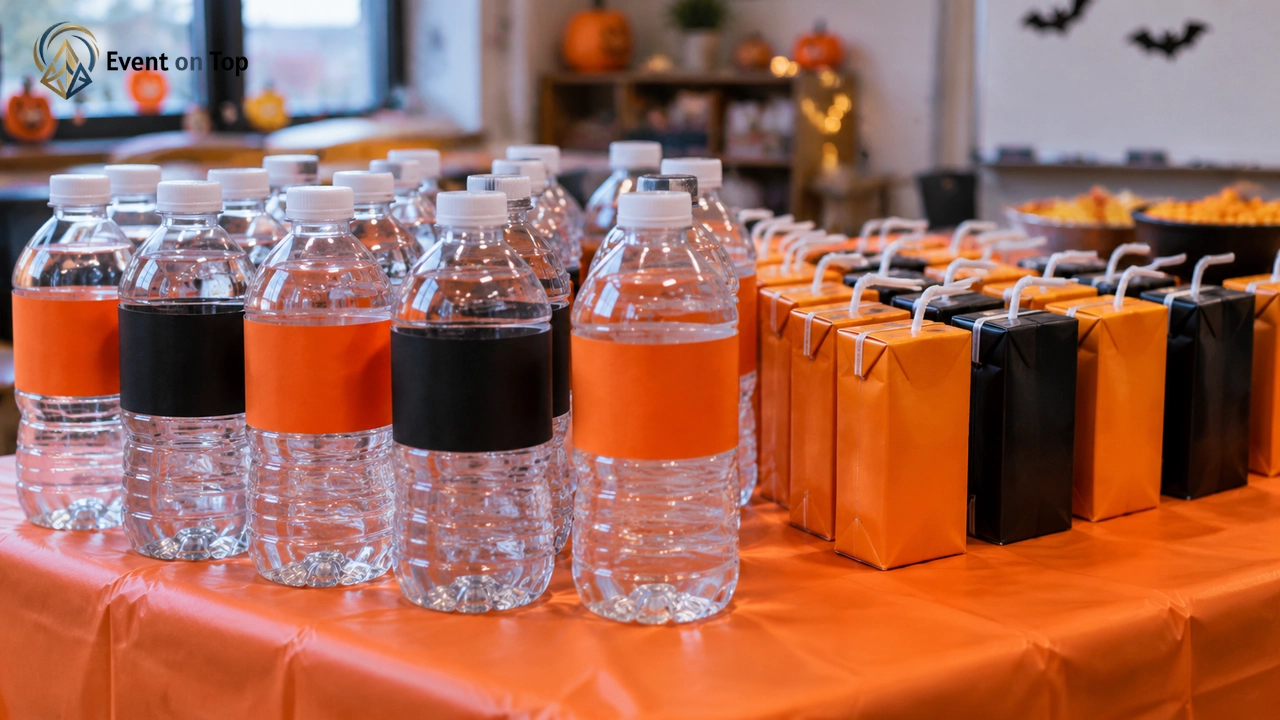
- Water, dressed up. Small water bottles with Halloween labels (wrap your own printed label around the bottle) are the zero-sugar, zero-allergen default every party should have.
- 100% juice boxes. Sealed, portioned and labeled. Juice still brings sugar, but a small box is a controlled amount — and the ingredient list is there for the teacher.
- Milk or chocolate milk — only in dairy-OK classrooms. Single-serve cartons are labeled and portioned, but milk is a top allergen — ask first.
Skip the shared punch bowl and the open 2-liter bottles: unlabeled ingredients and shared cups. Drinks are also the easiest sign-up slot for a family that doesn’t bake — claim it early.
Non-Food Treats for Strict Schools
Some schools — and some individual classrooms — ban party food entirely, or restrict it so heavily that food stops being the fun part. That is not a dead end; it is exactly the situation FARE’s Teal Pumpkin Project was built for. Teal is the color of food allergy awareness, and the project encourages offering non-food treats alongside or instead of candy, signaling with a teal pumpkin (real, painted or a printed sign) that every child gets something. For a child with multiple allergies, a guaranteed-safe prize beats another wrapper to worry about.
Classroom-friendly non-food treats:
- Stickers and temporary tattoos (Halloween sheets come in class-sized packs)
- Pencils, erasers and mini notepads — the rare party favor that is also useful on Monday
- Glow sticks and glow bracelets — dim the lights for the last ten minutes and these become the event
- Bubbles, bouncy balls and spider rings
- Bookmarks and coloring pages — a printed Halloween coloring sheet per child, plus crayons
- Mini puzzles or fidget toys for older elementary classes
FARE’s own practical tip travels well: if you offer both food and non-food treats, keep them in separate bowls, so there is no cross-contact and no confusion. Put the non-food bowl at its own station with the teal pumpkin next to it, and let kids choose — choice is what makes it feel like a treat rather than a substitute. It is also the kindest sign-up slot to offer a family whose child has the allergy: they contribute fully and safely, like everyone else.
The Sign-Up Checklist: Asking the Teacher & Labeling Everything
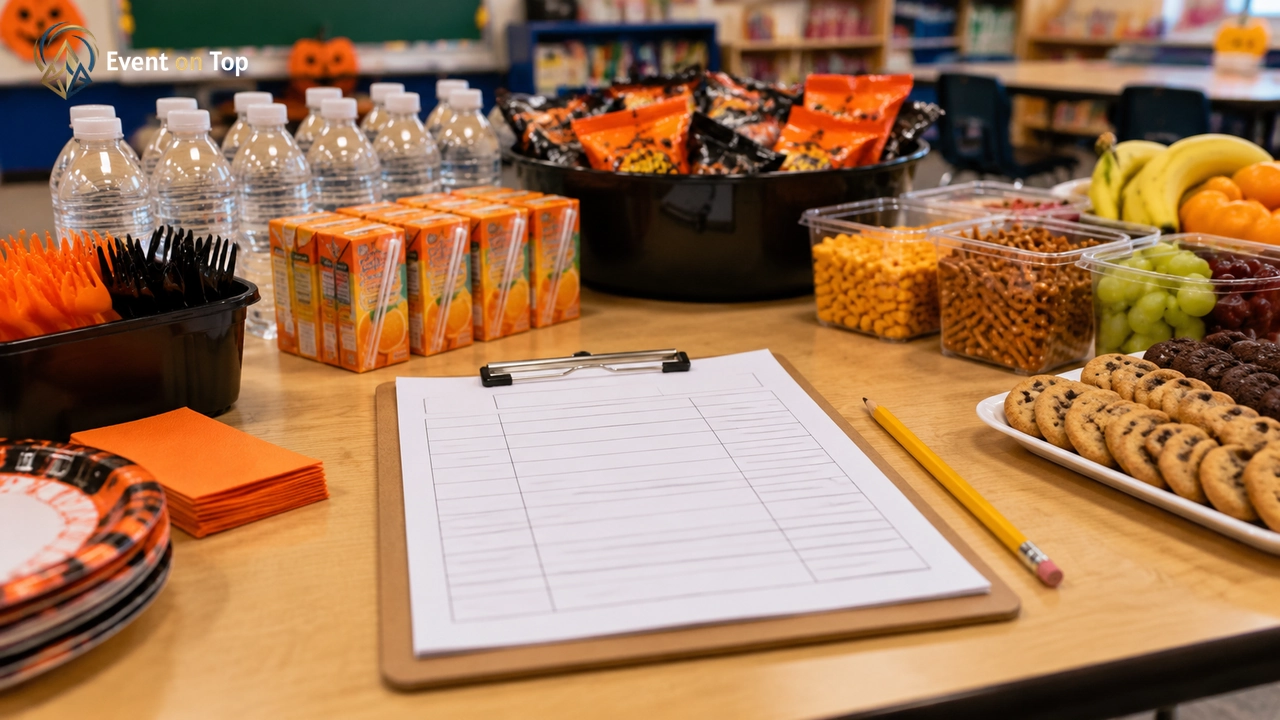
Most classroom snack disasters are logistics, not cooking: five families bring cupcakes, nobody brings drinks, and one well-meaning treat gets quietly removed because its label is missing. A sign-up list fixes all three — offer to run it.
Questions to ask the teacher first (before the list goes out):
1. Is food allowed at all, or non-food only?
2. Which allergies are in this class, and is the room nut-free / dairy-free / other?
3. Store-bought only, or is homemade allowed?
4. Any school-wide rules (no candy, no red dye, healthy-snacks-only policies)?
5. What time is the party, how many kids, any fridge space?
A sign-up structure that works:
| Slot | Suggested items | Volunteer |
|---|---|---|
| Sweet snack (nut-free, labeled) | Wrapped gummies, lollipops, marshmallow treats | |
| Savory snack (no-bake) | Popcorn bags, pretzel rods, veggie cups | |
| Healthy option | Clementine pumpkins, fruit cups, applesauce pouches | |
| Drinks | Water bottles, juice boxes | |
| Non-food treats | Stickers, glow sticks, pencils | |
| Supplies | Plates, napkins, cups, trash bag |
labeling rules to print at the top of the sign-up sheet:
– Everything arrives in its original, sealed packaging with the ingredient label intact — no exceptions, no repackaging into cute bags.
– Homemade items (where allowed) come with a written ingredient card listing everything, including the brand of any mix or frosting used.
– Nothing with a “may contain” warning for a class allergen gets served to that class. Spot one in your own shopping? Swap it before the party, not during it.
– Keep the empties until the party ends, in case a parent needs to check an ingredient.
One last line for your own kid: dress them in a costume that survives a school day (our kids’ costume guide below has the comfort rules), and send nothing extra “just in case” — unplanned food is how unlabeled snacks sneak in.
Frequently Asked Questions
Is homemade food ever allowed at a classroom Halloween party?
Sometimes — it depends entirely on your school. Many schools now require store-bought, factory-sealed food with a full ingredient label for shared classroom events, because a teacher can verify a label but not a home kitchen. Others still allow homemade treats, usually with a written ingredient card. There is no universal rule, which is why “ask the teacher first” is step one above.
What does “nut-free” actually cover?
Two different groups: peanuts (a legume) and tree nuts (almonds, walnuts, cashews, hazelnuts and similar). A nut-free classroom excludes both, in ingredients and usually in “may contain” warnings too. Nut-free does not mean allergy-free in general — milk, egg, wheat and soy are also common allergies, and a snack can be nut-free and still wrong for a particular child.
Can I trust a candy my child eats safely at home?
Not automatically, at classroom scale. FARE notes that fun-size versions of a candy are sometimes produced in different facilities or with different formulations than the full-size version, and the smallest wrappers may not carry a complete ingredient list. If the exact package has no full label to read, it stays out.
What if our school bans party food altogether?
Then the party runs on the non-food playbook — and many kids prefer it. Follow the Teal Pumpkin Project model FARE promotes: stickers, glow sticks, pencils, mini toys and activity treats, presented as the main event rather than a consolation. Games, crafts and a costume parade fill the party comfortably without a single snack.
How should I label a homemade treat if our school allows it?
Write an ingredient card that lists everything, including sub-ingredients: the brand of cake mix, frosting or chocolate chips matters, because that is where hidden allergens live. Tape the card to the container and tell the teacher what is in it. If you cannot list it completely, bring a sealed store-bought alternative instead — no teacher will ever be annoyed by that swap.
The Party Every Kid in the Class Can Actually Join
The point of school-safe snack rules is not a shorter treat table; it is a longer guest list. A nut-free, label-checked, thoughtfully signed-up spread means the child with the allergy action plan grabs a snack and a glow stick at the same stations as everyone else — and the teacher enjoys the party instead of policing it. Ask first, read every label, label everything you bring, and let the teal pumpkin sit where everyone can see it.
Planning the rest of your family’s Halloween? Our guide to family Halloween events covers the not-so-scary parties and zoo nights worth travelling for. For the parking-lot version of an inclusive party, see our trunk or treat ideas with their non-food handout options, and if the class party includes a costume day, our kids’ Halloween costume ideas will keep the outfit classroom-comfortable from first bell to party time.